Connect with us

In the community

Secret vaccinations help Zimbabwe mothers protect children

Published

on

BY FARAI MUTSAKA

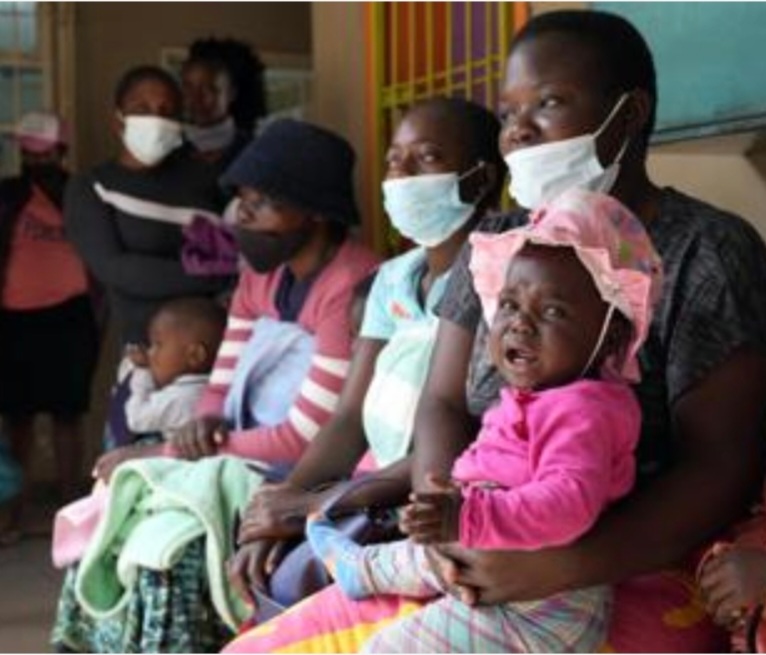
Dozens of women holding babies rushed to take their places on wooden benches at a clinic in Zimbabwe while a nurse took a separate group of anxious mothers and their children through a back door and into another room.

Advertisement

The nurse quickly closed the door behind them.

The women were all at the Mbare Polyclinic in Zimbabwe’s capital, Harare, to get their children vaccinated against measles amid a deadly outbreak in the southern African country.

But those who were taken to the back room were getting their children vaccinated in secret, and in defiance of religious doctrine that forbids them from using modern medicines.

Advertisement

“The advent of the measles outbreak saw children dying so they are now coming secretly and we are helping them,” said Lewis Foya, a nurse at the clinic.

More than 700 children have died from measles in Zimbabwe in an outbreak first reported in April.

Many were unvaccinated because of religious reasons, Information minister Monica Mutsvangwa said.

Advertisement

The government has announced a vaccination drive but, as with Covid-19, some religious groups are stubbornly opposed to vaccines and have hindered the campaign.

Apostolic groups that infuse traditional beliefs into a Pentecostal doctrine are among the most skeptical of modern medicine in Zimbabwe.

Followers instead put their faith in prayer, holy water and other measures to ward off disease or cure illnesses.

Advertisement

“They have a belief that if they get vaccinated, they become unholy so that’s the doctrine that they pass down to the women,” said Foya.

He said the patriarchy in the church means women have “no power to openly say no” to instructions. Children are then in danger.

There has been little detailed research on Apostolic churches in Zimbabwe but studies by the United Nations children’s agency, Unicef, estimate it is the largest denomination with around 2.5 million followers in a country of 15 million.

Advertisement

Some allow members to seek health care. Many are still resistant.

So to save their children, some mothers visit clinics in secret, sometimes under the cover of night and without their husbands knowing.

A group of Apostolic church members who are open to modern medicine have been trying to change church attitudes, but also advise women to go against church rules if it means helping their children.

Advertisement

“We encourage women to get their children vaccinated, maybe at night,” said Debra Mpofu, a member of the Apostolic Women Empowerment Trust.

“It’s really necessary for the women to protect their children so it’s important for them to just sneak out.”

The secrecy is necessary because members found to have visited health care centres are shamed and forbidden from taking part in church activities.

Advertisement

The World Health Organisation warned in April of an increase in measles in vulnerable countries due to Covid-19 disruptions, with more than 40 countries postponing or suspending their regular immunisation campaigns.

In July, Unicef said about 25 million children worldwide had missed out on routine immunizations against common childhood diseases, calling it a “red alert” for child healt

Globally, WHO and Unicef reported a 79% spike in measles in the first two months of 2022 alone and warned of the potential for large outbreaks.

Advertisement

Children and pregnant women are most at risk of severe disease from measles, which is among the most infectious diseases and easily preventable with a vaccine.

More than 95 percent of measles deaths occur in developing countries.

Zimbabwe’s outbreak was first reported in the eastern Manicaland province following church gatherings and has spread across the country.

Advertisement

The government, with support from Unicef, the WHO and other non-governmental organizations, has embarked on a vaccination campaign targeting millions of children.

At the Mbare clinic, one mother said people had learned from the vaccine hesitancy prevalent during the Covid-19 pandemic.

“A lot of people were misinformed during that Covid-19 period because they were told that when you get vaccinated there will be after-effects,” said the mother, Winnet Musiyarira.

Advertisement

“So due to that a lot of people lost their lives and it was important for everybody to take that serious.

“So when I heard about measles I just said I have to take my kids to hospital and get them vaccinated.”

Musiyarira said she wasn’t a member of a religious group.

Advertisement

Some women wearing matching white headscarves to indicate they are part of an Apostolic church and who were at the Mbare clinic to get their children vaccinated secretly declined to speak to The Associated Press for fear of reprisal from church leaders.

Apostolic groups are notoriously wary of outsiders.

In a bushy area in the impoverished Epworth region outside Harare, Apostolic congregants wearing white robes gathered outdoors recently, as is their tradition, to worship.

Advertisement

Some knelt before self-proclaimed prophets as a man scooped ashes from a fireplace and put them in plastic bag to take home to be used to heal illness.

It is one of many congregations that Mpofu’s Apostolic Women Empowerment Trust has approached.

On this occasion, and after intense negotiations, Mpofu and her team were allowed to address the congregants and distribute vaccination fliers.

Advertisement

The church leader, James Katsande, also agreed to allow his followers to take their children to clinics.

But there was a condition: They should approach the church’s prophets to be blessed before going to a clinic.

“First we need to protect them with the Holy Spirit to cast out any demons and bad luck,” said Katsande, a tall man wearing white robes and a white headscarf with a cross on it.

Advertisement

“We remain the first port of call,” he added. – AP

Advertisement
Continue Reading
Click to comment

Leave a Reply

Your email address will not be published. Required fields are marked *

Hwange

Hwange Central finally receives long-awaited CDF funds

Published

on

BY NOKUTHABA DLAMINI

Hwange Central constituency has finally received its long-awaited Constituency Development Fund (CDF) allocation, marking the first disbursement since 2022, Member of Parliament for the area, Fortune Daniel Molokele, has confirmed.

Advertisement

In a statement, Molokele said an amount of ZiG 1.3 million was deposited last week into a special bank account set up exclusively to administer CDF funds for the constituency. The disbursement falls under the 2024 national budget, following confirmation from the Parliament of Zimbabwe that no CDF disbursement will be made under the 2023 national budget.

He further noted that there is still no clarity on when CDF allocations under the 2025 and 2026 national budgets will be released.

“With this development, our local CDF Committee will, during the coming week, initiate the process of rolling out the approved projects,” said Molokele.

Advertisement

Priority Wards and Projects

The initial phase of implementation will cover five wards, namely Wards 1, 4, 5, 6 and 14, with the remaining wards expected to benefit under the next CDF disbursement.

According to minutes from a public consultation meeting held on 13 April 2024 at St Ignatius Primary School in Hwange, the community unanimously prioritised solar-powered boreholes with JoJo tanks and fenced nutritional gardens as the flagship project for the 2024 CDF cycle.

Advertisement

The project is set to be implemented at the following locations:

  • Ward 1: Chibondo
  • Ward 4: Baghdad
  • Ward 5: Empumalanga
  • Ward 6: Phase Four
  • Ward 14: Ngumija

Other proposals discussed at the meeting included the construction of an Advanced Level laboratory science facility at Nechilisa Secondary School and the refurbishment of Nengasha Stadium, but these were deferred in favour of addressing water and food security.

CDF Committee in Place

The public meeting also elected a new 2023–2028 CDF Committee, comprising:

Advertisement
  • Alice Phiri (Trade Unions, Women and Local Communities)
  • Luka Katako (Traditional Leaders and Faith-Based Leaders)
  • Bryan Nyoni (Youth and Local Communities)
  • Shonipai Muleya (Finance and Accounting)

Francisca Ncube was nominated as the National Assembly representative, while Teresa Kabondo will represent the constituency in the Senate.

The CDF bank account signatories and procurement committee members include Molokele, Luka Katako, Thulani Moyo and Alice Phiri.

Funding Clarifications

Although earlier discussions indicated that the 2024 allocation would include outstanding funds from 2023—bringing the total to an estimated USD100 000, to be disbursed in ZiG at the interbank rate—the Speaker of Parliament later clarified that the 2023 CDF allocation was no longer available.

Advertisement

“As a result, each constituency ended up receiving ZiG 1.3 million, which was meant to be equivalent to USD50 000,” Molokele explained, adding that the approved projects were subsequently endorsed by the relevant Parliamentary committee.

He also confirmed that no CDF proposals have yet been submitted for 2025 and 2026.

Residents seeking further information have been advised to contact CDF Committee Secretary Thulani Moyo on 078 648 3659.

Advertisement

Molokele said at least two public feedback meetings will be held once implementation begins, to ensure transparency and accountability in the use of the funds.

Advertisement
Continue Reading

In the community

Two artisanal miners die in Umguza mine shaft collapse

Published

on

BY STAFF REPORTER 

Two artisanal miners have died following the collapse of a flooded mine shaft at Cement Side in Umguza District, ZBC has reported.

Advertisement

The incident occurred early Tuesday morning after heavy water ingress caused the shaft to give way, trapping the two men underground.

When rescue teams arrived at the scene, officers from the Bulawayo Fire and Ambulance Services Department, assisted by local volunteers, were leading recovery efforts.

A survivor of the incident, Khulumani Nkomo, described the terrifying moments leading up to the collapse.

Advertisement

“We heard a loud cracking sound as we reached the ground, then water started rushing in. The two were behind us, and the shaft just closed, trapping the other one in the tunnel,” he said.

Nkomo added that attempts to rescue the trapped miners proved futile.

“We tried to dig with our hands and tools, but the water kept coming. By the time help arrived, it was already too late.”

Advertisement

A brother of one of the deceased miners said the family is struggling to cope with the loss, revealing that the victim was only 19 years old.

Advertisement
Continue Reading

In the community

Foot and mouth disease outbreak in Mat North

Published

on

BY NIZBERT MOYO

The provincial Veterinary Department has urged farmers to comply with livestock movement regulations following an outbreak of the Foot and Mouth Disease (FMD) in some parts of Matabeleland North.

Advertisement

Acting provincial veterinarian Gwinyai Zhandire confirmed the outbreak to Southern Eye, saying the government has instituted movement controls, vaccination and active surveillance in the affected areas.

“There are some dip tanks affected in the Nyamandlovu area,” Zhandire said.

“The government has instituted movement controls and vaccination, and we are conducting surveillance.

Advertisement

“Farmers are encouraged to observe and comply with livestock movement regulations to prevent further spread.”

He highlighted that the rainy season increases the risk of other livestock diseases.

With tick populations on the rise, farmers should be vigilant against tick-borne illnesses such as Anaplasmosis (Gall Sickness), Theileriosis (January Disease), Ehrlichiosis (Heartwater) and Babesiosis (Redwater).

Advertisement

“Weekly dipping is encouraged to prevent transmission between animals,” Zhandire said.

He emphasised the importance of routine vaccination against other seasonal threats, including anthrax and lumpy skin diseases.

The outbreak has also affected farmers in the Umguza area, who have similarly been directed to adhere to animal movement restrictions.

Advertisement

Foot and mouth disease is a highly contagious viral disease that affects cloven-hoofed animals, including cattle, sheep and goats.

The disease is characterised by fever and the development of painful sores or blisters in the mouth and on the feet, often leading to severe lameness and a drop in productivity.

The virus spreads easily through direct contact between animals, as well as via contaminated equipment, vehicles and feed.

Advertisement

The disease can result in significant economic losses in the livestock industry due to trade restrictions and animal health costs.
Source: Southern Eye


Advertisement
Continue Reading

Trending

Copyright © 2022 VicFallsLive. All rights reserved, powered by Advantage