Connect with us

Slider

Wire snares continue to kill wildlife around Hwange, despite crackdown

Published

on

BY NOKUTHABA DLAMINI

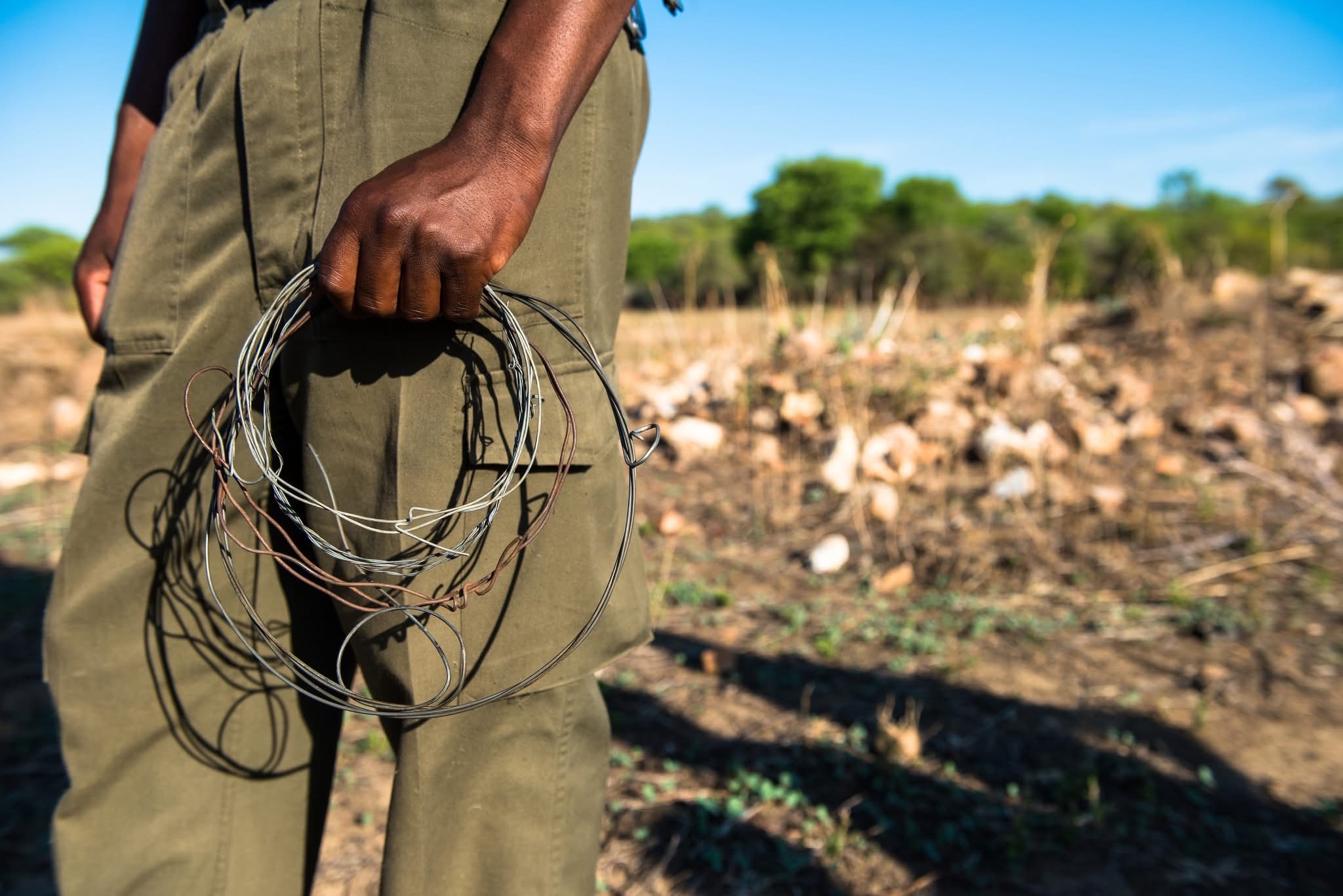
Wire snares continue to take a heavy toll on wildlife in the forests surrounding Hwange National Park and the Victoria Falls wildlife corridors, despite intensified anti-poaching efforts.

Advertisement

Figures from the Zimbabwe Parks and Wildlife Management Authority (ZimParks) show that 1 760 wire snares were recovered in Hwange National Park and the Victoria Falls area in 2024.

In the first ten months of 2025, a further 1 048 snares were removed, underscoring the persistence of illegal snaring in one of southern Africa’s most important conservation landscapes.

ZimParks says snaring is most common along park boundaries and buffer zones, particularly around Sinamatella, Hwange Main Camp, Matetsi and Robins Camp, as well as in nearby communities such as Dete and Mambanje.

Advertisement

“Our teams remain actively deployed on the ground, conducting regular patrols and monitoring exercises to combat snaring and other illegal activities,” ZimParks said in a written response. “This consistent field presence has been instrumental in safeguarding wildlife populations.”

However, conservation organisations operating in these areas say the rising number of recovered snares points to an escalating problem rather than success.

Painted Dog Conservation (PDC), which runs extensive anti-poaching patrols in and around Hwange, describes wire snares as one of the most indiscriminate threats to wildlife.

Advertisement

“Poachers are quite skilled and know what they are targeting,” said David Kuvaoga, operations director at PDC. “But the snare itself is not selective.”

He said animals of all sizes are caught.

“We have seen elephants trapped by the trunk, lions, buffalo, giraffe and painted dogs,” Kuvaoga said. “Once an animal is caught, it can suffer for hours or days. Many die without ever being seen.”

Advertisement

PDC rangers removed more than 3 500 wire snares in 2024 across Hwange, the Gwayi Valley and surrounding forestry areas.

“For every snare we remove, there are animals that have already been injured or killed,” he added.

In the Victoria Falls area, the Victoria Falls Anti-Poaching Unit (VFAPU) has reported a steady increase in snaring incidents, particularly during the dry season when wildlife movements intensify.

Advertisement

VFAPU recorded 59 snares recovered in September 2025 and 54 in October, alongside confirmed wildlife losses including buffalo and hyena.

“Animals lost to poaching is always a bitter pill to swallow,” VFAPU said in its October operational report. “Sadly, we lost three animals that we know of. From every case, we learn more about how these poaching groups operate.”

VFAPU said the regular recovery of snares reflects active and ongoing poaching, prompting expanded patrols in collaboration with ZimParks and neighbouring ranger units.

Advertisement

At the Conservation Wildlife Fund (CWF) in Hwange, conservationists caution against viewing high snare recovery figures as progress.

“It is difficult to describe collecting snares as success,” said Debra Ogilvie-Roodt of CWF. “Success would be seeing fewer snares being set in the first place.”

She said snares remain lethal long after they are placed.

Advertisement

“A snare doesn’t stop killing once it’s set,” Ms Ogilvie-Roodt said. “Unless it is found and removed, it will continue to trap animals. We have seen lions with snares around their necks, giraffes caught and elephants injured. Many do not survive.”

ZimParks acknowledges the scale of the challenge and says it is intensifying enforcement and cooperation with conservation partners.

The authority works with organisations including Painted Dog Conservation, Conservation Wildlife Fund, Friends of Hwange, Dete Animal Rescue Trust, Victoria Falls Anti-Poaching Unit and Victoria Falls Wildlife Trust, many of which operate outside protected areas where most snares are set.

Advertisement

“These partners play a critical role in early detection and rapid response,” ZimParks said.

ZimParks says its anti-snaring strategy includes increased law-enforcement patrols, de-snaring operations, sniffer dogs, intelligence networks, technology such as drones and camera traps, and community engagement through programmes like CAMPFIRE.

The authority warns that snaring threatens not only biodiversity but also livelihoods.

Advertisement

“Snaring poses a serious ecological threat and undermines wildlife-based tourism, which is a major revenue earner for local communities and the country,” ZimParks said.

SOURCE: CITE

Advertisement
Continue Reading
Click to comment

Leave a Reply

Your email address will not be published. Required fields are marked *

National

MPs challenge Government on fertiliser delays, livestock disease prevention and rural roads in Parliament

Published

on

BY NOKUTHABA DLAMINI

Members of Parliament pressed Government ministers on pressing issues affecting farmers and rural communities during oral questions at the beginning of yesterday’s parliamentary sitting, according to the Hansard record released from the Parliament of Zimbabwe.

Advertisement

MP Kudakwashe Mananzva raised concerns about delays in the distribution of critical fertiliser following reports that Ammonium Nitrate (AN) had not yet reached farmers despite good rains this season.

“This year we received good rains and we received fertiliser compound D but we did not receive the Ammonium Nitrate (AN). What is the Government policy to make sure that people receive their AN fertiliser in time?” the MP asked, prompting an immediate response from the Minister of Justice, Legal and Parliamentary Affairs, Ziyambi Ziyambi.

In reply, Minister Ziyambi acknowledged logistical challenges facing distribution agencies but stressed that efforts were underway to address the delays. “They experienced some delays in terms of transportation,” he said, adding that authorities had pledged to ensure AN fertiliser was disbursed and that “when the rains recommence, farmers will continue farming and we will make sure farmers will receive their fertilisers.” He concluded with a pledge to “fight to make sure that all fertilisers are disbursed in time,” reflecting Government’s commitment to agricultural support.

Advertisement

In the same session, Patrick Sagandira, the elected Member of Parliament for Makoni Central, raised concern about the spread of livestock diseases affecting cattle in the wake of heavy rains, with particular reference to January disease, which devastates herds during the rainy season. 

Sagandira asked: “What is the Government policy in making sure that farmers get medication for their livestock, especially the January disease?”

Minister Ziyambi reiterated Government advice on preventative measures rather than direct treatment. “To avoid January disease… every week, farmers are expected to spray the cattle or there must be dip tanks,” he said, noting that the Ministry had distributed “some tick grease to farmers in the rural areas” to help curb infestations and disease transmission.

Advertisement

Turning to critical infrastructure,Tendai Pinduka questioned the Minister of Transport and Infrastructural Development, Felix Mhona, on Government policy regarding rural roads, many of which have been damaged by recent rainfall.

“Most of the roads, especially those in rural areas, have been eroded by rainfall,” Pinduka said, asking when fuel allocations for road rehabilitation would be released to councils.

Minister Mhona explained that responsibilities for road maintenance are divided among authorities, with rural district councils and agencies like RIDA responsible for specific networks. He stressed that Government, through the Zimbabwe National Roads Administration (ZINARA) and the Emergency Roads Rehabilitation Programme Phase 2 (ERRP2), would support councils.

Advertisement

“We are pleading with the Rural District Councils that they must give us names of the roads and the kilometres that need to be rehabilitated,” he told MPs, adding that monitoring would ensure fuel disbursed was used for its intended purpose.

Supplementary questions further highlighted concerns about damaged bridges critical for access to schools and clinics. In response, Minister Mhona stressed the importance of collaboration between provincial engineers, councils and the Ministry to ensure “bridges can be rehabilitated swiftly.”

On frustration from MPs about failure to access fuel due to prior reporting shortfalls, the Minister said the Ministry had found solutions in some cases, including allocating further fuel while addressing accountability concerns.

Advertisement

Finally, questions arose about deteriorating town roads. Minister Mhona clarified that urban road networks fall under local authority jurisdiction, but reaffirmed Government commitment through ERRP2 to step in when needed, stating that “no place and no one is going to be left behind.”


Advertisement
Continue Reading

Hwange

Three-year-old girl killed in crocodile attack near Matetsi River Bridge

Published

on

BY NOKUTHABA DLAMINI 

A three-year-old girl from Matetsi in Hwange District, Matabeleland North Province, was killed by a crocodile on Tuesday evening while playing near the Matetsi River Bridge along the Bulawayo–Victoria Falls Highway.

Advertisement

According to ZBC, the toddler was with her five-year-old brother as their mother, Tariro Tsondzowore, was fishing nearby when the attack occurred. Authorities said the mother had briefly stepped away, leaving the children close to the riverbank, when a crocodile suddenly emerged from the water, struck and dragged the girl into the river.

People who were nearby reportedly attempted to scare the reptile away but were unsuccessful.

The child, who was from Masikili Village under Chief Shana in Hwange District, was taken before help could arrive.

Advertisement

Zimbabwe Parks and Wildlife Authority (ZimParks) rangers responded to the scene and shot one crocodile. Authorities confirmed that partial human remains have since been recovered, while efforts to retrieve additional remains are continuing.

Additional details of the incident were widely shared on social media platforms, where images from the scene show a sombre gathering along the riverbank. In the footage, several community members stand watching as uniformed personnel are seen in the water. A ZimParks vehicle is parked close to the river, while small groups of people look on from the grassy embankment, underscoring the gravity of the situation.

The tragedy has once again brought into focus the growing challenge of human-wildlife conflict in Zimbabwe, particularly in communities located near rivers and wildlife corridors.

Advertisement

Local authorities have urged residents, especially those living near riverbanks, to exercise extreme caution and remain vigilant against the dangers posed by crocodiles and other wild animals.

VicFallsLive will continue to follow developments on this story.

Advertisement
Continue Reading

In the community

Low environmental crime prosecutions raise concern in Matabeleland North

Published

on

BY STAFF REPORTER

The National Prosecuting Authority (NPA) has raised alarm over the low number of environmental cases recorded and prosecuted in Matabeleland North Province, warning that weak enforcement risks emboldening offenders.

Advertisement

Speaking at a multi-stakeholder engagement meeting organised by the Environmental Management Agency (EMA), Hwange-based public prosecutor Pride Mharadza said fewer than 15 EMA-related cases were recorded in the province in 2025, describing the situation as “deeply disappointing.”

“In Hwange, we only received one case last year involving the transport of hazardous substances without a permit,” Mharadza said. The accused, who had transported mercury, was convicted and fined US$500, with four months’ imprisonment suspended for five years.

Mharadza said Victoria Falls recorded no EMA cases in 2025, calling it “worrying that a whole station did not receive a single case.”

Advertisement

Binga recorded two cases involving cyanide, one resulting in six months’ imprisonment and forfeiture of the chemical, while the other could not proceed to court due to the absence of a forensic report.

In Inyathi, a single case involved implementing a project without an Environmental Impact Assessment (EIA) certificate, resulting in a US$200 fine. Nkayi recorded one case of prohibited alluvial mining, leading to suspended sentences for 19 accused persons.

Meanwhile, Tsholotsho and Lupane reported no EMA cases during the year.

Advertisement

Mharadza said delays in forensic reports, limited EMA representation, and weak collaboration between police and prosecutors were major obstacles to successful prosecution.

“The overall picture points to weak environmental law enforcement rather than an absence of environmental crimes,” she said. “Half the stations did not receive any EMA cases. Some prosecutors even said they do not know how to handle EMA cases because they are not receiving them.”

Mharadza urged law enforcement and prosecutors to take action, saying that successful prosecutions would “send a message to society” and strengthen environmental protection across the province.

Advertisement

SOURCE: CITE

Advertisement
Continue Reading

Trending

Copyright © 2022 VicFallsLive. All rights reserved, powered by Advantage