
Slider
Conservation’s unfinished business

BY RHETT AYERS BUTLER
SUMMARY:
- A recent Nature paper argues that many persistent failures in conservation cannot be understood without examining how race, power, and historical exclusion continue to shape the field’s institutions and practices.
- The authors contend that conservation’s colonial origins still influence who holds decision-making authority, whose knowledge is valued, and who bears the social costs of environmental protection today.
- As governments pursue ambitious global targets to expand protected areas, the paper warns that conservation efforts risk repeating past injustices if Indigenous and local land rights are not recognized and upheld.
- To address these challenges, the authors propose a framework centered on rights, agency, accountability, and education, emphasizing that more equitable conservation is also more durable.
Conservation often presents itself as a technical enterprise: how much land to protect, which species to prioritize, what policies deliver results. A recent paper in Nature argues that this framing misses something fundamental. Many of the field’s most persistent failures, the authors contend, cannot be understood without confronting how race, power, and historical exclusion continue to shape conservation practice today.
The paper, A Framework for Addressing Racial and Related Inequities in Conservation, does not claim that conservation is uniquely flawed, nor that injustice is universal across all projects. Its argument is narrower and more pointed. Modern conservation, it says, emerged from a colonial context that treated land as empty and people as obstacles. Those assumptions were never fully dismantled. They survive in subtler forms, influencing whose knowledge counts, who bears the costs of protection, and who decides what success looks like.

The authors, led by Moreangels Mbizah of Wildlife Conservation Action in Zimbabwe, trace conservation’s institutional roots to the late nineteenth century, when protected areas were established across colonized landscapes through forced removals and restrictions on customary land use. Indigenous peoples and rural communities were often excluded in the name of preserving “pristine” nature. Although conservation has evolved since then, the paper argues that these early patterns still shape present-day practice through what it calls “path dependencies”: inherited norms that continue to privilege outside expertise and centralized control.
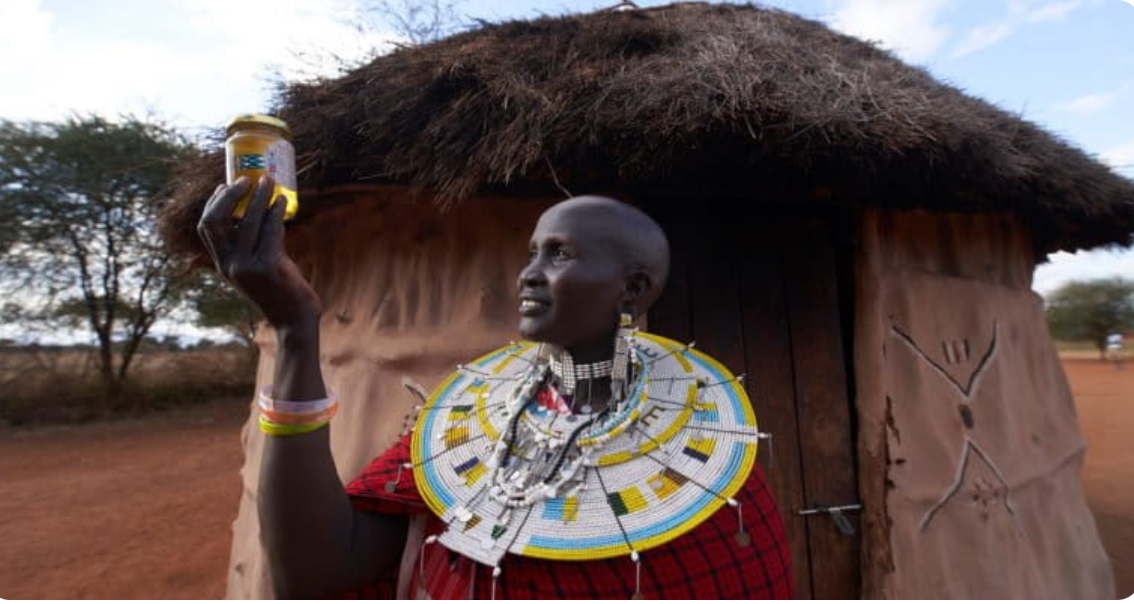
One consequence, according to the authors, is the persistent marginalization of Indigenous peoples and local communities, particularly in the Global South. These groups are frequently described as “stakeholders” or “beneficiaries” rather than rights-holders with authority over their lands. The language may sound neutral, the paper suggests, but it often masks unequal power relationships. Even well-intentioned projects can reproduce older hierarchies if communities are consulted only after priorities are set, or if participation is limited to implementation rather than decision-making.
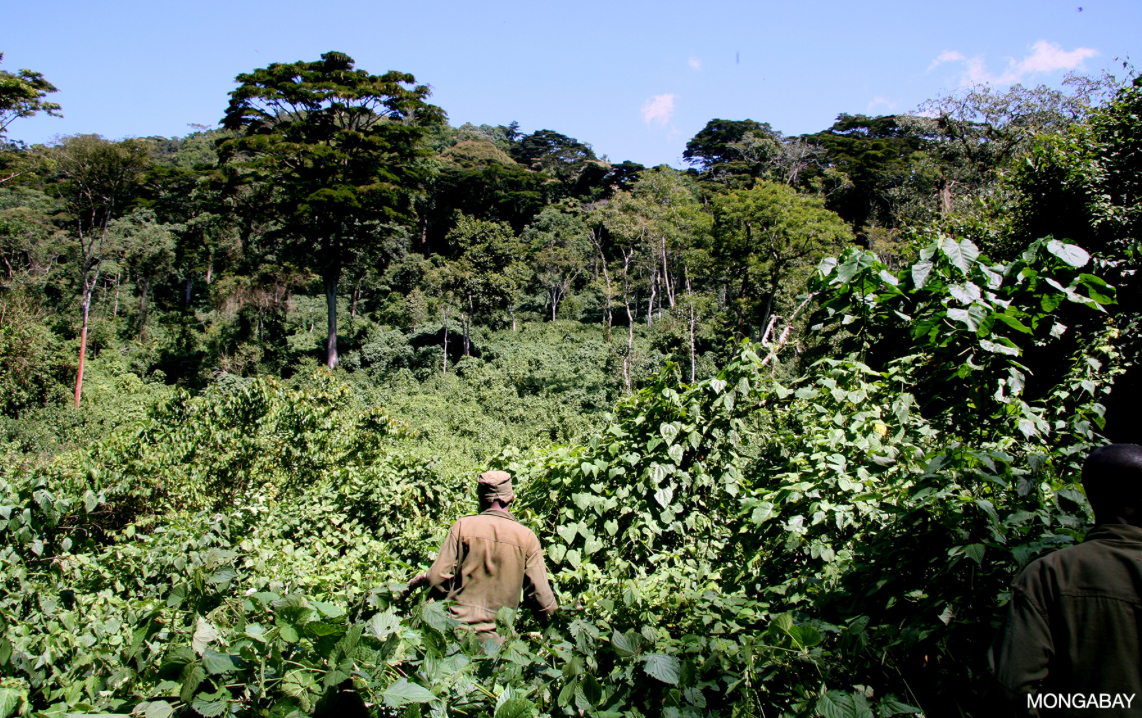 The paper pays particular attention to the current push to expand protected areas to cover 30% of the planet by 2030. In principle, the authors argue, this target could support more pluralistic forms of conservation, including Indigenous-managed territories and community conservancies. In practice, they warn, countries lacking legal mechanisms to recognize customary land rights may default to state-led models that repeat earlier injustices. Conservation success, measured narrowly through ecological indicators, can come at high social cost when human rights are treated as secondary concerns.
Another theme the authors examine is the way conservation narratives value animals and people. Campaigns aimed at audiences in Europe and North America often focus on the moral worth of individual animals, sometimes in ways that implicitly devalue the lives of people who live alongside wildlife. When human–wildlife conflict results in injury or death, local suffering may receive little attention, while the killing of a charismatic animal can provoke global outrage. The authors argue that such asymmetries are not incidental; they reflect deeper processes of “othering” that shape whose lives are seen as grievable or deserving of protection.
The paper is careful not to frame these dynamics as purely racial in a narrow sense. Instead, it emphasizes intersections of race, class, geography, and political power. Urban elites in low-income countries, the authors note, may exercise authority over rural communities in ways that mirror global North–South inequalities. Conservation led by local actors is not automatically just. What matters is how power is distributed and whether affected communities retain meaningful agency.
To address these patterns, the authors propose what they call the RACE framework: Rights, Agency, Challenge, and Education. The framework is not presented as a checklist or a universal solution. Rather, it is intended as a lens through which conservation organizations, researchers, and funders might examine their own practices.
Rights, in this framing, are foundational. The paper argues that conservation cannot be sustainable if it undermines basic human rights, including rights to land, culture, and self-determination. Agency follows from this: communities must have real authority over decisions that affect their territories, not merely advisory roles. Challenge refers to the obligation, particularly among powerful institutions and individuals, to speak out when conservation practices cause harm or exclusion. Education, finally, involves confronting conservation’s own history and recognizing knowledge systems that exist outside Western scientific traditions.
The authors stress that this is not about revisiting past wrongs for their own sake. Understanding history, they argue, is necessary to avoid repeating it under new banners. Nor is the framework framed as an attack on conservation itself. On the contrary, the paper insists that conservation outcomes are likely to be stronger when communities closest to the land are recognized as stewards rather than obstacles.
There is a pragmatic strand running through the analysis. Conservation, the authors note, increasingly operates in a politically fragmented world, with declining public funding and growing skepticism toward international institutions. Projects that lack local legitimacy are more vulnerable to conflict and reversal. Addressing inequities, in this sense, is not only an ethical concern but also a strategic one.
The paper does not pretend that change will be easy. Power, once accumulated, is rarely surrendered voluntarily. Nor does it suggest that conservation can resolve broader social injustices on its own. Its claim is more modest, and perhaps more demanding: that conservation must stop treating inequality as an external issue and recognize how deeply it is woven into the field’s own structures.
For a discipline accustomed to measuring success in hectares and population counts, this is an uncomfortable proposition. But the authors’ central point is straightforward. Conservation is about relationships—between people and nature, and among people themselves. Ignoring those relationships does not make them disappear. It only ensures that their consequences are felt later, often by those with the least power to absorb them.
SOURCE: MONGABAY


-

 Slider3 years ago
Innscor launches brewery to produce Nyathi beer
-

 National5 years ago
In perched rural Matabeleland North, renewable energy is vital
-

 Tourism and Environment4 years ago
Strive Masiyiwa’s daughter opens luxury Victoria Falls lodge
-

 Special reports4 years ago
Tinashe Mugabe’s DNA show’s popularity soars, causes discomfort for some
-

 Opinion4 years ago
A street art mural in Zimbabwe exposes a divided society
-

 National4 years ago
Victoria Falls’ pilot dies in helicopter crash
-

 National3 years ago
Commission of inquiry findings fail to be tabled as Victoria Falls councillors fight
-

 National3 years ago
Hwange coal miner fires workers over salary dispute