Connect with us

Slider

Aston Villa feels injured Marvelous Nakamba’s absence

Published

on

BY PATRICK ROWE

When Steven Gerrard was appointed as Aston Villa boss many fans and pundits anticipated a positive impact on the midfielders already at the club.

Advertisement

None of which felt the benefit of having Gerrard’s expertise in charge more than Marvelous Nakamba.

Nakamba started every single game for Villa until suffering a severe knee injury in the fixture against Liverpool at Anfield, and in his absence Villa have looked increasingly more vulnerable defensively.

Speaking on the impact of Nakamba in the early stages of his tenure, Gerrard stated this: “We knew he was a good player, but we’re really pleased with how he’s gone about it in the past couple of weeks.”

Advertisement

Nakamba was a key component in the opening games of the Gerrard era and his impact was felt right from the start.

In the first two games against Brighton and Crystal Palace Nakamba recorded seven tackles, two blocks, two interceptions and a 92% pass accuracy.

In these two fixtures, Villa limited their opponents to seven shots per game, a 0.65 expected goals (xG) value and 12 shot creating actions.

Advertisement

However, in the last five games opponents have averaged just under 17 shots, 1.2 xG and 21 shot creating actions.

The absence of Marvelous Nakamba has been felt dramatically as Villa look easier to pick apart and create against.

Douglas Luiz has attempted to fill the void the Zimbabwean has left, but sadly does not offer the same defensive cover when operating as the holding midfielder.

Advertisement

Villa have shown their resilience at times, as outlined in their second half defensive performance in the 1-0 win against Everton prior to the winter break.

However, given the volume of shots and chances they are now allowing, performances similar to the Leeds United one seem inevitable at times. – Birmingham Mail 

Advertisement

Slider

Nominations open for 2026 Tusk Conservation Awards

Published

on

BY WANDILE TSHUMA 

Nominations have opened for the 14th edition of the Tusk Conservation Awards, offering global recognition and £225,000 (about UGX 1.1 billion) in grant funding to Africa’s leading conservationists.

Advertisement

The awards, held in partnership with Ninety One, celebrate African-led solutions protecting wildlife, landscapes and livelihoods. Three winners will be selected from hundreds of nominations across the continent and honoured at a ceremony expected to be held in London later this year.

This year’s prize money will be distributed across three categories: £100,000 (UGX 480 million) for the Prince William Award, £75,000 (UGX 360 million) for the Tusk Award, and £50,000 (UGX 240 million) for the Tusk Wildlife Ranger Award.

Speaking at last year’s awards, Tusk’s Royal Patron, Prince William, said communities and local conservation leaders often provide the most practical solutions to sustaining biodiversity and natural landscapes.

Advertisement

“It is so often communities and local conservation leaders who provide the practical solutions to how we can best sustain our precious natural landscapes and vital biodiversity,” he said. “Identifying and supporting locally-led conservation has always been at the heart of Tusk’s ethos.”

Since their launch in 2013, the awards have recognised 61 winners and finalists from 23 African countries. Past recipients have used grant funding to expand ranger patrols, secure wildlife corridors, equip community conservancies and create sustainable livelihoods linked to conservation.

Examples of supported initiatives include protecting gorillas in eastern Congo, conserving turtles in Sierra Leone, restoring forests in Madagascar and dismantling poaching syndicates in Zimbabwe. Organisers say the funding is designed to be catalytic, enabling winners to scale their impact and attract long-term investment.

Advertisement

Nick Bubb, Chief Executive Officer of TUSK, said the awards highlight the courage and commitment of individuals working in challenging and often dangerous conditions.

“We encourage anyone who knows an individual or ranger team who has made a significant impact on wildlife conservation to nominate them for this once-in-a-lifetime opportunity to have their achievements recognised on a global stage,” Bubb said.

In a significant development this year, the Tusk Wildlife Ranger Award has been expanded to recognise ranger teams alongside individual rangers, reflecting what organisers describe as the collaborative nature of modern conservation efforts.

Advertisement

The expanded category aligns with Tusk’s broader ranger programmes, including the Wildlife Ranger Challenge and the Ranger Welfare and Standards Initiative, which supports more than 6,200 rangers with training, equipment and insurance.

Nominations are open to conservation leaders across Africa and do not require nominees to be existing Tusk partners. However, individuals cannot nominate themselves and must be put forward confidentially by someone familiar with their work.

Nominations will close on the 26th of April and must be submitted online.

Advertisement

Continue Reading

National

Government launches nationwide dog vaccination drive amid surge in rabies cases

Published

on

BY WANDILE TSHUMA 

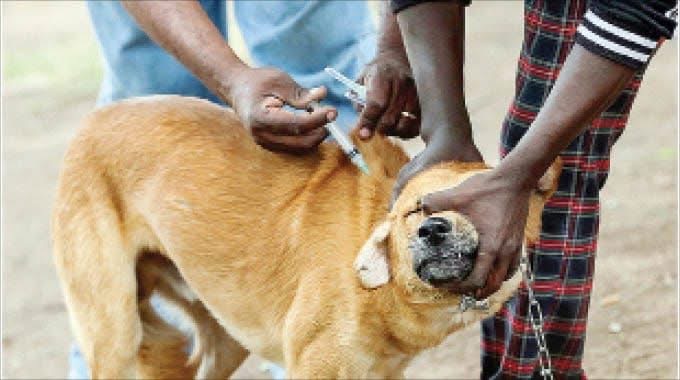
The Government has launched an urgent nationwide dog vaccination campaign following a surge in rabies cases across Zimbabwe.

Advertisement

In a statement posted over the weekend, the Ministry of Lands, Agriculture, Fisheries, Water and Rural Development said the country is experiencing a significant rise in rabies infections, largely linked to domestic dogs and wild jackals.

Permanent Secretary Prof. Obert Jiri confirmed that 650,000 doses of rabies vaccine have been secured from Botswana — exceeding the country’s usual annual requirement — to contain the escalating threat.

The Ministry said the campaign will be rolled out in the coming weeks across all provinces, targeting hotspots near national parks and conservancies, as well as urban areas that have recorded increasing cases.

Advertisement

Prof. Jiri stressed the urgency of seeking immediate medical attention following dog bites, warning that rabies is fatal in humans once symptoms appear.

He appealed to dog owners to ensure their pets are vaccinated, saying collective action remains the primary defence against the deadly disease and is critical in preventing further fatalities.

Advertisement
Continue Reading

National

Matabeleland North flags aid discrimination as provinces record widespread violations

Published

on

BY NOKUTHABA DLAMINI 

Matabeleland North recorded cases of discrimination in government aid distribution and political interference in community leadership, as human rights violations were reported across all provinces in January, according to the Zimbabwe Peace Project (ZPP).

Advertisement

In Matabeleland North, five violations were documented.

“On 9 January 2026, in Ward 29 (Emphafeni), farmers reported irregularities in agricultural input distribution, including selective allocation of groundnuts and maize seed to ruling party supporters, and sharing of 50kg fertiliser bags among three farmers, raising concerns over fairness and equal access to government assistance,” the report states.

In Binga South, a village secretary was removed from his position “for not aligning with ruling party positions, affecting his political rights and freedom of association.”

Advertisement

In Matabeleland South, four violations were recorded, mainly involving political intimidation. In Gwanda, individuals allegedly invaded Vubachikwe Mine claiming political backing, while in Bulilima West, villagers were reportedly threatened with losing land under the land reform programme if they did not support the “2030” agenda.

Bulawayo recorded two violations, including a case where “a visually impaired woman was denied bus transport from Bulawayo to South Africa despite having valid travel documents and fare, raising concerns of discrimination based on disability.” Residents in Old Magwegwe also reported prolonged sewage blockages exposing families to health risks.

Midlands province recorded 13 violations, including environmental concerns in Redcliff and Kwekwe over potential water contamination linked to gold processing chemicals. In Zhombe, political interference prevented enforcement of a court sentence in an assault case. In Silobela, police disrupted a Gukurahundi memorial service organised by a human rights group.

Advertisement

Masvingo recorded 19 violations, including the assault and arrest of a female vendor at SimRac Shopping Complex. The report says her goods were destroyed in what it describes as harassment of informal traders. Patients at Mashoko Hospital and Gawa Clinic also faced high user fees and limited medication.

Mashonaland West recorded 10 violations, including alleged irregularities in agricultural input distribution in Magunje and assault linked to ruling party supporters in Sanyati.

Mashonaland East documented six violations. In Murehwa North, “Provincial Chairperson and Minister Daniel Garwe threatened individuals in Ward 30, warning that those supporting the opposition CCC would be excluded from community programs and that anyone associating with CCC members could face violent reprisals.”

Advertisement

Mashonaland Central recorded four violations, including exclusion of community members, including persons with disabilities, from presidential agricultural inputs in Mt Darwin South, and learners being denied access to Grade 7 results over unpaid fees.

Harare recorded 16 violations, including assaults linked to political intolerance, disruption of civic gatherings, politicisation of borehole water access in Glenview, and the detention of a political activist over a planned protest.

Manicaland recorded the highest number of violations at 31. ZPP said incidents involved “state security agents, ruling party members, war veterans, and local authorities,” including intimidation of a human rights defender in Chimanimani and disruption of a community meeting in Nyanga South.

Advertisement

Overall, ZPP said the January data reflects “continued structural and institutional challenges in the protection, promotion, and fulfilment of human rights,” reinforcing the need for strengthened accountability and rights-based governance across the country.

Advertisement
Continue Reading

Trending

Copyright © 2022 VicFallsLive. All rights reserved, powered by Advantage