Connect with us

Tourism and Environment

US varsity develops software to tackle lion poaching

Published

on

BY NOKUTHABA DLAMINI 

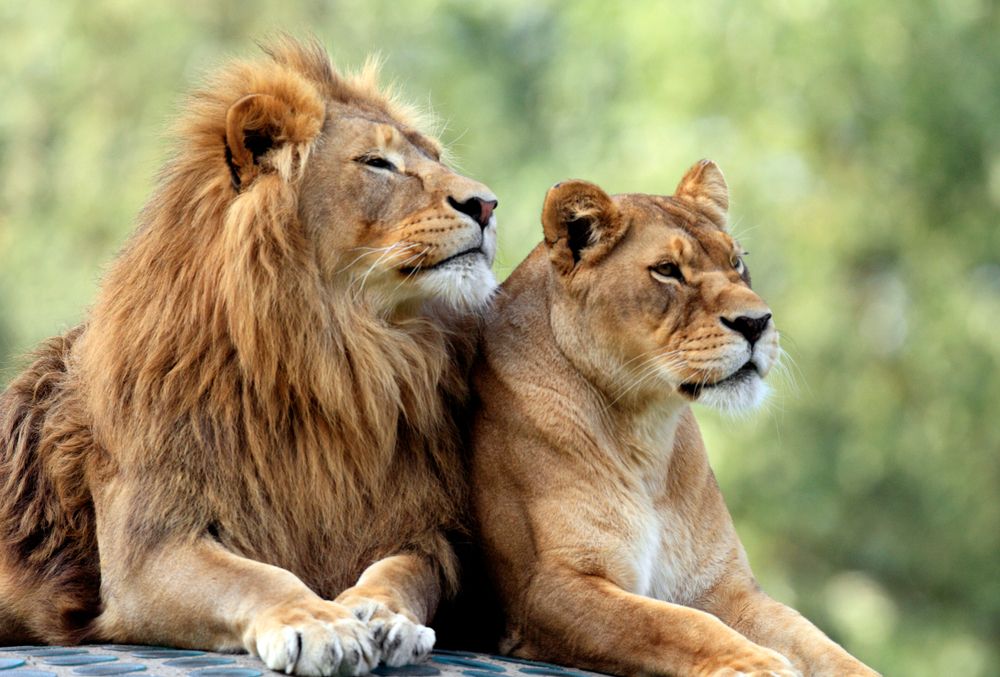
A top university in the United States of America is working on potentially ground-breaking software to fight help end the poaching of lions and trafficking of their body parts.

Advertisement

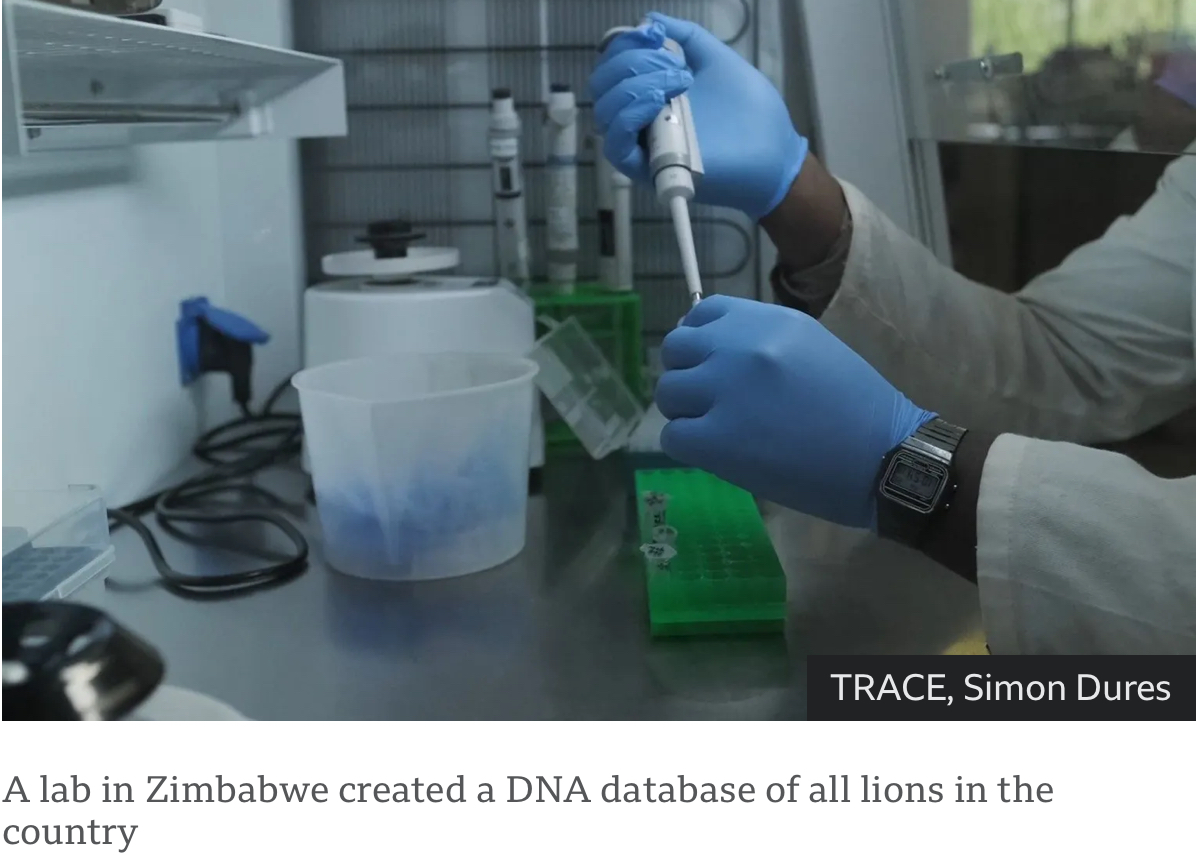
The University of Illinois says the software will track lion populations and trafficked lion products, based on mitochondrial DNA sequences, which has the potential to identify regions where poaching of the big cats.

VukaNow Activity, a USAid sponsored initiative to combat wildlife crime, in a statement to mark World Lion Day on August 10, said it was supporting the university’s efforts to develop the “Lion Localizer” given that Africa’s population is under threat.

Zimbabwe is one of the countries where lions are poached for their parts and skin.

Advertisement

“Africa’s lion population has almost halved in the past 25 years, due to threats such as illegal wildlife trade, bush meat poaching, habitat loss and fragmentation, and human-lion conflict, this technology is a timely addition to the fight against this decline,” VukaNow Activity said.

Alfred Roca, a professor in the department of animal sciences at the University of Illinois, and is heading up the innovative project, said the software will help law enforcement agencies to tackle the poaching menace.

“Smuggled wildlife products may be moved far from their original geographic source, and may be consolidated or travel across various countries, before being confiscated by authorities in a transit or destination country,” Roca sai.

Advertisement

“With lions increasingly subject to poaching for their teeth, claws, and other bones, we wanted to develop software and databases to allow law enforcement and forensics laboratories the capacity to examine the geographic source of the lions using DNA.”

According to Wesley Au, a graduate student working on the project, the Lion Localizer is interactive software that utilises a database of mitochondrial DNA sequences obtained from published studies, in order to gain insight on the possible origins of confiscated lion body parts.

“A mitochondrial DNA sequence, which may easily be produced using DNA extracted from lion tissue samples, is used as a query for the software,” Au said.

Advertisement

“The software creates a list of all the locations in Africa from which lions have been reported to have a particular DNA sequence, and plots these locations on a map of Africa.

“This makes it possible to identify regions from which the lions could potentially have been poached.”

VukaNow Activity said the knowledge will assist in the on-going fight against wildlife crime, by suggesting that lions may be from a particular region in Africa, and by excluding the likelihood that the lions came from other regions.

Advertisement

“This will provide law enforcement with information helpful towards further investigation,” it added.

“The software can also provide insight into which lion populations have either been recently targeted, or are being repeatedly targeted, by poachers, allowing for mitigation measures to be implemented.

“Importantly, law enforcement forensics laboratories will be able to gather this information, using the Lion Localizer, without the need for species-specific expertise or a great investment in time and limited resources.”

Advertisement

Deborah Kahatano, the chief of party for USAID’s VukaNow Activity, said they were thrilled to have been able to support the development of such software through a grant, as it was closely aligned with the objectives of their initiative.

“The software will act as an essential addition to the tools we have available to combat wildlife crime in the region,”Kahatano said.

” In addition, it will support the Southern African Development Community in implementing its Law Enforcement and Anti-Poaching (LEAP) strategy, by furthering the LEAP objective of minimising wildlife crimes and illegal trade.”

Advertisement

VukaNow Activity said while the software currently uses information from a fragment of DNA, as additional DNA sequences and markers become available for lions, it should be possible to increase the accuracy and preciseness of the estimates of the geographic origin of lion products.

Roca also noted that going forward, the software and methods developed could potentially also be applied to other trafficked species for which geographically-referenced DNA sequences are available.

 

Advertisement

Continue Reading
Click to comment

Leave a Reply

Your email address will not be published. Required fields are marked *

Slider

Wire snares continue to kill wildlife around Hwange, despite crackdown

Published

on

BY NOKUTHABA DLAMINI

Wire snares continue to take a heavy toll on wildlife in the forests surrounding Hwange National Park and the Victoria Falls wildlife corridors, despite intensified anti-poaching efforts.

Advertisement

Figures from the Zimbabwe Parks and Wildlife Management Authority (ZimParks) show that 1 760 wire snares were recovered in Hwange National Park and the Victoria Falls area in 2024.

In the first ten months of 2025, a further 1 048 snares were removed, underscoring the persistence of illegal snaring in one of southern Africa’s most important conservation landscapes.

ZimParks says snaring is most common along park boundaries and buffer zones, particularly around Sinamatella, Hwange Main Camp, Matetsi and Robins Camp, as well as in nearby communities such as Dete and Mambanje.

Advertisement

“Our teams remain actively deployed on the ground, conducting regular patrols and monitoring exercises to combat snaring and other illegal activities,” ZimParks said in a written response. “This consistent field presence has been instrumental in safeguarding wildlife populations.”

However, conservation organisations operating in these areas say the rising number of recovered snares points to an escalating problem rather than success.

Painted Dog Conservation (PDC), which runs extensive anti-poaching patrols in and around Hwange, describes wire snares as one of the most indiscriminate threats to wildlife.

Advertisement

“Poachers are quite skilled and know what they are targeting,” said David Kuvaoga, operations director at PDC. “But the snare itself is not selective.”

He said animals of all sizes are caught.

“We have seen elephants trapped by the trunk, lions, buffalo, giraffe and painted dogs,” Kuvaoga said. “Once an animal is caught, it can suffer for hours or days. Many die without ever being seen.”

Advertisement

PDC rangers removed more than 3 500 wire snares in 2024 across Hwange, the Gwayi Valley and surrounding forestry areas.

“For every snare we remove, there are animals that have already been injured or killed,” he added.

In the Victoria Falls area, the Victoria Falls Anti-Poaching Unit (VFAPU) has reported a steady increase in snaring incidents, particularly during the dry season when wildlife movements intensify.

Advertisement

VFAPU recorded 59 snares recovered in September 2025 and 54 in October, alongside confirmed wildlife losses including buffalo and hyena.

“Animals lost to poaching is always a bitter pill to swallow,” VFAPU said in its October operational report. “Sadly, we lost three animals that we know of. From every case, we learn more about how these poaching groups operate.”

VFAPU said the regular recovery of snares reflects active and ongoing poaching, prompting expanded patrols in collaboration with ZimParks and neighbouring ranger units.

Advertisement

At the Conservation Wildlife Fund (CWF) in Hwange, conservationists caution against viewing high snare recovery figures as progress.

“It is difficult to describe collecting snares as success,” said Debra Ogilvie-Roodt of CWF. “Success would be seeing fewer snares being set in the first place.”

She said snares remain lethal long after they are placed.

Advertisement

“A snare doesn’t stop killing once it’s set,” Ms Ogilvie-Roodt said. “Unless it is found and removed, it will continue to trap animals. We have seen lions with snares around their necks, giraffes caught and elephants injured. Many do not survive.”

ZimParks acknowledges the scale of the challenge and says it is intensifying enforcement and cooperation with conservation partners.

The authority works with organisations including Painted Dog Conservation, Conservation Wildlife Fund, Friends of Hwange, Dete Animal Rescue Trust, Victoria Falls Anti-Poaching Unit and Victoria Falls Wildlife Trust, many of which operate outside protected areas where most snares are set.

Advertisement

“These partners play a critical role in early detection and rapid response,” ZimParks said.

ZimParks says its anti-snaring strategy includes increased law-enforcement patrols, de-snaring operations, sniffer dogs, intelligence networks, technology such as drones and camera traps, and community engagement through programmes like CAMPFIRE.

The authority warns that snaring threatens not only biodiversity but also livelihoods.

Advertisement

“Snaring poses a serious ecological threat and undermines wildlife-based tourism, which is a major revenue earner for local communities and the country,” ZimParks said.

SOURCE: CITE

Advertisement
Continue Reading

Slider

From skins to steaks — How wildlife trade is fueling communities in South Africa

Published

on

BY NOKUTHABA DLAMINI 

In the small town of Bela-Bela, a quietly flourishing business is unfolding — one that turns wildlife into livelihood, education, and economic opportunity. On a humid afternoon, we walked into the operations of Estelle Nel Taxidermy (and its parent networks), where rows of beautiful animal mounts — from antelope horns to zebra skins, skulls to full-body trophies — line the walls.

Advertisement

But beyond the busts and custom mounts lies a deeper purpose: this is not simply a display of hunting trophies. It is a system of sustainable use — where animals that die naturally or are hunted legally are completely utilised: meat, skin, horns, bones — nothing goes to waste, and everything acquires value.

As we discovered from our conversations, this network extends beyond taxidermy. Adjacent to the showrooms are processing facilities, butcheries, and game-meat wholesalers — all integral to transforming South Africa’s wild fauna into a formal, regulated, and sustainable economy.

“This is home” — an artisan’s vocation

Advertisement

I sat down with Melanie Viljoen, who serves as Export Secretary at Estelle Nel Taxidermy. Her voice was calm, resolute.

“For me, it’s like this is home and it’s something that I love to do. I love art. I studied art at school. I can’t think of anything else I’d rather do.”

She told us she’s been with the business for thirteen to fourteen years. Over that time she’s mastered a unique craft. “I’ve found my niche,” she said, “and I’m not going anywhere.”

Advertisement

Melanie explained how the business flows: outfitters bring in international clients to hunt on private farms, then process the animals: trophy mounts for some, meat for others. Locals also bring animals — sometimes for trophies, sometimes just for meat. There is even “school-mount” work: smaller species, sometimes a mother and its young, carefully preserved — not just for hunters, but for children to touch and learn about wildlife up close.

“We mount animals that have died naturally or were hunted… we use everything, from the meat to the skins and curls. It’s a sustainable way of doing business, and everything has a monetary value.”

This, she says, is both business and passion — blending artistry, conservation, and commerce.

From workshops to global markets — taxidermy meets commerce

Advertisement

According to membership details o South African Taxidermy & Tannery Association, Estelle Nel Taxidermy offers a wide range of services: from mounting mammals, birds, reptiles; tanning skins and capes; cleaning, mounting and articulating skulls, bones, horns, tusks; to producing novelty leather items, polished horn décor, engraved bones, hoof lamps — even gunbags and furniture. They offer full export packing and crating services, and help clients ship internationally.

What this means is that skins, hides and trophies — once the culmination of a hunt — become far more than personal souvenirs. They become export commodities, contributing to livelihoods of artisans, packers, shippers, and everyone in between.

Yet, as Pieter Swart President of South African Taxidermy & Tannery Association  (SATTA)/chairman of SUCO-SA) told us, that path to global markets is not without obstacles.

“Certain airlines allow the shipping of these trophies. I think it’s about four airlines that you can ship them overseas, but the rest refuse to take their hunting trophies to destinations. As well as the sea shipments — there’s only one ship going to America every three months. The rest of the shipping lines refuse to take hunting trophies.”

Advertisement

He lamented the difficulty in logistics. And yet, he sees themselves as part of a broader — and misunderstood — effort. “This anti-animal works movement created the idea that hunting is killing the animals and destroying them to extinction — but that is actually quite the opposite,” he said. “More and more, the guys are farming the animals; that is creating a better future for the animals.”

In other words: regulated, sustainable use — of every part of the animal — can coexist with conservation, economic empowerment, and community upliftment.

Game meat: from farm to fork

Advertisement

Next door to the taxidermy showroom, we toured a modest but hygienic meat-processing Camo Meat facility, run by people like Ina Hechter. They explained that their business started small — in 2012 as a private processing butcher for animals from farms. Around 2017 they expanded into wholesale for local markets. Export remains limited, but local demand is growing.

Their meats include species typical of the South African game-meat industry: kudu, impala, springbok, wildebeest, zebra and others. What began as a niche — somewhat stigmatised — trade is slowly gaining acceptance. Some supermarkets and lodges are carrying game meat; more restaurants are offering “veld flavour.”

Ina told me that in times of drought — when traditional livestock farming may suffer — game-meat businesses often see increased activity. Farms with overstocked wildlife or animals unable to survive drought may harvest and sell meat, skins and other resources. In this way, what might have been a loss can become income, conservation, and food security.

Advertisement

“Our parks are so small that they can’t sustain all the animals that are there,” Ina said. “Especially in drought years … when it’s not raining a lot you will see they die and then they sell the animals.”M

She sees game meat not only as a business, but as part of a broader sustainable economy — offering healthy, lean protein to consumers, easing pressure on overburdened habitats, and circulating value in rural and peri-urban communities.

More than meat and trophies — a conservation-economy model

What struck me during the tour was how holistic the operation is. It isn’t just about hunters bringing back trophies. It’s about using every bit of what exists: meat, skins, hides, horns, bones — even skulls, and decorative by-products. From full-body mounts to polished horn décor, from retail game-meat packages to furniture made from hoofs: this is a full-value chain.

Advertisement

Companies like Estelle Nel Taxidermy are members of formal trade associations and provide professional services — tanning, mounting, packing, export documentation — and in doing so, they help formalize trade in wildlife products.

Meanwhile, the game meat industry — though historically informal — is slowly growing more regulated. According to a recent national biodiversity-economy strategy, game-meat production supports economic growth, food security, and employment. The most commonly produced and consumed species: impala, kudu, wildebeest, springbok.

In other words: when properly managed, this sector has the potential to transform perceptions of wildlife — from being simply “wild animals” to resources that can feed, employ and uplift entire communities.

Advertisement

Challenges — logistics, stigma, regulation

But it’s not all smooth. As Pieter Swart highlighted, export logistics remain a bottleneck: only a few airlines transport trophies; shipping lines are often reluctant; sea freight to markets like the United States may come only every few months. This makes it harder for the industry to scale globally.

Domestically, the market for game meat and wildlife products still battles cultural and regulatory stigma. Many people still frown at game meat; supermarkets and restaurants are only slowly integrating it.

Advertisement

Regulation is another issue: for the industry to be sustainable, wildlife needs to be farmed or managed responsibly, harvesting must follow quotas, and processing must meet health and safety standards. When abattoirs, tanneries, and exporting agents comply with regulation, this gives the industry legitimacy — but it also requires oversight, capacity, and buy-in from all stakeholders.

A snapshot

Our visit painted a picture of a wildlife economy that’s evolving: where skilled artisans turn skins, horns, skulls into enduring art; where processors supply game meat to homes, restaurants and hotels; where farms, outfitters, taxidermists, meat processors, exporters, and even children (learning from mounted displays) all form part of an ecosystem.

It’s a world that challenges simplistic ideas of wildlife as either “pristine wilderness” or “endangered species.” Instead, it shows how — if managed with respect, regulation, and purpose — natural resources can sustain livelihoods, build economies, and forge a bridge between conservation and commerce.

Advertisement

For many of those involved — from Melanie Viljoen to Ina Hechter and Pieter Swart — it’s not just business. It’s home. It’s art. It’s the future.

Advertisement
Continue Reading

Slider

Inside South Africa’s lion breeding debate: A field visit to Mabula Pro Safaris

Published

on

BY NOKUTHABA DLAMINI

At the heart of Bela-Bela’s Driepdrift area lies Mabula Pro Safaris — a private predator breeding facility that, to many outsiders, represents one of the most controversial aspects of South Africa’s wildlife industry. But for the Zimbabwe Parks and Wildlife Management Authority (ZimParks) delegation, which recently toured the facility together with myself as a journalist from Zimbabwe, the visit provided an unusual opportunity: to see the behind-the-scenes reality of a commercial hunting lion breeding operation, far from the images often circulated in global media.

Advertisement

Led by Stephen Palos, Vice-Chair of the Sustainable Use Coalition Southern Africa (SUCo-SA) and CEO of the Confederation of Hunters Associations of South Africa (CHASA), the tour included a close look at lions bred under the South African Predator Association (SAPA) standards.

Inside the sanctuary, the group viewed 52 lions — including 12 adult males and 11 cubs — living in structured social groups within medium-sized enclosures. The animals walked freely, with access to shade, water, and open space.

An earlier visit to a predator sanctuary was, as pointed out by Palos, a stark contrast. Those were used to people whereas these would eat you in a heartbeat.

Advertisement

“These are breeding animals specifically, not pets,” he emphasized. “This is a breeding unit with the express purpose of producing lions for hunting. What you’re seeing here is very different from the popular ‘puppy farm’ narrative.”

Debunking the ‘puppy farm’ image

For years, global campaigns have depicted South African lion breeding as cruel and exploitative — with constant forced pregnancies, cubs immediately snatched from mothers, and animals confined in cramped cages. Palos argued that the facility before the delegation told a different story.

Advertisement

“Each enclosure functions as a pride,” he explained. “A male, a few females, different ages of cubs — just like in the wild, but within an enclosure. Look at the cleanliness, the condition of the animals, their behaviours. These animals are at ease.”

He stressed that cubs were not routinely separated from their mothers for tourism activities, and that animals destined for hunting were relocated to separate facilities to be raised with minimal human imprinting.

A fractured industry

Advertisement

Despite the orderliness observed at Mabula Pro, Palos admitted that the predator breeding industry suffers from fragmentation. Although SAPA prescribes standards for its members, adherence is voluntary.

“There are around 340 facilities in the country, but only about 43 are members of the association,” he said. “We cannot speak about those who choose to operate outside of these standards. That’s where the problems arise.”

What can African countries learn from each other?

Advertisement

After the tour, l asked what lessons Southern Africa can share across borders, including Zimbabwe.

Palos responded with a regional, long-term view.

“Every African country has something to teach and something to learn,” he said. “Wildlife is a renewable natural resource — but only if it’s managed properly.”

Advertisement

He contrasted South Africa’s fenced wildlife model with Zimbabwe’s largely open systems.

“South Africa relies heavily on fencing — from Kruger National Park to private ranches. But in Zimbabwe, Tanzania, Namibia, and elsewhere, you have vast open landscapes. Both systems work in their own contexts.”

Palos warned against “fortress conservation”, where communities are excluded from wildlife spaces — a model he says has failed people and wildlife alike.

Advertisement

Toward shared learning and mentorship

One of the strongest points he emphasized was the need for honest exchange between countries.

“It’s wonderful for us to learn from your challenges and successes,” he told the delegation. “But it’s even more important for us to show what works here, openly, and address our own challenges.”

Advertisement

He suggested that exchanges like this should evolve into:

Formal mentorship programmes
Boots-on-the-ground technical exchanges
Shared management experiments
Cross-border policy innovation

Economic lessons from a controversial industry

Palos acknowledged that South Africa has become a global leader in game farming and wildlife production systems — but insisted this does not invalidate the strengths of other countries’ models.

Advertisement

“There is economic success here,” he said. “But it’s not the only way. Zimbabwe already has strong systems. A blend of your models and ours could be even better.”

For the Zimbabwean delegation, the visit provided an opportunity to observe a facility that challenges both critics and defenders of the captive breeding industry. Whether South Africa continues down this path or phases it out — as many activists demand — facilities like Mabulapro Safaris remain central to the debate.

The tour served as a reminder that wildlife management in Africa is varied, complex, and always evolving — shaped by history, ecology, economics, and human needs.

Advertisement

Continue Reading

Trending

Copyright © 2022 VicFallsLive. All rights reserved, powered by Advantage