BY TENDAI MARIMA
The season of searing temperatures will soon begin in northwestern Zimbabwe as the chilly months fade away.
But for the villagers of Silewad the return of summer, storms and a new planting season increase the risk of elephants invading their land.
Silewad is near Hwange National Park, the country’s premier game reserve which is roughly half the size of Belgium.
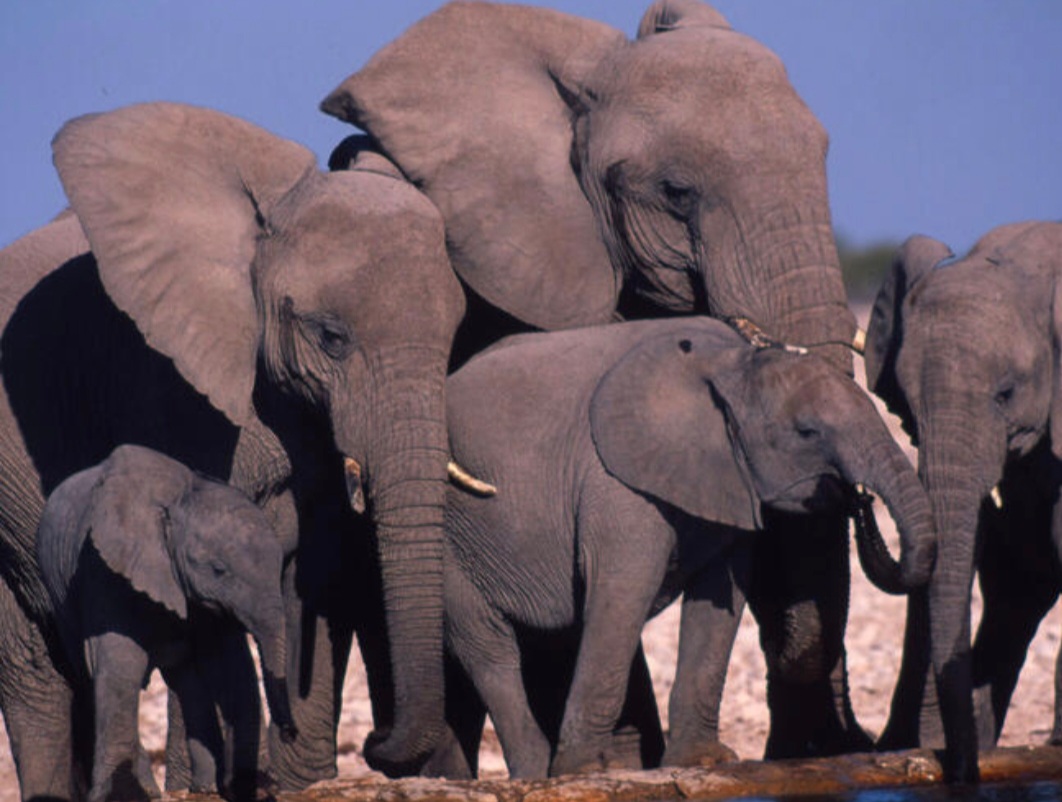
Zimbabwe is home to Africa’s second largest pachyderm population.
It’s growing at about five percent a year, and that means competition for water and land between humans and the world’s largest land mammal is increasing in and around Hwange.
During these last weeks of the cool months, the villagers rely on homemade remedies to keep elephants away from people, crops and water.
In Silewad, not far from seasonal streams which attract elephants, five gloved and masked villagers use a large wooden pestle to pound a fermented mixture of chilis, garlic, ginger, neem leaves and elephant dung into a paste designed to keep the animals at bay.
Masaloni Ndlovu, 67, hangs plastic bottles of the ground chili paste on his fence to deter elephants that often wander through his homestead.
Elephants hate the smell of the paste.
But faced with another dry season forecast of patchy rains and poor harvests, people fear that the homemade remedies won’t be enough to keep desperately thirsty elephants within the national park and out of village gardens.
Once a worker at a nearby railway station, Ndlovu recalls that elephants rarely wandered through the hamlet when he was younger, but now they are increasingly a common sight.
“We call the rangers to deal with the animals, but they don’t do anything. We hardly saw elephants when I was younger but today they are everywhere and they eat everything we plant,” he says.
Zimbabwe’s elephant population is growing as climate change is making rainfall unpredictable.
Depleting levels of groundwater in the Hwange game reserve are forcing animals to travel farther in search of replenishment during the hot season.
Villagers and conservationists fear that the competition for shrinking water resources could lead to deaths of local people and elephants.
Already this year, at least 20 people have been killed in confrontations with elephants, according to Zimbabwe’s National Parks and Wildlife Management Authority (ZimParks).
Growing, thirsty herds roam a drying earth
Elephants are especially vulnerable to rising temperatures. They need to drink up to 200 litres per day, but during the summer they can lose up to 10 percent of body water daily.
Research shows elephants migrate seasonally depending on the availability of water in Hwange National Park.
Between 1928 and 2005, during drought years with erratic rainfall, herbivore populations tended to migrate more frequently, according to another study.
ZimParks has partnered with local and international donor conservation groups to drill more than 65 boreholes that create artificial watering holes throughout the year for more than 45,000 elephants that trek through Hwange.
But the changing climate has raised concern among scholars and conservationists over the future sustainability of the animal sanctuary.
Simon Chamaillé-Jammes, deputy director of Hwange LTSER, the Long-Term Socio-Ecological Research center, has observed that droughts have intensified in sections of the game reserve.
“[W]e did publish a study showing that annual rainfall did not change that much on average over the 1940 – 2005 period, but that droughts, when they occurred, where much more severe than they used to be, with 50% reduction of rainfall during drought years in some areas of the park,” he wrote in an email.
On the routes elephants typically take that wind through Zimbabwe, Angola, Botswana, Namibia and Botswana, an aerial survey was launched by the Kavango Transfrontier Conservation Area (KAZA TFCA) to count the wildlife roaming the Kavango Zambezi basin over the next four months. (Hwange Park is within the Kavango Zambezi basin.)
Counting the large herds which roam this rich biodiverse area will help to determine animal numbers and the water needs of southern Africa’s mammals.
This is the first survey of its kind in this region, according to Teofilus Nghitila, executive director general of Namibia’s wildlife and national parks management authority.
The information gathered from the survey will also help in shaping elephant management policies, Nghitila said.
Climate change pushes elephants closer to people
Over the years, southern Africa’s climate has become increasingly vulnerable to weather patterns like El Nino, making rainfall patterns highly unpredictable, according to Narcisa Pricope, a professor of geography at the University of North Carolina Wilmington in the United States.
Some research has shown an increase in the occurrence and intensity of drought over many parts of Southern Africa, Pricope says.
Rainy seasons have gotten more unreliable, with implications for humans and animals alike.
“So, local communities not only have to contend with unreliable precipitation patterns that make them food insecure in the first place,” Pricope said in an email, “but on top of that, they have to live with wildlife in very close proximity as a result of the shrinking of water availability throughout the landscape in Hwange national park.”
In 2019, hundreds of people were killed when Cyclone Idai struck eastern Zimbabwe.
The same year, a drought in the western provinces resulted in the death of more than 200 elephants in Hwange National Park over just two months.
Pricope predicts if water scarcity persists it is likely to “amplify human wildlife conflicts especially in the areas adjacent to national parks where humans cohabit”.
Less water within the national park could drive animals closer to perennial water sources which are also close to human settlements.
A desperate solution to a deadly conflict.
To manage the dilemmas of a changing climate and growing wildlife populations, regional governments are currently lobbying for the one-off sale of ivory stockpiles in order to finance human-wildlife conflict programs.
But under a global treaty called the Convention on International Trade in Endangered Species of Wild Fauna and Flora (CITES), trade in ivory is strictly prohibited.
CITES has previously allowed ivory sales on two occasions, but global resistance against the trade has grown stronger.
After the push to sell African stockpiles was chastised by international conservation groups, the southern African states convened the African Elephant Conference in May and declared their intention to collectively lobby for permission to trade.
The southern African states, which includes Zimbabwe, hope to present their united position at the CITES Summit in Panama later this year.
Zimbabwe alone claims it is sitting on a 123 tonne stockpile worth an estimated $600 million, a figure questioned by environmental accountants.
Better water drilling to save people and elephants
But far from the high-powered summit and drawn out debates over the sale of tusks, villagers live with an impending crisis.
Hangani Dube, 79, bears the scars of this conflict.
Dube was injured while trying to scare off a pair of intruding elephants in his vegetable garden one afternoon in May. The elephants, instead, charged and gored him with their tusks.
Writhing in pain, Dube dragged himself on his hips to the main highway, where he found help to get to the nearest medical centre.
After a month in the infirmary, a frail Dube hobbles from place to place, unable to walk easily because of the steel plate implanted to keep his bones together.
Feeling robbed of life, the old man wishes for more action to reduce the elephant herds in his area.
“I feel useless. I can’t do anything for my family since I was injured.
“I used to take out my plough and plant with my cattle, but now I can’t,” he says.
“I rely on my wife and sons to do everything I used to do.”
He says bitterly: “The government has to cull these elephants before they hurt us all.”
Zimbabwe has recently considered culling.
In the past, more than 50,000 elephants were killed during culls between 1965 and 1988.
However, this controversial control method would require significant financing, which the government lacks.
While the government weighs the sale of ivory or culling herds, villagers still live with the daily risk of elephants searching for water and food.
When the rainy season begins in November, farmers will plant their crops, and Ndlovu will have to apply the chili fixative more regularly as his only defence against the marauding mammals.
Other homegrown methods such as burning chili bricks and making chili bombs are used in other areas, but they too have limited effectiveness in keeping elephants away.
Hwange’s intermittent rain and persistent heat also harm vegetation.
The elephants have to travel farther in search of food as well as water.
While there is no available research on Hwange’s groundwater recharge rates, Chamaillé-Jammes cautions against drilling further boreholes near human settlements.
His joint research has shown that more water holes tend to attract more elephants.
Chamaillé-Jammes recommends closing watering holes on the eastern section of Hwange to steer elephants away from villages and instead, drilling boreholes in the centre of the game reserve with some only operating during periods of extreme drought.
These “safety pans” might be one way of ensuring elephants are more likely to stay within the perimeter of the park.
As rising global temperatures signal more extreme droughts in the future, a more sustainable intervention than chili concoctions and one-off ivory sales is needed to halt Zimbabwe’s deadly battle for resources in a parched land. – NRI





 Slider3 years ago
 National5 years ago
 Tourism and Environment4 years ago
 Special reports4 years ago
 Opinion4 years ago
 National4 years ago
 National3 years ago
 National3 years ago