Connect with us

Slider

Hwange lion DNA helps convict poachers for first time

Published

on

BY BBC

Lion DNA has been used to successfully prosecute poachers for the first time in the world, it has emerged.

Advertisement

Wildlife crime experts have only just revealed how they were able to identify the individual animal from body parts found in a suspect’s village, as they matched a profile on Zimbabwe’s lion database.

A blood sample had previously been taken from the male lion, which was being tracked by authorities in Hwange National Park – using a radio collar.

Two poachers were convicted for the 2024 incident and sent to prison in what is thought to be the first prosecution of its kind.

Advertisement


The details of the convictions and the role the DNA database played have been previously unknown.

Non-governmental organisation (NGO) Traffic, which works to combat the illegal trade in wildlife, has shared the detail with us.

Advertisement

In May 2024, authorities in Hwange National Park became suspicious after a radio collar worn by a male lion stopped working.

Investigators and police traced its last known position and found a snare with lion fur attached to it.

After collecting forensic evidence they questioned two men in a nearby village and discovered three sacks of meat, 16 lion claws and four teeth. These body parts would later be tested against the database, with the DNA from all matching the profile of that missing lion.

Advertisement

But possessing lion parts is not necessarily a crime in Zimbabwe.

Having them can be explained away as old, traditional ornaments or as coming from an animal that died of natural causes.

This has been an obstacle to prosecutions in the past.

Advertisement

But thanks to a breakthrough in DNA profiling, that’s now changed.

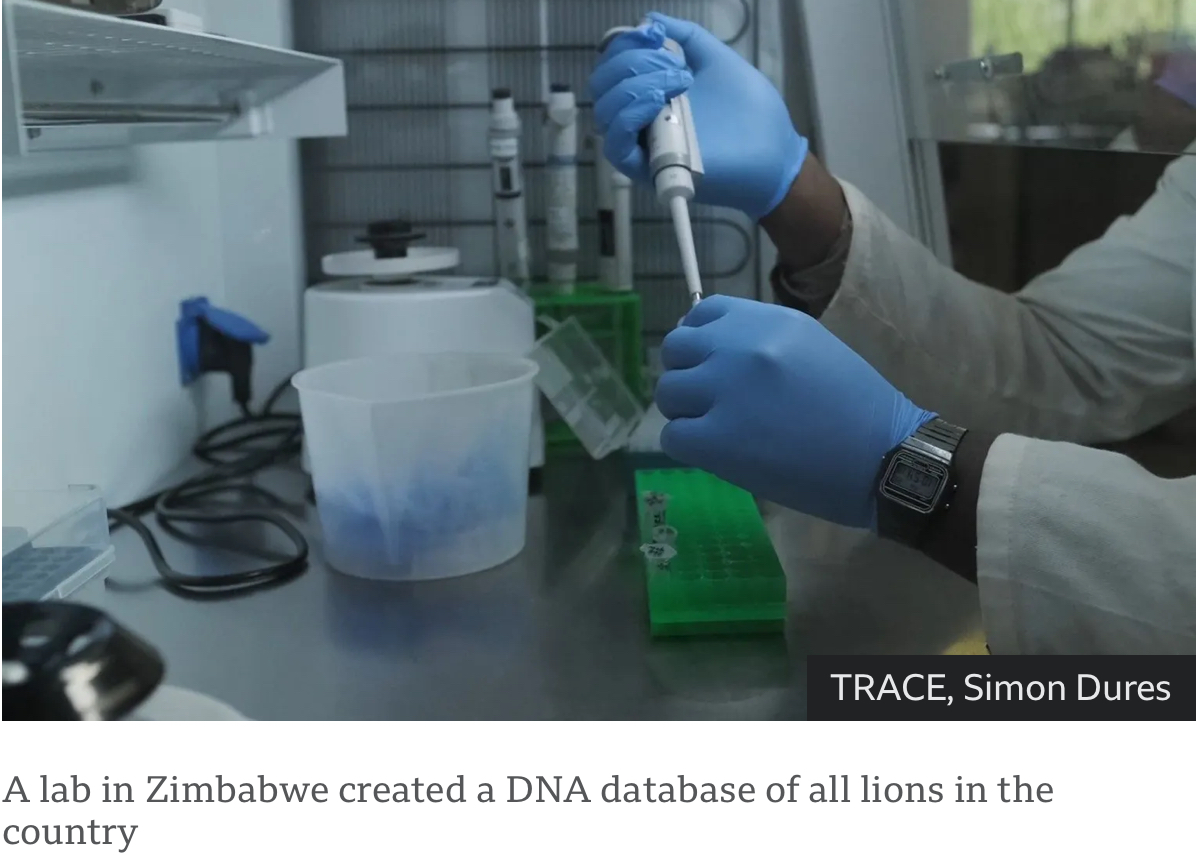
The lab generated a DNA profile from the recovered body parts and compared this to the profile previously generated from a blood sample of the lion with the radio collar.

The two profiles matched and scientists were able to identify the specific missing animal.

Advertisement

Over the last eight years the Victoria Falls Wildlife Trust (VFWT) has received about £250,000 from the People’s Postcode Lottery in the UK to build up the DNA database of lions in Zimbabwe.

The scientist at the trust, who made the discovery, asked to remain anonymous for his own safety, but said:

“Before we had access to this technology, we were only able to do species identification, but sometimes that’s not enough.

Advertisement

“We can essentially match those claws or those products to the lion of interest that we are looking for.”

Within 10 days of the killing, the DNA evidence was presented in court.

Two men pleaded guilty and were given 24 month prison sentences.

Advertisement

The hearing was told the value of the lion was about $20,000.

Richard Scobey, Traffic’s executive director, said “countries now have the forensic capability to bring, solid science-based evidence to court” and that it will have global impact.

This is understood to be the first time that DNA from an individual lion has been identified and used to prosecute poachers.

Advertisement

Professor Rob Ogden has been closely involved in setting up the project and is co- founder of the organisation Trace, which promotes the use of forensic science in wildlife law enforcement.

He says the prosecution gives “a message of hope” and shows what can be done using a combination of training, research and development and forensic casework.

Recent figures suggest an increase in the number of lions being killed for their body parts which are then sold both as cultural objects in Africa and for traditional Chinese medicine.

Advertisement

It is thought the rise may be down to organised crime gangs also involved in the illegal trade in Rhino horn and ivory trafficking.

In Mozambique between 2010 and 2023, 426 lions were killed as a result of contact with humans with a quarter linked to deliberate poaching.

A measure of the scale of the trade is also the number of seizures by the authorities in recent years.

Advertisement

That includes 17 lion skulls found in Lusaka in 2021, reportedly en-route from South Africa, and a 2023 seizure in Maputo of more than 300kg of lion body parts.

Which is why this breakthrough on DNA identification is seen as sending an important message to would-be poachers.


Advertisement

Continue Reading
Click to comment

Leave a Reply

Your email address will not be published. Required fields are marked *

In the community

Elephant kills villager in Nkayi, authorities launch investigation

Published

on

BY NOKUTHABA DLAMINI

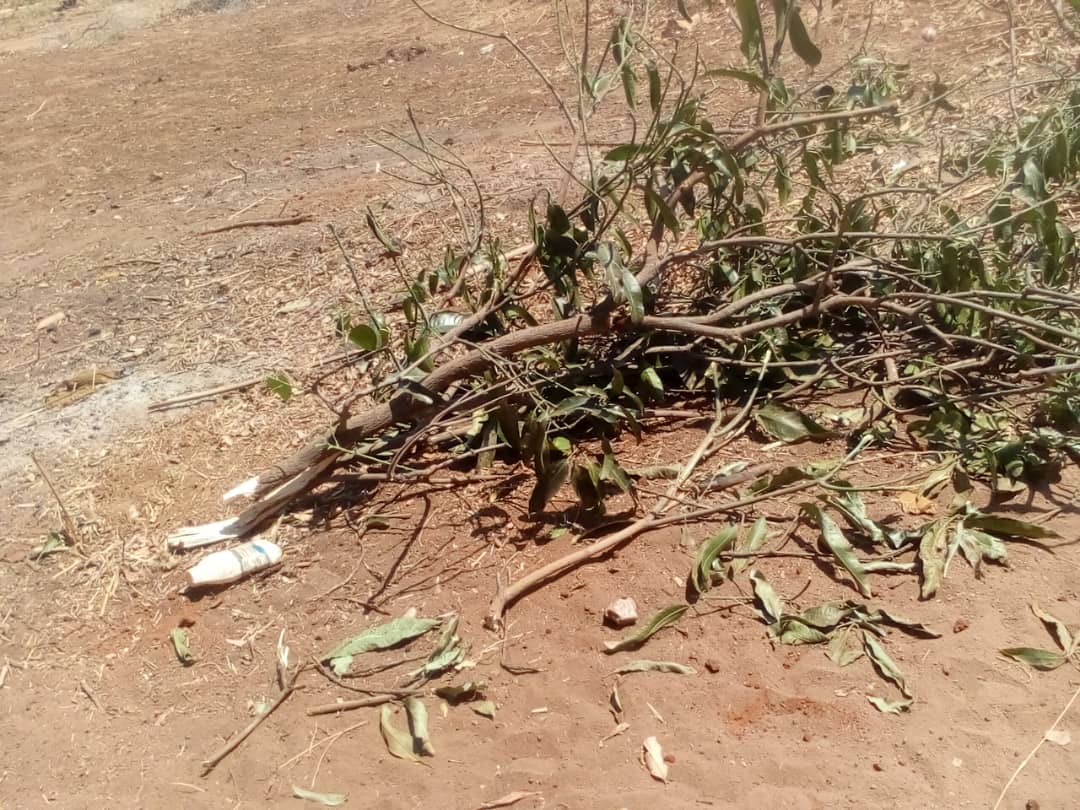
An elephant trampled a villager to death overnight in Mthoniselwa village in Ward 13 of Nkayi district, local authorities said on Sunday, in the latest human-wildlife conflict incident in the area.

Advertisement

The fatal attack occurred in the early hours of the morning, according to community leaders, who said the victim was attacked near the homestead.

“We have received a report from our Lupane Investigations Office regarding a tragic incident in Mthoniselwa village, Ward 13 of Nkayi, where a villager was trampled by an elephant,” said Zimbabwe Parks and Wildlife Management Authority (ZimParks spokesperson Luckmore Safuli.

“Further details regarding the identity and circumstances surrounding the deceased are still pending. ZimParks personnel are actively conducting assessments in the area to gather more information. Additionally, the Nkayi Rural District Council officers, in collaboration with the Zimbabwe Republic Police, are on site to investigate the incident and conduct community awareness initiatives,” Saffouli added.

Advertisement

A message circulated in local community groups earlier in the day alerted residents to the incident and urged caution.

“We received a sad report from police this morning of a person who was attacked and killed by an elephant at night in Mthoniselwa, Ward 13. ZimParks has been notified and a ranger is on the way to track the elephant,” the message read.

Community leaders also urged residents to report the presence of dangerous wildlife and to remain vigilant to avoid further tragedies.

Advertisement

Zimbabwe has in recent years recorded a rise in human-wildlife conflict cases, particularly involving elephants, as animals stray into villages in search of food and water.

Advertisement
Continue Reading

In the community

Grade 2 pupil and neighbor die in gas-filled well in Nkayi

Published

on

BY NOKUTHABA DLAMINI 

A Grade 2 pupil and a young man died on Thursday in a tragic incident at a neighbor’s well in Nkayi Ward 19, after being overcome by suspected carbon monoxide and a total lack of oxygen.

Advertisement

The tragedy unfolded near Nkayi Primary School area when the young student was reportedly sent into the well by an elderly man  to retrieve a bucket that had fallen to the bottom.

He reportedly lured him on the promise of buying him sweets.

When the child failed to resurface, a neighbor entered the shaft in a desperate rescue attempt.

Advertisement

Councillor Thubelihle Mabuza Ncube, who visited the scene on Friday, described the harrowing moments that led to the double fatality. “What happened, we understand, is that a bucket fell into the well and the boy, whose mother was not at home at the time, was lured to get in an retrieve it in exchange of sweets and things,” Ncube said. “It is said there was carbon [monoxide]… there was no oxygen at all at the bottom and that’s how he died”.

According to the councillor, the second individual who had reportedly sent the child to fetch the bucket in the well reached the bottom and was briefly able to interact with the child before being overwhelmed . “He reached the bottom, but [the gas] overcame him,” Ncube explained. “He reportedly tapped the child, but then he was overcome by that carbon and lack of air… They both died in the water “.

A third person attempted to enter the well but immediately signaled to be pulled out, reporting a suffocating heat and a total lack of oxygen inside the shaft.

Advertisement

The councillor expressed deep distress over the decision to send a young child into the well. “It is very painful… a Grade 2 pupil being sent into the well by elders to go and retrieve a container from the bottom,” Ncube said, noting that it appeared the community had grown accustomed to such tasks.

Due to the extreme danger posed by the air quality, rescuers were unable to physically enter the well to recover the bodies. Instead, villagers were forced to use a makeshift tool to retrieve the deceased from the surface.

“They were finally taken out not by being fetched from below; instead, they ended up using something like a wire to pull them because people were afraid to enter where that gas was,” Ncube said.

Advertisement

The incident has left the Nkayi community in mourning. “Nkayi is hurting deeply,” the councillor added. “It is a very painful situation”.

The accused has been charged by the police, according to the councillor,

Advertisement
Continue Reading

Lifestyle

Molokele mourns the loss of artist Fanuel Mwale

Published

on

BY STAFF REPORTER

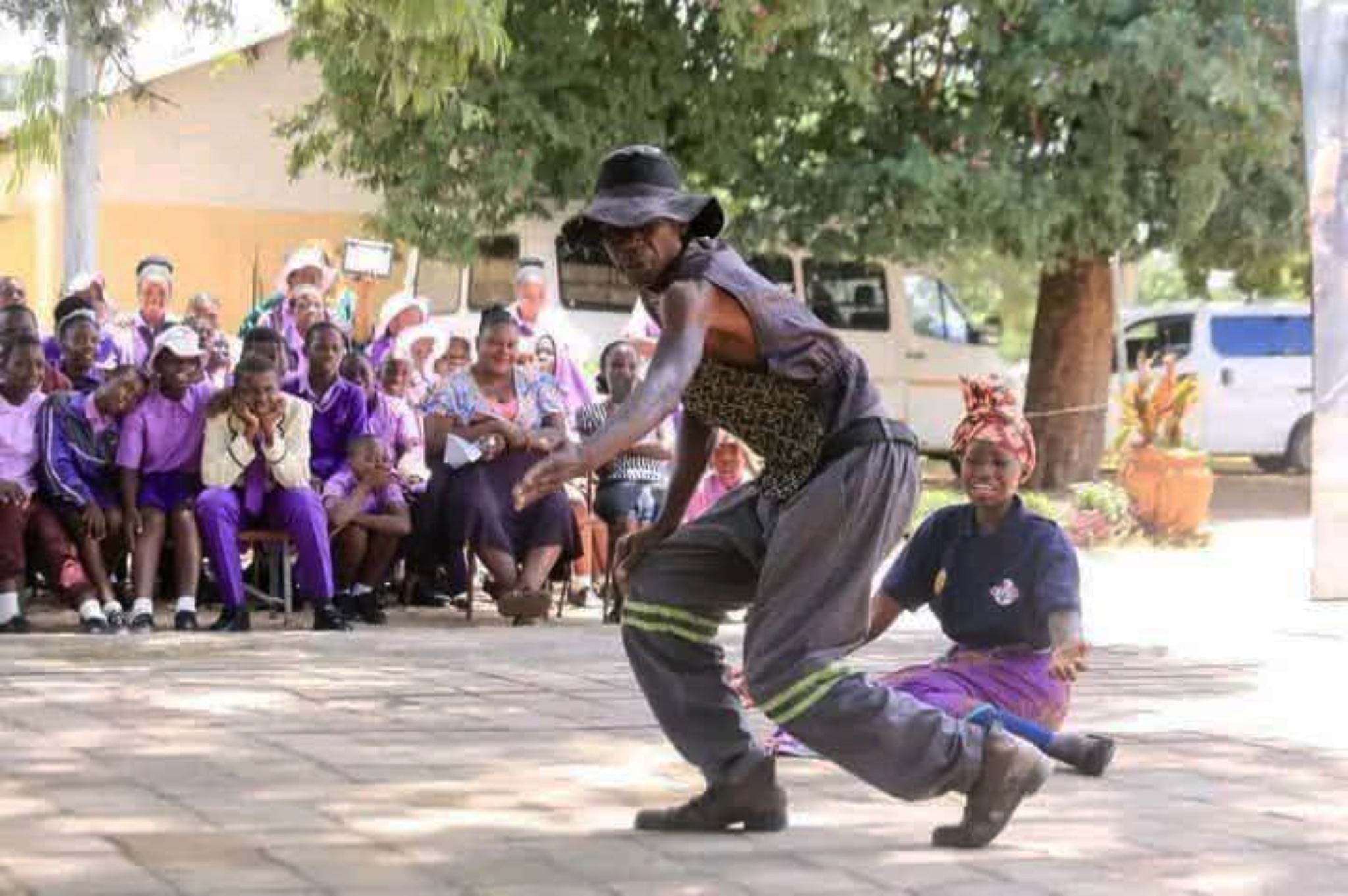
Daniel Molokele, the Member of Parliament for Hwange Central, paid tribute on Thursday to Fanuel Achimwene Mwale, a prominent local artist and his lifelong friend, who died over the weekend following a brief illness.

Advertisement

Molokele visited Mwale’s family in Makwika village to offer condolences and visited the artist’s final resting place at the local cemetery. The MP described a personal bond spanning more than 45 years, noting that he and Mwale grew up together in the No. 1 colliery area and remained classmates throughout their years at St Ignatius Primary School.

“I consider him as my first best friend of my entire life,” Molokele said in a statement, adding that the two had shared the formative first five years of their lives together.

Mwale was recognized as a multi-talented artist who represented Hwange on both national and international stages. His career included roles as a dancer, composer, singer, scriptwriter, actor, producer, and director.

Advertisement

Molokele expressed hope that Mwale’s “exemplary artistic legacy” would serve as an inspiration for other performers emerging from the “hot coalfields of Whange” to achieve similar success .

The MP concluded his tribute by wishing that Mwale’s “dearest artistic soul rest in power”

Advertisement
Continue Reading

Trending

Copyright © 2022 VicFallsLive. All rights reserved, powered by Advantage