Connect with us

In the community

Contest shines a light on the Ndebele matrilineal culture of home painting

Published

on

BY TENDAI MARIMA

MATOBO – Peggy Masuku put the finishing touches on the welcome sign to her homestead in Matabeleland South’s Matobo district.

Advertisement

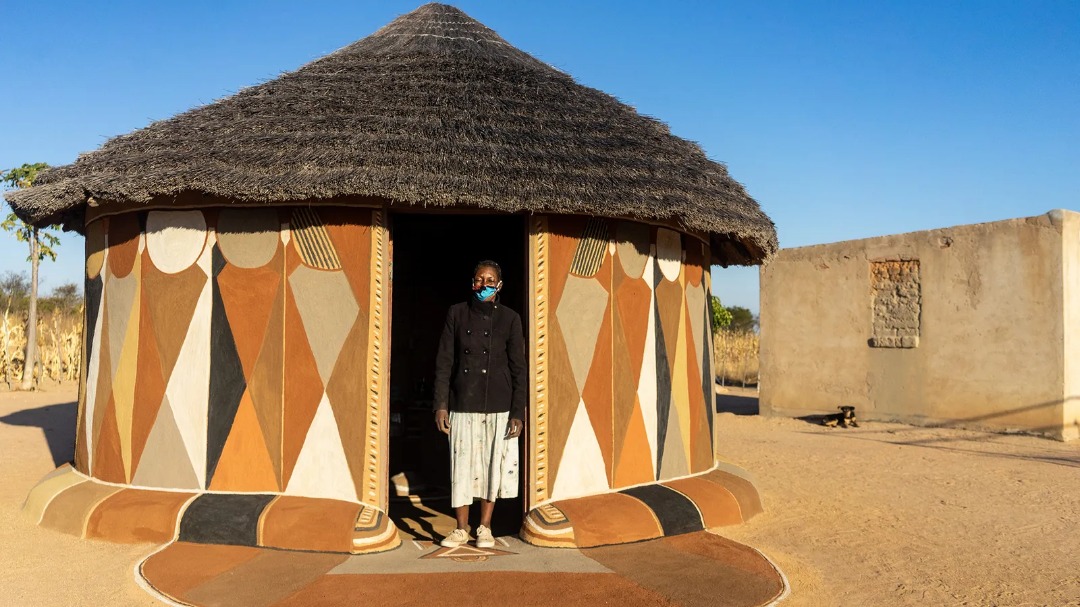
She surveyed her handiwork, six months of designing and painting her huts in anticipation of an annual competition, My Beautiful Home, which recognises the most beautiful traditionally decorated homes in the district.

It was a one-woman effort – with some with some constructive criticism from her husband – to decorate the homestead’s huts in patterns of brown, black, red and grey.

Adorned, they stood out among the orange and lemon trees and the rock garden dotted with native aloes and cactus plants.

Advertisement

In Ndebele culture, hut decoration is solely a women’s duty and the secrets of the traditional patterns and the making of natural paints have been passed from one generation to the next for hundreds of years.

As a young girl, Masuku learnt how to design patterns and paint huts from her mother.

Now she only designs what she feels. “I listen to the walls as I work and I feel like they tell me what sort of shape I must put,” she said.

Advertisement

“There’s a feeling you get when you create art and that’s what guides me as I put designs on the walls.”

The My Beautiful Home awards started in 2014 with just 30 entrants.

When the competition began, its purpose was to document and preserve the local Ndebele tribe’s tradition of painting homes.

Advertisement

In recent years, the contest has attracted attention well beyond Matobo, drawing judges, sponsors and cultural enthusiasts from elsewhere in Zimbabwe and from other countries.

Originally from present-day South Africa, the Ndebele fled 19th-Century Zulu wars and settled in present-day Zimbabwe in the 1830s, bringing with them the tradition of exterior hut-painting in geometric designs using earth-toned natural dyes.

Over time, the designs have come to incorporate patterns from other cultures, and the creativity of the hut-painters has evolved to include wild animals, flowers and people.

Advertisement

Interior painting, which has become part of the culture of beautifying the home, is a tradition borrowed from the local Shona people.

Throughout the Matobo Hills, art is woven into life.

The landscape is studded with massive granite boulders, some of which create caves that shelter ancient paintings.

Advertisement

Believed to have one of southern Africa’s largest concentration of rock art, the caves of the Matobo Hills are adorned with images up to 12,000 years old.

When it’s time to paint, Masuku seeks her raw materials from surrounding nature.

In Masuku’s village of Mafela, anthills are a common sight and she uses the greyish soil from the anthill domes to make her grey and white paints.

Advertisement

She also uses ash and charcoal residue from fires to create black and white.

The reds and browns come from red clay soil, but she has to travel long distances with her wheelbarrow in search of good quality soil and water.

She does it all herself; her husband is severely asthmatic so he can’t help with the sourcing or making of the mud dyes.

Advertisement

Masuku begins painting during the dry season which normally runs from March to October.

“It takes me a long time to finish decorating because I have to do so many other duties at home, I have to cook daily, [and] during the harvest season there are crops to be picked.

When I have time, I go into the bush to look for the different soils.

Advertisement

I have to bake some of the soils so I get the specific colour I want,” she explained.

She daubs her paints onto the walls using old socks and netting fabric.

The geometric patterns she paints reflect traditional Ndebele art.

Advertisement

Masuku’s designs have earned her two wins in the My Beautiful Home contest, in 2018 and 2019.

According to the founder of the competition, Pathisa Nyathi, a local historian and director of local community arts centre, the Amagugu Heritage Centre, the geometric patterns, especially the circular forms, have a deeper symbolism.

“The round shape represents the contour of the Earth, Sun, Moon and any other planets,” Nyathi said.

Advertisement

“Everything the Africans built in medieval times were round in shape, be it their houses, kraals [enclosure or group of houses around an enclosure], shields or pots…

“Old Bulawayo grass huts are all in a circular shape.”

This year, Masuku is expanding her efforts.

Advertisement

She has extended her decor to the outside eating area and is experimenting with new styles such as drawing hands and flowers in the kitchen.

When Masuku first entered in 2018, she took it as an opportunity to exhibit her skill in making dresses using organic materials.

Her works have included a strapless dress made from the leaves of corn cobs, shoes sequined with pumpkin seeds and a necklace made from the seeds of wild trees.

Advertisement

“I spent three nights sewing the first one with my machine.

“I don’t know if I’ll make something else this year, but making clothes from natural [and] free things are my favourite designs,” she explained.

Each year in August, hundreds of women enter the contest supported by Ekhaya Gaia a local NGO supporting sustainable communities, to showcase their adorned homes.

Advertisement

Prizes include farming and water implements such as ploughs, wheelbarrows and water storage tanks.

For each of her wins, Masuku was awarded a water tank, which she uses to harvest and store rainwater to get through the dry months of the year.

After months of painting, the results fade quickly.

Advertisement

Each year, the elaborate decorations are washed away with the coming of the rains in October.

It’s a loss but also a welcome end to the dry season.

And it offers these house artists a fresh canvas for the next year.

Advertisement

For now, not many tourists are visiting the Matobo Hills for hiking, bird watching or to admire the painted homes due to lockdown travel restrictions.

But to Masuku, this remains a special place.

“When I’m here I don’t have to worry, I breathe the fresh air and it brings me back to my inner centre, where I should be,” she said.

Advertisement

The traditions celebrated by the My Beautiful Home contest are specific to the region, but their spirit is universal.

“I hope that other people around Zimbabwe will be inspired to decorate their homes,” she said, “and to make their homes into something they love.” – BBC Travel

Advertisement
Continue Reading
Click to comment

Leave a Reply

Your email address will not be published. Required fields are marked *

In the community

Two missing Apostolic Faith sect members found deceased in Zambezi River

Published

on

BY NOKUTHABA DLAMINI 

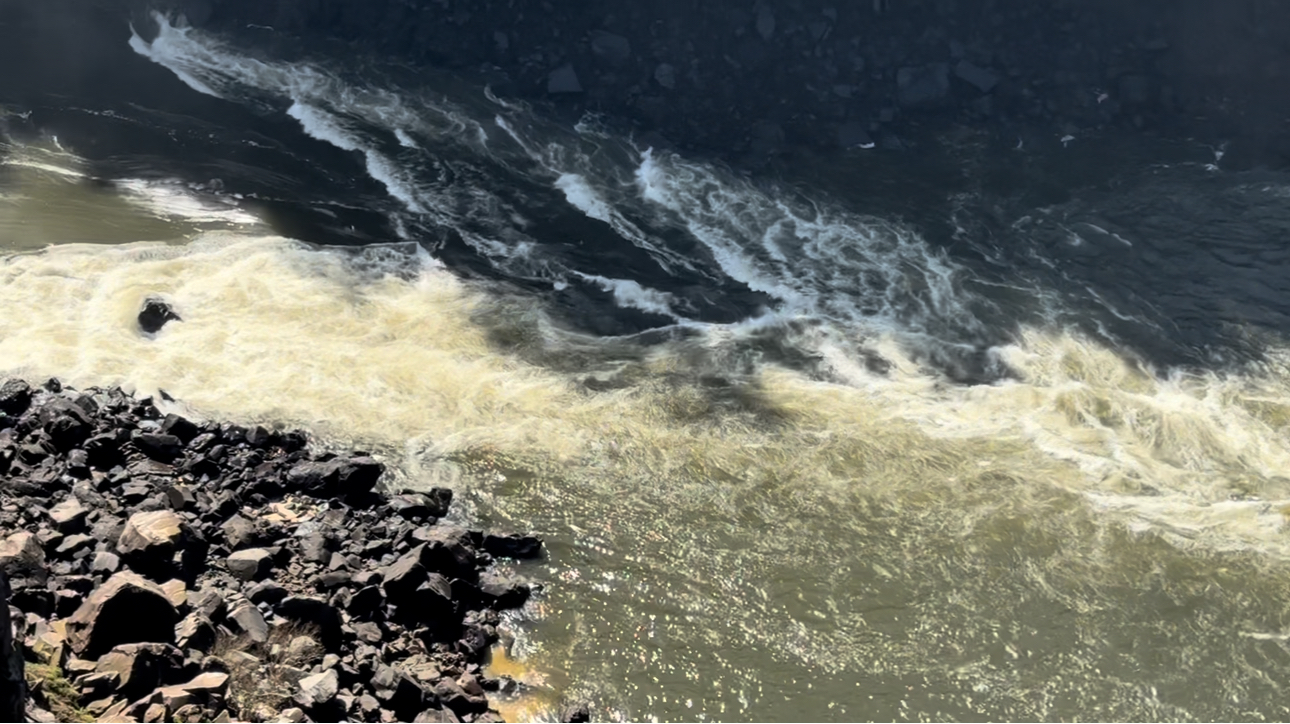
Two members of an Apostolic Faith sect who were swept away by strong currents during a baptism service on the Zambezi River in Victoria Falls on Saturday have been found deceased, two days after they went missing.

Search and rescue efforts, which had been ongoing since the incident, culminated on Monday when the two bodies were located with the assistance of a local rafting company operating on the river.

Confirming the development, Victoria Falls Residents Association chairperson, Kelvin Moyo, said the discovery brought a tragic end to hopes of finding the pair alive.

“As of this afternoon, we have received confirmation that both bodies have been found,” said Moyo. “The operation was supported by a local rafting company, and at the time of the update, teams were still working on the process of retrieving one of the bodies from the river.”

Moyo said the incident has once again highlighted the dangers associated with conducting religious activities in the Zambezi River, particularly during periods of strong water flow.

He urged residents and visitors to exercise extreme caution when approaching the river and called on religious groups to prioritise safety when carrying out baptism rituals.

Authorities are expected to continue engaging relevant stakeholders on safety measures as the community comes to terms with the loss.

Continue Reading

In the community

Government intensifies crop pest control efforts in Mat North

Published

on

BY STAFF REPORTER 

The government has intensified efforts to contain a crop pest outbreak affecting parts of Matabeleland North Province, with enhanced control measures set to be rolled out this week.

According to ZBC News, a visit by its crew to Hwange District revealed widespread infestation, with several farmers reporting damage to early-stage crops, particularly traditional grains and sunflower. Authorities say swift intervention is essential to prevent further losses and protect the current farming season.

Provincial Agricultural and Rural Development Advisory Services (ARDAS) Acting Director, Mkhunjulelwa Ndlovu, told ZBC News that government has moved quickly to assist affected farmers through the distribution of pesticides and the deployment of extension officers.

“We have noted with concern the infestation of crop pests, particularly on small grains and sunflower, mostly at the early stages of crop development. As Government, we have moved in and this week we are distributing pesticides to Tsholotsho, Binga and Hwange so that farmers can effectively control the pests and protect their crops,” he said.

Ndlovu added that extension officers are already on the ground working closely with farmers to ensure the correct application of chemicals and to assess the extent of the damage.

“We are optimistic that timely pest control and continued farmer participation will result in improved yields, enhanced household food security and the prospects of a bumper harvest in Matabeleland North Province,” he said.

Despite the challenges, Ndlovu urged farmers not to lose hope, encouraging them to replant where possible, as conditions remain favourable in most areas and support systems are in place.

The distribution of inputs and technical support forms part of ongoing Government efforts to boost agricultural productivity and strengthen household food security.

Continue Reading

Hwange

Hwange Central finally receives long-awaited CDF funds

Published

on

BY NOKUTHABA DLAMINI

Hwange Central constituency has finally received its long-awaited Constituency Development Fund (CDF) allocation, marking the first disbursement since 2022, Member of Parliament for the area, Fortune Daniel Molokele, has confirmed.

In a statement, Molokele said an amount of ZiG 1.3 million was deposited last week into a special bank account set up exclusively to administer CDF funds for the constituency. The disbursement falls under the 2024 national budget, following confirmation from the Parliament of Zimbabwe that no CDF disbursement will be made under the 2023 national budget.

He further noted that there is still no clarity on when CDF allocations under the 2025 and 2026 national budgets will be released.

“With this development, our local CDF Committee will, during the coming week, initiate the process of rolling out the approved projects,” said Molokele.

Priority Wards and Projects

The initial phase of implementation will cover five wards, namely Wards 1, 4, 5, 6 and 14, with the remaining wards expected to benefit under the next CDF disbursement.

According to minutes from a public consultation meeting held on 13 April 2024 at St Ignatius Primary School in Hwange, the community unanimously prioritised solar-powered boreholes with JoJo tanks and fenced nutritional gardens as the flagship project for the 2024 CDF cycle.

The project is set to be implemented at the following locations:

  • Ward 1: Chibondo
  • Ward 4: Baghdad
  • Ward 5: Empumalanga
  • Ward 6: Phase Four
  • Ward 14: Ngumija

Other proposals discussed at the meeting included the construction of an Advanced Level laboratory science facility at Nechilisa Secondary School and the refurbishment of Nengasha Stadium, but these were deferred in favour of addressing water and food security.

CDF Committee in Place

The public meeting also elected a new 2023–2028 CDF Committee, comprising:

  • Alice Phiri (Trade Unions, Women and Local Communities)
  • Luka Katako (Traditional Leaders and Faith-Based Leaders)
  • Bryan Nyoni (Youth and Local Communities)
  • Shonipai Muleya (Finance and Accounting)

Francisca Ncube was nominated as the National Assembly representative, while Teresa Kabondo will represent the constituency in the Senate.

The CDF bank account signatories and procurement committee members include Molokele, Luka Katako, Thulani Moyo and Alice Phiri.

Funding Clarifications

Although earlier discussions indicated that the 2024 allocation would include outstanding funds from 2023—bringing the total to an estimated USD100 000, to be disbursed in ZiG at the interbank rate—the Speaker of Parliament later clarified that the 2023 CDF allocation was no longer available.

“As a result, each constituency ended up receiving ZiG 1.3 million, which was meant to be equivalent to USD50 000,” Molokele explained, adding that the approved projects were subsequently endorsed by the relevant Parliamentary committee.

He also confirmed that no CDF proposals have yet been submitted for 2025 and 2026.

Residents seeking further information have been advised to contact CDF Committee Secretary Thulani Moyo on 078 648 3659.

Molokele said at least two public feedback meetings will be held once implementation begins, to ensure transparency and accountability in the use of the funds.

Continue Reading

Trending

Copyright © 2022 VicFallsLive. All rights reserved, powered by Advantage