Connect with us

In the community

Crocodile attack victim recounts horror encounter

Published

on

BY NOKUTHABA DLAMINI

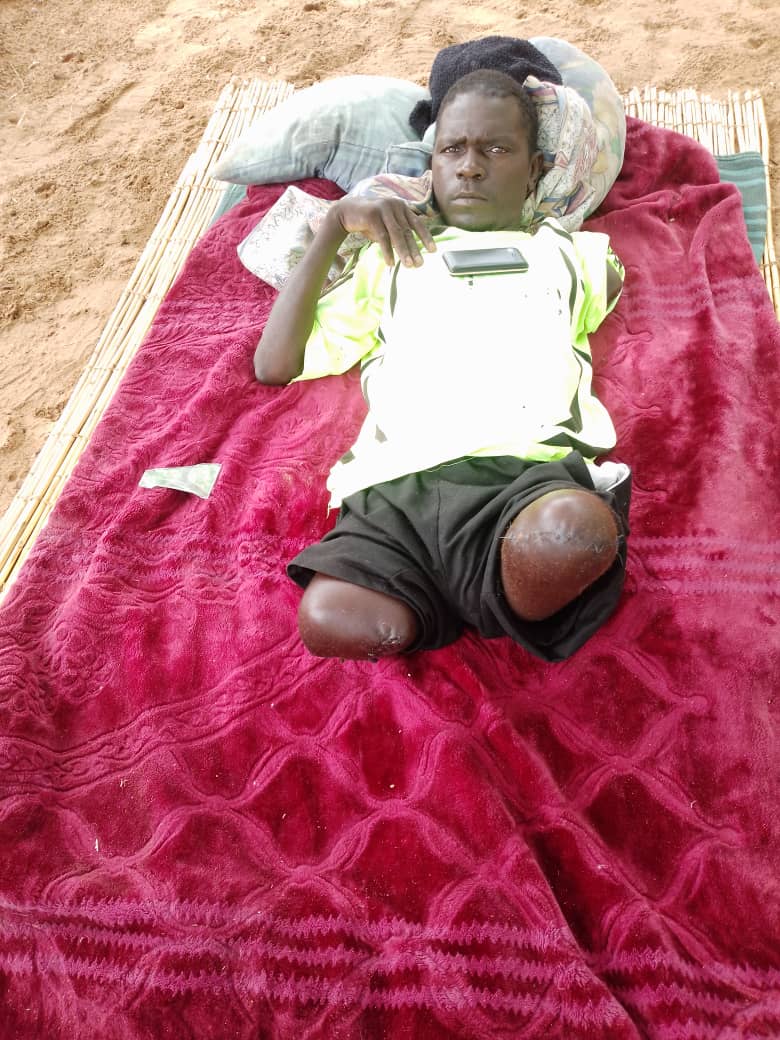
A Binga man, who survived a vicious attack by a crocodile after jumping into Mlibizi River while running away from a herd of elephants almost three months ago, is struggling to survive after both his legs and left arm were amputated.

Advertisement

Windas Sianene Muleya (43) jumped into the jaws of the giant reptile while running away from a herd of five elephants that was encircling him during a fishing expedition.

Muleya, a father of three from the Chief Saba area, survived the attack by jumping on the back of the crocodile and shoving his arm down its throat to make it gag until rescue arrived.

His legs and arm were first amputated at Mpilo Central Hospital in Bulawayo before another amputation on both legs in neighbouring Zambia after doctors there said the initial procedures were botched.

Advertisement

Muleya , an unemployed widower, is now unable to fend for himself and his children and is also saddled with huge hospital bills.

“I have had to move back from my homestead to live with my mother together with my children, who are still very young,” he told The Standard .

“There was a wheelchair that was donated to me, but I cannot push it because of the dust and oftentimes when it starts to rain and there is no one close to assist me, I get rained on.

Advertisement

“I have soiled myself several times because it gets too overwhelming for my family, especially for my mother (to take care of me).

“I need medical assistance, a bedroom that is ideal for my condition and a toilet close to my room because I struggle to go and relieve myself in the bush.”

His cousin Tendayi Zulu Sianene said the family had incurred a lot of costs while seeking treatment for Sianene, both in Zimbabwe and Zambia.

Advertisement

“We still have a bill to pay at Mpilo Hospital because the admission was free, but surgery cost $291 000 and we have only managed to pay $50 000,”Tendayi said.

“In Zambia we paid 3 000 Kwacha to cover the first three days and thereafter for the other 15 days we were paying 500 kwacha per day inclusive of everything.”

Muleya said the government was yet to give him any assistance despite some officials showing an interest in his case when his story first hit the headlines.

Advertisement

“I have not been helped by anyone from the government,” he said.

“They tried to contact me soon after the incident, but I have not heard anything from them since then.

“It’s only well-wishers that have been assisting me.”

Advertisement

Sianene narrated for the first time how the September 28 incident that altered his life forever unfolded.

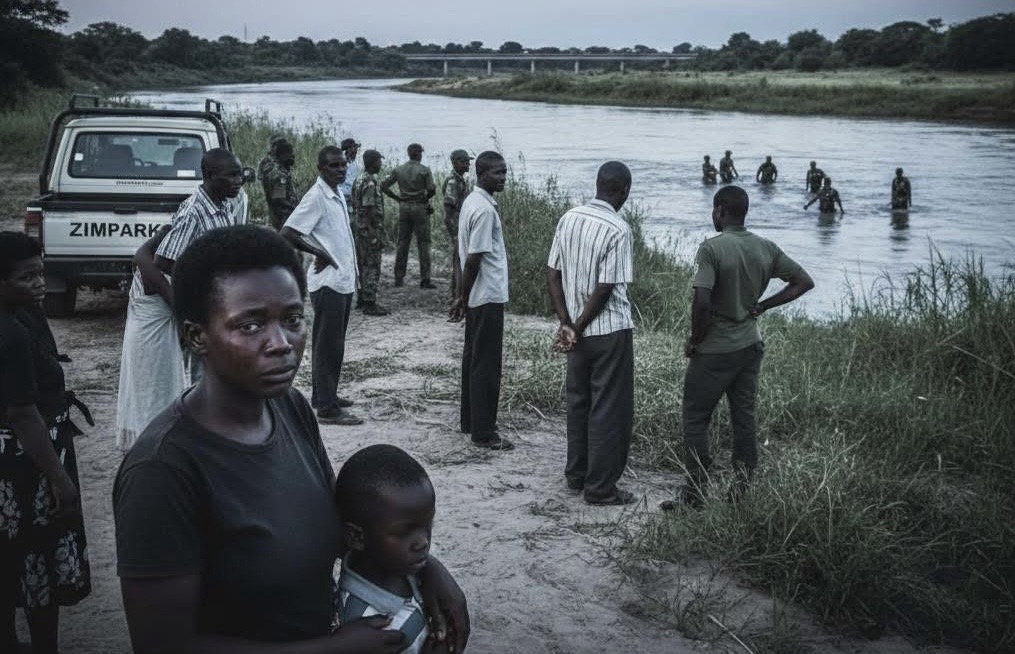
He said he was fishing close to his homestead on the confluence of Mlibizi and Zambezi rivers when he suddenly saw a herd of five elephants charging towards him.

There was nowhere to run to for the fisherman as he was on an island and the elephants were charging from the only route out of the area.

Advertisement

“I jumped into the river to try and hide under the water close to the river bank, but I landed on a lurking crocodile that immediately attacked me,” Sianene said.

“Some fishermen that were close by jumped into the river to fight the crocodile and that’s all I remember as I immediately lost consciousness.”

He was rushed to Binga District Hospital and he says his relatives used cardboard boxes to cover bones that were protruding from his arm and legs.

Advertisement

Sianene was immediately transferred to Mpilo Central Hospital in Bulawayo, which is about 436 kilometres from his home and he arrived at night.

The following morning a decision was made to amputate his left leg and left arm.

“After the amputation they stitched my right leg in many areas. The leg was not broken, but it was injured from below the knee and it was bandaged after the stiching,” he said.

Advertisement

“The following day that leg was painful and swollen. I alerted the nurses, but no action was taken.

“I spent the whole Saturday pleading for help because the bandage was too tight and I was in pain.

“A decision was taken on Sunday morning to check why the right leg was swollen and they found out that there was puss.

Advertisement

“The bones  were now exposed again after the stitches had burst and they told me that they were going to amputate it as well as there had been a severe infection, which explained the puss.”

His right leg was amputated just below the knee. Sianene was discharged from hospital, but the pain did not go away until his family decided to take him to neighbouring Zambia for treatment.

A doctor at Livingstone Hospital informed them that the amputation was not properly done as the legs were not aligned.

Advertisement

The Mpilo Hospital doctors had amputated Sianene’s right leg from below the knee while the left leg was amputated close to the hip and the Zambian doctor said that would affect his balance.

“On the left arm he also noted that there were some bones that were still exposed and that was the same case as the left leg.

“A decision to redo the surgery was then made,” he recounted.

Advertisement

“A few days later I was asked to sign another letter so that I could go to the theatre and that was the fourth time I was being amputated.

“This  time it was to align the right leg with the left one.

“The doctors had noted that the wound was not going to heal as it was amputated close to a muscle rapture and the bones were exposed too.”

Advertisement

Sianene spent 17 days at Livingstone Hospital.

When he returned home he ran out of medication and missed his review date at Binga Hospital by two days because there was no transport.

“When we eventually got to the hospital there was no doctor and the nurses told me that the hospital had run for some time without electricity and as such they could not check why my right leg was still swollen and was not healing,” he added.

Advertisement

“They resolved to admit me to monitor my condition, but I failed to pay the US$6 per night that government hospitals charge.

“I had to travel back home and I am still in pain because both my thighs often swell.”

Sianene is one of the many victims of human wildlife conflict in Zimbabwe that struggle to get treatment for their injuries or to get compensation for loss of livelihoods.

Advertisement

The government recently announced that it was creating a fund for victims of human wildlife conflict that would cover medical expenses and hospitalisation, among other things, but critics say it is not clear where the money would come from.

Advertisement
Continue Reading
Click to comment

Leave a Reply

Your email address will not be published. Required fields are marked *

In the community

Tsholotsho teacher dismissed over protest photo, union cries foul

Published

on

BY NOKUTHABA DLAMINI

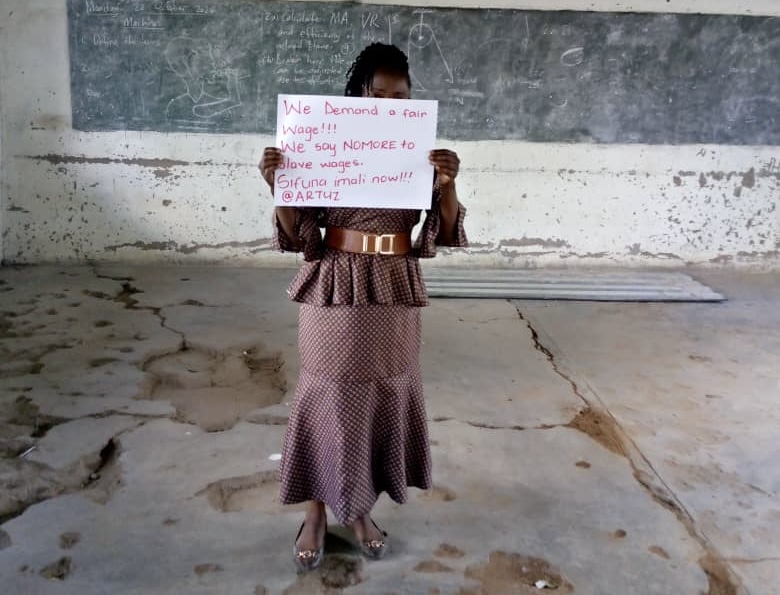
A Tsholotsho teacher has been dismissed from the public service after participating in an online protest by taking a photo in class holding a placard demanding better wages, a move that has drawn sharp criticism from a teachers’ union.

Advertisement

According to a letter dated April 10, 2026, from the Ministry of Primary and Secondary Education in Matabeleland North, Bridget Dhliwayo, a teacher at Zibungululu Secondary School in Tsholotsho District, was found guilty of misconduct and discharged from service with effect from May 14.

The dismissal letter, signed by Jabulani Mpofu, the Chief Director for Provincial Education Services in Matabeleland North, states that Dhliwayo violated public service regulations by taking a selfie inside a classroom on May 13, 2025, holding a placard reading: “We demand a fair wage; we say no more to slave wages. Sifuna imali now.”

Authorities said she shared the image on a WhatsApp group linked to the Amalgamated Rural Teachers of Zimbabwe (ARTUZ) and failed to conduct lessons over several days in May 2025, in breach of her duties.

Advertisement

“This is not the first time that you have been found guilty of misconduct,” the letter reads, adding that Dhliwayo had previously received warnings.

However, ARTUZ condemned the dismissal in a statement posted on X, arguing that the action criminalises labour activism.

“Since when has exercising labour rights become a dismissible offence?” the union said, describing the incident as part of an online demonstration campaign over low salaries.

Advertisement

Zimbabwean teachers, represented by groups such as ARTUZ, have long protested against poor pay and working conditions, often clashing with authorities over strikes and demonstrations, which are tightly regulated under public service rules.

The letter advises Dhliwayo that she may appeal the decision to the Labour Court or seek a review through the Public Service Commission within 21 days, although such processes do not automatically suspend the penalty.

The Ministry of Primary and Secondary Education had not publicly commented on the union’s claims at the time of publication.

Advertisement


Advertisement
Continue Reading

In the community

Nkayi’s mortuary crisis leaves families racing against time

Published

on

BY NOKUTHABA DLAMINI

When an elephant trampled Mbusi Mabhena to death two weeks ago in Mthoniselwa village in Nkayi, his family’s grief was swiftly compounded by another ordeal.

Advertisement

By the following day, he had been buried.

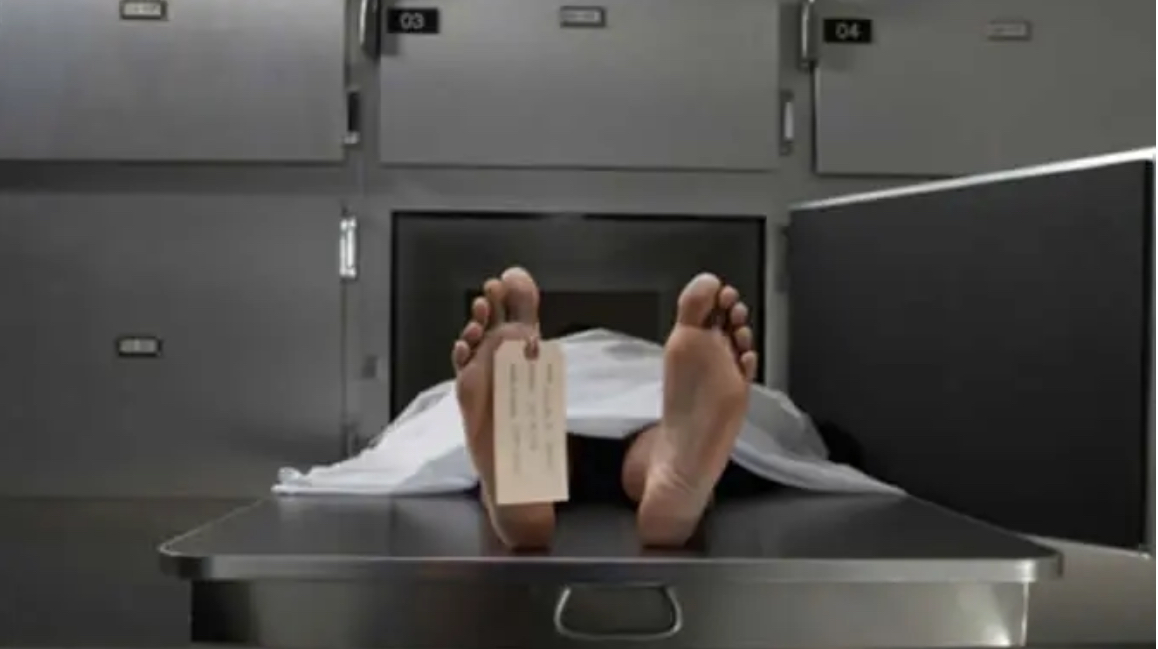
In Ward 13 of Nkayi district, there was no time for a traditional week-long wake or a post-mortem examination. There is no mortuary.

Local leaders say immediate burials have become common in parts of Nkayi and neighbouring Lupane, where families cannot preserve bodies due to a lack of cold storage facilities.

Advertisement

Weston Msimango, the councillor for Ward 13, said Mr Mabhena’s body was covered with sand before burial in an attempt to slow decomposition.

“It has become normal for people to be buried within 24 hours,” he said. “We have no facilities to keep them.”

The problem centres on Mbuma Mission Hospital, the main referral hospital for Nkayi and Lupane districts. Despite serving thousands of people, it has never had a mortuary.

Advertisement

For many villagers, transporting a body to cities such as Bulawayo or Gweru is too expensive. As a result, families resort to improvised methods to manage the smell of decomposition while making urgent burial arrangements.

Thandiwe Moyo, from Mkalathi village, said families often use sand and bananas to try to reduce odours while waiting for a few relatives to gather.

“To bury someone you love within 24 hours, without a proper goodbye because there is no cold room, feels like we are disposing of trash rather than honouring a life,” she said.

Advertisement

Residents say the lack of basic infrastructure contrasts sharply with the political rallies occasionally held in the district.

Jabulani Hadebe, the Member of Parliament for Nkayi South, has criticised what he describes as a lack of political will to address the issue.

He pointed to a large 2023 election rally in the area, attended by senior political figures, as an example of misplaced priorities.

Advertisement

“Leaders had an opportunity to visit the hospital, see what was missing and help,” he said. “Instead, the focus was on displays of wealth.”

Hadebe also alleged that some people who attended the rally were given spoiled food and later fell ill, though this claim could not be independently verified.

Sibusiso Sibanda, from Gonye village, said residents struggle to reconcile the arrival of luxury vehicles at rallies with the absence of a basic mortuary facility.

Advertisement

“They can come with big cars and give out meat, but they cannot finish a small room at Mbuma to keep the dead,” he said.

He added that without funeral insurance or money for transport, families have little choice but to bury relatives quickly.

“In the morning you are alive. If you die and you do not have a funeral policy, by evening you are in the sand,” he said. “There is no dignity left.”

Advertisement

Villagers in Somakantane said the absence of a mortuary has also disrupted cultural practices that require the body to remain at home for several days before burial.

The situation is not unique to Nkayi. Lawmakers have raised similar concerns in Binga, where some hospitals also operate without mortuary facilities.

Despite the issue being raised in Parliament, there has been no formal response from the government indicating when mortuaries might be built or repaired in affected districts.

Advertisement

The Ministry of Health’s spokesperson, Donald Mujiri, could not be reached for comment.

SOURCE: CITE

Advertisement
Continue Reading

In the community

Zimbabwe moves to support human-wildlife conflict victims

Published

on

BY NOKUTHABA DLAMINI

Cabinet has officially approved a transformative National Wildlife Policy, marking the first major overhaul of the sector’s regulatory framework in over three decades.

Advertisement

For the communities of Matabeleland North—from the elephant-dense corridors of Hwange to the tourism heartbeat of Victoria Falls—the policy promises a radical shift in how local people coexist with and benefit from the country’s natural heritage.

Presented by Finance minister Mthuli Ncube on Tuesday, the new policy acknowledges that the wildlife sector has been “remarkably transformed” since the current laws were enacted in 1992.

The updated framework seeks to align Zimbabwe with modern international best practices, moving toward a “vibrant wildlife-anchored economy” that directly supports national development.

Advertisement

For residents of Hwange and Victoria Falls, the most critical breakthrough is the policy’s explicit focus on human-wildlife conflict (HWC).

The framework provides for the implementation of the Human-Wildlife Conflict Relief Fund, specifically designed to provide benefits and support to victims of wildlife encounters.

This is paired with new regulations for CAMPFIRE (Communal Areas Management Programme for Indigenous Resources) and the establishment of dedicated wildlife corridors to reduce dangerous interactions between animals and human settlements.

Advertisement

The policy is built upon 10 strategic pillars, including community-based natural resources management and the equitable sharing of benefits.

Crucially, the government now recognises wildlife as a “public resource,” with the policy aiming to support devolution and enhance “active community participation.”

This ensures that present and future generations in Matabeleland North are not just neighbours to the game reserves, but active stakeholders in its socio-economic success.

Advertisement

However, community members say the success of the policy will depend on how effectively benefits are devolved to grassroots level.

“We have heard policies before, but what matters is whether the money reaches us,” said a Hwange villager, Eslina Ndlovu from Nemanhanga. “Our schools are struggling, some do not even have adequate classrooms or learning materials. If wildlife revenue is coming from our areas, it should help improve our education system.”

Another villager,Joseph Mwembe from Vukuzenzele village under Chief Mvuthu, echoed similar sentiments, calling for investment in health services. “We are living with wildlife every day, but our hospitals are not equipped. We don’t have proper referral hospitals or machines. If this policy is serious about supporting communities, then we must see that money building clinics, equipping hospitals, and improving services here in Matabeleland North,” he said.

Advertisement

Villagers stressed that without tangible improvements in infrastructure and social services, the policy risks falling short of its intended impact.

“If communities do not benefit in real terms, then it defeats the whole purpose of calling wildlife a national resource,” added Ndlovu.

The policy also introduces measures for fisheries conservation and the protection of indigenous plant species, with strict penalties for violations that threaten resource sustainability.

Advertisement

Continue Reading

Trending

Copyright © 2022 VicFallsLive. All rights reserved, powered by Advantage