Connect with us

Slider

Zimbabwe’s focus on wheat set to yield biggest-ever harvest

Published

on

BY FARAI MUTSAKA

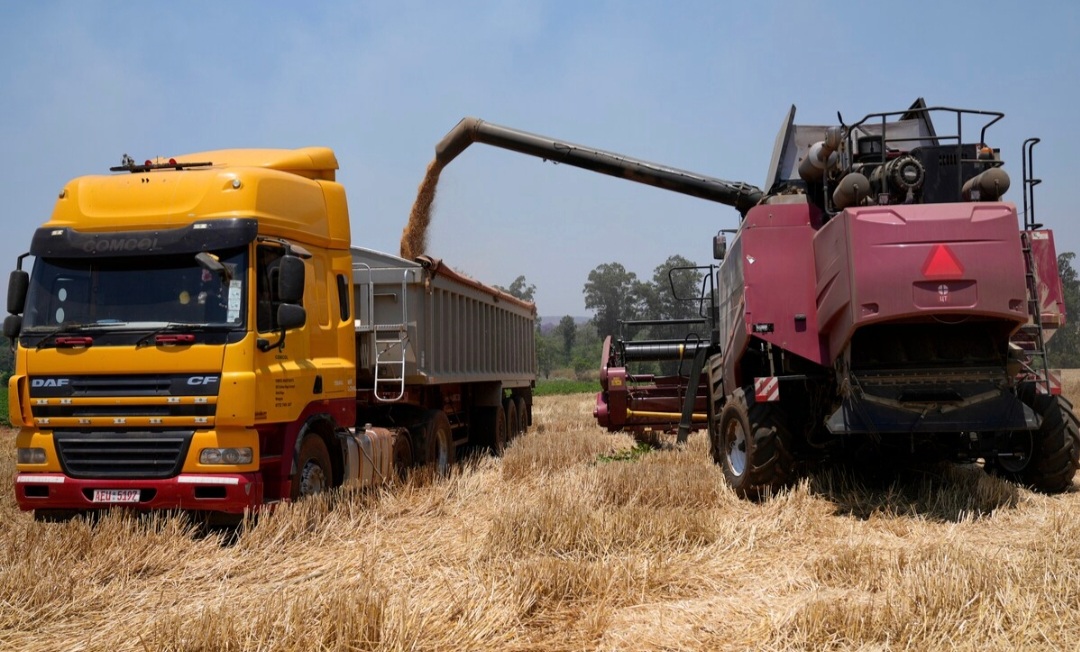
Zimbabwe says it is on the brink of its biggest wheat harvest in history, thanks in large part to efforts to overcome food supply problems caused by the war in Ukraine.

Advertisement

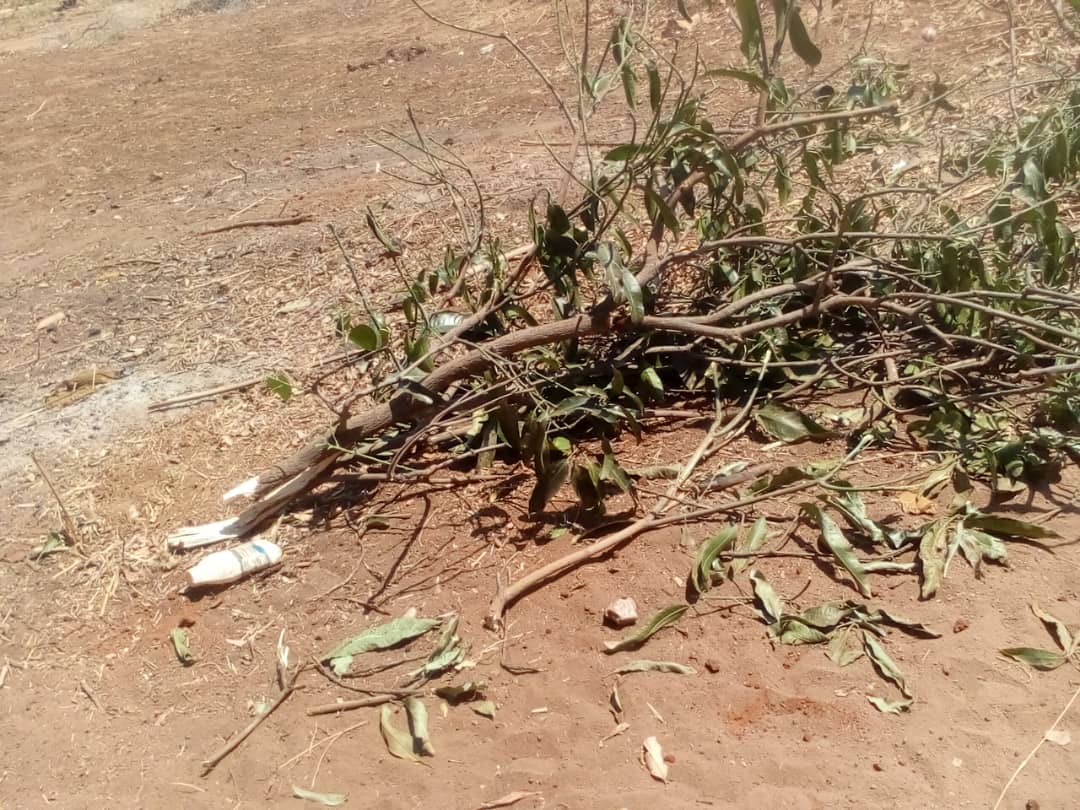
But bush fires and impending rains are threatening crops yet to be harvested.

Like other African countries, Zimbabwe has for decades relied on imports to offset low local production.

After Russia’s invasion of Ukraine resulted in global shortages and price hikes, the country wanted to ensure “self-sufficiency at all costs,”  Agriculture deputy minister Vangelis Haritatos told The Associated Press this week.

Advertisement

The country expects to harvest 380,000 tons of wheat, “which is 20,000 more than we require as a country,” Haritatos said. That is up from about 300,000 tons produced last year.

“We are most likely to get the highest tonnage since 1962, when wheat was first introduced to Zimbabwe.

“A lot of countries are facing shortages, but the opposite is happening in Zimbabwe.”

Advertisement

While other hunger-stricken African countries are struggling with reduced wheat imports due to the war in Ukraine, Zimbabwe is looking at using its anticipated surplus of the grain to build “a small strategic reserve” for the first time in its history, Agriculture minister Anxious Masuka told journalists earlier this month.

This would cushion Zimbabwe against future shocks.

Masuka said Zimbabwe plans to bump up wheat production to about 420,000 tons next season, giving the country room to keep building its strategic reserve and become an exporter of the grain.

Advertisement

Wheat is Zimbabwe’s most important strategic crop after corn.

African countries — which imported 44 percent of their wheat from Russia and Ukraine between 2018 and 2020, according to U.N. figures — were hit hard by the global shortages and price hikes of grains as a result of the war.

The African Development Bank has reported a 45 percent increase in wheat prices on the continent.

Advertisement

African nations were at the center of Western efforts to reopen Ukraine’s ports as the United States and allies accused Russia of starving the world  by denying exports from Ukraine, a key global grain exporter. African leaders also visited Russia to meet with Putin over the issue.

Zimbabwean President Emmerson Mnangagwa in April described the war in Ukraine as a “wake-up call” for countries to grow their own food.

The answer in Zimbabwe has been to empower local farmers, said Haritatos, the deputy agriculture minister.

Advertisement

That included roping in hundreds of small-scale, rural farmers to start growing a crop that was traditionally reserved for large-scale commercial farmers, improving water supply infrastructure and distributing fertilisers to small-scale farmers as well as increasing private-sector participation.

The crop was introduced for the first time to areas and farmers who had never grown wheat before.

Winter corn production has given way to wheat in many areas, with Zimbabwe banking on corn reserves to meet demand for the staple food. Land used for growing wheat increased from 66,000 hectares (163,089 acres) in 2021 to 75,000 hectares this year and will grow to 100,000 hectares next season.

Advertisement

“A lot of countries discount small-scale farmers because they are so small that individually they cannot effect much change,” Haritatos said.

“But we organized them into clusters and convinced them that it was possible. The quality of most of their crops is premium.”

He said the war in Ukraine had made Zimbabwe “realize that we shouldn’t rely on other countries for food that we can grow on our own.”

Advertisement

However, Zimbabwe’s wheat is predominantly soft, and there is a need to blend it with imported hard wheat varieties to produce quality flour for bread, according to the Grain Millers Association of Zimbabwe.

But the government has ruled out imports amid the surplus, saying a special permit would be needed.

The wheat harvest runs from October to December. However, both farmers and the government are concerned by the threat of raging bush fires and imminent rains.

Advertisement

They say the fires are more devastating than in previous years as climate change contributes to an extended dry season.

“Farmers are increasingly getting worried about the time factor. It looks like the rains will be upon us soon. Wheat should be out of the fields,” said Paul Zakariya,

director of the Zimbabwe Farmers Union, which represents small-scale growers.

Advertisement

Officials said bush fires destroyed wheat worth nearly US$1 million in a single week in mid-October.

Zimbabwe is amid the “fire season,” characterised by severe heat and strong windy and arid conditions that precede the rainy season.

The government says it has deployed more combine harvesters to help farmers speed up the harvest and is carrying out fire prevention awareness programs.

Advertisement

The country’s environmental management agency has described bush fires as “one of the greatest environmental challenges of our time. – AP

Advertisement
Continue Reading
Click to comment

Leave a Reply

Your email address will not be published. Required fields are marked *

In the community

Foot and mouth disease outbreak in Mat North

Published

on

BY NIZBERT MOYO

The provincial Veterinary Department has urged farmers to comply with livestock movement regulations following an outbreak of the Foot and Mouth Disease (FMD) in some parts of Matabeleland North.

Advertisement

Acting provincial veterinarian Gwinyai Zhandire confirmed the outbreak to Southern Eye, saying the government has instituted movement controls, vaccination and active surveillance in the affected areas.

“There are some dip tanks affected in the Nyamandlovu area,” Zhandire said.

“The government has instituted movement controls and vaccination, and we are conducting surveillance.

Advertisement

“Farmers are encouraged to observe and comply with livestock movement regulations to prevent further spread.”

He highlighted that the rainy season increases the risk of other livestock diseases.

With tick populations on the rise, farmers should be vigilant against tick-borne illnesses such as Anaplasmosis (Gall Sickness), Theileriosis (January Disease), Ehrlichiosis (Heartwater) and Babesiosis (Redwater).

Advertisement

“Weekly dipping is encouraged to prevent transmission between animals,” Zhandire said.

He emphasised the importance of routine vaccination against other seasonal threats, including anthrax and lumpy skin diseases.

The outbreak has also affected farmers in the Umguza area, who have similarly been directed to adhere to animal movement restrictions.

Advertisement

Foot and mouth disease is a highly contagious viral disease that affects cloven-hoofed animals, including cattle, sheep and goats.

The disease is characterised by fever and the development of painful sores or blisters in the mouth and on the feet, often leading to severe lameness and a drop in productivity.

The virus spreads easily through direct contact between animals, as well as via contaminated equipment, vehicles and feed.

Advertisement

The disease can result in significant economic losses in the livestock industry due to trade restrictions and animal health costs.
Source: Southern Eye


Advertisement
Continue Reading

In the community

Brother-in-law jailed for repeated rape of mentally incompetent 16-year-old

Published

on

BY WANDILE TSHUMA

The Hwange Regional Magistrates’ Court has convicted and sentenced a 41‑year‑old man to 20 years’ imprisonment for the repeated rape of his 16‑year‑old sister‑in‑law, a mentally incompetent juvenile.

Advertisement

The court heard that the victim was staying at the offender’s homestead in Lupane. Between November 2024 and May this year, the offender exploited her mental incapacity and his position of trust to rape her on multiple occasions.

In the first incident, the offender’s sister pushed the victim into a bedroom where the offender was waiting, locked the door, removed the victim’s clothes and raped her. He threatened the victim and ordered her to remain silent when she tried to cry out for help.

The abuse continued on various occasions. In May, a community member discovered the abuse and reported it to the Zimbabwe Republic Police in Lupane.

Advertisement

Medical and psychiatric examinations confirmed the victim’s mental status and the ordeal. The offender and his sister assaulted the victim with a sjambok and a stick and threatened her not to disclose the matter.


Advertisement

Continue Reading

Slider

Inside South Africa’s lion breeding debate: A field visit to Mabula Pro Safaris

Published

on

BY NOKUTHABA DLAMINI

At the heart of Bela-Bela’s Driepdrift area lies Mabula Pro Safaris — a private predator breeding facility that, to many outsiders, represents one of the most controversial aspects of South Africa’s wildlife industry. But for the Zimbabwe Parks and Wildlife Management Authority (ZimParks) delegation, which recently toured the facility together with myself as a journalist from Zimbabwe, the visit provided an unusual opportunity: to see the behind-the-scenes reality of a commercial hunting lion breeding operation, far from the images often circulated in global media.

Advertisement

Led by Stephen Palos, Vice-Chair of the Sustainable Use Coalition Southern Africa (SUCo-SA) and CEO of the Confederation of Hunters Associations of South Africa (CHASA), the tour included a close look at lions bred under the South African Predator Association (SAPA) standards.

Inside the sanctuary, the group viewed 52 lions — including 12 adult males and 11 cubs — living in structured social groups within medium-sized enclosures. The animals walked freely, with access to shade, water, and open space.

An earlier visit to a predator sanctuary was, as pointed out by Palos, a stark contrast. Those were used to people whereas these would eat you in a heartbeat.

Advertisement

“These are breeding animals specifically, not pets,” he emphasized. “This is a breeding unit with the express purpose of producing lions for hunting. What you’re seeing here is very different from the popular ‘puppy farm’ narrative.”

Debunking the ‘puppy farm’ image

For years, global campaigns have depicted South African lion breeding as cruel and exploitative — with constant forced pregnancies, cubs immediately snatched from mothers, and animals confined in cramped cages. Palos argued that the facility before the delegation told a different story.

Advertisement

“Each enclosure functions as a pride,” he explained. “A male, a few females, different ages of cubs — just like in the wild, but within an enclosure. Look at the cleanliness, the condition of the animals, their behaviours. These animals are at ease.”

He stressed that cubs were not routinely separated from their mothers for tourism activities, and that animals destined for hunting were relocated to separate facilities to be raised with minimal human imprinting.

A fractured industry

Advertisement

Despite the orderliness observed at Mabula Pro, Palos admitted that the predator breeding industry suffers from fragmentation. Although SAPA prescribes standards for its members, adherence is voluntary.

“There are around 340 facilities in the country, but only about 43 are members of the association,” he said. “We cannot speak about those who choose to operate outside of these standards. That’s where the problems arise.”

What can African countries learn from each other?

Advertisement

After the tour, l asked what lessons Southern Africa can share across borders, including Zimbabwe.

Palos responded with a regional, long-term view.

“Every African country has something to teach and something to learn,” he said. “Wildlife is a renewable natural resource — but only if it’s managed properly.”

Advertisement

He contrasted South Africa’s fenced wildlife model with Zimbabwe’s largely open systems.

“South Africa relies heavily on fencing — from Kruger National Park to private ranches. But in Zimbabwe, Tanzania, Namibia, and elsewhere, you have vast open landscapes. Both systems work in their own contexts.”

Palos warned against “fortress conservation”, where communities are excluded from wildlife spaces — a model he says has failed people and wildlife alike.

Advertisement

Toward shared learning and mentorship

One of the strongest points he emphasized was the need for honest exchange between countries.

“It’s wonderful for us to learn from your challenges and successes,” he told the delegation. “But it’s even more important for us to show what works here, openly, and address our own challenges.”

Advertisement

He suggested that exchanges like this should evolve into:

Formal mentorship programmes
Boots-on-the-ground technical exchanges
Shared management experiments
Cross-border policy innovation

Economic lessons from a controversial industry

Palos acknowledged that South Africa has become a global leader in game farming and wildlife production systems — but insisted this does not invalidate the strengths of other countries’ models.

Advertisement

“There is economic success here,” he said. “But it’s not the only way. Zimbabwe already has strong systems. A blend of your models and ours could be even better.”

For the Zimbabwean delegation, the visit provided an opportunity to observe a facility that challenges both critics and defenders of the captive breeding industry. Whether South Africa continues down this path or phases it out — as many activists demand — facilities like Mabulapro Safaris remain central to the debate.

The tour served as a reminder that wildlife management in Africa is varied, complex, and always evolving — shaped by history, ecology, economics, and human needs.

Advertisement

Continue Reading

Trending

Copyright © 2022 VicFallsLive. All rights reserved, powered by Advantage