Connect with us

National

Zimbabwe tourism industry suffers major blow amid new restrictions for visitors  

Published

on

BY NOKUTHABA DLAMINI

Zimbabwe’s tourism industry is facing a bleak festive after the government on Tuesday introduced new tough measures to prevent the spread of the new Omicron variant of Covid-19, which include mandatory 10-day quarantine for all visitors.

Advertisement

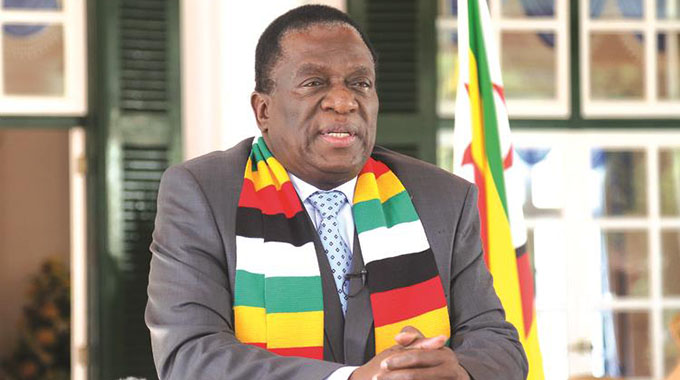
President Emmerson Mnangagwa said visitors and returning residents will required to take PCR tests on arrival before quarantining at their own expense.

The detection of the new variant in Botswana and South Africa led to a ban on flights from southern Africa by several countries, including those in Africa.

“What raises our concern, and adds to our anxieties, is the outbreak of a new strain – Omicron – detected and reported in neighbouring countries only a few days ago” Mnangagwa said.

Advertisement

“We face a new, added risk, which compounds the burden we already face and shoulder from known variants we have been grappling since the outbreak of the pandemic (so) is in view of this new, ominous development that government has decided on new, enhanced measures to strengthen our national response, and to protect our nation from impact of a likely fourth wave, which the new variant, Omicron will most certainly aggravate,

“With immediate effect, all returning residents and visitors have to undergo PCR testing, and will be quarantined, at own cost, for days recommended by the World Health Organisation even if they present a negative PCR test result from elsewhere,”

Resort areas like Victoria Falls have been, since last year, charging a minimum fee of US$ 60 per night and per individual for quarantining at their facilities certified by health officials.

Advertisement

The tourism industry, which was beginning to show signs of recovery, will be the hardest hit by the measures as they are likely to lead to cancellation of bookings even by tourists from the region.

Zimbabwe’s tourism industry has borne the brunt of travel bans that were first imposed early last year following the outbreak of Covid-19 that began in China.

Mnangagwa also announced that the daily curfew would now be between 9PM to 6AM.

Advertisement

“Only essential services categories announced in previous gazettes stand exempt,” he revealed.

Shops will open for business from 7AM and close at 7PM.

On gatherings, Mnangagwa said citizens must observe and comply with WHO protocols such as masking, social distancing and sanitising.

Advertisement

“All Covid-19 related funerals will strictly be supervised by Ministry of Health and Child Care Environmental Health Officers and Technicians,” he said.

“No liquor will be consumed at bottle stores, which consequently cease to be drinking premises until further notice”.

Night clubs and bars will admit vaccinated clients only while restaurants are now required to close at 7PM.

Advertisement

Continue Reading
Click to comment

Leave a Reply

Your email address will not be published. Required fields are marked *

National

Parliament debates disputed chiefdoms across the country

Published

on


BY STAFF REPORTER 

Advertisement

Parliament has raised concern over increasing disputes over traditional leadership, with lawmakers warning that contested chiefdoms are undermining governance and development in rural communities.

Moving a motion in the National Assembly, Hwange West MP, Vusumuzi Moyo said the growing number of chieftainship disputes posed a threat to peace and cultural heritage.

“I rise today to debate on a matter which I believe is a matter of national importance, the growing prevalence of disputed chiefdoms across Zimbabwe and the serious threat that these poses to peace, governance, development, and the preservation of our cultural heritage,” Moyo told Parliament. 

Advertisement

He said many disputes date back to distortions created during the colonial period.

“Some of these disputes… emanate from colonial times… when the colonial masters moved in. When they moved in, we already had governing structures,” he said. 

Moyo also referenced communities in Hwange District, saying colonial relocations disrupted traditional governance systems.

Advertisement

“I remember in the constituency that I come from, most of these people… had been resettled from far-off lands, fertile lands, and dumped in Hwange District,” he said. 

He warned that unresolved leadership disputes weaken governance at grassroots level.

“Madam Speaker, when a chiefdom becomes disputed, those constitutional functions grind to a halt. Customary courts lose legitimacy. Land allocations become contested. Development programmes stall,” he said. 

Advertisement

Moyo urged Government to establish clearer succession procedures for traditional leaders.

“It is my sincere hope that… we could start the conversation of trying to restore our culture by providing the necessary legislation to make sure that we cure all this,” he said.  

Advertisement
Continue Reading

National

Rising Zambezi flows lift Kariba water levels amid improved rains

Published

on

BY WANDILE TSHUMA

Water levels at the Kariba Dam are gradually rising following improved rainfall across the Zambezi River Basin, bringing cautious optimism for water availability and power generation.

Advertisement

In a hydrological update released Tuesday, the Zambezi River Authority said the Lake Kariba reservoir level had reached 477.74 metres above sea level as of 10 March 2026.

Usable live storage now stands at 15.57 percent, equivalent to about 10.08 billion cubic metres of usable water.

The Authority said the increase is being driven by improved rainfall across much of the Kariba catchment during the 2025/2026 rainy season, which has boosted river flows and inflows into the reservoir.

Advertisement

“This reflects an improvement compared to the same date in 2025, when the reservoir stood at 476.93 metres above sea level with usable live storage of 9.87 percent,” the Authority said.

Zambezi flows rising at key monitoring points

River flows are also increasing at key monitoring stations along the Zambezi River.

Advertisement

At the Chavuma Gauging Station, flows reached 3,058 cubic metres per second on 10 March 2026, significantly higher than 2,088 cubic metres per second recorded during the same period last year.

Flows have also risen sharply near Victoria Falls, a key tourism and hydrological monitoring point.

At the Victoria Falls (Nana’s Farm) Gauging Station, river flows increased to 1,645 cubic metres per second, compared to 871 cubic metres per second on the same date in 2025.

Advertisement

The Authority said the upward trend reflects stronger rainfall upstream and around the Victoria Falls area, which is feeding the Zambezi system.

Outlook

The Zambezi River Authority said it will continue monitoring rainfall patterns and inflows across the basin to guide water utilisation at hydropower stations linked to the Kariba Dam.

Advertisement

The reservoir is a critical source of electricity for both Zimbabwe and Zambia, which jointly own and manage the dam through the Authority.

Advertisement
Continue Reading

National

Parliament flags dozens of council by-laws as unconstitutional

Published

on


BY NOKUTHABA DLAMINI

Advertisement

Subheading:

Legal committee says several statutory instruments exceed legal powers, impose excessive fines and create room for arbitrary charges.

Story:

Advertisement

The Parliament of Zimbabwe has raised alarm over dozens of local authority by-laws, warning that many of them violate the Constitution and the laws under which they were created.

In an adverse report, the Parliamentary Legal Committee said several statutory instruments gazetted in October 2025 are ultra vires, meaning they exceed the legal powers granted under the Urban Councils Act and the Rural District Councils Act. 

The by-laws affect a number of local authorities including Masvingo, Plumtree, Shurugwi, Chimanimani, Chivi and Insiza.

Advertisement

According to the committee, some of the regulations were improperly enacted because the minister responsible for local government made the by-laws directly instead of councils, which are legally mandated to draft them before submitting them for ministerial approval. 

“The by-law making authority is the council, not the minister,” the report states, adding that the process set out in the law was not followed. 

The committee also flagged excessive penalties in some statutory instruments. Under existing legislation, fines imposed through council by-laws should not exceed Level Five on the standard scale of fines — about US$200. However, some by-laws impose penalties ranging between US$500 and US$5,000, which lawmakers said violates the enabling legislation. 

Advertisement

Another major concern is that several by-laws require residents to pay permit or licence fees without specifying the amounts, creating legal uncertainty.

Lawmakers warned that leaving such fees undefined could allow authorities to impose arbitrary charges, potentially opening the door to corruption and abuse of power. 

The committee also highlighted constitutional concerns in some provisions, including those that allow councils to seize property or evict residents without court oversight, which may violate constitutional protections against arbitrary deprivation of property and unlawful eviction. 

Advertisement

In its conclusion, the committee said the statutory instruments are inconsistent with both the Constitution and the Acts of Parliament that empower local authorities, recommending that the laws be reviewed and amended to comply with constitutional and legal requirements. 


Advertisement
Continue Reading

Trending

Copyright © 2022 VicFallsLive. All rights reserved, powered by Advantage