Connect with us

Slider

Tourism industry gears up for Sanganai/Hlanganani expo

Published

on

BY BAYANDA NKATHA

Preparations are underway for the 17th edition of the Sanganai/Hlanganani World Tourism Expo, scheduled to take place in Bulawayo from September 12-14.

Advertisement

The event will be held at the Zimbabwe Exhibition Centre at the Zimbabwe International Trade Fair, and over 400 foreign and local exhibitors are expected to participate.

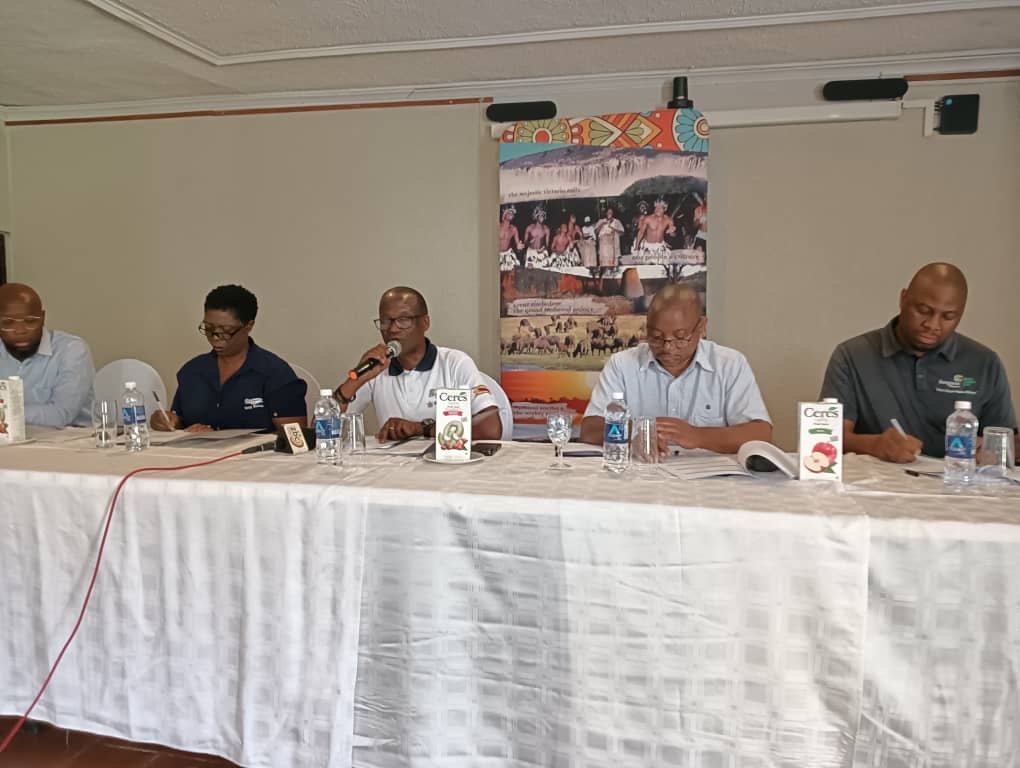
On Monday, the Zimbabwe Tourism Authority (ZTA) held a meeting with tourism operators in Victoria Falls, where acting ZTA chief executive William Stima encouraged industry players to exhibit at the expo.

“I am excited to announce that we will be hosting the 17th edition of Sanganai/Hlanganani World Tourism Expo in Bulawayo from September 12-14,” he said.

Advertisement

“We have been hosting this expo for the past 16 years to promote the tourism industry, especially small operators who may not have the capacity to attend international travel shows. We bring buyers to their doorstep.”

Stima emphasized the importance of participation from Victoria Falls, Zimbabwe’s tourism capital and a world destination of choice.

“We look forward to seeing more players from Victoria Falls coming to participate in Sanganai/Hlanganani. We encourage all provinces to take ownership and advantage of this mega event to profile tourism products.

Advertisement

We appeal to the tourism industry in Victoria Falls to support this initiative, as it is crucial for you to showcase your products to international buyers for future business.”

The expo has grown steadily, with 310 exhibitors in 2017, 375 last year, and over 400 expected this year. The target for regional and international exhibiting companies is 40, up from 34 last year.

All provinces will be expected to exhibit attractions in their areas to collectively market the country, including hidden gems, as a destination.

Advertisement

Registration is ongoing, although recruitment of buyers has closed.

Advertisement
Continue Reading
Click to comment

Leave a Reply

Your email address will not be published. Required fields are marked *

National

79 dead as floods hit communities

Published

on

BY STAFF REPORTER

As the Zimbabwe enters the peak of its rainy season from January to March, communities across the country are being urged to remain on high alert following the deaths of 79 people due to flooding and rain-related disasters since October last year.

Advertisement

Speaking to the Herald newspaper, Department of Civil Protection Chief Director Nathan Nkomo said the department is closely monitoring the situation as more severe weather is expected in the coming weeks.

“We anticipate significant rainfall during this period. It’s crucial for everyone to stay informed and take necessary precautions,” Nkomo said.

According to the Department of Civil Protection, many of the deaths and injuries recorded since the start of the 2025/2026 rainfall season resulted from people attempting to cross flooded rivers and mining-related accidents, particularly involving artisanal miners operating near waterways.

Advertisement

“The statistics reveal a worrying trend of fatalities and injuries during this rainfall season,” Nkomo said.

Infrastructure worth more than US$1 million has also been damaged, disrupting livelihoods and access to essential services in several communities.

In response, Government has released funding towards disaster management and emergency response through a coordinated, multi-sectoral approach, involving security services and other stakeholders as outlined in the Civil Protection Act. Nkomo said the initial tranche of funds has already strengthened rescue operations.

Advertisement

“The money that was availed is not enough, but it is the first tranche. We are expecting another tranche from Treasury later this month to bolster our disaster response capabilities,” he said.

Authorities are urging communities to take an active role in disaster preparedness by monitoring weather forecasts, avoiding flooded areas, and implementing local emergency plans. Schools and community organisations have also been encouraged to conduct safety drills and ensure emergency procedures are well communicated.

With heavy rains expected to continue, officials warn that community vigilance and preparedness will be key in preventing further loss of life.

Advertisement

SOURCE: HERALD

Advertisement
Continue Reading

Slider

From discarded glass to second chances: How conservation is rebuilding the lives of Zambia’s street boys

Published

on


BY NOKUTHABA DLAMINI

Advertisement

Livingstone, Zambia — In Maloni township, the sound of glass snapping cleanly against a cutter echoes through the yard of a modest home. What was once a discarded beer bottle now sits neatly trimmed, smoothed into a drinking glass. For a group of young men long dismissed as “junkies,” this simple act has become the beginning of a second chance.

At the centre of this transformation is Songiso Mukena, a conservationist, tourism practitioner and founder of the Responsible Earth Keepers Foundation (REK). Through conservation work, recycling, football and mentorship, Mukena is quietly rewriting the futures of boys once written off by their own communities.


Advertisement

“My name is Songiso Mukena from Livingstone, Zambia,” he says. “I am the founder of Responsible Earth Keepers Foundation – a non-profit making organisation.”

A journey rooted in hospitality and conservation

Mukena’s passion for conservation grew out of more than 15 years working in Zambia’s hospitality industry. While employed at Jolly Boys Backpackers in Livingstone, he was involved in a programme focused on responsible tourism and waste management.

Advertisement

“For me, it was just work,” he explains. “It was all about waste separation, finding a better place where to take or whom to give. We were doing worm farming and also just learning how to manage waste.”

That experience sparked a deeper interest. “I think it’s one of the places I worked that really opened my mind,” he says.

In 2016, a visit to a recycling organisation became a defining moment.

Advertisement

“I was amazed with what I saw,” Mukena recalls. “They were giving life back to bottles that were discarded out there or thrown out. They would cut them, make candle holders, lanterns and drinking glasses.”

Although he wasn’t taught the technique, the idea stayed with him. “I started doing research on how to cut a bottle and make a drinking glass,” he says. “It wasn’t easy.”

A breakthrough came when former employers, Mr and Mrs Sikaneta of Munga Eco-Lodge, donated a glass cutter.

Advertisement

“I started practicing and practicing,” Mukena says. “The whole of 2017 I was practicing. In 2018, I started taking bottles to my house and cutting them.”

Soon, people began buying the glasses.

“For me, my mind shifted,” he says. “I thought, I think this can be a big idea on recycling.”

Advertisement

COVID-19 and a move into the community

The COVID-19 pandemic forced Mukena out of employment as tourism ground to a halt. He moved from Linda township to his own plot in Maloni, an area facing deep social challenges.

“It’s a remote area,” he explains. “It’s one of the places where you find early pregnancies, boys failing exams and turning into what today are called junkies.”

Advertisement

Many of these boys had gone through traditional initiation ceremonies, after which they were often stigmatised.

“When they come back, the community views them in a different way,” Mukena says. “Once you go there and come back, you are not taken as a normal boy child.”

Instead of distancing himself, Mukena opened his space to them.

Advertisement

“I started teaching those boys how to cut bottles, making drinking glasses,” he says. “We started with about ten boys.”

The glasses were sold, and the money shared according to need.

“If one lacked shoes, we would sponsor that,” Mukena explains. “If another boy wanted to go back to school and lacked books, we helped.”

Advertisement

Healing beyond skills

The transformation was not just physical or financial. Mukena’s wife, Yvonne, a psychosocial counsellor, joined the initiative.

“She started talking to the boys,” he says. “Trying to get their minds shifted.”

Advertisement

Their home became a safe space.

“Our home became a home of many,” Mukena says. “Some kids would come just to play.”

Recycling soon funded broader social causes.

Advertisement

“We said, how about we sell these glasses back into the charity to help make it self-sustainable? Mukena explains. “Waste management became a starting point for other projects.”

Football as a tool for dignity

Football emerged naturally from the boys themselves.

Advertisement

“They were already playing – and with real talent,” Mukena says. “One day they came and said, ‘Father, we want to play City Stars and we’ll win!”’ City Stars is a professional team.

Recognising their talent and passion, the boys asked for support.

“They said, if possible, can you organise football kits for us?” he recalls.

A local church donated land for a pitch, and REK FC was formed. Recycling income helped support the charity’s activities, linking conservation directly to sport.

Advertisement

Football also brought structure, discipline and confidence.

“We don’t just concentrate on soccer,” he says. “We also give motivational talks, encouragements, testimonies and Bible readings. At the end of the day, it’s a mind change that we are looking for.”

Support from abroad, built on trust and friendship

Advertisement

Among those drawn to support Mukena’s work were two tourists from the UK, Simon Greene and Audrey Furnell. Simon explains why grassroots initiatives resonate with donors today:

“In return for a relatively modest donation anyone can make a tangible difference. Supporters like us can see a direct return on what we give which is incredibly rewarding.”

Simon says this is exactly the kind of work they want to promote.

Advertisement

“We’ve learnt a huge amount from Song and Yvonne and were struck by their kindness and impressed by their drive to do more for his community,” Simon says.

Their family’s support began with a classroom project in Linda, expanded to monthly assistance for school needs, and later funded a borehole near Kazungula.

When introduced to the boys of Maloni, Audrey says:

Advertisement

“We saw their passion for football and it was clear they deserved the chance to be their best on the field – but without proper kit that could never happen.”

Soon afterwards, Simon recalls:

“Songiso lost no time, organised all the kit and immediately arranged a match on Christmas Eve with REK FC playing against a professional team. We were thrilled.”

Advertisement

Rewriting the story of the boy child

Mukena believes the project addresses a wider national issue.

“There was a campaign for educating the girl child,” he says. “That campaign was done very thoroughly. But the boy child was left behind.”

Advertisement

He believes that neglect has contributed to rising numbers of boys labelled as criminals and drug users.

“When a boy’s mind is changed,” Mukena says, “it’s an achievement for the organisation, the community and the country.”

Today, REK works with approximately 100 boys aged between 15 and 22, with about 25 actively involved in recycling and football.

The long-term goal is to establish a recycling and skills training centre employing youth from the community.

Advertisement

“We want a better community,” Mukena says.

Small acts, lasting change

In Maloni, discarded bottles are no longer just waste. They are tools of transformation — funding education, restoring dignity and giving young men a reason to believe in themselves.

Advertisement

For Mukena, success is simple.

“One day we hope a boy will be picked to play for a professional team,” he says, “that will be an incredible achievement for him — and for us.”

And for Simon and Audrey:

Advertisement

“We feel blessed to have Songiso in our lives. Being able to see REK make valuable improvements like these is very rewarding. We’d like more people in the wider donor community to act as we have – together we can make a difference.”

Advertisement
Continue Reading

Slider

Human-wildlife conflict in Zimbabwe is a crisis: who is in danger, where and why?

Published

on

BY BLESSING KAVHU

In the fishing villages along Lake Kariba in northern Zimbabwe, near the border with Zambia, everyday routines that should be ordinary – like collecting water, walking to the fields or casting a fishing net – now carry a quiet, ever-present fear. A new national analysis shows that human-wildlife conflict in rural Zimbabwe has intensified to the point where it has become a public safety crisis, rather than simply an environmental challenge.

Advertisement

Between 2016 and 2022, 322 people died in wildlife encounters. Annual fatalities climbed from 17 to 67: a fourfold increase in just seven years. These fatal encounters are concentrated in communities that live closest to protected areas and water bodies. Here, people and wildlife compete for space and survival.

Protected areas and rivers provide water, forage and shelter for wildlife. Rural households rely on the same landscapes for farming, fishing and domestic water. The study shows that this overlap between human activity and wildlife movement sharply increases the risk of fatal encounters.

Historically, human-wildlife conflict research and policy in southern Africa focused on economic losses such as destroyed crops, livestock predationand damaged infrastructure. Fatal attacks on people were often treated as rare or incidental. This study shifts that perspective by showing that human deaths are not isolated events, but a growing and measurable pattern that demands urgent attention.

Advertisement

I am a US-based Zimbabwean scientist working with Zimbabwean conservationists. We analysed national wildlife-related fatality records from the Zimbabwe Parks and Wildlife Management Authority. The central questions were: how many people are dying from wildlife encounters, where are these deaths occurring and which species are responsible?

The findings were stark. Fatal encounters are rising rapidly, are geographically clustered in the north and western districts, and are driven primarily by two species: crocodiles and elephants (not lions, as people might expect). The implications extend beyond conservation to include trauma, fear, retaliatory killings of wildlife and the need for targeted, locally specific interventions.

Patterns in the data

The study reveals that more than 80% of recorded deaths involved only two species, elephants and crocodiles. Crocodiles alone were responsible for slightly more than half of all fatalities. Many of these incidents happened during activities people cannot avoid: fishing, crossing rivers, bathing, or washing clothes in rivers and lakes. These encounters are sudden and often impossible to anticipate, especially in places where visibility is poor and safe water access is limited.

Advertisement

Elephants were responsible for nearly a third of the deaths. These happened mainly during crop-raiding incidents or when communities attempted to chase elephants from fields and homesteads, or when people were walking to school and work. These confrontations often occur at night or in the early morning when visibility is low. Lions, hyenas, hippos and buffalo contributed only 17% of fatal incidents during the study period.

The rise in lethal encounters appears to be driven by several overlapping forces. Zimbabwe still holds one of Africa’s largest elephant populations, estimated at over 80,000 animals. This is second only to Botswana. In dry years elephants move over long distances in search of water and forage, increasing their presence in communal lands. Shrinking natural habitats and growing rural populations mean that human populations are expanding into wildlife corridors. Climate change, particularly recurring droughts, intensifies the competition for water and space.

The geography of the fatalities reveals a clear pattern. Most deaths occurred in Kariba, Binga and Hwange. These are districts along the country’s northern and western frontier, with a combined population of about 343,264 people. They have large water bodies that support abundant crocodile populations; they are close to protected areas with high elephant numbers; and people there depend heavily on farming, fishing and natural resource use.

Advertisement

How people feel

These encounters leave people with fear. Parents become anxious about children walking to school, farmers worry about tending crops at dawn and communities may avoid crossing rivers.

But people aren’t getting mental health support. So grief and fear can turn into anger, often resulting in killings of wildlife. A destructive cycle undermines conservation and damages trust between communities and authorities.

What to do about it

Different places face different dangers, and solutions should reflect that.

Advertisement

Areas near crocodile-prone rivers need safe water access and crossing points and redesigned community washing areas. Districts where elephants are responsible for most fatalities require better early-warning systems, community-based monitoring networks and low-cost methods to deter elephants from crop fields. These measures must be paired with community education and consistent follow-up support.

The findings highlight that coexistence will not be possible without recognising the emotional and psychological dimensions of living alongside wildlife. The responsibility lies with government agencies working with communities. These must be supported by conservation organisations and health services. Counselling, community healing processes and long-term engagement can help break the retaliatory cycle.

Research from other African settings shows that targeted solutions grounded in community involvement and local risk patterns are key to reducing conflicts. In northern Kenya, community-based early warning systems that alert villagers to elephant movements have significantly reduced fatal encounters. Beehive fences and chili-based barriers have helped protect crops without harming wildlife.

Advertisement

In Uganda’s Murchison Falls area, surveys found that local people preferred physical exclusion measures and the relocation of specific crocodiles as ways to lower the risk of attacks. In South Sudan’s Sudd wetlands, communities identified crocodile sanctuaries as one way to reduce dangerous interactions. In Zambia’s lower Zambezi valley, villagers highlighted the need for more alternative water access points (such as boreholes).

These examples show that fatal encounters are not inevitable. When interventions are matched to the species involved and the daily realities of local communities, both human deaths and retaliatory killings of wildlife can be reduced.

Zimbabwe’s wildlife remains a source of national pride and a cornerstone of tourism. But conservation cannot succeed if the people who live closest to wildlife feel unprotected or unheard. A future where people and wildlife thrive together depends on acknowledging that human wellbeing is inseparable from the wellbeing of the ecosystems they share.

Advertisement

SOURCE: THE CONVERSATION 

Advertisement
Continue Reading

Trending

Copyright © 2022 VicFallsLive. All rights reserved, powered by Advantage