Connect with us

Slider

Teenage Hadebe honours mom with career she helped launch

Published

on

BY ANNE M PETERSON

Teenage Hadebe’s golden ticket was a soda his mom bought him as a treat.

Advertisement

As a child growing up in Zimbabwe, the Houston Dynamo defender would improvise to play his favourite sport, fashioning whatever was on hand into a ball because his family didn’t have the money for one.

But in a truly Willie Wonka-esque twist, the cap of that soda had a code that won Hadebe a real soccer ball.

“We saw there was a competition on the television and I went to my mother and said, `Just buy me a Coke and you never know, maybe I’ll win something,’ so that’s what she did,” Hadebe laughs, recalling the moment when he was about five years old.

Advertisement

That ball put Hadebe on a path that would take him across the globe playing the sport he loves.

In honour of his mom, Selina Ndlovu, who died in 2017, Hadebe always wears a shirt under his jersey that says “My Mother’s Blessings.’

When he scored his first goal for Dynamo last month, he doffed his jersey to reveal the shirt.

Advertisement

“I dedicate everything to her, that’s my strength,” he said.

Hadebe was born in Bulawayo, Zimbabwe’s second-largest city. Soon after he got that first soccer ball, he knew he had a knack for the game.

“I was sure I was talented because — you know when you are a kid, you want to show which position you’re playing — but me, I was playing all the positions.

Advertisement

“Sometimes you could find me in the goals, in the midfield, playing as a striker, playing as a defender, playing as a goalkeeper,” he said.

“I wasn’t sure which position exactly, but I had many coaches and they saw I had potential, so that’s why they kept on telling me to work hard, never give up on my dreams, and that’s what I did and now it pays me, so thank God for that.”

He was 17 when he embarked on his professional career, playing for several teams in his native country before ending up with the South African first-division Kaiser Chiefs.

Advertisement

Hadebe was set to play his final match in Zimbabwe, with his proud mother in the stands, when he got the devastating news: She had collapsed and died suddenly outside the family home.

Hadebe eventually played in South Africa, and that led to a stint in Turkey. In 2021 he was signed by Dynamo as a designated player.

Houston struggled in his first season, finishing 6-16-12 and at the bottom of the Western Conference.

Advertisement

The team parted ways in November with coach Tab Ramos, whose contract was not renewed. Dynamo hired Paulo Nagamura, a former MLS player who previously coached Sporting Kansas City II, in January.

While defenders aren’t generally goal scorers, Hadebe’s height— he’s 6-foot-2 — and skills make him a dangerous aerial presence. More than that, he’s become a key leader on the team and charmed Houston fans with his broad smile — and his keen fashion sense.

In addition to Dynamo, Hadebe also plays for Zimbabwe’s national team. However, the team is currently suspended from international competitions because of government interference in the running of its national soccer federation.

Advertisement

The T-shirt isn’t the only reminder of his mother that Hadebe carries. He’s got a tattoo that also says “My Mother’s Blessings” on the back of his neck.

Just 26, Hadebe is now a parent himself. He and his wife, who were high school sweethearts, have three children.

He hopes he’s made his mother proud.

Advertisement

“Every time I play, I ask for guidance with everything I’m doing, even when I’m on the pitch, because she used to like watching me play,” he said.

 “But I’m sure in spirit she’s there with me.” – AP

Advertisement
Continue Reading
Click to comment

Leave a Reply

Your email address will not be published. Required fields are marked *

In the community

Tsholotsho teacher dismissed over protest photo, union cries foul

Published

on

BY NOKUTHABA DLAMINI

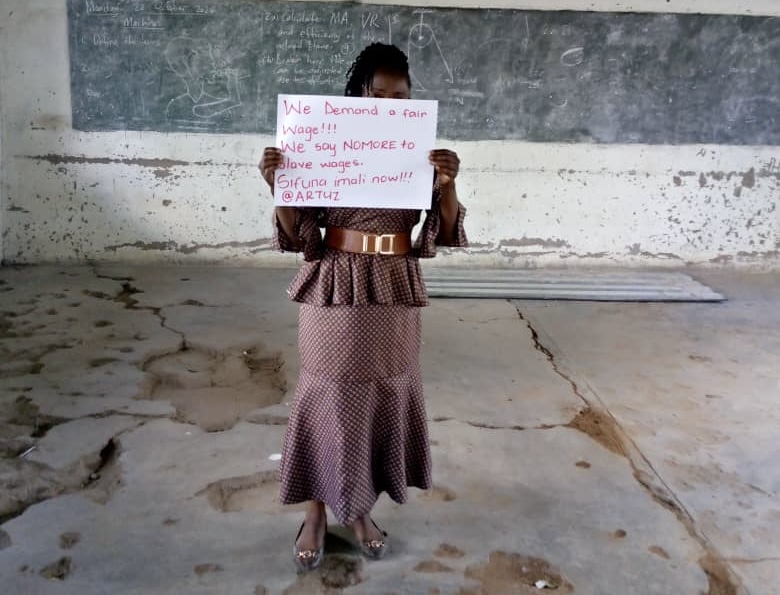
A Tsholotsho teacher has been dismissed from the public service after participating in an online protest by taking a photo in class holding a placard demanding better wages, a move that has drawn sharp criticism from a teachers’ union.

Advertisement

According to a letter dated April 10, 2026, from the Ministry of Primary and Secondary Education in Matabeleland North, Bridget Dhliwayo, a teacher at Zibungululu Secondary School in Tsholotsho District, was found guilty of misconduct and discharged from service with effect from May 14.

The dismissal letter, signed by Jabulani Mpofu, the Chief Director for Provincial Education Services in Matabeleland North, states that Dhliwayo violated public service regulations by taking a selfie inside a classroom on May 13, 2025, holding a placard reading: “We demand a fair wage; we say no more to slave wages. Sifuna imali now.”

Authorities said she shared the image on a WhatsApp group linked to the Amalgamated Rural Teachers of Zimbabwe (ARTUZ) and failed to conduct lessons over several days in May 2025, in breach of her duties.

Advertisement

“This is not the first time that you have been found guilty of misconduct,” the letter reads, adding that Dhliwayo had previously received warnings.

However, ARTUZ condemned the dismissal in a statement posted on X, arguing that the action criminalises labour activism.

“Since when has exercising labour rights become a dismissible offence?” the union said, describing the incident as part of an online demonstration campaign over low salaries.

Advertisement

Zimbabwean teachers, represented by groups such as ARTUZ, have long protested against poor pay and working conditions, often clashing with authorities over strikes and demonstrations, which are tightly regulated under public service rules.

The letter advises Dhliwayo that she may appeal the decision to the Labour Court or seek a review through the Public Service Commission within 21 days, although such processes do not automatically suspend the penalty.

The Ministry of Primary and Secondary Education had not publicly commented on the union’s claims at the time of publication.

Advertisement


Advertisement
Continue Reading

In the community

Nkayi’s mortuary crisis leaves families racing against time

Published

on

BY NOKUTHABA DLAMINI

When an elephant trampled Mbusi Mabhena to death two weeks ago in Mthoniselwa village in Nkayi, his family’s grief was swiftly compounded by another ordeal.

Advertisement

By the following day, he had been buried.

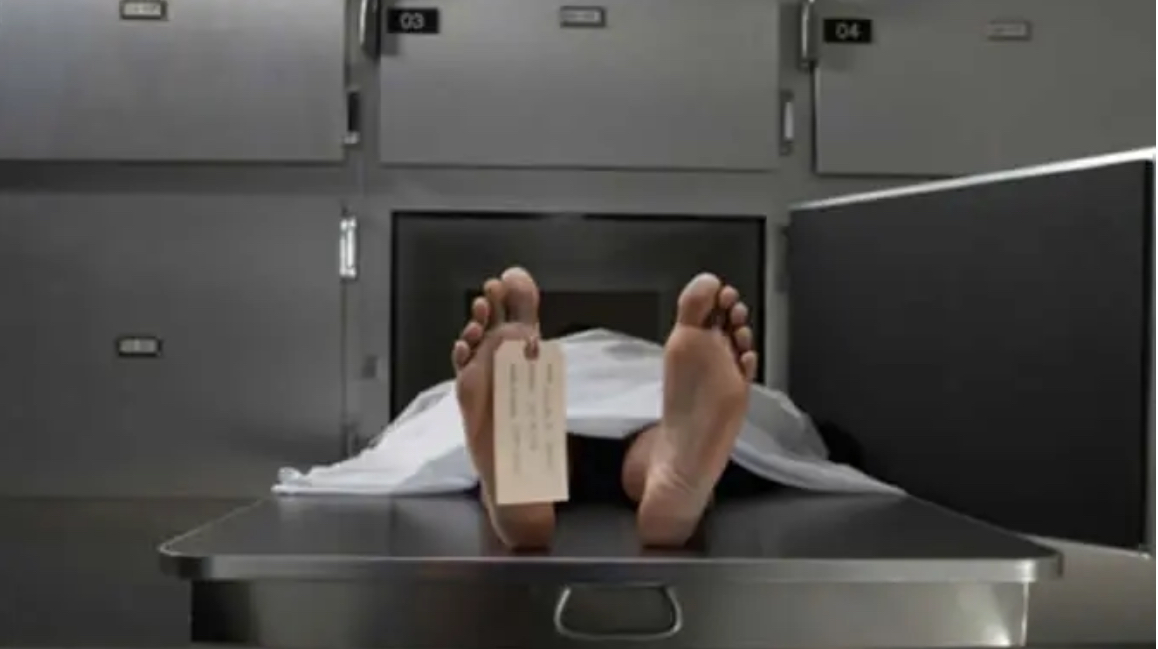
In Ward 13 of Nkayi district, there was no time for a traditional week-long wake or a post-mortem examination. There is no mortuary.

Local leaders say immediate burials have become common in parts of Nkayi and neighbouring Lupane, where families cannot preserve bodies due to a lack of cold storage facilities.

Advertisement

Weston Msimango, the councillor for Ward 13, said Mr Mabhena’s body was covered with sand before burial in an attempt to slow decomposition.

“It has become normal for people to be buried within 24 hours,” he said. “We have no facilities to keep them.”

The problem centres on Mbuma Mission Hospital, the main referral hospital for Nkayi and Lupane districts. Despite serving thousands of people, it has never had a mortuary.

Advertisement

For many villagers, transporting a body to cities such as Bulawayo or Gweru is too expensive. As a result, families resort to improvised methods to manage the smell of decomposition while making urgent burial arrangements.

Thandiwe Moyo, from Mkalathi village, said families often use sand and bananas to try to reduce odours while waiting for a few relatives to gather.

“To bury someone you love within 24 hours, without a proper goodbye because there is no cold room, feels like we are disposing of trash rather than honouring a life,” she said.

Advertisement

Residents say the lack of basic infrastructure contrasts sharply with the political rallies occasionally held in the district.

Jabulani Hadebe, the Member of Parliament for Nkayi South, has criticised what he describes as a lack of political will to address the issue.

He pointed to a large 2023 election rally in the area, attended by senior political figures, as an example of misplaced priorities.

Advertisement

“Leaders had an opportunity to visit the hospital, see what was missing and help,” he said. “Instead, the focus was on displays of wealth.”

Hadebe also alleged that some people who attended the rally were given spoiled food and later fell ill, though this claim could not be independently verified.

Sibusiso Sibanda, from Gonye village, said residents struggle to reconcile the arrival of luxury vehicles at rallies with the absence of a basic mortuary facility.

Advertisement

“They can come with big cars and give out meat, but they cannot finish a small room at Mbuma to keep the dead,” he said.

He added that without funeral insurance or money for transport, families have little choice but to bury relatives quickly.

“In the morning you are alive. If you die and you do not have a funeral policy, by evening you are in the sand,” he said. “There is no dignity left.”

Advertisement

Villagers in Somakantane said the absence of a mortuary has also disrupted cultural practices that require the body to remain at home for several days before burial.

The situation is not unique to Nkayi. Lawmakers have raised similar concerns in Binga, where some hospitals also operate without mortuary facilities.

Despite the issue being raised in Parliament, there has been no formal response from the government indicating when mortuaries might be built or repaired in affected districts.

Advertisement

The Ministry of Health’s spokesperson, Donald Mujiri, could not be reached for comment.

SOURCE: CITE

Advertisement
Continue Reading

National

Zimbabwe export surge, diaspora inflows mask funding gaps in foreign affairs sector

Published

on

BY STAFF REPORTER 

Zimbabwe is seeing strong gains in export earnings and diaspora remittances, but lawmakers warn chronic underfunding is undermining the country’s diplomatic and economic ambitions.

Advertisement

Parliament heard that remittances reached about $1.8 billion by the third quarter of 2025, while exports rose sharply, helping cut the trade deficit. Lawmakers said the diaspora remains “a vital source of foreign exchange, directly contributing to the enhancement of the nation’s foreign reserves and overall economic stability.”  

However, MPs said financial constraints are weakening the institutions meant to sustain that growth. The Zimbabwe Foreign Services Institute received only a fraction of its budget, limiting recruitment and training.

“The staffing shortfall has inevitably affected operational efficiency and the institute’s ability to discharge its core mandate,” the committee report noted.  

Advertisement

Lawmakers warned that without consistent funding, gains in exports and diaspora engagement could stall, particularly as Zimbabwe pushes toward an export-led economy.

Advertisement
Continue Reading

Trending

Copyright © 2022 VicFallsLive. All rights reserved, powered by Advantage