Connect with us

In the community

Victoria Falls residents struggling to stay afloat in a dream destination

Published

on

BY FORTUNE MOYO

The splattering of raindrops gives Blessing Maya sleepless nights.

Advertisement

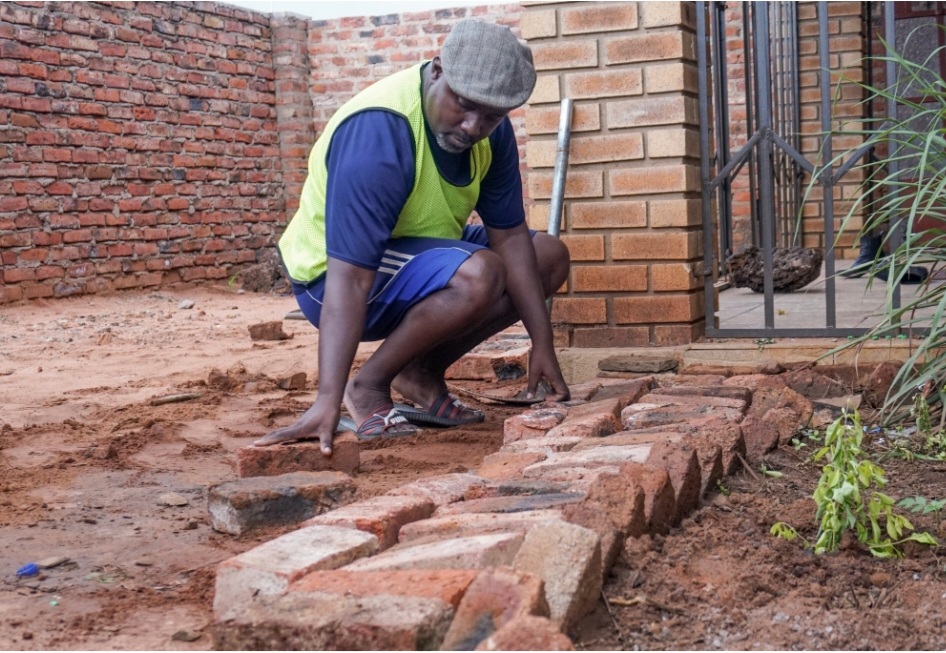
“Each time it rains, I am forced to dig some trenches or lay some bricks so that water does not flood my home,” he says of the three-bedroom house he shares with his wife, niece and two children in Victoria Falls’ Mkhosana neighbourhood.

His only consolation is that the same rain helps the potatoes, onions and tomatoes growing on a separate acre of land he bought four years ago to supplement his income as a tour guide — a lucky decision, in hindsight, as Covid-19 travel restrictions have slowed Victoria Falls tourism  to a trickle.

The pandemic’s economic impact has exacerbated poor urban planning and increasingly adverse weather conditions.

Advertisement

This makes it difficult for Maya and thousands of other year-round residents to stay afloat in what had once been their dream destination — and continues to be one of the most sought-after places to live in the country.

The city’s population is projected to grow from 42,224 to 50,734 over the next decade, according to the Zimbabwe National Statistics Agency.

Many are drawn by the hospitality industry surrounding Victoria Falls, one of the Seven Natural Wonders of the World and a United Nations World Heritage Site.

Advertisement

The housing waiting list managed by the Victoria Falls Municipality, the local governing authority, stands at more than 15,000 households.

In 2021, the municipality requested enough land for 1,000 housing units but received approval for only 500, says Mandla Dingani, acting public and community relations manager.

Once Zimbabwe’s central government approves a land reallocation request, the local authority assumes responsibility for developing and maintaining the required infrastructure.

Advertisement

But the rush to meet housing demand caused storm drain installation and maintenance to fall through the cracks, Dingani says.

Officials for the Ministry of Lands, Agriculture, Fisheries, Water and Rural Settlement, the central government department that processes the municipal applications, didn’t respond to requests for comment.

The Mkhosana neighbourhood was created in 1997 on land formerly zoned for park use.

Advertisement

The Maya family was among the first to settle here when they moved from Chinotimba, an older, more congested neighbourhood.

They never expected that all these years later, nearly half of Mkhosana, including their own street, would still lack the storm drains necessary to collect and channel excess surface water away from homes when it rains.

“The population has also grown over the years, which is good as there are new businesses, which employ locals,” Maya says.

Advertisement

“However, the local authority needs to stay ahead of the population growth in the town.”

Victoria Falls received its highest rainfall and the city’s namesake feature recorded its highest inflows in a decade last year, according to the Zambezi River Authority, the administrative body that manages the waterway between Zimbabwe and Zambia.

A 2021 World Bank report on climate in sub-Saharan Africa says floods between 2010 and 2019 had increased tenfold in the region compared with the period between 1970 and 1979.

Advertisement

Residents of flood-prone neighbourhoods have taken matters into their own hands: digging their own trenches, about a metre wide and two meters deep, to redirect water; erecting brick barriers; and using pots and buckets to bail out their homes when it rains.

“The rainy season is quite stressful,” says Khethiwe Mlilo, a Mkhosana resident since 2019.

“In addition to flooding, the heavy rains also cause property destruction.”

Advertisement

Mlilo moved to Mkhosana from Gweru, a city in central Zimbabwe, to launch her business selling secondhand clothes in a local market, while her husband works in South Africa and sends home money to help support her and their two daughters.

They settled in a temporary structure, intending to build a stronger home there within a year, but the subsequent years of a pandemic and rainy seasons have delayed their efforts.

The Victoria Falls Combined Residents Association, whose representatives are chosen by the local population, has been lobbying the municipality for improvements, says Nguquko Tshili, association secretary general.

Advertisement

But, he says, residents are also to blame for carelessly clogging the existing drains.

“Residents have a tendency of throwing litter all over,” Tshili says.

“When it rains, the litter then blocks the few storm drains present in the suburb, the water then cannot move, and this also contributes to flooding in the suburb.”

Advertisement

The association routinely warns residents against littering, including through a community programme in November as the rainy season was beginning.

The municipality also has increased garbage collection services to reduce the problem, he says.

While demand for more residential land use has remained strong, developing infrastructure that can support the population growth must take priority, Dingani says.

Advertisement

The municipality has budgeted US$1.6 million for road repairs and drainage construction, with work scheduled to begin in mid-April, he says.

The coronavirus pandemic’s ongoing economic impact also remains a challenge.

As of January, Victoria Falls residents and businesses owed more than $200 million (US$1.5 million) in utility payments, which the municipality needs to fund storm drain management, garbage collection and sewage services, Dingani says.

Advertisement

Maya’s tourism business has dried up.

Until visitors return to pre-pandemic levels or the municipality repairs the storm drain in their neighbourhood — ideally, both — his family must borrow furniture and electronics.

They make any repairs they can manage on less than US$1,800 a month.

Advertisement

“Each time it rains, and water enters the house, we scoop it into buckets,” says his wife, Rutendo Maya.

“When the rainy season began, water flooded our house, and we lost property worth about US$8,000.”

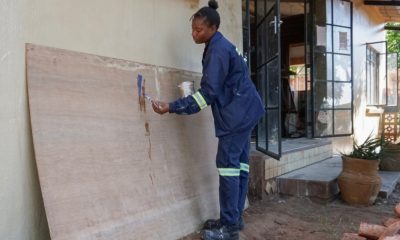
Not everyone dreads the rain. For residents working in construction and carpentry, business has never been better.

Advertisement

“This is the fifth house we are repairing this month,” says Reginald Mutsvakiwa, a local builder who had a busy start to the year.

“It may be sad for people affected, but for our business, it’s good.”  – Global Press Journal

Advertisement

In the community

Foot and mouth disease outbreak in Mat North

Published

on

BY NIZBERT MOYO

The provincial Veterinary Department has urged farmers to comply with livestock movement regulations following an outbreak of the Foot and Mouth Disease (FMD) in some parts of Matabeleland North.

Advertisement

Acting provincial veterinarian Gwinyai Zhandire confirmed the outbreak to Southern Eye, saying the government has instituted movement controls, vaccination and active surveillance in the affected areas.

“There are some dip tanks affected in the Nyamandlovu area,” Zhandire said.

“The government has instituted movement controls and vaccination, and we are conducting surveillance.

Advertisement

“Farmers are encouraged to observe and comply with livestock movement regulations to prevent further spread.”

He highlighted that the rainy season increases the risk of other livestock diseases.

With tick populations on the rise, farmers should be vigilant against tick-borne illnesses such as Anaplasmosis (Gall Sickness), Theileriosis (January Disease), Ehrlichiosis (Heartwater) and Babesiosis (Redwater).

Advertisement

“Weekly dipping is encouraged to prevent transmission between animals,” Zhandire said.

He emphasised the importance of routine vaccination against other seasonal threats, including anthrax and lumpy skin diseases.

The outbreak has also affected farmers in the Umguza area, who have similarly been directed to adhere to animal movement restrictions.

Advertisement

Foot and mouth disease is a highly contagious viral disease that affects cloven-hoofed animals, including cattle, sheep and goats.

The disease is characterised by fever and the development of painful sores or blisters in the mouth and on the feet, often leading to severe lameness and a drop in productivity.

The virus spreads easily through direct contact between animals, as well as via contaminated equipment, vehicles and feed.

Advertisement

The disease can result in significant economic losses in the livestock industry due to trade restrictions and animal health costs.
Source: Southern Eye


Advertisement
Continue Reading

In the community

Brother-in-law jailed for repeated rape of mentally incompetent 16-year-old

Published

on

BY WANDILE TSHUMA

The Hwange Regional Magistrates’ Court has convicted and sentenced a 41‑year‑old man to 20 years’ imprisonment for the repeated rape of his 16‑year‑old sister‑in‑law, a mentally incompetent juvenile.

Advertisement

The court heard that the victim was staying at the offender’s homestead in Lupane. Between November 2024 and May this year, the offender exploited her mental incapacity and his position of trust to rape her on multiple occasions.

In the first incident, the offender’s sister pushed the victim into a bedroom where the offender was waiting, locked the door, removed the victim’s clothes and raped her. He threatened the victim and ordered her to remain silent when she tried to cry out for help.

The abuse continued on various occasions. In May, a community member discovered the abuse and reported it to the Zimbabwe Republic Police in Lupane.

Advertisement

Medical and psychiatric examinations confirmed the victim’s mental status and the ordeal. The offender and his sister assaulted the victim with a sjambok and a stick and threatened her not to disclose the matter.


Advertisement

Continue Reading

In the community

Hwange man sentenced to 40 years for raping two minors

Published

on

BY STAFF REPORTER

A 32-year-old man from Victoria Falls has been convicted by the Hwange Magistrates’ Court and sentenced to 40 years imprisonment  for raping two minors.

Advertisement

The man, whose name has been hidden to protect the image of the victims was being tried by the prosecutors on two counts of rape leading to the conviction.

The court heard that the accused committed the offences against two young female juveniles, aged nine 10 years old who are sisters on the 25th of September this year.

“The offender who was at his place of residence called the victims who were going to school to come to his place of residence to collect baobab fruits,” the National Prosecuting Authority said in a statement.

Advertisement

“They both got into the offender’s place of residence and the offender instructed the victims to get into his bedroom hut.

The victims complied and the offender followed them into his bedroom and closed the door from inside and raped them.”

The matter came to light on the same day when a relative informed the victim’s grandmother and father that she saw the victims leaving the offenders bedroom and they revealed what had transpired, leading yo his arrest.

Advertisement

Continue Reading

Trending

Copyright © 2022 VicFallsLive. All rights reserved, powered by Advantage