Connect with us

National

‘A deadly year’: 70 killed by wild animals across Zimbabwe in 2021

Published

on

BY NOKUTHABA DLAMINI

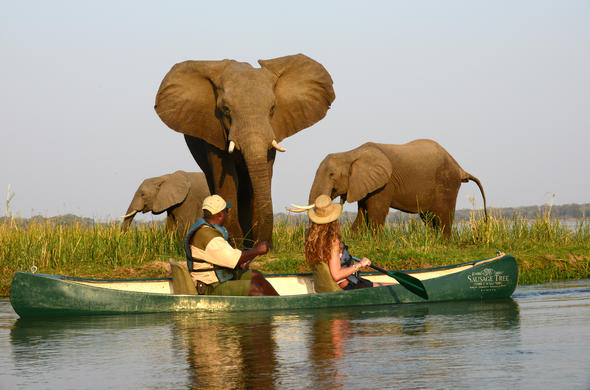
Zimbabwe Parks and Wildlife Management Authority (Zimparks) says 70 people were killed by wild animals, especially by elephants this year as human-wildlife conflicts escalate throughout the country.

Advertisement

Zimparks spokesperson Tinashe Farawo told VicFallsLive that the distressing human-wildlife conflicts were prevalent in districts such as Binga in Matabeleland North, Mbire in Mashonaland Central and Bikita in Masvingo where some villagers are bordering game reserves.

“As we come towards the end of the year, we feel it is important to update you about the human-wildlife conflicts that have happened since the beginning of the year,” Farawo said.

“We have lost 70 lives to different animals, but the majority of the cases were involving elephants and crocodiles ad most of the districts which were affected are Binga in Matabeleland North, Mashonaland West in Kariba, Masvingo areas like Bikita and Mashonaland Central in Mbire and Muzarabani.”

Advertisement

One of the tragic incidents involved a Victoria Falls bartender, who was gored by an elephant behind Victoria Falls police station last month as he was walking home from work at around 3AM.

In October, game scout Clever Kapandure from the Victoria Falls Anti-Poaching Unit was also trampled to death by an elephant during a routine patrol around the resort city.

“But we ask, why is it we are having this kind of increase because this year we received close to 2 000 distress calls from these communities either about lions, elephants and buffaloes and we think we are getting punished for doing what is good for our animals,” Farawo said.

Advertisement

“Our elephant, lion and other species population is growing, and our human population is also growing when our country is not expanding.

“If you look at Hwange National Park compared to 50 years ago, the wildlife has expanded, and this is why we are witnessing such conflicts.

“We are forced to share the resources like water because during hot seasons especially around October until now during the onset of the wet season, it means that more water bodies will be dry and that’s how the animals move around the communities in search of water and food.”

Advertisement

According to the HideAways Life Changing Experiences, the Hwange game reserve is home to an estimated 44 000 pachyderms inhabiting the 14 651 square kilometre park, which is half of the country’s elephant population.

Meanwhile, Farawo said they had embarked on mobile education campaigns on how to manage human-wildlife conflicts such as avoiding moving at night, keeping a safe distance and avoiding provoking the animals.

He said plans were afoot to review the Parks and Wildlife Act so that it speaks to the realities as Zimparks felt that the existing law was outdated and colonial.

Advertisement

Continue Reading
Click to comment

Leave a Reply

Your email address will not be published. Required fields are marked *

National

Government warns farmers to step up tick control as January Disease threat looms

Published

on

BY STAFF REPORTER

The Ministry of Lands, Agriculture, Fisheries, Water and Rural Development has urged livestock farmers across Zimbabwe to heighten disease surveillance and tick control measures as the 2026 rainy season continues, warning of an increased risk of January Disease (Theileriosis).

Advertisement

In a farmer advisory posted on the Ministry’s official Facebook page, authorities said the tick-borne disease spreads rapidly under warm and wet conditions and can decimate entire cattle herds if not effectively controlled.

The Ministry emphasised that weekly cattle dipping is mandatory during the rainy season, in line with Government policy to curb the spread of the brown ear tick, the primary carrier of January Disease. Farmers were urged to pay dipping levies, ensure correct acaricide dilution as per manufacturers’ instructions, and utilise spray races where possible for improved effectiveness.

In high-risk areas or during active outbreaks, farmers may be directed to follow a 5:5:4 dipping regime, involving more frequent dipping intervals. The Ministry also recommended the use of tick grease on sensitive areas such as inside the ears, the udder and under the tail.

Advertisement

As part of broader prevention efforts, the Ministry said the locally produced BOLVAC vaccine is now available in increased quantities, with farmers encouraged to contact their local veterinary offices to access the vaccine.

Farmers were further advised to conduct daily inspections of their cattle and remain alert to early warning signs of January Disease, which include swollen lymph nodes, loss of appetite, breathing difficulties, frothing, watery or cloudy eyes, fever and general weakness.

The Ministry reminded farmers that all suspected cases or sudden cattle deaths must be reported to the Directorate of Veterinary Services within 24 hours, stressing that the movement of sick or tick-infested animals is prohibited as it contributes to the spread of the disease.

Advertisement

Failure to comply with dipping regulations constitutes an offence under the Animal Health Act, with penalties that may include fines or arrest, the Ministry warned.

Farmers requiring assistance or wishing to report suspected cases were advised to contact their local Veterinary Extension Officer or the Ministry of Lands, Agriculture, Fisheries, Water and Rural Development.

“Prevention saves wealth,” the Ministry said, urging farmers to take proactive measures to protect their herds.

Advertisement

Continue Reading

National

Education ministry launches nationwide one laptop, one iPad per pupil program

Published

on

BY LWAZI SHOKO

Zimbabwe has launched a nationwide One Laptop, One iPad Per Pupil initiative aimed at bridging the digital divide and expanding access to technology in schools, Minister of Primary and Secondary Education Torerayi Moyo announced on X on Monday.

Advertisement

The programme, being implemented in partnership with UNICEF Zimbabwe, will see the distribution of ICT equipment including laptops, tablets and projectors to schools across the country, with priority given to disadvantaged and solar-powered schools.

According to Minister Moyo, the initiative is designed to strengthen digital teaching and learning while promoting inclusive and equitable education. He said the programme seeks to ensure that all learners, regardless of geographic location or socio-economic background, have access to modern learning tools.

“As part of this initiative, I had the honour of presiding over the official handover of a major consignment of ICT devices,” Moyo said, adding that the resources would support the delivery of quality education and help prepare learners for a technology-driven future.

Advertisement

The minister described the programme as a transformative step that goes beyond the provision of devices, framing it as an investment in equity, opportunity and long-term national development.

Moyo also paid tribute to President Emmerson Dambudzo Mnangagwa, crediting his leadership under Vision 2030 and the Presidential Computerisation Programme for driving innovation and public-private partnerships in the education sector.

“By placing a laptop and an iPad in the hands of every pupil, we are building the digital foundations of a knowledge-based economy,” he said.

Advertisement

Lastly, expressed gratitude to UNICEF Zimbabwe and other development partners for their continued support, noting that the collaboration is key to building a more connected and future-ready education system.


Advertisement
Continue Reading

National

Unregulated mining pushes Zimbabwe toward environmental and public health crisis

Published

on

BY STAFF REPORTER

Zimbabwe is facing a deepening environmental and public health emergency driven by unchecked mining activities, with environmental experts warning that the situation has escalated into a national security concern.

Advertisement

The alarm was raised during discussions aired on recently at CITE, where environmental leaders unpacked the scale of ecological damage unfolding across the country.

Centre for Natural Resource Governance (CNRG) Executive Director Farai Maguwu said Zimbabwe’s mining boom has reached crisis levels, fuelled largely by economic decline and the collapse of formal employment.

“Mining has become the default survival strategy for many Zimbabweans,” Maguwu said, noting that widespread job losses and industrial shutdowns have pushed communities toward extractive activities as a quick source of income.

Advertisement

He warned that weak governance has allowed mining to spread into protected and ecologically sensitive areas, despite existing policies that prohibit such activities.

“We are seeing mountains disappearing and rivers being destroyed. Even with a ban on riverbed mining, enforcement has collapsed,” Maguwu said.

According to Maguwu, mining has encroached into UNESCO heritage sites and protected zones such as Mavuradona Wilderness, while areas like Shurugwi and Poterekwa Mountain have suffered extensive damage.

Advertisement

More concerning, he alleged that some law enforcement agents and senior officials are complicit in environmental destruction.

“In places like Penhalonga, elements within the police, military, senior government structures and intelligence services are allegedly part of mining syndicates,” he said, warning that the crisis now threatens national stability.

Maguwu also highlighted the dangers of mining beneath roads and residential areas, which he said could result in catastrophic collapses and flash floods.

Advertisement

“They are creating underground dams in mountains. When these give way, people will be swept away,” he said.

He criticised what he described as a lack of urgency from authorities in responding to the scale of destruction.

“If government is concerned about the future of this country, the current level of environmental damage should be setting off alarm bells,” Maguwu said.

Advertisement

He further explained that the shift from underground mining to open-cast methods has accelerated deforestation, land degradation and loss of agricultural land, undermining food security.

The uncontrolled use of toxic substances such as mercury and cyanide, particularly during the rainy season, has also heightened contamination risks.

“These chemicals are being dumped indiscriminately, with no punitive measures in place,” he said, warning that rainfall washes toxins into rivers, dams and streams.

Advertisement

Maguwu expressed particular concern for rural communities dependent on untreated water from shallow wells, especially in Marange and Matabeleland North.

“People are drinking contaminated water. The long-term health consequences are devastating and still unfolding,” he said, describing the crisis as an “environmental Armageddon.”

Similar concerns were echoed by Nkosikhona Sibanda, Executive Director of the Centre for Environmental and Corporate Accountability Research (CECAR), who said the crisis is nationwide.

Advertisement

In Matabeleland North, Sibanda said mining activity—particularly by Chinese-owned companies—has intensified in areas such as Hwange, Kamativi in Binga, and surrounding districts.

“When communities hear about foreign investment, they expect development. Instead, they are experiencing severe environmental degradation,” Sibanda said.

Studies conducted between 2024 and 2025, he added, revealed dangerous levels of air pollution in Hwange.

Advertisement

“The results were shocking. Air quality is far beyond safe limits, and people are breathing toxic substances daily,” Sibanda said.

Health facilities in affected areas have reportedly recorded a rise in respiratory illnesses and chronic diseases, underscoring the growing human cost of environmental neglect.

“This is no longer just an environmental issue—it is a public health emergency,” Sibanda said.

Advertisement

This report is based on information originally published by the Centre for Innovation and Technology (CITE).

Advertisement
Continue Reading

Trending

Copyright © 2022 VicFallsLive. All rights reserved, powered by Advantage