Connect with us

In the community

In Zimbabwe, older people are silent victims of Covid-19

Published

on

BY NYASHA CHINGON0

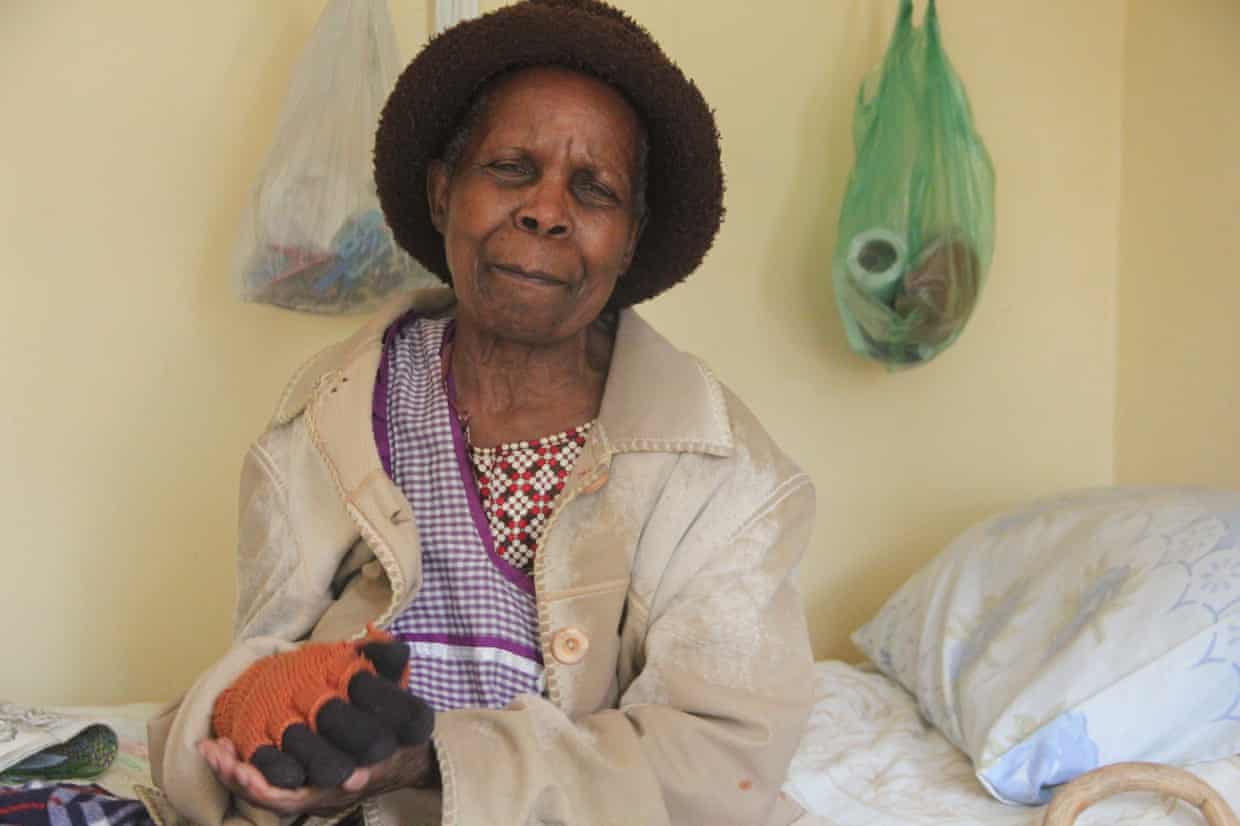
Lunch is Angelica Chibiku’s favourite time.At 12pm she sits on her neatly made bed waiting for her meal at the Society of the Destitute Aged (Soda) home for older people in Highfield, a township in south-west Harare.

Advertisement

Chibiku welcomes a helper into her room and cracks a few jokes. She loves to interact with those who bring her food and supplies.

Chibiku is paralysed on her left side, and for most of the day she is alone in her room.

“I suffered a stroke years ago, and I was worried about how I was going to survive, then ended up here. My health is worse, especially when it’s very cold,” says Chibiku.

Advertisement

Chibiku is always lonely. Her vulnerability to Covid prevents her from going outside often and her children seldom visit.

“I do not have any grandchildren and my children come to see me sometimes.

“I am always depressed because I don’t have anyone to see me. I used to do exercises, but now I cannot do that any more.

Advertisement

“I just spend my day sitting,” says Chibiku.

Chibiku misses talking to her friends.

“My condition depresses me so much that I sometimes lose my mind. I am thankful that I am not on the streets,” she says.

Advertisement

Older people have become silent victims of the pandemic.

Zimbabwean communities used to pride themselves on looking after their ageing members, but poverty and high mortality rates among working-age men and women as well as unrelenting economic pressures on families have left older people isolated, poor and lonely.

While some have ended up sleeping rough, risking infection and starvation, the lucky ones like Chibiku are cared for in homes such as Soda.

Advertisement

Although it is often called “un-African” to send elderly people to institutions, the pandemic has led to a rise in demand for such facilities, says HelpAge Zimbabwe.

“Being in a pandemic is an emergency situation.

“Being in a pandemic, you find there are people who suffer and find themselves homeless and without food.

Advertisement

“Due to family friction, some elderly people find themselves on the streets,” says Priscilla Gavi, HelpAge executive director.

“Some of the older people have been thrown out of their homes by their children, who request that they be taken into an institution,” she adds.

Gavi says a growing proportion of the country’s population of 15 million population are over 65, and fears this number will double over the next decade, increasing demand for care homes.

Advertisement

According to the Zimbabwe National Statistics Agency, 80% of elderly people live in abject poverty.

Bothwell Sundire, a development expert based in Masvingo, a city in south-east Zimbabwe, says care homes have experienced a 60 percent increase in admissions since the first Covid-19 case was reported in March 2020 and the country’s 170 facilities for older people are now saturated.

Domingo Zakani, 86 and Samson Edwin, 81, are watching television and reminiscing in a lounge at the Soda care home.

Advertisement

Zakani, who migrated to Zimbabwe in 1958 from Mozambique to work for a tobacco firm, is unmarried and has no children.

Finding him homeless and begging for food, a “good Samaritan” brought him to the home five years ago.

“I would like to go back home, but all my relatives are gone; no one knows me any more. I am just waiting for my day of death,” says Zakani.

Advertisement

Zakani, who has several ailments, including a knee problem, spends his day sitting in the courtyard or watching television.

His friends at the home also keep him company.

“I just sit all day. I cannot do much.

Advertisement

“This place is like a prison because I cannot move around any more. My relatives used to come, but not any more, so it is very lonely here,” he says.

Edwin migrated to Zimbabwe several years ago after getting a job, but his employer died, leaving him without work and stranded far from home. Edwin became destitute.

“I have been staying here for a year now. Before that, I stayed at Stoddart Hall in Mbare [a Harare township] because I had lost my job.

Advertisement

“ A stranger took me to this place and I am really grateful for his love.

“ I am glad that I never get sick. When I came from Malawi five years ago, I got a job in a white man’s shop that sells vehicle parts.

“I then lost my job,” Edwin said.

Advertisement

Edwin misses his children and desperately wants to go back home.

“I have tried to go back home, but I could not get money to travel.

“All my children are in Malawi. We write letters to each other and it has been long since I saw them,” says Edwin.

Advertisement

But Soda, like the older people it supports, has itself fallen on hard times.

Lack of funding and a lack of government programmes to aimed at supporting older people have affected the running of the facility – which was once visited by Diana, Princess of Wales – and its 16 residents eat only mealie-meal porridge, beans and vegetables.

“We have well-wishers who are gracious enough to help with food and other items and we also mobilise resources. Covid-19 has affected our resource mobilisation.

Advertisement

“We rely on the industry when they have enough to spare.

“It is hard to get support when the industry is depressed,” says director Emilia Mukaratirwa.

Mukaratirwa says the pandemic has forced the home to lock its gates, as elderly people are listed as vulnerable.

Advertisement

“It has been a love and hate relationship because they feel robbed of their freedoms.

“ The extension of the lockdown did not help matters. They cannot go out there, but some do understand that we have to protect them.

“We are lucky that we never had any positive cases,” says Mukaratirwa.

Advertisement

Older people saw their incomes and savings decimated by hyperinflation in 2008, face other pressures. Many are caring for orphaned relatives such as grandchildren. Gavi estimates more than 60% of orphans are cared for by older people.

Anyone 65 and older is entitled to free healthcare, but hospitals are depleted of supplies.

“We are advocating for a universal pension. We are advocating that every elderly person gets something at the end of every month to cater for their daily needs.

Advertisement

“Universal health insurance. We are saying that as long as we don’t address these issues, the burden on the economy will be bigger,” Gavi says.

She believes older people deserve to live in a loving environment.

“We cannot dump our older persons in institutions, saying they are now a spent force,” says Gavi. – The Guardian

Advertisement

Continue Reading
Click to comment

Leave a Reply

Your email address will not be published. Required fields are marked *

In the community

Hwange West MP demands urgent action after two killed by elephants in Victoria Falls

Published

on

BY NOKUTHABA DLAMINI 

VICTORIA FALLS – Hwange West legislator Vusumuzi Moyo has called for urgent and decisive intervention to address escalating human-elephant conflict after two people were killed by elephants in Victoria Falls within the space of a week.

Advertisement

Rising on a point of national interest in the National Assembly, Moyo said the recent deaths had left families in mourning and exposed the growing danger faced by communities living near wildlife corridors.

“In closing, Mr Speaker Sir, I want to convey my message to two families within Victoria Falls. This happened within a week. They lost their lives because of this conflict,” Moyo said. “In a space of a week, two families are mourning the loss of their loved ones.”

Victoria Falls and surrounding communities, which border wildlife areas, have in recent years experienced increased incidents of elephants straying into residential areas, destroying crops and infrastructure, and in some cases fatally attacking residents.

Advertisement

Moyo told Parliament that the crisis must no longer be viewed solely as a conservation issue but as a matter of human dignity and national development.

“My issue is not merely about wildlife management. It is about national development, constitutional responsibility and ultimately, protecting human dignity,” he said.

He warned that communities from Kariba to Binga, and in tourism corridors around Victoria Falls, are “under siege” from escalating human-elephant conflict.

Advertisement

“Families are losing crops, infrastructure is being destroyed and tragically, lives continue to be lost. This House cannot ignore the cries of rural citizens who coexist with wildlife every day,” Moyo said.

The Hwange West MP defended previous government decisions to cull elephants in high-conflict zones, arguing that such measures were sometimes necessary to restore ecological balance and protect human life.

“These are not acts of recklessness but acts of necessity because conservation must never come at the expense of human survival,” he said.

Advertisement

While acknowledging the importance of non-lethal measures such as fencing and translocation, Moyo said in some areas those interventions were no longer sufficient on their own.

He urged authorities to urgently implement provisions of the Parks and Wildlife Act, promulgated on 28 November 2025, particularly in communities bordering national parks.

“It is my sincere hope that the implementation of the Parks and Wildlife Act… will be taken to the areas that border within national parks so that people appreciate and that the regulations can be done as fast as possible,” he said.

Advertisement

Moyo stressed that Parliament must strike a balance between conservation and protecting human life.

“The people are not asking Parliament to choose between elephants and human beings. They are asking us to restore the balance,” he said.

The latest fatalities have renewed debate in Victoria Falls over how authorities can better safeguard residents while maintaining Zimbabwe’s strong conservation reputation.

Advertisement

Continue Reading

In the community

Grace-and-Favour: Binga RDC builds $200k lakeside mansion for CEO despite government ban

Published

on

BY TANAKA MREWA

In a district where hunger drives thousands of children out of school and most households lack basic sanitation, a luxury four-bedroom house with a jacuzzi is nearing completion on the shores of Lake Kariba, built at public expense for the long-serving chief executive of one of Zimbabwe’s poorest local authorities.

Advertisement

An investigation by CITE reveals that Binga Rural District Council (RDC) has spent close to US$200 000 constructing a “grace-and-favour” home for its chief executive officer, Joshua Muzamba, despite a standing government directive prohibiting local authorities from building personal residences for senior officials.

The development has ignited questions about governance, accountability and political protection in a district consistently ranked among Zimbabwe’s poorest, and where residents say public resources are routinely diverted from desperately needed services.

The house sits on a two-acre stand overlooking Lake Kariba, in an exclusive peninsula neighbourhood about six kilometres from Binga town, surrounded by water on two sides.

Advertisement

Council records and sources familiar with the project say the stand, valued at over US$40 000, was allocated to Muzamba free of charge. The property includes four bedrooms – three of them ensuite – a jacuzzi and two garages.

The project’s cost and scale contrast sharply with living conditions in the district.

Official statistics paint a grim picture: ZimStat data shows that 73 percent of households in Binga lack toilets, while many communities travel long distances for schools and healthcare facilities amid largely impassable roads.

Advertisement

Education ministry figures indicate that in 2022 alone, 6 671 pupils dropped out of school, while more than 13 000 children were irregular attendees due to hunger.

Yet despite chronic underdevelopment, council funds have been channelled into the high-end residence.

Muzamba and the council did not respond to multiple requests for comment.

Advertisement

A ministry of local government circular issued on October 6, 2014 (Circular CX154) explicitly forbids local authorities from allocating institutional properties to employees, mayors or council chairpersons.

The ministry’s spokesperson Gabriel Masvora confirmed the directive remains in force.

“The government’s wish is to see improved service delivery prioritised in local authorities for the benefit of the people,” Masvora said. “Local authorities are a third tier of government which have systems and controls in place to ensure resources are used effectively.”

Advertisement

He added that councillors should scrutinise expenditures to ensure compliance with government policy and residents’ priorities.

The Association of Rural District Councils of Zimbabwe (ARDCZ), with Muzamba as chair, passed a resolution allowing construction of houses for senior officials after 10 years of service, effectively sidestepping central government policy.

Muzamba has led Binga RDC for 14 years, a tenure marked by recurring controversies.

Advertisement

Fanuel Cumanzala, the MP for Binga South (CCC) describes the CEO as a dominant figure operating with little internal resistance.

“He has become a liability to Binga,” Cumanzala said. “Whatever he does is for personal gain, not for the wellbeing of the people. Councillors are afraid to go against him.”

Cumanzala alleges the CEO survives political pressure because of backing from influential figures with economic interests in the district.

Advertisement

Muzamba lost his position in Zanu PF’s central committee in 2018 after the Supreme Court ruled public officials could not hold multiple posts simultaneously.

Concerns over governance at Binga RDC stretch back years.

In 2018, police requested a full audit of the council after investigations into suspected theft of trust property revealed potential financial irregularities.

Advertisement

The then senior assistant commissioner Stephen Mutamba, now police commissioner general, wrote to the local government ministry recommending a comprehensive audit after police uncovered evidence that council employees were allegedly under-receipting cash.

The subsequent ministry audit found serious weaknesses, including: bank transfers not being recorded in cash books; rampant under-receipting; an absence of an authenticated employment policy, exposing the council to nepotism and unethical hiring practices; and unsigned council minutes, raising doubts about the authenticity of the records.

Despite these findings, residents say meaningful corrective action never followed.

Advertisement

Muzamba is accused of protecting one employee, Lovemore Siamuyi, who was implicated in earlier investigations and remains employed.

Current and former council insiders allege the CEO has filled the local authority with relatives, claims he has not publicly addressed.

A council official, speaking anonymously for fear of reprisals, said a previous resolution capped staff numbers at 50 due to financial constraints, leading to retrenchments.

Advertisement

“But soon after that, more people started being employed,” the source said. “Now the place is flooded with his kinsmen.”

Employees describe a workplace climate of fear and factionalism.

Residents also question a council resolution allowing senior officials to purchase service vehicles at book value after five years, a policy they say disproportionately benefits senior executives and their associates.

Advertisement

“This means residents effectively buy new vehicles every five years,” said one ratepayer.

The council is reportedly struggling with cash flow, at times paying salaries through allocations of housing stands instead of wages.

Muzamba’s critics argue that such challenges make spending on his luxury house especially difficult to justify.

Advertisement

The Auditor-General has previously warned that similar practices elsewhere risk undermining service delivery. In 2022, Marondera RDC was flagged after building a CEO residence using capital development funds. The Auditor-General cautioned that “service delivery may be compromised as council funds are used for unintended purposes.”

Matabeleland North Minister Richard Moyo said his office had received no formal complaints about corruption at Binga RDC.

“We haven’t received any official reports pertaining to this matter,” he said, suggesting some allegations could be politically motivated disputes between councillors from different parties.

Advertisement

Meanwhile, the government says a Zimbabwe Anti-Corruption Commission (ZACC) taskforce is examining corruption allegations across local authorities.

“If there are any reports made, the committee will swiftly look into the issues,” Masvora said.

The MP Cumanzala said it was particularly disheartening that communities in Binga remain trapped in poverty despite vast natural resources including Lake Kariba fisheries, forests teeming with wildlife and mineral wealth.

Advertisement

“Binga RDC is one of the worst run in the country in the sense that we have so much resources and a lot of potential and we receive a lot of attention from non-governmental organisations and the government itself, but those resources are being pocketed by certain people,” he said.

SOURCE: CITE

Advertisement
Continue Reading

Hwange

Three-year-old girl killed in crocodile attack near Matetsi River Bridge

Published

on

BY NOKUTHABA DLAMINI 

A three-year-old girl from Matetsi in Hwange District, Matabeleland North Province, was killed by a crocodile on Tuesday evening while playing near the Matetsi River Bridge along the Bulawayo–Victoria Falls Highway.

Advertisement

According to ZBC, the toddler was with her five-year-old brother as their mother, Tariro Tsondzowore, was fishing nearby when the attack occurred. Authorities said the mother had briefly stepped away, leaving the children close to the riverbank, when a crocodile suddenly emerged from the water, struck and dragged the girl into the river.

People who were nearby reportedly attempted to scare the reptile away but were unsuccessful.

The child, who was from Masikili Village under Chief Shana in Hwange District, was taken before help could arrive.

Advertisement

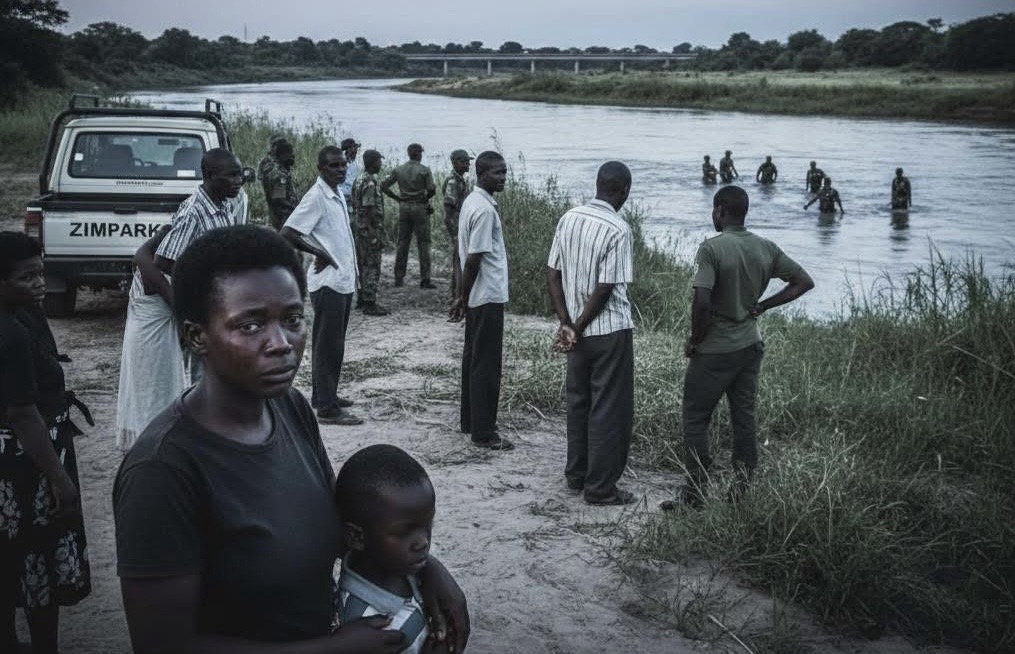
Zimbabwe Parks and Wildlife Authority (ZimParks) rangers responded to the scene and shot one crocodile. Authorities confirmed that partial human remains have since been recovered, while efforts to retrieve additional remains are continuing.

Additional details of the incident were widely shared on social media platforms, where images from the scene show a sombre gathering along the riverbank. In the footage, several community members stand watching as uniformed personnel are seen in the water. A ZimParks vehicle is parked close to the river, while small groups of people look on from the grassy embankment, underscoring the gravity of the situation.

The tragedy has once again brought into focus the growing challenge of human-wildlife conflict in Zimbabwe, particularly in communities located near rivers and wildlife corridors.

Advertisement

Local authorities have urged residents, especially those living near riverbanks, to exercise extreme caution and remain vigilant against the dangers posed by crocodiles and other wild animals.

VicFallsLive will continue to follow developments on this story.

Advertisement
Continue Reading

Trending

Copyright © 2022 VicFallsLive. All rights reserved, powered by Advantage