Connect with us

In the community

In Zimbabwe, more children go hungry amid Covid-19

Published

on

BY KUDZAI MAZVARIRWOFA AND FORTUNE MOYO

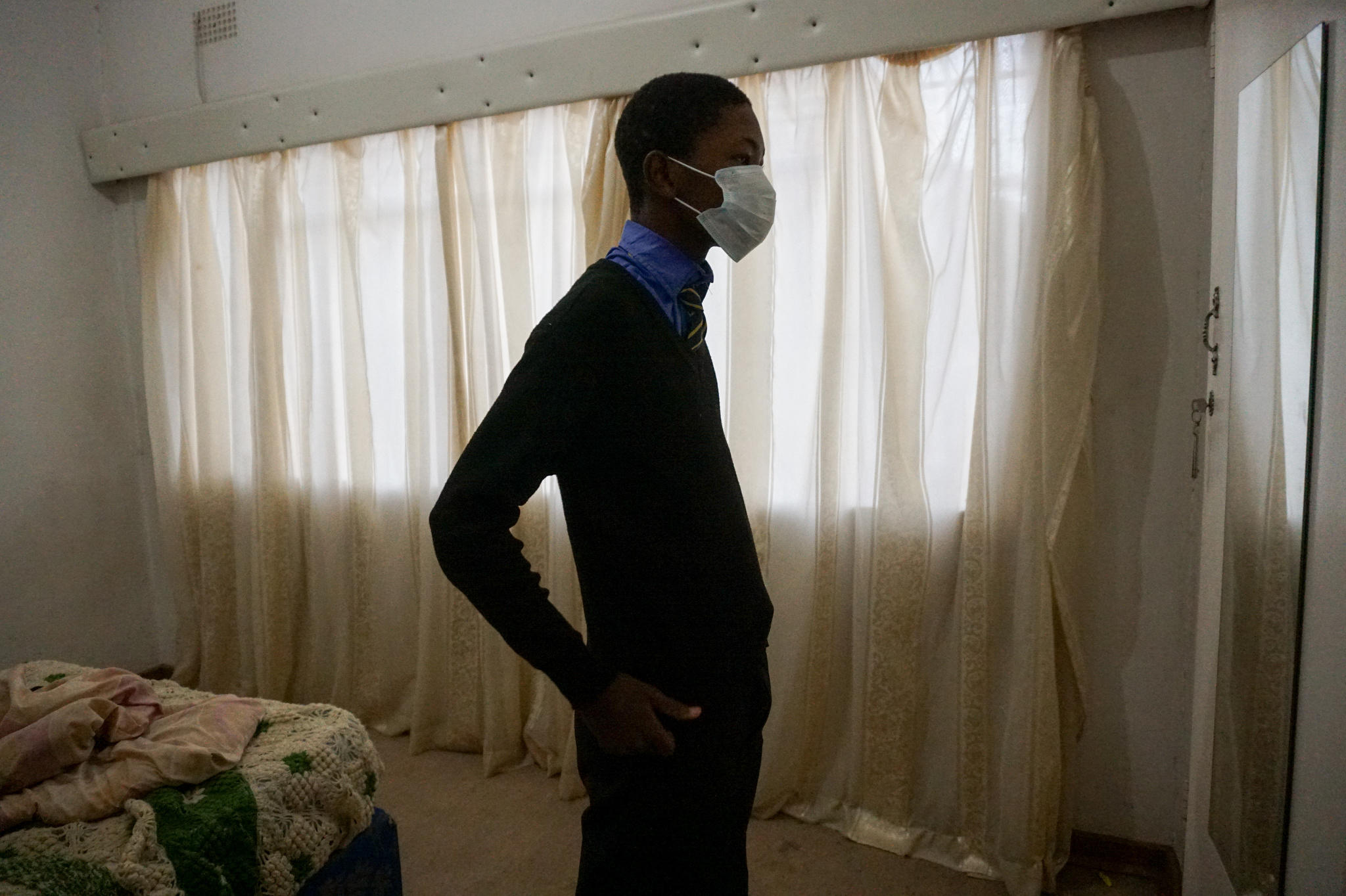
Before the coronavirus pandemic, Mai Tafara Children’s Center was a bustling refuge for the 50 children it serves.

Advertisement

The kids, many of whom are orphans, would come to the center in Tafara, a high-density suburb in Zimbabwe’s capital city of Harare, and enjoy a heavy lunch consisting of sadza — a dense porridge made from maize meal — plus sugar bean, leafy greens or soya mince, an inexpensive, soybean-based protein.

They would eat their fill and spend the afternoon doing arts and crafts or homework.

But that changed in March 2020, as the coronavirus emerged. Like many countries, Zimbabwe enacted a strict lockdown to limit the spread of the virus.

Advertisement

“Things have been very tough for the children,” says Eleanor Alfred, founder of Mai Tafara Children’s Centre.

“These children do not have parents, and sometimes no family at all, to go to for food and necessities — just us. And we cannot let them down.”

The effects are ricocheting through communities worldwide.

Advertisement

Child hunger has skyrocketed since the start of the pandemic, according to the 2020 Annual Report from the United Nations Children’s Fund, known as Unicef.

An additional 6.7 million children under age 5 are now at risk of wasting, a form of malnutrition, in the next year. This could lead to at least 10,000 more children dying each month from food insecurity.

The pandemic has added pressure on centres like Mai Tafara, which serve as a fragile last resort to feed and educate vulnerable children.

Advertisement

Covid-19’s repercussions, including death and loss of employment, mean centers have more mouths to feed, alongside an ever-dwindling base of resources.

Alfred, fondly known as “Mai Tafara” — Shona for “mother of Tafara” — says that it has become increasingly difficult to provide meals for the children.

The centre’s one donor, a Zimbabwean living in Australia, was unable to continue funding the operation due to financial struggles prompted by the pandemic.

Advertisement

The donor had supplied the centre with money to buy food, such as mealie meal, a hot porridge made from maize flour and a staple meal in Zimbabwe.

“I have had to sometimes dig into my own pocket and resources to try and stretch them out so the children have some form of consistency,” Alfred says.

“I take foodstuffs from home sometimes to cook at the centre, and sometimes I take whatever money I have to add to the children’s school fees, especially those in examination classes.”

Advertisement

Water shortages are a persistent issue in Zimbabwe due to lack of purifying chemicals and an ailing pipe system.

But that means children must “go and queue all day for water, without having eaten anything, only to go home at the end of the day and find nothing,” Alfred says, noting that many of the children live with grandparents who aren’t strong enough to work.

The number of vulnerable children and orphans in Zimbabwe has increased amid two decades of economic instability.

Advertisement

HIV/Aids and related illnesses also have had an impact; in 2019, 13% of Zimbabwean children age 17 and younger had lost one or both parents to the disease, according to a survey by the Zimbabwe National Statistics Agency.

In May, Faith Community Support Trust, a child-care centre in Kambuzuma, a suburb of Harare, was stretching supplies meant to serve 30 children in order to care for 40, said Orpah Magadzire, the resident caregiver, who later contracted Covid-19 and died.

Phone calls to the centre now go unanswered.

Advertisement

In Bulawayo, Zimbabwe’s second-largest city, Siduduzile Nkomo uses income from her tailoring business to care for about 45 orphaned and vulnerable children at the centre she runs.

In addition to her own funds, she also receives assistance from the surrounding community, including residents and some businesses. But Nkomo says the coronavirus has affected everyone, and contributions have tapered off.

The government is grappling with a currency crisis and many donation-based organizations working in the region already are stretched thin.

Advertisement

Henry Chigama, president and chief executive officer of EatOut Movement, a startup initiative meant to fight homelessness and poverty, says the pandemic has dried up resources.

“When Covid-19 began, companies and individuals were able and willing to donate items which we then gave to orphans and vulnerable children,” he says.

“However, as the pandemic continued, companies also became strained, a situation which has also affected us as an organisation.”

Advertisement

For child-care centres, that may mean turning to other revenue streams.

“These homes will need to come up with other self-sustaining methods, such as agriculture,” says Thomas Sithole, a Zimbabwean social expert and civic society leader.

“The impact of Covid-19 on various societal aspects has been profound, and homes that look after vulnerable children have not been spared.” – Global Press Journal

Advertisement

Continue Reading
Click to comment

Leave a Reply

Your email address will not be published. Required fields are marked *

Hwange

Chief Nelukoba-Dingani sounds alarm as water crisis and wildlife attacks threaten Mabale

Published

on

BY NOKUTHABA DLAMINI

Deep in the dry plains of Hwange-Mabale, villagers say life has become a daily battle for survival — not only against the long distances they walk to fetch water, but also against the wildlife that roams the same paths their children must use to reach school.

Advertisement

During a visit by VicFallsLive, Chief Nelukoba- Dingani of Mabale painted a dire picture of a community caught between environmental hardship and the realities of living inside a wildlife corridor.

“We have no water up to Gwayi — we are suffering.”

Standing beside a recently drilled, but completely dry borehole shaft at his homestead, Chief Nelukoba said the area’s water table has drastically dropped, leaving families without reliable access to drinking water.

Advertisement

“We have tried drilling many times. The latest borehole went down almost 100 metres — still, nothing,” he said.

“People here are suffering. To get water, some walk more than five kilometres every day.”

The chief said several homesteads have abandoned shallow wells that dried up as temperatures soared and rainfall patterns shifted.

Advertisement

The water crisis is compounded by the fact that the community sits directly along a wildlife corridor used by elephants, lions and hyenas moving between protected areas.

Behind some homesteads, fresh elephant dung and large footprints are a daily reminder of how close danger is.

“These animals are always here,” said Chief Nelukoba. “Elephants are killing people, hyenas are killing livestock, and lions are hunting in our villages.”

Advertisement

He recalled a particularly devastating attack at his own homestead.

“In one night, I lost eight cattle and 16 goats. They were all taken from the kraal. This is what my people face often.”

Perhaps the most heartbreaking part of the chief’s concerns is the danger faced by school-going children.

Advertisement

Learners from the area walk between 5 and 10 kilometres to reach Nabushome High School.

“Children meet lions on the way. Sometimes they have to run back home,” he said.

“How can they learn in fear? How can they grow when they are not safe?”

Advertisement

“Conservation must benefit the people living with wildlife.”

Chief Nelukoba stressed that communities bearing the burden of wildlife presence should also receive the most support.

He urged conservation authorities and organisations to prioritise basic needs such as water, safe routes to school, and security for villagers and livestock.

Advertisement

“We support conservation. But conservation must also support us,” he said.

“We need water sources. We need protection from these animals. Rural people living with wildlife must not be forgotten.”

For Chief Nelukoba, the message is simple but urgent:

Advertisement

“Let conservation policies bring safety and dignity to our people.”

Advertisement
Continue Reading

In the community

Hwange man jailed 19 years for sexual assault spree against relative

Published

on

BY STAFF REPORTER

A 39-year-old man from Musuna area has been sentenced to an effective 19 years in prison after the Hwange Regional Court found him guilty of indecent assault and aggravated indecent assault against his 36-year-old cousin-in-law.

Advertisement

According to the National Prosecuting Authority (NPA) , the offender targeted the woman on two separate nights at her homestead in Breamland Gardens, subjecting her to a series of disturbing assaults while she slept under her mosquito net.

The first attack occurred on 31 August 2025 at around 10PM. Prosecutors said the man crept into the complainant’s mosquito net while she was sleeping facing downwards, hugged her from behind, and began touching her inappropriately. She woke up and confronted him, prompting him to flee — but not before bizarrely offering her “sugar beans” as payment for her silence.

Although the complainant informed her husband, he initially begged her not to report the matter in an attempt to protect his younger brother.

Advertisement

Two days later, on 2 September at around 11PM, the offender returned. This time, he again slipped under the mosquito net and molested the woman, forcibly groping her and inserting his finger into her private parts. When he discovered that the complainant was menstruating, he stopped and pleaded for forgiveness, offering beans once again and urging her to sweep away his footprints to erase evidence of his presence.

After the second attack, the survivor refused to remain silent and reported the matter to the police, leading to the offender’s arrest and prosecution.

He was sentenced to 12 months imprisonment for indecent assault and 18 years for aggravated indecent assault.

Advertisement

In a statement, the NPA warned that the justice system will not be lenient with sexual offenders, stressing that “the sanctity of a woman’s body and the safety of her home must be respected. Family ties should never be used as a shield to silence victims of abuse.”

Advertisement
Continue Reading

In the community

Tsholotsho man jailed for threats of violence and assault

Published

on

BY NOKUTHABA DLAMINI

A 43-year-old Tsholotsho man, Ezekiel Ndlovu, has been convicted on two counts of threatening violence and one count of assault after a series of violent incidents at a local homestead earlier this month.

Advertisement

According to the National Prosecuting Authority, the offences occurred on the 10th 10 and 15 November, at Soluswe line. During a misunderstanding while socializing, Ndlovu reportedly threatened to kill a male victim using an axe. Five days later, he allegedly returned to the same homestead and again issued threats — this time targeting the owner of the property.

In a separate incident at the same gathering, Ndlovu struck another man on the left leg with an iron bar, causing bodily harm.

He was sentenced to 12 months in jail after being convicted at the Tsholotsho Magistrates’ Court.

Advertisement

Continue Reading

Trending

Copyright © 2022 VicFallsLive. All rights reserved, powered by Advantage