Connect with us

Tourism and Environment

This is how the famous Victoria Falls Bridge came into being

Published

on

BY SIOBHAN DOLYE

Victoria Falls Bridge was the brainchild of British administrator and financier Cecil Rhodes, who envisioned a railway scheme the length of the African continent, from Cape Town, South Africa, to Cairo, Egypt.

Advertisement

The former governor of Rhodesia (today Zambia and Zimbabwe) reputedly instructed the bridge’s engineers to “build the bridge across the Zambezi where the trains as they pass will catch the spray from the Falls”.

Sadly, he never even got to visit the Falls and died before construction of the bridge began.

Set in a remote section of the African rainforest, the Victoria Falls span nearly a mile (1,708m) across the Zambezi River, which forms the border between Zimbabwe and Zambia, before dropping over 100 metres into a deep gorge.

Advertisement

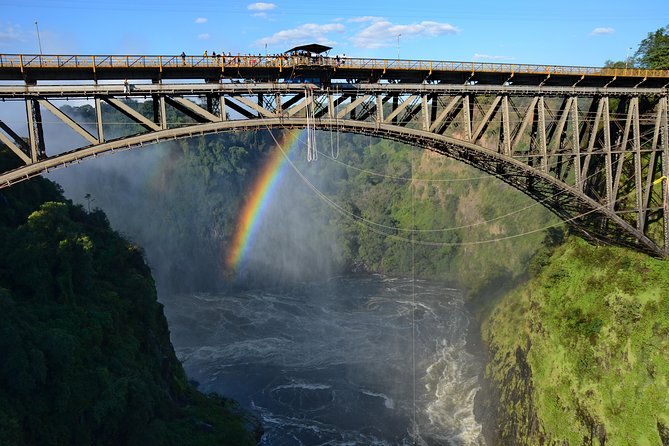
The bridge, built just downstream from the falls and supported by a parabolic arch spanning 156.5m, was fashioned from materials shipped on the rail line and transported across the gorge by cableway.

The design of what was originally referred to as the Zambezi Bridge is credited to British engineer George Hobson, and parts were built in Darlington by the Cleveland Bridge and Engineering Company and shipped to the Mozambique port of Beira for transport to the Falls.

Work started on the bridge in May 1904, and the concrete foundations were finally ready in October.

Advertisement

Meanwhile, the anchorages for sustaining the main span during its cantilever stage were prepared, and the building of the main bridge structure began on October 21.

The two side spans of the bridge, supported on the abutments and anchored to the rock behind by steel cables, were completed in late December 1904.

Engineers erected the main arch simultaneously from either side as two cantilevers, with the two arms anchored on either side by 12 high-tension steel wire hawsers running through galleries cut into the rock.

Advertisement

As the work was proceeding from the two sides of the gorge, the engineers took observations each day to see that the centre line of the bridge was maintained.

In April 1905, the engineers linked the bridge’s main arch together.

They said the calculations were so precise that chief construction engineer Georges C Imbault allowed for spray on the girders which would have slowed heat absorption and thus expansion of the metal.

Advertisement

The bridge took 14 months to complete and was officially opened by Professor Sir George Darwin, son of Charles Darwin and president of the British Association (now the British Science Association), on 12 September 1905.

Constructed from steel, the bridge is 198m long, with the main arch at a height of 128m above the lower water mark of the river in the gorge below. It carries a road, railway, and footway.

The bridge is the only rail link between Zambia and Zimbabwe and one of only three road links between the two countries.

Advertisement

The bridge did not bring the first train or the first railway to Zambia.

To push on with construction of the railway into Northern Rhodesia as fast as possible, Rhodes insisted the Livingstone to Kalomo line be laid before the bridge was finished.

Then a locomotive was conveyed in pieces across the gorge by the temporary electric cableway used to transport the bridge materials and nicknamed the ‘Blondin’ by the construction engineers.

Advertisement

The locomotive was re-assembled and entered service months before the bridge was complete.

For over 50 years, passenger trains crossed the bridge regularly as part of the principal route between the then Northern Rhodesia, southern Africa and Europe.

Freight trains carried mainly copper ore (later, copper ingots) and timber out of Northern Rhodesia, and coal into the country.

Advertisement

Today, one of the bridge’s main attractions is guided tours focusing on its construction, which include a walking tour under the main deck.

There is also an attraction called Shearwater that has a 111m bungee jump, including a bungee swing and zip-line.

Over the years, engineers and architects have praised Victoria Falls Bridge for its elegance of design and responsiveness to a natural setting and its practical application.

Advertisement

According to the American Society of Civil Engineers, the bridge “embodies the best abilities of the engineer to enhance the beauty of nature, rather than detract from it”.

Timeline: Victoria Falls Bridge

November 1855: British explorer David Livingstone visits the Falls.

Advertisement

1899-1902: The survey of the bridge site is made during the Boer War.

May 1903: Contract is awarded to The Cleveland Bridge Company to construct and erect the Victoria Falls Bridge for £72,000.

Late 1903: Georges C Imbault, a young French engineer working with The Cleveland Bridge Company, is appointed as chief construction engineer on site.

Advertisement

2 September 1903: Bridge designers decide on the final location of the bridge, over the second gorge close to the Boiling Pot pool.May 1904 Construction on the site begins.

October 1904: Concrete foundations for the bridge completed.

21 October 1904: Building of the main bridge structure begins. The anchorages for sustaining the main span during its cantilever stage are prepared.

Advertisement

Late December 1904: Engineers complete two side spans of the bridge, supported on the abutments and anchored to the rock behind by steel cable.

1 April 1905: Main arch of bridge is linked.

1905: Bridge is completed.

Advertisement

1929: Bridge reconfigured. Its deck is widened by 13ft (4m) and raised by nearly 5ft (1.5m), to accommodate a single rail line, two vehicle lanes and two pedestrian walkways. – E&T

Advertisement
Continue Reading
Click to comment

Leave a Reply

Your email address will not be published. Required fields are marked *

Slider

Nominations open for 2026 Tusk Conservation Awards

Published

on

BY WANDILE TSHUMA 

Nominations have opened for the 14th edition of the Tusk Conservation Awards, offering global recognition and £225,000 (about UGX 1.1 billion) in grant funding to Africa’s leading conservationists.

The awards, held in partnership with Ninety One, celebrate African-led solutions protecting wildlife, landscapes and livelihoods. Three winners will be selected from hundreds of nominations across the continent and honoured at a ceremony expected to be held in London later this year.

This year’s prize money will be distributed across three categories: £100,000 (UGX 480 million) for the Prince William Award, £75,000 (UGX 360 million) for the Tusk Award, and £50,000 (UGX 240 million) for the Tusk Wildlife Ranger Award.

Speaking at last year’s awards, Tusk’s Royal Patron, Prince William, said communities and local conservation leaders often provide the most practical solutions to sustaining biodiversity and natural landscapes.

“It is so often communities and local conservation leaders who provide the practical solutions to how we can best sustain our precious natural landscapes and vital biodiversity,” he said. “Identifying and supporting locally-led conservation has always been at the heart of Tusk’s ethos.”

Since their launch in 2013, the awards have recognised 61 winners and finalists from 23 African countries. Past recipients have used grant funding to expand ranger patrols, secure wildlife corridors, equip community conservancies and create sustainable livelihoods linked to conservation.

Examples of supported initiatives include protecting gorillas in eastern Congo, conserving turtles in Sierra Leone, restoring forests in Madagascar and dismantling poaching syndicates in Zimbabwe. Organisers say the funding is designed to be catalytic, enabling winners to scale their impact and attract long-term investment.

Nick Bubb, Chief Executive Officer of TUSK, said the awards highlight the courage and commitment of individuals working in challenging and often dangerous conditions.

“We encourage anyone who knows an individual or ranger team who has made a significant impact on wildlife conservation to nominate them for this once-in-a-lifetime opportunity to have their achievements recognised on a global stage,” Bubb said.

In a significant development this year, the Tusk Wildlife Ranger Award has been expanded to recognise ranger teams alongside individual rangers, reflecting what organisers describe as the collaborative nature of modern conservation efforts.

The expanded category aligns with Tusk’s broader ranger programmes, including the Wildlife Ranger Challenge and the Ranger Welfare and Standards Initiative, which supports more than 6,200 rangers with training, equipment and insurance.

Nominations are open to conservation leaders across Africa and do not require nominees to be existing Tusk partners. However, individuals cannot nominate themselves and must be put forward confidentially by someone familiar with their work.

Nominations will close on the 26th of April and must be submitted online.

Continue Reading

Slider

Painted Dog Conservation raises alarm over road detour threatening wildlife near Hwange

Published

on

BY NOKUTHABA DLAMINI 

Painted Dog Conservation (PDC) has raised serious concerns over a road rehabilitation detour near Hwange National Park, warning that the route now passing through a sensitive wildlife area poses an immediate threat to painted dogs and other species.

In a statement shared on its official Facebook page, PDC said while it supports Zimbabwe’s ongoing road rehabilitation programme, the decision to divert heavy commercial traffic through an ecologically critical landscape is placing wildlife and people at risk.

The organisation said it had, together with other conservation groups and tourism operators, raised concerns with the relevant authorities, the responsible ministry and the contractor from the early stages of the project, warning of potential ecological damage. However, those concerns were not acted upon, and the detour is now in active use.

According to PDC, the increased traffic volume and speeding trucks along the route leading to Hwange National Park have created a “grave and immediate danger” to painted dogs, one of Africa’s most endangered carnivores, as well as to other wildlife and road users.

“With the detour now in place, the reality on the ground is worrying,” the organisation said.

PDC revealed that its teams, alongside other conservation stakeholders, are taking emergency measures to reduce wildlife fatalities during the period. These include actively guiding painted dogs away from the road and, in some cases, chasing them to safety when trucks approach. Staff have also been stationed along the road holding “Slow Down” placards to alert motorists.

“These are not ideal or sustainable solutions, but they are necessary right now to save lives,” the organisation said.

Painted Dog Conservation has called on authorities to urgently install additional wildlife warning signage and more speed humps to calm traffic through the sensitive area. The organisation also appealed directly to motorists to exercise caution.

“We respectfully urge all road users to slow down, stay alert, and remember that this is a shared landscape. Development and conservation must go hand in hand, especially in areas of such high ecological importance,” PDC said.

The organisation stressed that wildlife cannot speak for itself and vowed to continue intervening until safer, long-term solutions are implemented.

PDC has also urged the public to share the message widely in a bid to help protect Hwange’s wildlife.

Continue Reading

Slider

Human-wildlife conflict in Zimbabwe is a crisis: who is in danger, where and why?

Published

on

BY BLESSING KAVHU

In the fishing villages along Lake Kariba in northern Zimbabwe, near the border with Zambia, everyday routines that should be ordinary – like collecting water, walking to the fields or casting a fishing net – now carry a quiet, ever-present fear. A new national analysis shows that human-wildlife conflict in rural Zimbabwe has intensified to the point where it has become a public safety crisis, rather than simply an environmental challenge.

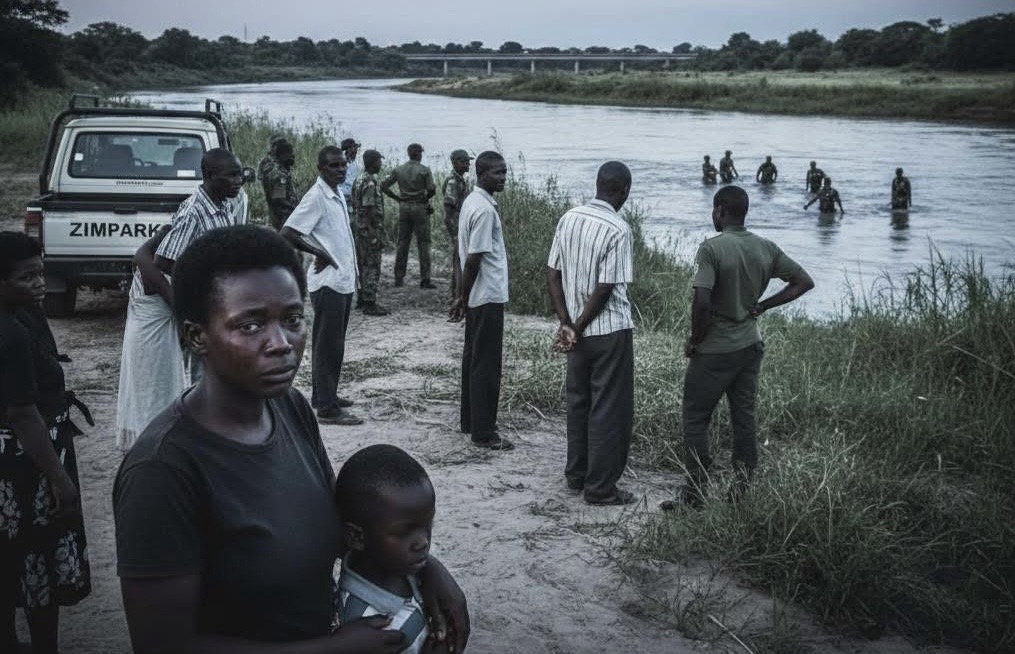
Between 2016 and 2022, 322 people died in wildlife encounters. Annual fatalities climbed from 17 to 67: a fourfold increase in just seven years. These fatal encounters are concentrated in communities that live closest to protected areas and water bodies. Here, people and wildlife compete for space and survival.

Protected areas and rivers provide water, forage and shelter for wildlife. Rural households rely on the same landscapes for farming, fishing and domestic water. The study shows that this overlap between human activity and wildlife movement sharply increases the risk of fatal encounters.

Historically, human-wildlife conflict research and policy in southern Africa focused on economic losses such as destroyed crops, livestock predationand damaged infrastructure. Fatal attacks on people were often treated as rare or incidental. This study shifts that perspective by showing that human deaths are not isolated events, but a growing and measurable pattern that demands urgent attention.

I am a US-based Zimbabwean scientist working with Zimbabwean conservationists. We analysed national wildlife-related fatality records from the Zimbabwe Parks and Wildlife Management Authority. The central questions were: how many people are dying from wildlife encounters, where are these deaths occurring and which species are responsible?

The findings were stark. Fatal encounters are rising rapidly, are geographically clustered in the north and western districts, and are driven primarily by two species: crocodiles and elephants (not lions, as people might expect). The implications extend beyond conservation to include trauma, fear, retaliatory killings of wildlife and the need for targeted, locally specific interventions.

Patterns in the data

The study reveals that more than 80% of recorded deaths involved only two species, elephants and crocodiles. Crocodiles alone were responsible for slightly more than half of all fatalities. Many of these incidents happened during activities people cannot avoid: fishing, crossing rivers, bathing, or washing clothes in rivers and lakes. These encounters are sudden and often impossible to anticipate, especially in places where visibility is poor and safe water access is limited.

Elephants were responsible for nearly a third of the deaths. These happened mainly during crop-raiding incidents or when communities attempted to chase elephants from fields and homesteads, or when people were walking to school and work. These confrontations often occur at night or in the early morning when visibility is low. Lions, hyenas, hippos and buffalo contributed only 17% of fatal incidents during the study period.

The rise in lethal encounters appears to be driven by several overlapping forces. Zimbabwe still holds one of Africa’s largest elephant populations, estimated at over 80,000 animals. This is second only to Botswana. In dry years elephants move over long distances in search of water and forage, increasing their presence in communal lands. Shrinking natural habitats and growing rural populations mean that human populations are expanding into wildlife corridors. Climate change, particularly recurring droughts, intensifies the competition for water and space.

The geography of the fatalities reveals a clear pattern. Most deaths occurred in Kariba, Binga and Hwange. These are districts along the country’s northern and western frontier, with a combined population of about 343,264 people. They have large water bodies that support abundant crocodile populations; they are close to protected areas with high elephant numbers; and people there depend heavily on farming, fishing and natural resource use.

How people feel

These encounters leave people with fear. Parents become anxious about children walking to school, farmers worry about tending crops at dawn and communities may avoid crossing rivers.

But people aren’t getting mental health support. So grief and fear can turn into anger, often resulting in killings of wildlife. A destructive cycle undermines conservation and damages trust between communities and authorities.

What to do about it

Different places face different dangers, and solutions should reflect that.

Areas near crocodile-prone rivers need safe water access and crossing points and redesigned community washing areas. Districts where elephants are responsible for most fatalities require better early-warning systems, community-based monitoring networks and low-cost methods to deter elephants from crop fields. These measures must be paired with community education and consistent follow-up support.

The findings highlight that coexistence will not be possible without recognising the emotional and psychological dimensions of living alongside wildlife. The responsibility lies with government agencies working with communities. These must be supported by conservation organisations and health services. Counselling, community healing processes and long-term engagement can help break the retaliatory cycle.

Research from other African settings shows that targeted solutions grounded in community involvement and local risk patterns are key to reducing conflicts. In northern Kenya, community-based early warning systems that alert villagers to elephant movements have significantly reduced fatal encounters. Beehive fences and chili-based barriers have helped protect crops without harming wildlife.

In Uganda’s Murchison Falls area, surveys found that local people preferred physical exclusion measures and the relocation of specific crocodiles as ways to lower the risk of attacks. In South Sudan’s Sudd wetlands, communities identified crocodile sanctuaries as one way to reduce dangerous interactions. In Zambia’s lower Zambezi valley, villagers highlighted the need for more alternative water access points (such as boreholes).

These examples show that fatal encounters are not inevitable. When interventions are matched to the species involved and the daily realities of local communities, both human deaths and retaliatory killings of wildlife can be reduced.

Zimbabwe’s wildlife remains a source of national pride and a cornerstone of tourism. But conservation cannot succeed if the people who live closest to wildlife feel unprotected or unheard. A future where people and wildlife thrive together depends on acknowledging that human wellbeing is inseparable from the wellbeing of the ecosystems they share.

SOURCE: THE CONVERSATION 

Continue Reading

Trending

Copyright © 2022 VicFallsLive. All rights reserved, powered by Advantage