Connect with us

In the community

In Hwange, conflict escalates between elephants and humans

Published

on

BY DERICK MATENGARWODZI

For months, the idea of her crops being unable to pass another night in the field unperturbed while she dozed indoors rattled Flora Mangwana so much.

Advertisement

These days, the 40-year old farmer sleeps in a makeshift hut outside her home in Siyalwindi, northwestern Zimbabwe.

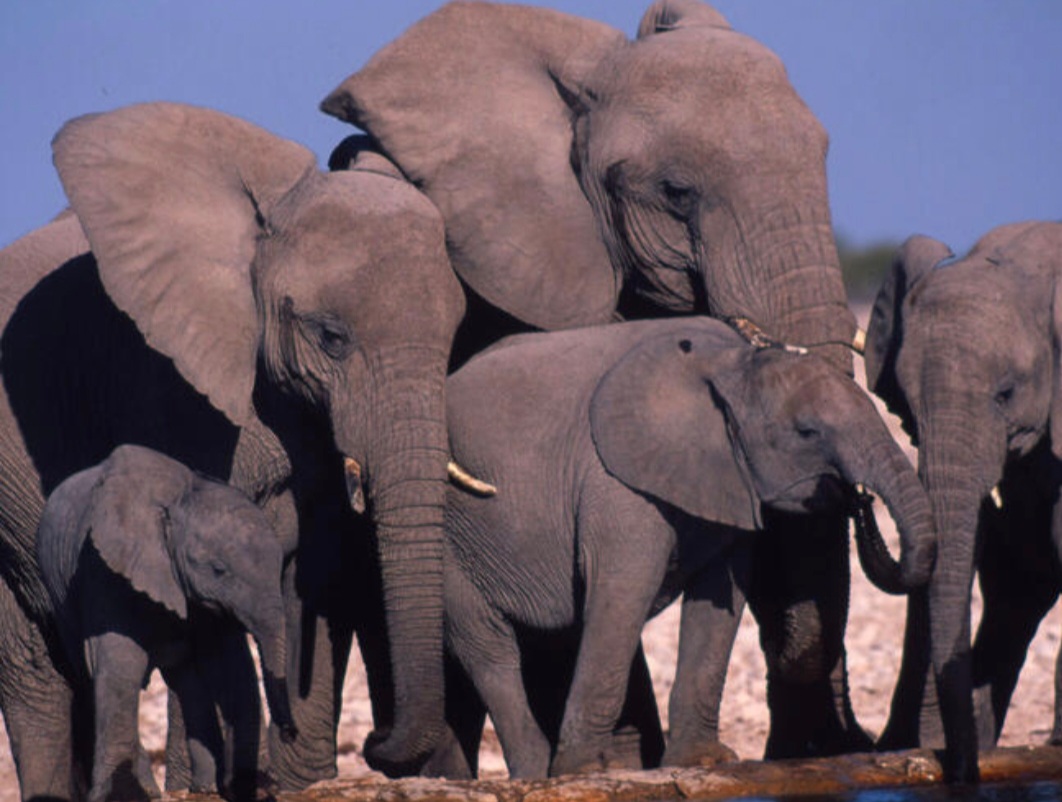
For more than a dozen years now, herds of elephants from the nearby Hwange National Park invade her family plot every other night, devouring the planted maize before it reaches maturity.

That has often left Mwangana, her family’s breadwinner, scrambling to find other food sources to feed her family of six. Ahead of harvest this April, she is worried about a repeat scenario.

Advertisement

“The elephants are coming to our fields in large numbers and we are not going to harvest much this season,” she said.

“Every year, we don’t harvest much because of the elephants. This year, there was little rainfall and elephants are still becoming a big problem, destroying our fields.”

The Hwange National Park is the biggest wildlife reserve in the southern African nation.

Advertisement

In 1928, it was declared a game reserve. Stretching over 14,600 square km and located in the eastern part of the Kalahari Desert, a low rainfall area, it is home to more than 100 mammal and 400 bird species.

During the dry season, the competition for food and water intensifies, resulting in conflicts among the animals.

For years, some of these animals, the elephants, have also been straying into residential areas around the park.

Advertisement

The invasion has led to loss of crops on farmland and lives across the country.

Things have worsened as the elephant population in the game park increased over the years to more than 50,000, far beyond its holding capacity of 10,000, Zimbabwe Parks and Wildlife Management (ZimParks) told the BBC.

In 2020, there were more than 50 injuries and 60 deaths due to growing wildlife-human conflict, according to ZimParks’ website.

Advertisement

It was an increase of more than fifty percent from the previous year.

In search of good pastures and water holes, the villagers drive their livestock into the game park.

Thomas Tshuma (47), a cattle herder has encountered elephants while tending to his livestock in the game park.

Advertisement

“Each time we go into the game to herd our livestock, the elephants are harassing us, attacking and chasing away our livestock at watering holes and pastures,” Tshuma told Al Jazeera.

“The grazing lands are now scarce and we have to look for better pastures to feed our animals.”

To protect their crops, the villagers have formed watch groups to scare away the elephants using primitive weapons and bonfires.

Advertisement

When the animals emerge from the park, the watchmen start beating metal tins loudly to frighten them.

But experts also say that this human activity is part of the problem.

“Land use change and continuous human encroachment near and sometimes in protected areas is the driving factor to the increase in Human-Wildlife Conflict”, said Shamiso Mupara, executive director of Mutare-based nonprofit Environmental Buddies Zimbabwe.

Advertisement

“And it likely results in both parties suffering.”

The increase in demand for land use around Hwange has seen communities encroaching on the game park.

“Before the conflicts started, there was a fence dividing the community and the park. However, it was removed and the elephants have access to the community farmlands,” said Ndlelende Ncube, the founder of Tikobane Trust, a Hwange-based conservation volunteer group.

Advertisement

 “Also, the increase in population has resulted in the occupation of buffer zones, sometimes a kilometre wide, resulting in conflicts in 27 villages.”

Survival of the fittest

Due to poor rainfall, the current farming season is likely to yield a poor harvest  even as the elephants continue to launch regular raids.

Advertisement

So the villagers are doubling down on crop protection, saying farming as a primary source of livelihood in Siyalwindi is being threatened.

“We don’t sleep in our homes at night, we stay awake trying to keep away the elephants that are coming for the little crops we have,” Mangwana added.

Others have resorted to trapping wild animals for meat or for sale of their body parts to poachers.

Advertisement

ZimParks, which manages the country’s national parks, said it is trying to “create a balance between people and wildlife”, according to Tinashe Farawo, a spokesperson for ZimParks.

“Both the animal and human populations are increasing.”

“Communities who share borders with parks must desist from herding cattle in the parks because their livestock is at risk of contracting diseases and being attacked,” added Farawo.

Advertisement

Previous studies done in the Kruger National Park in neighbouring South Africa to test the repellents have proved that “elephant repellents, chili bombs and beehive fencing are effective in deterring elephants,” according to Mupara.

Last year, Tikobane Trust tested an elephant repellent it made with the help of local advocacy groups, in one village.

The main ingredients were cow dung, water and garlic. It proved to be a “success, repelling elephants from 200 meters away”, said Ncube.

Advertisement

There also seem to be concerted efforts to reduce poaching through skills training and entrepreneurship education for communities near the parks to aid them in participating in the tourism value chain.

Farawo said the villagers are benefitting from Communal Areas Management for Indigenous Resources (CAMPFIRE), a government programme to support community-led development.

Government officials said the funds from the programme are used for development purposes, such as building schools, clinics and roads.

Advertisement

However, some farmers say the perennial losses incurred by the animals trampling on their crops are having a toll on them and they see little direct benefits from the CAMPFIRE funds.

Community members, including Mangawana and Ncube said their neighbours appointed to the committees do not know how it works because they do not run the project.

For example, when a rowdy elephant is shot by ZimParks, communities allegedly get only a small share, Ncube said.

Advertisement

Last year, Dete, another affected area, reportedly received less than US$100 payout, he said.

After years of confronting the elephants, Mangwana is running out of patience and wants quick solutions, rather than new policies and programmes.

“The elephants should rather be taken away from the area,” she said. “We are losing and we are under a lot of stress because we are not sleeping at night.

Advertisement

“The CAMPFIRE funds are only benefitting a few people who are administering the programme.” – Aljazeera 

Advertisement
Continue Reading
Click to comment

Leave a Reply

Your email address will not be published. Required fields are marked *

In the community

Tsholotsho teacher dismissed over protest photo, union cries foul

Published

on

BY NOKUTHABA DLAMINI

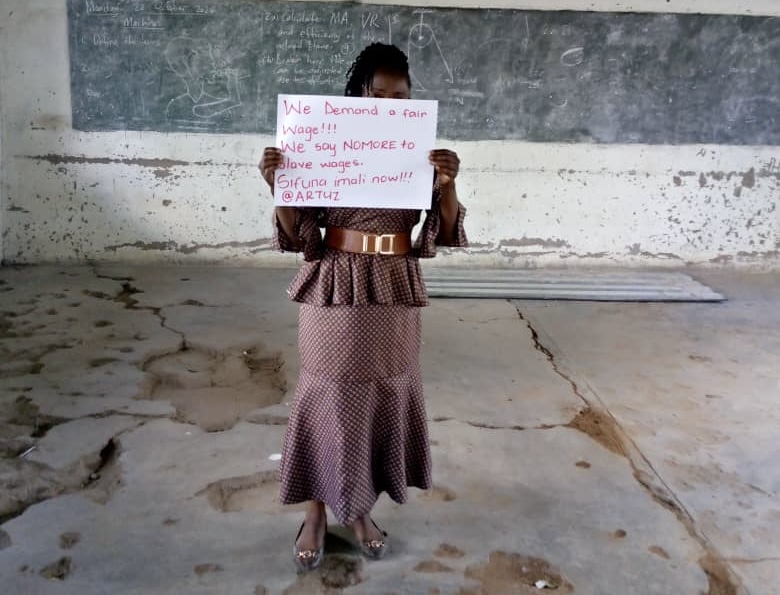
A Tsholotsho teacher has been dismissed from the public service after participating in an online protest by taking a photo in class holding a placard demanding better wages, a move that has drawn sharp criticism from a teachers’ union.

Advertisement

According to a letter dated April 10, 2026, from the Ministry of Primary and Secondary Education in Matabeleland North, Bridget Dhliwayo, a teacher at Zibungululu Secondary School in Tsholotsho District, was found guilty of misconduct and discharged from service with effect from May 14.

The dismissal letter, signed by Jabulani Mpofu, the Chief Director for Provincial Education Services in Matabeleland North, states that Dhliwayo violated public service regulations by taking a selfie inside a classroom on May 13, 2025, holding a placard reading: “We demand a fair wage; we say no more to slave wages. Sifuna imali now.”

Authorities said she shared the image on a WhatsApp group linked to the Amalgamated Rural Teachers of Zimbabwe (ARTUZ) and failed to conduct lessons over several days in May 2025, in breach of her duties.

Advertisement

“This is not the first time that you have been found guilty of misconduct,” the letter reads, adding that Dhliwayo had previously received warnings.

However, ARTUZ condemned the dismissal in a statement posted on X, arguing that the action criminalises labour activism.

“Since when has exercising labour rights become a dismissible offence?” the union said, describing the incident as part of an online demonstration campaign over low salaries.

Advertisement

Zimbabwean teachers, represented by groups such as ARTUZ, have long protested against poor pay and working conditions, often clashing with authorities over strikes and demonstrations, which are tightly regulated under public service rules.

The letter advises Dhliwayo that she may appeal the decision to the Labour Court or seek a review through the Public Service Commission within 21 days, although such processes do not automatically suspend the penalty.

The Ministry of Primary and Secondary Education had not publicly commented on the union’s claims at the time of publication.

Advertisement


Advertisement
Continue Reading

In the community

Nkayi’s mortuary crisis leaves families racing against time

Published

on

BY NOKUTHABA DLAMINI

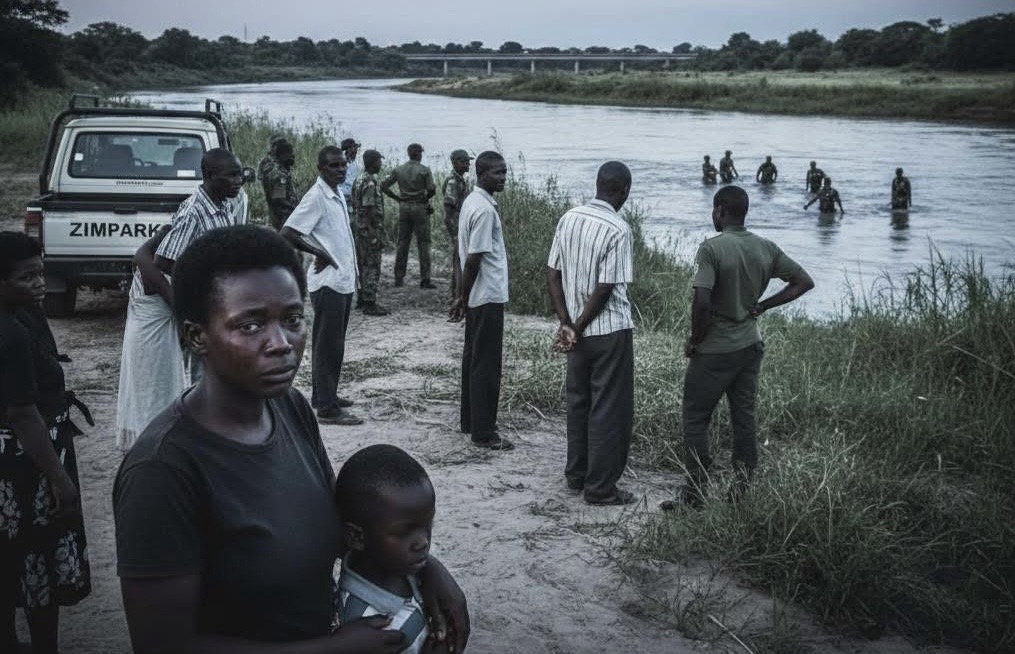
When an elephant trampled Mbusi Mabhena to death two weeks ago in Mthoniselwa village in Nkayi, his family’s grief was swiftly compounded by another ordeal.

Advertisement

By the following day, he had been buried.

In Ward 13 of Nkayi district, there was no time for a traditional week-long wake or a post-mortem examination. There is no mortuary.

Local leaders say immediate burials have become common in parts of Nkayi and neighbouring Lupane, where families cannot preserve bodies due to a lack of cold storage facilities.

Advertisement

Weston Msimango, the councillor for Ward 13, said Mr Mabhena’s body was covered with sand before burial in an attempt to slow decomposition.

“It has become normal for people to be buried within 24 hours,” he said. “We have no facilities to keep them.”

The problem centres on Mbuma Mission Hospital, the main referral hospital for Nkayi and Lupane districts. Despite serving thousands of people, it has never had a mortuary.

Advertisement

For many villagers, transporting a body to cities such as Bulawayo or Gweru is too expensive. As a result, families resort to improvised methods to manage the smell of decomposition while making urgent burial arrangements.

Thandiwe Moyo, from Mkalathi village, said families often use sand and bananas to try to reduce odours while waiting for a few relatives to gather.

“To bury someone you love within 24 hours, without a proper goodbye because there is no cold room, feels like we are disposing of trash rather than honouring a life,” she said.

Advertisement

Residents say the lack of basic infrastructure contrasts sharply with the political rallies occasionally held in the district.

Jabulani Hadebe, the Member of Parliament for Nkayi South, has criticised what he describes as a lack of political will to address the issue.

He pointed to a large 2023 election rally in the area, attended by senior political figures, as an example of misplaced priorities.

Advertisement

“Leaders had an opportunity to visit the hospital, see what was missing and help,” he said. “Instead, the focus was on displays of wealth.”

Hadebe also alleged that some people who attended the rally were given spoiled food and later fell ill, though this claim could not be independently verified.

Sibusiso Sibanda, from Gonye village, said residents struggle to reconcile the arrival of luxury vehicles at rallies with the absence of a basic mortuary facility.

Advertisement

“They can come with big cars and give out meat, but they cannot finish a small room at Mbuma to keep the dead,” he said.

He added that without funeral insurance or money for transport, families have little choice but to bury relatives quickly.

“In the morning you are alive. If you die and you do not have a funeral policy, by evening you are in the sand,” he said. “There is no dignity left.”

Advertisement

Villagers in Somakantane said the absence of a mortuary has also disrupted cultural practices that require the body to remain at home for several days before burial.

The situation is not unique to Nkayi. Lawmakers have raised similar concerns in Binga, where some hospitals also operate without mortuary facilities.

Despite the issue being raised in Parliament, there has been no formal response from the government indicating when mortuaries might be built or repaired in affected districts.

Advertisement

The Ministry of Health’s spokesperson, Donald Mujiri, could not be reached for comment.

SOURCE: CITE

Advertisement
Continue Reading

In the community

Zimbabwe moves to support human-wildlife conflict victims

Published

on

BY NOKUTHABA DLAMINI

Cabinet has officially approved a transformative National Wildlife Policy, marking the first major overhaul of the sector’s regulatory framework in over three decades.

Advertisement

For the communities of Matabeleland North—from the elephant-dense corridors of Hwange to the tourism heartbeat of Victoria Falls—the policy promises a radical shift in how local people coexist with and benefit from the country’s natural heritage.

Presented by Finance minister Mthuli Ncube on Tuesday, the new policy acknowledges that the wildlife sector has been “remarkably transformed” since the current laws were enacted in 1992.

The updated framework seeks to align Zimbabwe with modern international best practices, moving toward a “vibrant wildlife-anchored economy” that directly supports national development.

Advertisement

For residents of Hwange and Victoria Falls, the most critical breakthrough is the policy’s explicit focus on human-wildlife conflict (HWC).

The framework provides for the implementation of the Human-Wildlife Conflict Relief Fund, specifically designed to provide benefits and support to victims of wildlife encounters.

This is paired with new regulations for CAMPFIRE (Communal Areas Management Programme for Indigenous Resources) and the establishment of dedicated wildlife corridors to reduce dangerous interactions between animals and human settlements.

Advertisement

The policy is built upon 10 strategic pillars, including community-based natural resources management and the equitable sharing of benefits.

Crucially, the government now recognises wildlife as a “public resource,” with the policy aiming to support devolution and enhance “active community participation.”

This ensures that present and future generations in Matabeleland North are not just neighbours to the game reserves, but active stakeholders in its socio-economic success.

Advertisement

However, community members say the success of the policy will depend on how effectively benefits are devolved to grassroots level.

“We have heard policies before, but what matters is whether the money reaches us,” said a Hwange villager, Eslina Ndlovu from Nemanhanga. “Our schools are struggling, some do not even have adequate classrooms or learning materials. If wildlife revenue is coming from our areas, it should help improve our education system.”

Another villager,Joseph Mwembe from Vukuzenzele village under Chief Mvuthu, echoed similar sentiments, calling for investment in health services. “We are living with wildlife every day, but our hospitals are not equipped. We don’t have proper referral hospitals or machines. If this policy is serious about supporting communities, then we must see that money building clinics, equipping hospitals, and improving services here in Matabeleland North,” he said.

Advertisement

Villagers stressed that without tangible improvements in infrastructure and social services, the policy risks falling short of its intended impact.

“If communities do not benefit in real terms, then it defeats the whole purpose of calling wildlife a national resource,” added Ndlovu.

The policy also introduces measures for fisheries conservation and the protection of indigenous plant species, with strict penalties for violations that threaten resource sustainability.

Advertisement

Continue Reading

Trending

Copyright © 2022 VicFallsLive. All rights reserved, powered by Advantage