Connect with us

Slider

Jamaica reigns supreme as South Africa and Botswana athletes fall short in dramatic 100m showdown

Published

on

BY TIMES LIVE

Jamaica returned to the top of the 100m podium at the world championships in Tokyo on Sunday, but South Africa — even with two dogs in the fight — missed out yet again.

Advertisement

Gift Leotlela finished fifth in 9.95 sec and veteran Akani Simbine ended seventh in 10.04 while Oblique Seville clocked a 9.77 personal best to become the first Jamaican to win the global 100m crown in 10 years after Usain Bolt at Beijing 2015.

His countryman, Olympic silver medallist Kishane Thompson, was second in 9.82 and brash American Noah Lyles, the Olympic and defending champion, third in 9.89.

The final featured two Jamaicans, two Americans and two South Africans, but it was the two traditional powerhouses that dominated the podium.

Advertisement

Looked at another way, the final had four men from the Americas against four Africans, and with Kenny Bednarek ending fourth, it was the men from the Americas who took the first four spots.

Letsile Tebogo of Botswana, the Olympic 200m champion and the 100m silver medallist from Budapest 2023, was disqualified for a false start. Nigerian Kayinsola Ajayi was sixth in 10.00.

Yet, had Leotlela repeated the 9.87 he ran in the heats on Saturday he would have taken third. Still, the 27-year-old, who has struggled with injuries for much of the past four years, can be happy with three consecutive sub-10 runs at the showpiece.

Advertisement

But Simbine, who took the 60m bronze at the world indoor championships in March, looked as if he had mistimed his season.

He went on the indoor circuit early in the year in a bid to improve his start, which meant sacrificing an important training block that he subsequently switched to June and July.

The 31-year-old was on fire before the break, but since returning he never looked sharp.

Advertisement

He’s competed in seven major 100m finals — three Olympics and four world championships — and never reached a podium. Having previously finished fourth or fifth, this was also his worst finish in a final.

In the semifinals earlier, just like it happened at the Olympics on the same track four years ago, Simbine had to wait to find out if he had won a spot in the final after finishing third in the first heat in 9.96.

Only the first two of the three heats advanced automatically, with the two fastest losers going through.

Advertisement

Leotlela ended third in the final semifinal in 9.97.

But still, two South Africans in the final should augur well for the 4x100m relay next weekend.

The only other South African in a medal race on the day, Adriaan Wildschutt, didn’t have the kick at the tail end of a slow 10,000m, crossing the line in 28 min 59.47 sec to finish 10th to match his position at last year’s Paris Olympics.

Advertisement

Frenchman Jimmy Gressier won a sprint finish in 28:55.77, ahead of Ethiopian Yomif Kejelcha (28:55.83) and Andreas Almgren of Sweden (29:56.02).

Earlier, Zakithi Nene, the fastest man over 400m in the world this year with his 43.76 from May, won his heat in 44.34 to advance to Tuesday’s semifinal.

But American Jacory Patterson, No 2 on the list, threw down the gauntlet by jogging over the final metres of his heat to clock the fastest time of the heats, 43.90.

Advertisement

Khaleb McRae, the second of three American qualifiers, was second quickest in the heats in 44.25.

Then came Nene, and behind him lurk other dangermen, like Botswana’s Bayapo Ndori (44.36) and Rusheen McDonald of Jamaica (44.38), who limped off the track.

Countryman Lythe Pillay delivered a solid performance to advance to the semifinals with a 44.73 season’s best, finishing second in his heat behind Jereem Richards of Trinidad and Tobago, fourth at last year’s Olympics.

Advertisement

But with the US getting four men into the next round and Botswana and Britain three, the South African 4x400m team will have their work cut out next weekend to make the relay podium.

Miranda Coetzee and Shirley Nekhubui failed to advance beyond the women’s 400m heats and Brian Raats was unable to clear the bar in the qualifying round of the men’s high jump.

SOURCE| TIMES LIVE

Advertisement

Continue Reading
Click to comment

Leave a Reply

Your email address will not be published. Required fields are marked *

National

MPs challenge Government on fertiliser delays, livestock disease prevention and rural roads in Parliament

Published

on

BY NOKUTHABA DLAMINI

Members of Parliament pressed Government ministers on pressing issues affecting farmers and rural communities during oral questions at the beginning of yesterday’s parliamentary sitting, according to the Hansard record released from the Parliament of Zimbabwe.

Advertisement

MP Kudakwashe Mananzva raised concerns about delays in the distribution of critical fertiliser following reports that Ammonium Nitrate (AN) had not yet reached farmers despite good rains this season.

“This year we received good rains and we received fertiliser compound D but we did not receive the Ammonium Nitrate (AN). What is the Government policy to make sure that people receive their AN fertiliser in time?” the MP asked, prompting an immediate response from the Minister of Justice, Legal and Parliamentary Affairs, Ziyambi Ziyambi.

In reply, Minister Ziyambi acknowledged logistical challenges facing distribution agencies but stressed that efforts were underway to address the delays. “They experienced some delays in terms of transportation,” he said, adding that authorities had pledged to ensure AN fertiliser was disbursed and that “when the rains recommence, farmers will continue farming and we will make sure farmers will receive their fertilisers.” He concluded with a pledge to “fight to make sure that all fertilisers are disbursed in time,” reflecting Government’s commitment to agricultural support.

Advertisement

In the same session, Patrick Sagandira, the elected Member of Parliament for Makoni Central, raised concern about the spread of livestock diseases affecting cattle in the wake of heavy rains, with particular reference to January disease, which devastates herds during the rainy season. 

Sagandira asked: “What is the Government policy in making sure that farmers get medication for their livestock, especially the January disease?”

Minister Ziyambi reiterated Government advice on preventative measures rather than direct treatment. “To avoid January disease… every week, farmers are expected to spray the cattle or there must be dip tanks,” he said, noting that the Ministry had distributed “some tick grease to farmers in the rural areas” to help curb infestations and disease transmission.

Advertisement

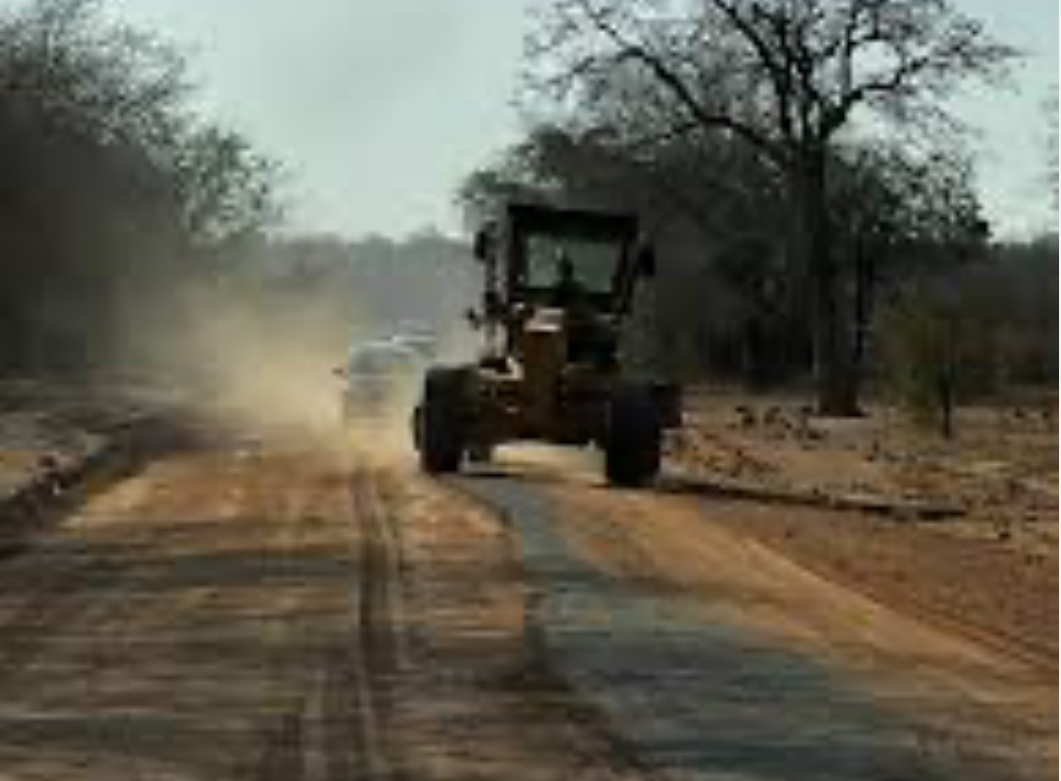
Turning to critical infrastructure,Tendai Pinduka questioned the Minister of Transport and Infrastructural Development, Felix Mhona, on Government policy regarding rural roads, many of which have been damaged by recent rainfall.

“Most of the roads, especially those in rural areas, have been eroded by rainfall,” Pinduka said, asking when fuel allocations for road rehabilitation would be released to councils.

Minister Mhona explained that responsibilities for road maintenance are divided among authorities, with rural district councils and agencies like RIDA responsible for specific networks. He stressed that Government, through the Zimbabwe National Roads Administration (ZINARA) and the Emergency Roads Rehabilitation Programme Phase 2 (ERRP2), would support councils.

Advertisement

“We are pleading with the Rural District Councils that they must give us names of the roads and the kilometres that need to be rehabilitated,” he told MPs, adding that monitoring would ensure fuel disbursed was used for its intended purpose.

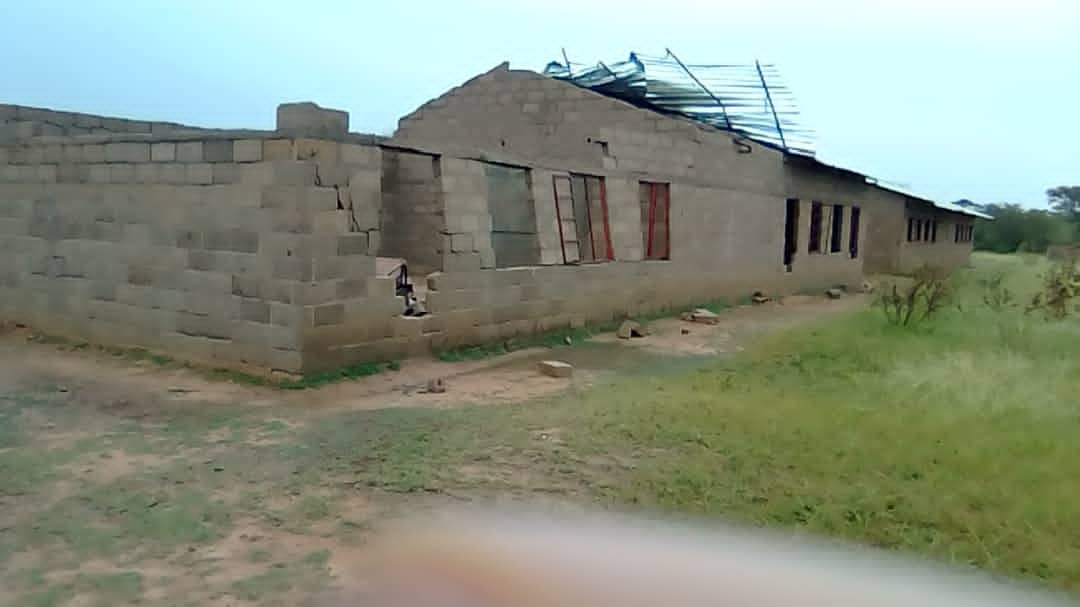
Supplementary questions further highlighted concerns about damaged bridges critical for access to schools and clinics. In response, Minister Mhona stressed the importance of collaboration between provincial engineers, councils and the Ministry to ensure “bridges can be rehabilitated swiftly.”

On frustration from MPs about failure to access fuel due to prior reporting shortfalls, the Minister said the Ministry had found solutions in some cases, including allocating further fuel while addressing accountability concerns.

Advertisement

Finally, questions arose about deteriorating town roads. Minister Mhona clarified that urban road networks fall under local authority jurisdiction, but reaffirmed Government commitment through ERRP2 to step in when needed, stating that “no place and no one is going to be left behind.”


Advertisement
Continue Reading

Hwange

Three-year-old girl killed in crocodile attack near Matetsi River Bridge

Published

on

BY NOKUTHABA DLAMINI 

A three-year-old girl from Matetsi in Hwange District, Matabeleland North Province, was killed by a crocodile on Tuesday evening while playing near the Matetsi River Bridge along the Bulawayo–Victoria Falls Highway.

Advertisement

According to ZBC, the toddler was with her five-year-old brother as their mother, Tariro Tsondzowore, was fishing nearby when the attack occurred. Authorities said the mother had briefly stepped away, leaving the children close to the riverbank, when a crocodile suddenly emerged from the water, struck and dragged the girl into the river.

People who were nearby reportedly attempted to scare the reptile away but were unsuccessful.

The child, who was from Masikili Village under Chief Shana in Hwange District, was taken before help could arrive.

Advertisement

Zimbabwe Parks and Wildlife Authority (ZimParks) rangers responded to the scene and shot one crocodile. Authorities confirmed that partial human remains have since been recovered, while efforts to retrieve additional remains are continuing.

Additional details of the incident were widely shared on social media platforms, where images from the scene show a sombre gathering along the riverbank. In the footage, several community members stand watching as uniformed personnel are seen in the water. A ZimParks vehicle is parked close to the river, while small groups of people look on from the grassy embankment, underscoring the gravity of the situation.

The tragedy has once again brought into focus the growing challenge of human-wildlife conflict in Zimbabwe, particularly in communities located near rivers and wildlife corridors.

Advertisement

Local authorities have urged residents, especially those living near riverbanks, to exercise extreme caution and remain vigilant against the dangers posed by crocodiles and other wild animals.

VicFallsLive will continue to follow developments on this story.

Advertisement
Continue Reading

In the community

Low environmental crime prosecutions raise concern in Matabeleland North

Published

on

BY STAFF REPORTER

The National Prosecuting Authority (NPA) has raised alarm over the low number of environmental cases recorded and prosecuted in Matabeleland North Province, warning that weak enforcement risks emboldening offenders.

Advertisement

Speaking at a multi-stakeholder engagement meeting organised by the Environmental Management Agency (EMA), Hwange-based public prosecutor Pride Mharadza said fewer than 15 EMA-related cases were recorded in the province in 2025, describing the situation as “deeply disappointing.”

“In Hwange, we only received one case last year involving the transport of hazardous substances without a permit,” Mharadza said. The accused, who had transported mercury, was convicted and fined US$500, with four months’ imprisonment suspended for five years.

Mharadza said Victoria Falls recorded no EMA cases in 2025, calling it “worrying that a whole station did not receive a single case.”

Advertisement

Binga recorded two cases involving cyanide, one resulting in six months’ imprisonment and forfeiture of the chemical, while the other could not proceed to court due to the absence of a forensic report.

In Inyathi, a single case involved implementing a project without an Environmental Impact Assessment (EIA) certificate, resulting in a US$200 fine. Nkayi recorded one case of prohibited alluvial mining, leading to suspended sentences for 19 accused persons.

Meanwhile, Tsholotsho and Lupane reported no EMA cases during the year.

Advertisement

Mharadza said delays in forensic reports, limited EMA representation, and weak collaboration between police and prosecutors were major obstacles to successful prosecution.

“The overall picture points to weak environmental law enforcement rather than an absence of environmental crimes,” she said. “Half the stations did not receive any EMA cases. Some prosecutors even said they do not know how to handle EMA cases because they are not receiving them.”

Mharadza urged law enforcement and prosecutors to take action, saying that successful prosecutions would “send a message to society” and strengthen environmental protection across the province.

Advertisement

SOURCE: CITE

Advertisement
Continue Reading

Trending

Copyright © 2022 VicFallsLive. All rights reserved, powered by Advantage