Connect with us

National

MPs challenge Government on fertiliser delays, livestock disease prevention and rural roads in Parliament

Published

on

BY NOKUTHABA DLAMINI

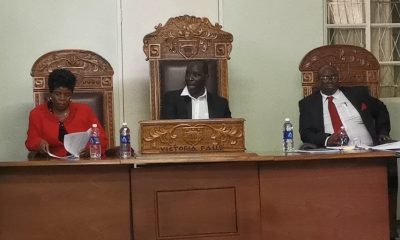
Members of Parliament pressed Government ministers on pressing issues affecting farmers and rural communities during oral questions at the beginning of yesterday’s parliamentary sitting, according to the Hansard record released from the Parliament of Zimbabwe.

Advertisement

MP Kudakwashe Mananzva raised concerns about delays in the distribution of critical fertiliser following reports that Ammonium Nitrate (AN) had not yet reached farmers despite good rains this season.

“This year we received good rains and we received fertiliser compound D but we did not receive the Ammonium Nitrate (AN). What is the Government policy to make sure that people receive their AN fertiliser in time?” the MP asked, prompting an immediate response from the Minister of Justice, Legal and Parliamentary Affairs, Ziyambi Ziyambi.

In reply, Minister Ziyambi acknowledged logistical challenges facing distribution agencies but stressed that efforts were underway to address the delays. “They experienced some delays in terms of transportation,” he said, adding that authorities had pledged to ensure AN fertiliser was disbursed and that “when the rains recommence, farmers will continue farming and we will make sure farmers will receive their fertilisers.” He concluded with a pledge to “fight to make sure that all fertilisers are disbursed in time,” reflecting Government’s commitment to agricultural support.

Advertisement

In the same session, Patrick Sagandira, the elected Member of Parliament for Makoni Central, raised concern about the spread of livestock diseases affecting cattle in the wake of heavy rains, with particular reference to January disease, which devastates herds during the rainy season. 

Sagandira asked: “What is the Government policy in making sure that farmers get medication for their livestock, especially the January disease?”

Minister Ziyambi reiterated Government advice on preventative measures rather than direct treatment. “To avoid January disease… every week, farmers are expected to spray the cattle or there must be dip tanks,” he said, noting that the Ministry had distributed “some tick grease to farmers in the rural areas” to help curb infestations and disease transmission.

Advertisement

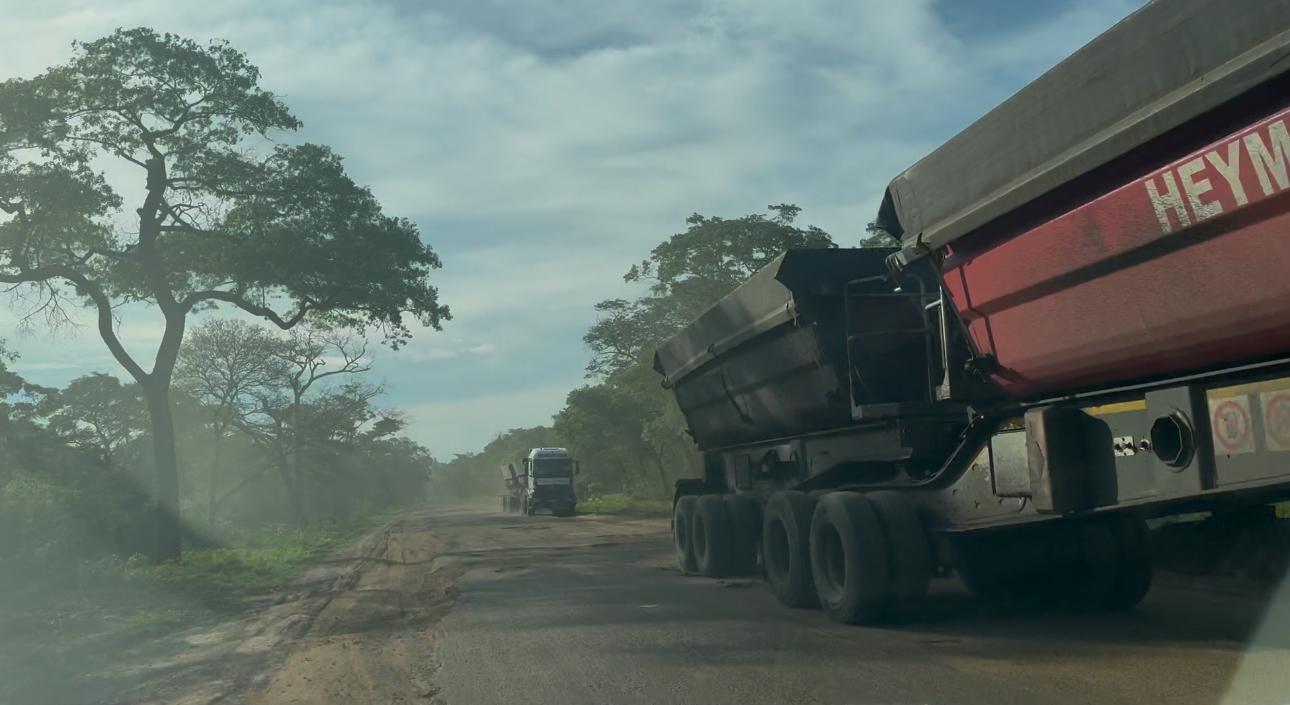
Turning to critical infrastructure,Tendai Pinduka questioned the Minister of Transport and Infrastructural Development, Felix Mhona, on Government policy regarding rural roads, many of which have been damaged by recent rainfall.

“Most of the roads, especially those in rural areas, have been eroded by rainfall,” Pinduka said, asking when fuel allocations for road rehabilitation would be released to councils.

Minister Mhona explained that responsibilities for road maintenance are divided among authorities, with rural district councils and agencies like RIDA responsible for specific networks. He stressed that Government, through the Zimbabwe National Roads Administration (ZINARA) and the Emergency Roads Rehabilitation Programme Phase 2 (ERRP2), would support councils.

Advertisement

“We are pleading with the Rural District Councils that they must give us names of the roads and the kilometres that need to be rehabilitated,” he told MPs, adding that monitoring would ensure fuel disbursed was used for its intended purpose.

Supplementary questions further highlighted concerns about damaged bridges critical for access to schools and clinics. In response, Minister Mhona stressed the importance of collaboration between provincial engineers, councils and the Ministry to ensure “bridges can be rehabilitated swiftly.”

On frustration from MPs about failure to access fuel due to prior reporting shortfalls, the Minister said the Ministry had found solutions in some cases, including allocating further fuel while addressing accountability concerns.

Advertisement

Finally, questions arose about deteriorating town roads. Minister Mhona clarified that urban road networks fall under local authority jurisdiction, but reaffirmed Government commitment through ERRP2 to step in when needed, stating that “no place and no one is going to be left behind.”


Advertisement
Continue Reading
Click to comment

Leave a Reply

Your email address will not be published. Required fields are marked *

National

Government launches nationwide dog vaccination drive amid surge in rabies cases

Published

on

BY WANDILE TSHUMA 

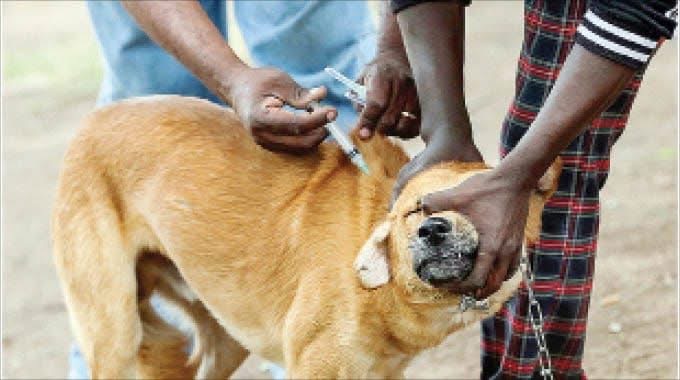
The Government has launched an urgent nationwide dog vaccination campaign following a surge in rabies cases across Zimbabwe.

Advertisement

In a statement posted over the weekend, the Ministry of Lands, Agriculture, Fisheries, Water and Rural Development said the country is experiencing a significant rise in rabies infections, largely linked to domestic dogs and wild jackals.

Permanent Secretary Prof. Obert Jiri confirmed that 650,000 doses of rabies vaccine have been secured from Botswana — exceeding the country’s usual annual requirement — to contain the escalating threat.

The Ministry said the campaign will be rolled out in the coming weeks across all provinces, targeting hotspots near national parks and conservancies, as well as urban areas that have recorded increasing cases.

Advertisement

Prof. Jiri stressed the urgency of seeking immediate medical attention following dog bites, warning that rabies is fatal in humans once symptoms appear.

He appealed to dog owners to ensure their pets are vaccinated, saying collective action remains the primary defence against the deadly disease and is critical in preventing further fatalities.

Advertisement
Continue Reading

National

Matabeleland North flags aid discrimination as provinces record widespread violations

Published

on

BY NOKUTHABA DLAMINI 

Matabeleland North recorded cases of discrimination in government aid distribution and political interference in community leadership, as human rights violations were reported across all provinces in January, according to the Zimbabwe Peace Project (ZPP).

Advertisement

In Matabeleland North, five violations were documented.

“On 9 January 2026, in Ward 29 (Emphafeni), farmers reported irregularities in agricultural input distribution, including selective allocation of groundnuts and maize seed to ruling party supporters, and sharing of 50kg fertiliser bags among three farmers, raising concerns over fairness and equal access to government assistance,” the report states.

In Binga South, a village secretary was removed from his position “for not aligning with ruling party positions, affecting his political rights and freedom of association.”

Advertisement

In Matabeleland South, four violations were recorded, mainly involving political intimidation. In Gwanda, individuals allegedly invaded Vubachikwe Mine claiming political backing, while in Bulilima West, villagers were reportedly threatened with losing land under the land reform programme if they did not support the “2030” agenda.

Bulawayo recorded two violations, including a case where “a visually impaired woman was denied bus transport from Bulawayo to South Africa despite having valid travel documents and fare, raising concerns of discrimination based on disability.” Residents in Old Magwegwe also reported prolonged sewage blockages exposing families to health risks.

Midlands province recorded 13 violations, including environmental concerns in Redcliff and Kwekwe over potential water contamination linked to gold processing chemicals. In Zhombe, political interference prevented enforcement of a court sentence in an assault case. In Silobela, police disrupted a Gukurahundi memorial service organised by a human rights group.

Advertisement

Masvingo recorded 19 violations, including the assault and arrest of a female vendor at SimRac Shopping Complex. The report says her goods were destroyed in what it describes as harassment of informal traders. Patients at Mashoko Hospital and Gawa Clinic also faced high user fees and limited medication.

Mashonaland West recorded 10 violations, including alleged irregularities in agricultural input distribution in Magunje and assault linked to ruling party supporters in Sanyati.

Mashonaland East documented six violations. In Murehwa North, “Provincial Chairperson and Minister Daniel Garwe threatened individuals in Ward 30, warning that those supporting the opposition CCC would be excluded from community programs and that anyone associating with CCC members could face violent reprisals.”

Advertisement

Mashonaland Central recorded four violations, including exclusion of community members, including persons with disabilities, from presidential agricultural inputs in Mt Darwin South, and learners being denied access to Grade 7 results over unpaid fees.

Harare recorded 16 violations, including assaults linked to political intolerance, disruption of civic gatherings, politicisation of borehole water access in Glenview, and the detention of a political activist over a planned protest.

Manicaland recorded the highest number of violations at 31. ZPP said incidents involved “state security agents, ruling party members, war veterans, and local authorities,” including intimidation of a human rights defender in Chimanimani and disruption of a community meeting in Nyanga South.

Advertisement

Overall, ZPP said the January data reflects “continued structural and institutional challenges in the protection, promotion, and fulfilment of human rights,” reinforcing the need for strengthened accountability and rights-based governance across the country.

Advertisement
Continue Reading

National

Police arrest six in major drug busts across the country

Published

on

BY BANDILE TSHUMA

The Zimbabwe Republic Police (ZRP) has arrested six suspects in separate incidents involving the unlawful possession and cultivation of dangerous drugs across the country.

Advertisement

In a press statement written on Monday, police said the arrests were part of ongoing efforts to curb drug trafficking and substance abuse.

On Sunday , police in Plumtree intercepted a Toyota Quantum vehicle and arrested Msawenkosi Ndlovu (49) and Vengai Chawa (41). The two were found in possession of 5 124 bottles of Broncleer cough syrup (100ml) and 4 170 bottles of Astra Pain cough syrup (100ml). The illicit substances are valued at approximately US$80 000.

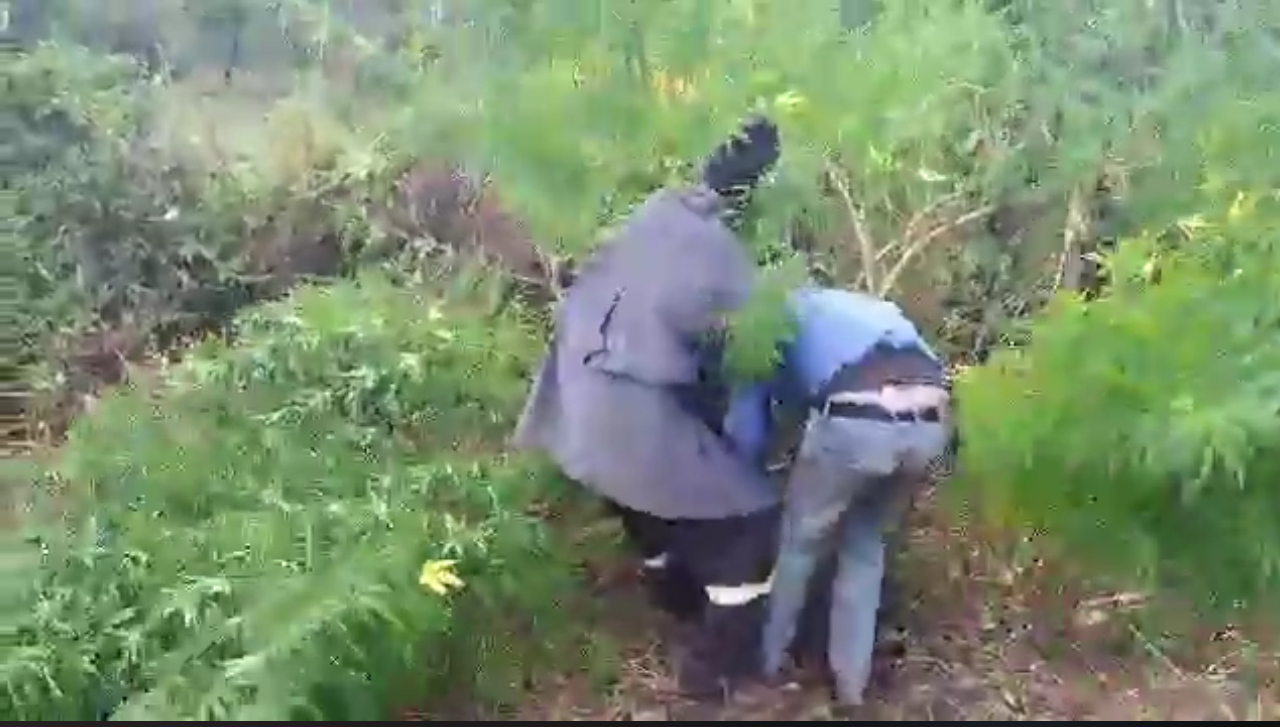
In a separate case on the same day, police in Wedza arrested Emanuel Busemani (28) at Plot 7 Investment Farm in Melfort, Goromonzi in connection with the unlawful cultivation of dagga.

Advertisement

Meanwhile, in Bubi, Lacken Tshuma (55) and Owner Muleya (32) were arrested on Monday at Inunwa Ranch for unlawful cultivation of dagga.

In another incident on Friday, Tinashe Mero Shoko (22) and Eliot Badza (33) were arrested at a house in Garikai, Dulibadzimu, Beitbridge after police recovered 100 kilogrammes of dagga.

Police reiterated that the fight against drug and illicit substance peddling and trafficking will continue for the safety and security of Zimbabweans.

Advertisement

The ZRP urged members of the public to provide information on drug lords, dealers and criminal syndicates. Reports can be made through the National Complaints Desk on (0242) 703 631, via WhatsApp on 0712 800 197, or at any nearest police station.

Advertisement
Continue Reading

Trending

Copyright © 2022 VicFallsLive. All rights reserved, powered by Advantage