Connect with us

National

Education ministry launches nationwide one laptop, one iPad per pupil program

Published

on

BY LWAZI SHOKO

Zimbabwe has launched a nationwide One Laptop, One iPad Per Pupil initiative aimed at bridging the digital divide and expanding access to technology in schools, Minister of Primary and Secondary Education Torerayi Moyo announced on X on Monday.

Advertisement

The programme, being implemented in partnership with UNICEF Zimbabwe, will see the distribution of ICT equipment including laptops, tablets and projectors to schools across the country, with priority given to disadvantaged and solar-powered schools.

According to Minister Moyo, the initiative is designed to strengthen digital teaching and learning while promoting inclusive and equitable education. He said the programme seeks to ensure that all learners, regardless of geographic location or socio-economic background, have access to modern learning tools.

“As part of this initiative, I had the honour of presiding over the official handover of a major consignment of ICT devices,” Moyo said, adding that the resources would support the delivery of quality education and help prepare learners for a technology-driven future.

Advertisement

The minister described the programme as a transformative step that goes beyond the provision of devices, framing it as an investment in equity, opportunity and long-term national development.

Moyo also paid tribute to President Emmerson Dambudzo Mnangagwa, crediting his leadership under Vision 2030 and the Presidential Computerisation Programme for driving innovation and public-private partnerships in the education sector.

“By placing a laptop and an iPad in the hands of every pupil, we are building the digital foundations of a knowledge-based economy,” he said.

Advertisement

Lastly, expressed gratitude to UNICEF Zimbabwe and other development partners for their continued support, noting that the collaboration is key to building a more connected and future-ready education system.


Advertisement
Continue Reading
Click to comment

Leave a Reply

Your email address will not be published. Required fields are marked *

National

Parliament debates disputed chiefdoms across the country

Published

on


BY STAFF REPORTER 

Advertisement

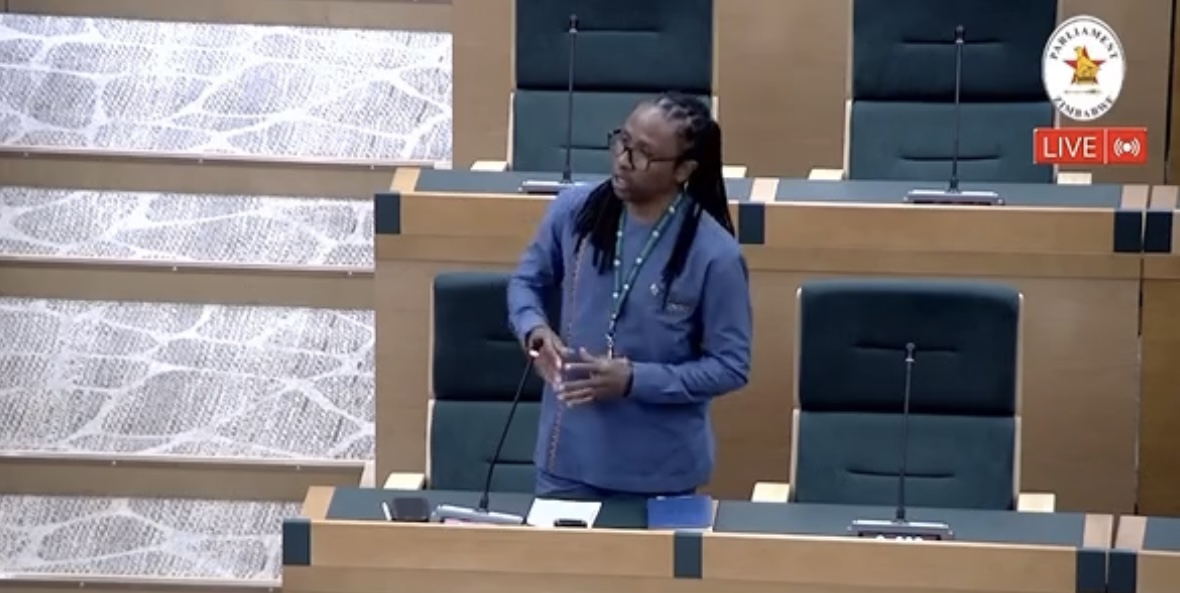
Parliament has raised concern over increasing disputes over traditional leadership, with lawmakers warning that contested chiefdoms are undermining governance and development in rural communities.

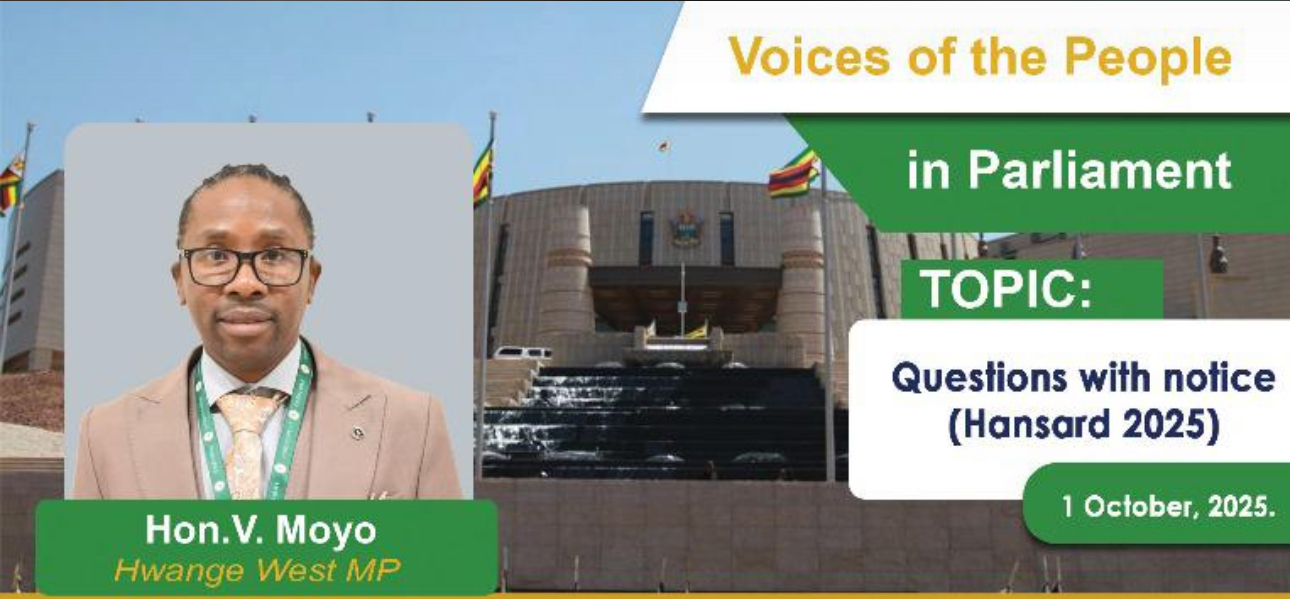
Moving a motion in the National Assembly, Hwange West MP, Vusumuzi Moyo said the growing number of chieftainship disputes posed a threat to peace and cultural heritage.

“I rise today to debate on a matter which I believe is a matter of national importance, the growing prevalence of disputed chiefdoms across Zimbabwe and the serious threat that these poses to peace, governance, development, and the preservation of our cultural heritage,” Moyo told Parliament. 

Advertisement

He said many disputes date back to distortions created during the colonial period.

“Some of these disputes… emanate from colonial times… when the colonial masters moved in. When they moved in, we already had governing structures,” he said. 

Moyo also referenced communities in Hwange District, saying colonial relocations disrupted traditional governance systems.

Advertisement

“I remember in the constituency that I come from, most of these people… had been resettled from far-off lands, fertile lands, and dumped in Hwange District,” he said. 

He warned that unresolved leadership disputes weaken governance at grassroots level.

“Madam Speaker, when a chiefdom becomes disputed, those constitutional functions grind to a halt. Customary courts lose legitimacy. Land allocations become contested. Development programmes stall,” he said. 

Advertisement

Moyo urged Government to establish clearer succession procedures for traditional leaders.

“It is my sincere hope that… we could start the conversation of trying to restore our culture by providing the necessary legislation to make sure that we cure all this,” he said.  

Advertisement
Continue Reading

National

Rising Zambezi flows lift Kariba water levels amid improved rains

Published

on

BY WANDILE TSHUMA

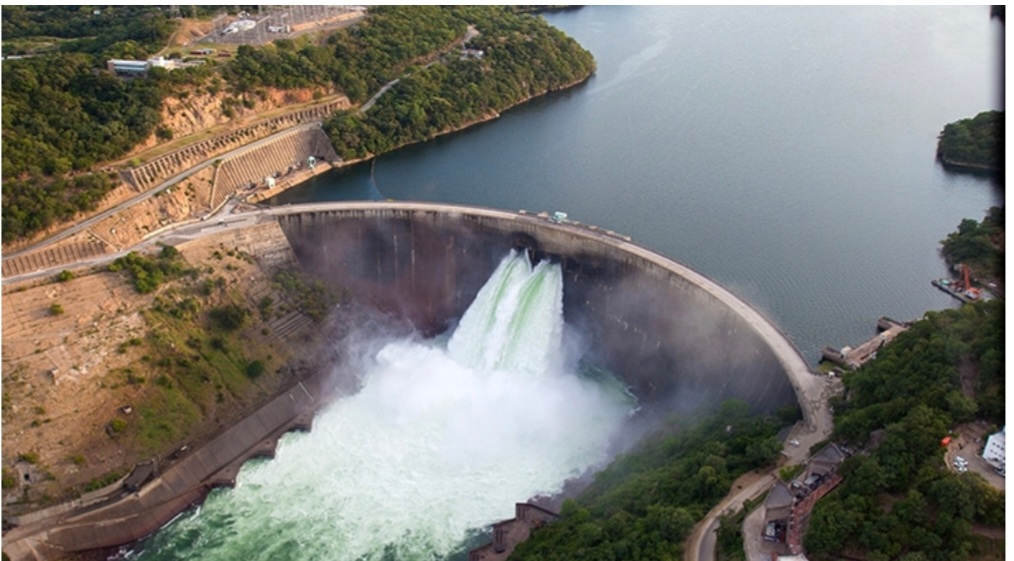
Water levels at the Kariba Dam are gradually rising following improved rainfall across the Zambezi River Basin, bringing cautious optimism for water availability and power generation.

Advertisement

In a hydrological update released Tuesday, the Zambezi River Authority said the Lake Kariba reservoir level had reached 477.74 metres above sea level as of 10 March 2026.

Usable live storage now stands at 15.57 percent, equivalent to about 10.08 billion cubic metres of usable water.

The Authority said the increase is being driven by improved rainfall across much of the Kariba catchment during the 2025/2026 rainy season, which has boosted river flows and inflows into the reservoir.

Advertisement

“This reflects an improvement compared to the same date in 2025, when the reservoir stood at 476.93 metres above sea level with usable live storage of 9.87 percent,” the Authority said.

Zambezi flows rising at key monitoring points

River flows are also increasing at key monitoring stations along the Zambezi River.

Advertisement

At the Chavuma Gauging Station, flows reached 3,058 cubic metres per second on 10 March 2026, significantly higher than 2,088 cubic metres per second recorded during the same period last year.

Flows have also risen sharply near Victoria Falls, a key tourism and hydrological monitoring point.

At the Victoria Falls (Nana’s Farm) Gauging Station, river flows increased to 1,645 cubic metres per second, compared to 871 cubic metres per second on the same date in 2025.

Advertisement

The Authority said the upward trend reflects stronger rainfall upstream and around the Victoria Falls area, which is feeding the Zambezi system.

Outlook

The Zambezi River Authority said it will continue monitoring rainfall patterns and inflows across the basin to guide water utilisation at hydropower stations linked to the Kariba Dam.

Advertisement

The reservoir is a critical source of electricity for both Zimbabwe and Zambia, which jointly own and manage the dam through the Authority.

Advertisement
Continue Reading

National

Parliament flags dozens of council by-laws as unconstitutional

Published

on


BY NOKUTHABA DLAMINI

Advertisement

Subheading:

Legal committee says several statutory instruments exceed legal powers, impose excessive fines and create room for arbitrary charges.

Story:

Advertisement

The Parliament of Zimbabwe has raised alarm over dozens of local authority by-laws, warning that many of them violate the Constitution and the laws under which they were created.

In an adverse report, the Parliamentary Legal Committee said several statutory instruments gazetted in October 2025 are ultra vires, meaning they exceed the legal powers granted under the Urban Councils Act and the Rural District Councils Act. 

The by-laws affect a number of local authorities including Masvingo, Plumtree, Shurugwi, Chimanimani, Chivi and Insiza.

Advertisement

According to the committee, some of the regulations were improperly enacted because the minister responsible for local government made the by-laws directly instead of councils, which are legally mandated to draft them before submitting them for ministerial approval. 

“The by-law making authority is the council, not the minister,” the report states, adding that the process set out in the law was not followed. 

The committee also flagged excessive penalties in some statutory instruments. Under existing legislation, fines imposed through council by-laws should not exceed Level Five on the standard scale of fines — about US$200. However, some by-laws impose penalties ranging between US$500 and US$5,000, which lawmakers said violates the enabling legislation. 

Advertisement

Another major concern is that several by-laws require residents to pay permit or licence fees without specifying the amounts, creating legal uncertainty.

Lawmakers warned that leaving such fees undefined could allow authorities to impose arbitrary charges, potentially opening the door to corruption and abuse of power. 

The committee also highlighted constitutional concerns in some provisions, including those that allow councils to seize property or evict residents without court oversight, which may violate constitutional protections against arbitrary deprivation of property and unlawful eviction. 

Advertisement

In its conclusion, the committee said the statutory instruments are inconsistent with both the Constitution and the Acts of Parliament that empower local authorities, recommending that the laws be reviewed and amended to comply with constitutional and legal requirements. 


Advertisement
Continue Reading

Trending

Copyright © 2022 VicFallsLive. All rights reserved, powered by Advantage