Connect with us

Slider

Inside Boschpoort Predators: A candid tour with Hannes Wessels

Published

on

BY NOKUTHABA DLAMINI 

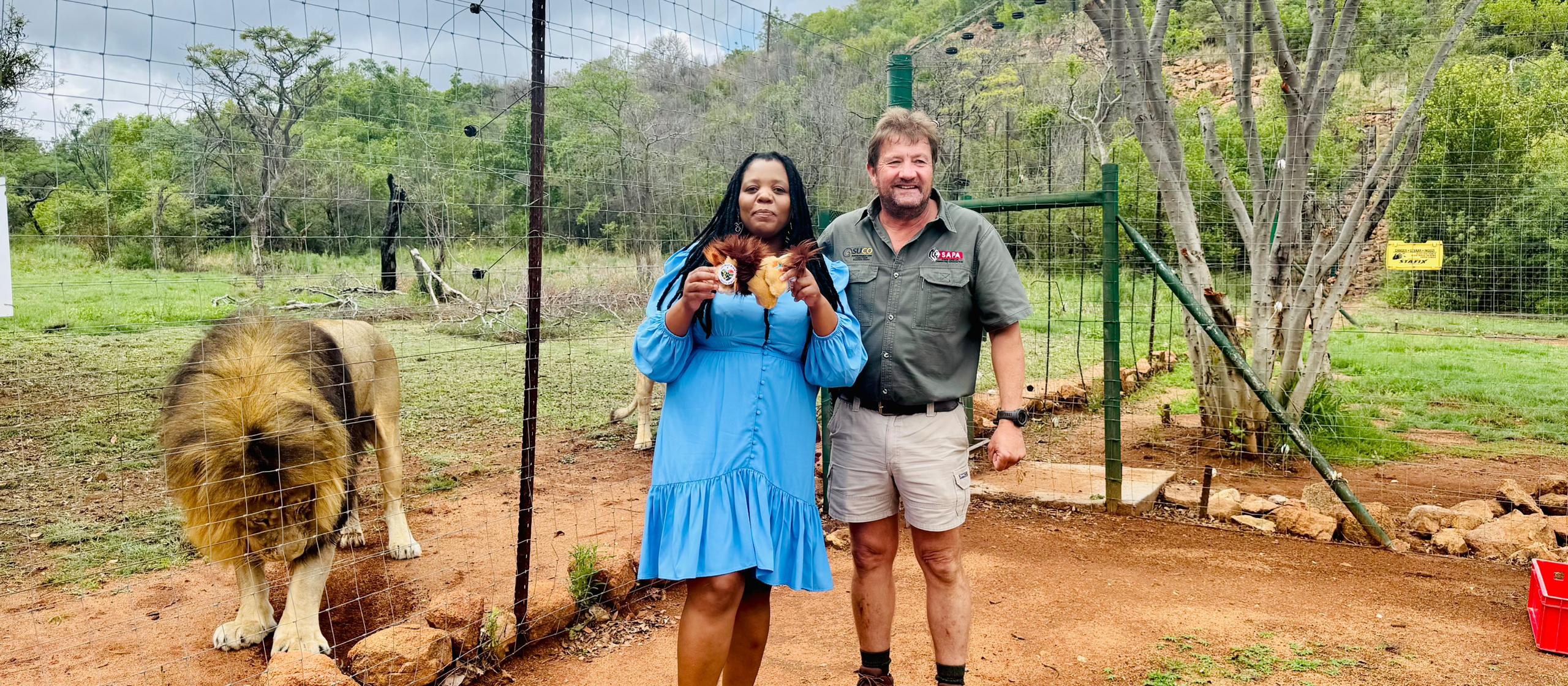
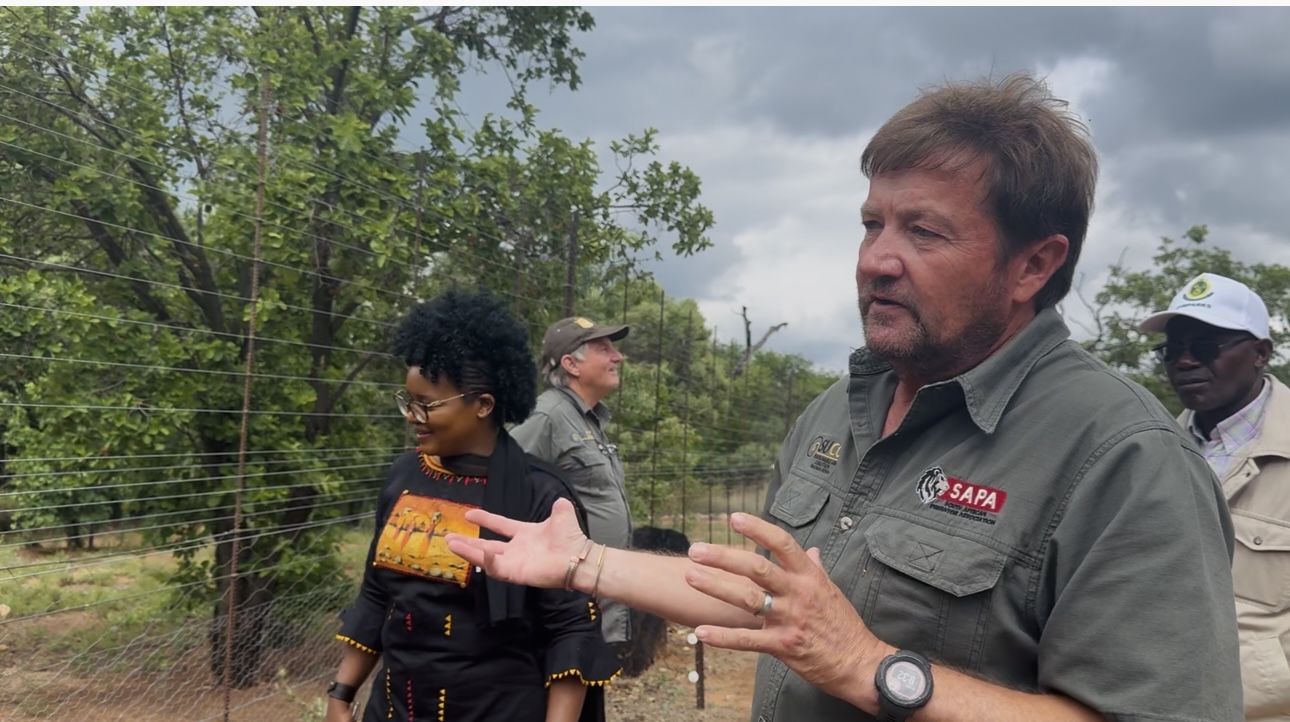
When l visited South Africa recently with the Zimbabwe Parliament and Wildlife Management Authority delegation, I was taken on a private tour of Boschpoort Predators by Hannes Wessels — President of the South African Predator Association, SUCo-SA member, and one of the industry’s most outspoken defenders. For hours, he walked us through his sanctuary, breeding areas, and off-site hunting properties, offering an unusually frank look into a sector that is often hidden behind controversy and media narratives.
Advertisement

“The youth are our conservationists”

We began in the sanctuary section, where Hannes explained why thousands of schoolchildren visit the property each year.

“On Tuesdays and Thursdays school groups visit us free of charge,” he said. “Our school system in South Africa has no conservation value in the syllabus anymore. The youth are our conservationists, and that’s why it’s important to bring their schools in and take them through the jobs.”

Advertisement

The sanctuary is one of three main sections: the public sanctuary, tiger breeding facilities in the valley, and a mountain breeding area that is closed to visitors.

“We don’t want human imprint on animals that are going into the hunting land,” he explained.

Breeding, hunting and the “Buffer” argument
Hannes spoke openly about the role of the predator-breeding industry in South Africa.

Advertisement

“We need to keep this industry open, because it’s a buffer for the wild populations we’ve got,” he said.

“There’s been unnecessary negativity. People see an animal in a cage and think it’s starving today because of what they see in the media.”

He argued that captive-bred lions reduce pressure on wild reserves, especially as some national parks face disease challenges.

Advertisement

“A specimen like that, you won’t find in our national parks anymore — Kruger is compromised due to disease in the lions. Other metapopulations are under pressure.”

He also highlighted the economic contribution:

“This industry contributes five hundred million to GDP from lion hunting alone,” he said. “If you look at the whole value chain — taxidermy, shipping agents — it makes up to a billion.”

Advertisement

Traditional use and sustainability

Standing beside the enclosures, he spoke about cultural practices involving animal parts:

“Animals are part of traditional medicine in our culture, and there’s nothing wrong with it as long as it’s used sustainably. You cannot change the culture of a nation, but you can teach sustainability.”

Advertisement

The challenge of tiger genetics and DNA markers
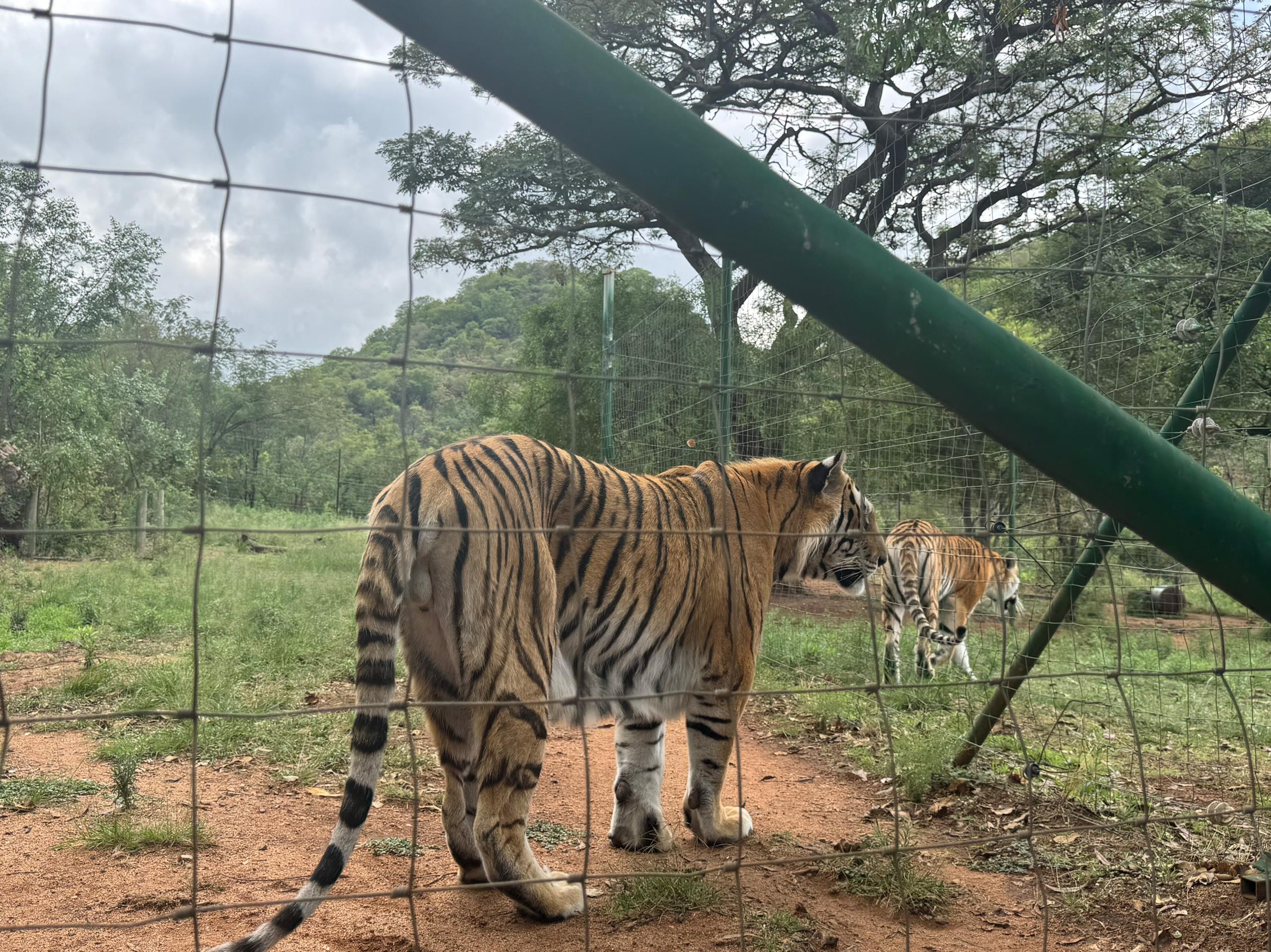
At the tiger section, he turned to what he called South Africa’s biggest challenge in tiger management:

“South Africa cannot export tigers to the countries of origin because we haven’t got DNA markers,” he said.

“I can say this is a Siberian, but it’s got Bengal blood — nobody can tell me. That’s the problem: there’s no regulation or DNA system to determine pure lines.”

Advertisement

He mentioned that one of his colleagues is working to change that.

“One of my staff members is working on that to see if we can get tiger markers in, so we can actually determine what we’ve got.”

Traceability

Advertisement

Hannes described a new programme they believe will reshape South Africa’s predator sector:

“We’ve got a new traceability programme, written by one of the best, especially for the lion industry,” he said.

“We can trace a lion from cradle to grave — DNA, parentage, everything.”

Advertisement

This, he said, is crucial for international acceptance:

“The US (United State of America) wants traceability on the product. They don’t just want to know it doesn’t threaten the species — they want enhancement findings. It must prove a benefit.”

He argued that once traceability is universal:

Advertisement

“CITES (Convention on International Trade in Endangered Species of Wild Fauna and Flora) will open up, because then we can prove we are not busy with inbreeding.”

A database to counter inbreeding claims

He said their internal database already captures detailed lineage:

Advertisement

“I’ve got parentage, I’ve got DNA, I’ve got everything. We can prove we’re not breeding irresponsibly.”

But he added that government itself lacks accurate numbers:
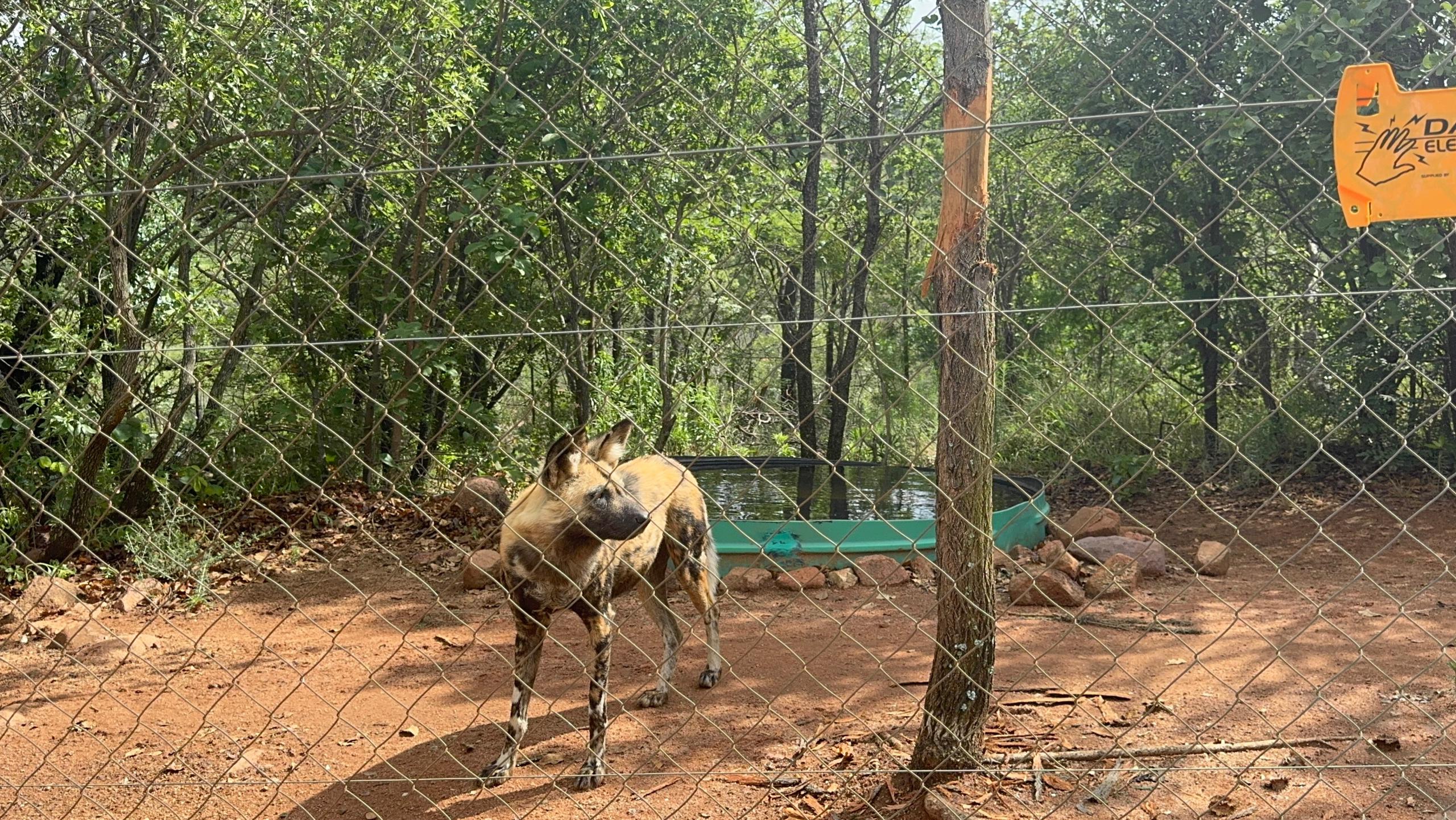
“If you ask the department how many one-year-old male lions we have in captivity, they battle to tell us.”

Advertisement

The new programme aims to force uniform reporting across the industry.

Re-wilding and new conservation fund

Hannes revealed a new initiative:

Advertisement

“Every lion that will be hunted in the future will contribute to a conservation fund,” he said.

“That fund is busy with projects like re-wilding.”

He insisted re-wilding can work:

Advertisement

“They say you cannot re-wild a lion — it’s like teaching a house cat to hunt. We re-wilded lions in 2016, and it’s working.”

Breeding success and natural mortality

He explained that captive-breeding success mirrors natural patterns:

Advertisement

“The success rate is usually four cubs, but there’s a 25% loss. Four will be born, you’ll raise three — one is always lost.”

In nature, he said, mortality is even more brutal due to pride takeovers.

“A new male kills all the cubs because he wants his own blood. That’s why it’s almost impossible for a father to mate with his daughter in the wild.”

Advertisement

Some online images showing thin lions mislead the public, he argued:

“Most of those pictures are lions growing old. They’re not sick — they just go old and starve naturally once they’re chased out.”

The 1984 Smith study: “Putting facts ahead”

Advertisement

Hannes cited the work of Dr Smith, who sedated a number lions in Kruger in 1984 to establish physical averages.

“Smith claims a big lion male should be 1.05 metres at the shoulder,” he said, standing beside one of his large males.

“This one is 1.32 — higher than a normal lion male. That’s the genetics we’re working with.”

Advertisement

He emphasised that quality genetics drive higher industry prices.

Industry scrutiny and advocacy

Hannes believes misinformation is one of the industry’s greatest challenges.

Advertisement

“We are confronted with opinions. We’ve got the science, we’ve got the proof. NGOs are sponsoring opinions and we haven’t got the funding to put the facts out.”

He credited sector associations

“If it wasn’t for Peter, Stephen, and especially Richard — attending meetings, fighting for us — we would have lost this industry a long time ago.”

Advertisement

He dismissed political threats to shut predator farming:

“The wish of the government to close the industry is the same as my wish to win the lottery — it will never happen.”

Inside the facility: Slaughterhouse, hospital, and daily Realities

Advertisement

At one point we passed the onsite veterinary building.

“That’s our hospital where we treat all our animals,” he said. “It’s also the slaughterhouse for carcasses — nothing is wasted.”

He explained they had just processed a horse that had died that morning following an attack with a wildebeest.

Advertisement

Gabi and the nocturnal predators

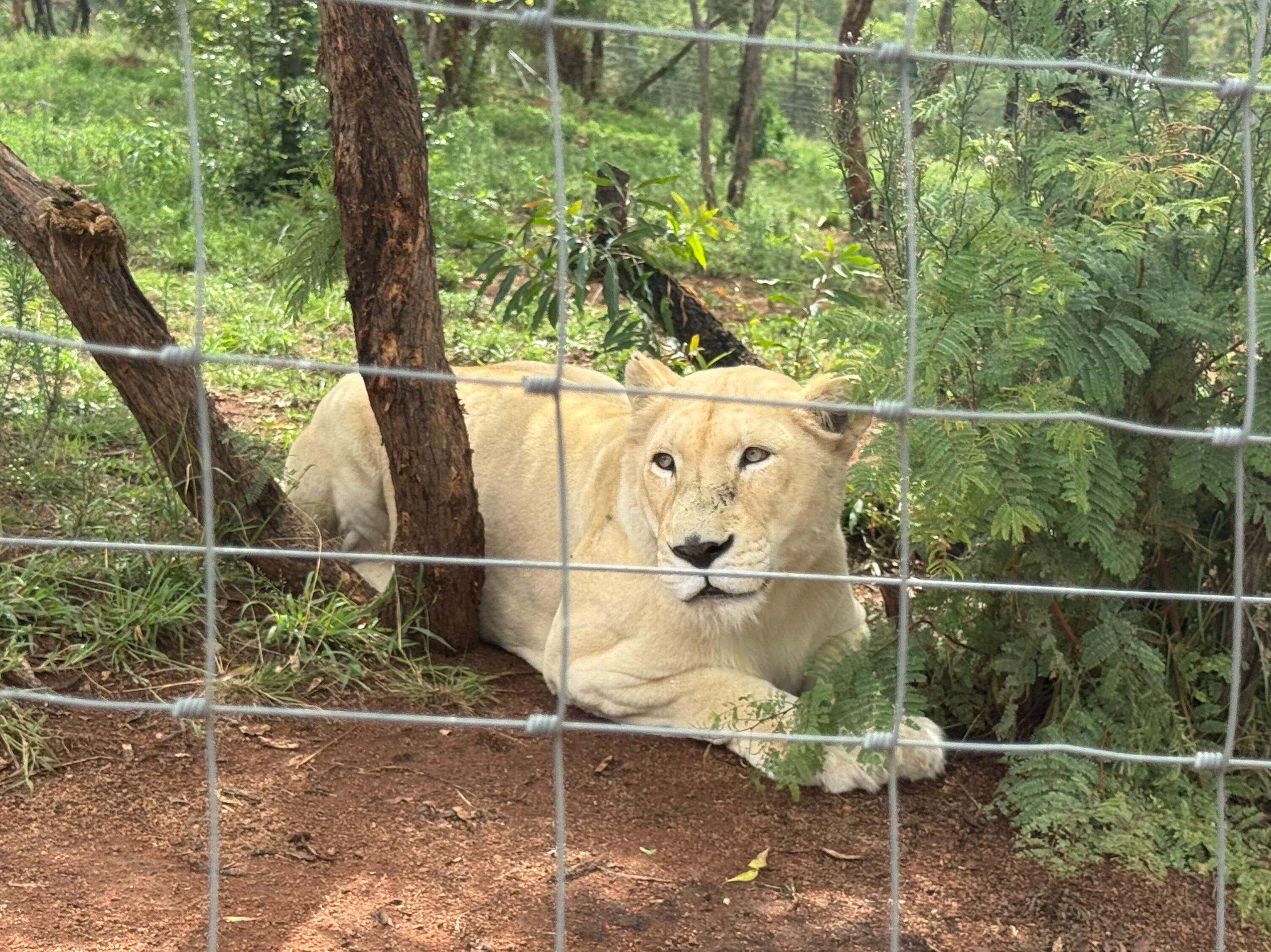
The tour almost ended with Gabi, a six-year-old predator kept in the sanctuary.

“Normally nocturnal,” Hannes said, “but she’s quite big, and she was hand-raised before being released on the property.”

Advertisement

A controversial but transparent vision

My tour with Hannes revealed a man deeply committed to a model that blends conservation, utilisation, and economic sustainability — a model many organisations and countries intensely debate. He insists that with science, genetics, traceability, and strict record-keeping, the predator-breeding industry can both protect wild populations and support livelihoods.

Advertisement
Continue Reading
Click to comment

Leave a Reply

Your email address will not be published. Required fields are marked *

In the community

Hwange West MP demands urgent action after two killed by elephants in Victoria Falls
Published

on

BY NOKUTHABA DLAMINI 

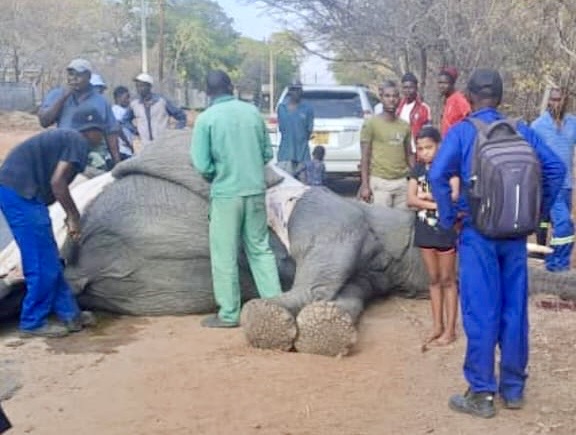
VICTORIA FALLS – Hwange West legislator Vusumuzi Moyo has called for urgent and decisive intervention to address escalating human-elephant conflict after two people were killed by elephants in Victoria Falls within the space of a week.

Advertisement

Rising on a point of national interest in the National Assembly, Moyo said the recent deaths had left families in mourning and exposed the growing danger faced by communities living near wildlife corridors.

“In closing, Mr Speaker Sir, I want to convey my message to two families within Victoria Falls. This happened within a week. They lost their lives because of this conflict,” Moyo said. “In a space of a week, two families are mourning the loss of their loved ones.”

Victoria Falls and surrounding communities, which border wildlife areas, have in recent years experienced increased incidents of elephants straying into residential areas, destroying crops and infrastructure, and in some cases fatally attacking residents.

Advertisement

Moyo told Parliament that the crisis must no longer be viewed solely as a conservation issue but as a matter of human dignity and national development.

“My issue is not merely about wildlife management. It is about national development, constitutional responsibility and ultimately, protecting human dignity,” he said.

He warned that communities from Kariba to Binga, and in tourism corridors around Victoria Falls, are “under siege” from escalating human-elephant conflict.

Advertisement

“Families are losing crops, infrastructure is being destroyed and tragically, lives continue to be lost. This House cannot ignore the cries of rural citizens who coexist with wildlife every day,” Moyo said.

The Hwange West MP defended previous government decisions to cull elephants in high-conflict zones, arguing that such measures were sometimes necessary to restore ecological balance and protect human life.

“These are not acts of recklessness but acts of necessity because conservation must never come at the expense of human survival,” he said.

Advertisement

While acknowledging the importance of non-lethal measures such as fencing and translocation, Moyo said in some areas those interventions were no longer sufficient on their own.

He urged authorities to urgently implement provisions of the Parks and Wildlife Act, promulgated on 28 November 2025, particularly in communities bordering national parks.

“It is my sincere hope that the implementation of the Parks and Wildlife Act… will be taken to the areas that border within national parks so that people appreciate and that the regulations can be done as fast as possible,” he said.

Advertisement

Moyo stressed that Parliament must strike a balance between conservation and protecting human life.

“The people are not asking Parliament to choose between elephants and human beings. They are asking us to restore the balance,” he said.

The latest fatalities have renewed debate in Victoria Falls over how authorities can better safeguard residents while maintaining Zimbabwe’s strong conservation reputation.

Advertisement

Continue Reading

In the community

Grace-and-Favour: Binga RDC builds $200k lakeside mansion for CEO despite government ban
Published

on

BY TANAKA MREWA

In a district where hunger drives thousands of children out of school and most households lack basic sanitation, a luxury four-bedroom house with a jacuzzi is nearing completion on the shores of Lake Kariba, built at public expense for the long-serving chief executive of one of Zimbabwe’s poorest local authorities.

Advertisement

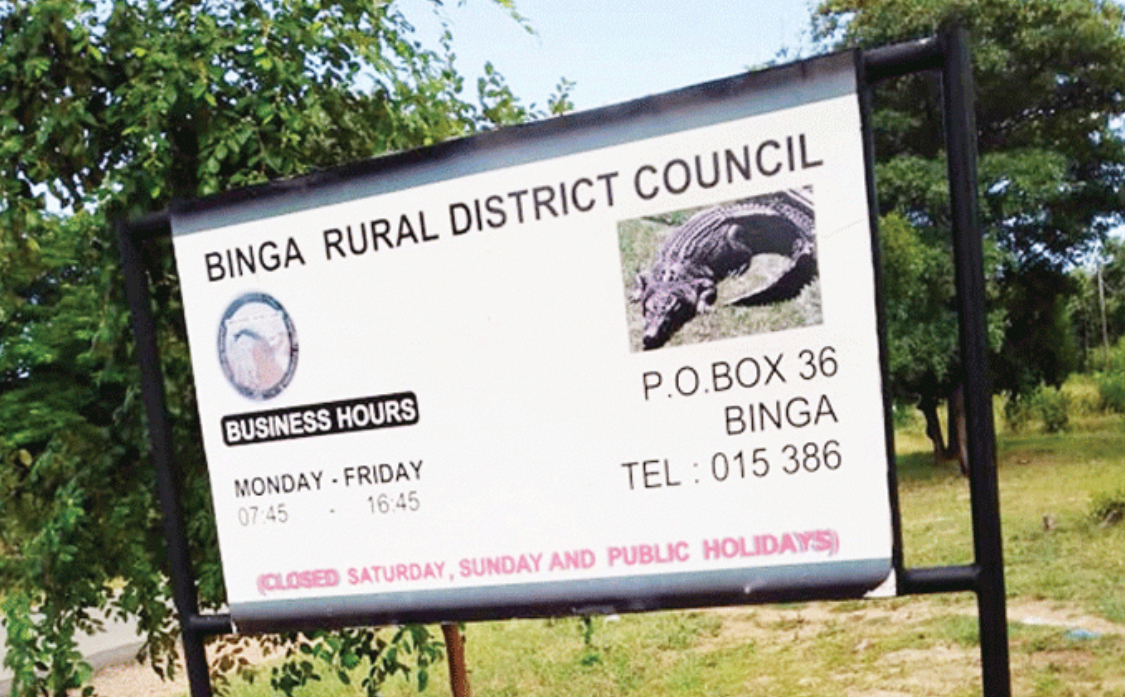
An investigation by CITE reveals that Binga Rural District Council (RDC) has spent close to US$200 000 constructing a “grace-and-favour” home for its chief executive officer, Joshua Muzamba, despite a standing government directive prohibiting local authorities from building personal residences for senior officials.

The development has ignited questions about governance, accountability and political protection in a district consistently ranked among Zimbabwe’s poorest, and where residents say public resources are routinely diverted from desperately needed services.

The house sits on a two-acre stand overlooking Lake Kariba, in an exclusive peninsula neighbourhood about six kilometres from Binga town, surrounded by water on two sides.

Advertisement

Council records and sources familiar with the project say the stand, valued at over US$40 000, was allocated to Muzamba free of charge. The property includes four bedrooms – three of them ensuite – a jacuzzi and two garages.

The project’s cost and scale contrast sharply with living conditions in the district.

Official statistics paint a grim picture: ZimStat data shows that 73 percent of households in Binga lack toilets, while many communities travel long distances for schools and healthcare facilities amid largely impassable roads.

Advertisement

Education ministry figures indicate that in 2022 alone, 6 671 pupils dropped out of school, while more than 13 000 children were irregular attendees due to hunger.

Yet despite chronic underdevelopment, council funds have been channelled into the high-end residence.

Muzamba and the council did not respond to multiple requests for comment.

Advertisement

A ministry of local government circular issued on October 6, 2014 (Circular CX154) explicitly forbids local authorities from allocating institutional properties to employees, mayors or council chairpersons.

The ministry’s spokesperson Gabriel Masvora confirmed the directive remains in force.

“The government’s wish is to see improved service delivery prioritised in local authorities for the benefit of the people,” Masvora said. “Local authorities are a third tier of government which have systems and controls in place to ensure resources are used effectively.”

Advertisement

He added that councillors should scrutinise expenditures to ensure compliance with government policy and residents’ priorities.

The Association of Rural District Councils of Zimbabwe (ARDCZ), with Muzamba as chair, passed a resolution allowing construction of houses for senior officials after 10 years of service, effectively sidestepping central government policy.

Muzamba has led Binga RDC for 14 years, a tenure marked by recurring controversies.

Advertisement

Fanuel Cumanzala, the MP for Binga South (CCC) describes the CEO as a dominant figure operating with little internal resistance.

“He has become a liability to Binga,” Cumanzala said. “Whatever he does is for personal gain, not for the wellbeing of the people. Councillors are afraid to go against him.”

Cumanzala alleges the CEO survives political pressure because of backing from influential figures with economic interests in the district.

Advertisement

Muzamba lost his position in Zanu PF’s central committee in 2018 after the Supreme Court ruled public officials could not hold multiple posts simultaneously.

Concerns over governance at Binga RDC stretch back years.

In 2018, police requested a full audit of the council after investigations into suspected theft of trust property revealed potential financial irregularities.

Advertisement

The then senior assistant commissioner Stephen Mutamba, now police commissioner general, wrote to the local government ministry recommending a comprehensive audit after police uncovered evidence that council employees were allegedly under-receipting cash.

The subsequent ministry audit found serious weaknesses, including: bank transfers not being recorded in cash books; rampant under-receipting; an absence of an authenticated employment policy, exposing the council to nepotism and unethical hiring practices; and unsigned council minutes, raising doubts about the authenticity of the records.

Despite these findings, residents say meaningful corrective action never followed.

Advertisement

Muzamba is accused of protecting one employee, Lovemore Siamuyi, who was implicated in earlier investigations and remains employed.

Current and former council insiders allege the CEO has filled the local authority with relatives, claims he has not publicly addressed.

A council official, speaking anonymously for fear of reprisals, said a previous resolution capped staff numbers at 50 due to financial constraints, leading to retrenchments.

Advertisement

“But soon after that, more people started being employed,” the source said. “Now the place is flooded with his kinsmen.”

Employees describe a workplace climate of fear and factionalism.

Residents also question a council resolution allowing senior officials to purchase service vehicles at book value after five years, a policy they say disproportionately benefits senior executives and their associates.

Advertisement

“This means residents effectively buy new vehicles every five years,” said one ratepayer.

The council is reportedly struggling with cash flow, at times paying salaries through allocations of housing stands instead of wages.

Muzamba’s critics argue that such challenges make spending on his luxury house especially difficult to justify.

Advertisement

The Auditor-General has previously warned that similar practices elsewhere risk undermining service delivery. In 2022, Marondera RDC was flagged after building a CEO residence using capital development funds. The Auditor-General cautioned that “service delivery may be compromised as council funds are used for unintended purposes.”

Matabeleland North Minister Richard Moyo said his office had received no formal complaints about corruption at Binga RDC.

“We haven’t received any official reports pertaining to this matter,” he said, suggesting some allegations could be politically motivated disputes between councillors from different parties.

Advertisement

Meanwhile, the government says a Zimbabwe Anti-Corruption Commission (ZACC) taskforce is examining corruption allegations across local authorities.

“If there are any reports made, the committee will swiftly look into the issues,” Masvora said.

The MP Cumanzala said it was particularly disheartening that communities in Binga remain trapped in poverty despite vast natural resources including Lake Kariba fisheries, forests teeming with wildlife and mineral wealth.

Advertisement

“Binga RDC is one of the worst run in the country in the sense that we have so much resources and a lot of potential and we receive a lot of attention from non-governmental organisations and the government itself, but those resources are being pocketed by certain people,” he said.

SOURCE: CITE

Advertisement
Continue Reading

Slider

Hwange lion DNA helps convict poachers for first time

Published

on

BY BBC

Lion DNA has been used to successfully prosecute poachers for the first time in the world, it has emerged.

Advertisement

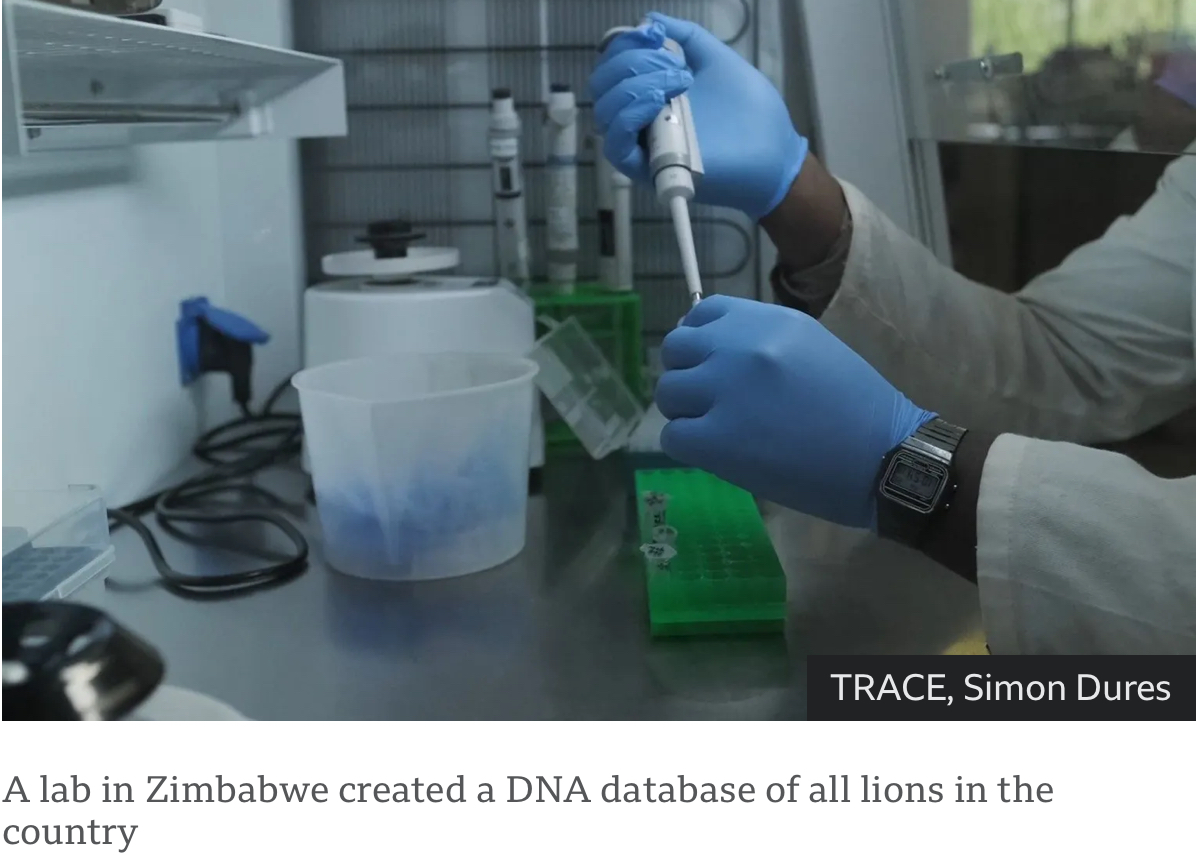
Wildlife crime experts have only just revealed how they were able to identify the individual animal from body parts found in a suspect’s village, as they matched a profile on Zimbabwe’s lion database.

A blood sample had previously been taken from the male lion, which was being tracked by authorities in Hwange National Park – using a radio collar.

Two poachers were convicted for the 2024 incident and sent to prison in what is thought to be the first prosecution of its kind.

Advertisement


The details of the convictions and the role the DNA database played have been previously unknown.

Non-governmental organisation (NGO) Traffic, which works to combat the illegal trade in wildlife, has shared the detail with us.

Advertisement

In May 2024, authorities in Hwange National Park became suspicious after a radio collar worn by a male lion stopped working.

Investigators and police traced its last known position and found a snare with lion fur attached to it.

After collecting forensic evidence they questioned two men in a nearby village and discovered three sacks of meat, 16 lion claws and four teeth. These body parts would later be tested against the database, with the DNA from all matching the profile of that missing lion.

Advertisement

But possessing lion parts is not necessarily a crime in Zimbabwe.

Having them can be explained away as old, traditional ornaments or as coming from an animal that died of natural causes.

This has been an obstacle to prosecutions in the past.

Advertisement

But thanks to a breakthrough in DNA profiling, that’s now changed.

The lab generated a DNA profile from the recovered body parts and compared this to the profile previously generated from a blood sample of the lion with the radio collar.

The two profiles matched and scientists were able to identify the specific missing animal.

Advertisement

Over the last eight years the Victoria Falls Wildlife Trust (VFWT) has received about £250,000 from the People’s Postcode Lottery in the UK to build up the DNA database of lions in Zimbabwe.

The scientist at the trust, who made the discovery, asked to remain anonymous for his own safety, but said:

“Before we had access to this technology, we were only able to do species identification, but sometimes that’s not enough.

Advertisement

“We can essentially match those claws or those products to the lion of interest that we are looking for.”

Within 10 days of the killing, the DNA evidence was presented in court.

Two men pleaded guilty and were given 24 month prison sentences.

Advertisement

The hearing was told the value of the lion was about $20,000.

Richard Scobey, Traffic’s executive director, said “countries now have the forensic capability to bring, solid science-based evidence to court” and that it will have global impact.

This is understood to be the first time that DNA from an individual lion has been identified and used to prosecute poachers.

Advertisement

Professor Rob Ogden has been closely involved in setting up the project and is co- founder of the organisation Trace, which promotes the use of forensic science in wildlife law enforcement.

He says the prosecution gives “a message of hope” and shows what can be done using a combination of training, research and development and forensic casework.

Recent figures suggest an increase in the number of lions being killed for their body parts which are then sold both as cultural objects in Africa and for traditional Chinese medicine.

Advertisement

It is thought the rise may be down to organised crime gangs also involved in the illegal trade in Rhino horn and ivory trafficking.

In Mozambique between 2010 and 2023, 426 lions were killed as a result of contact with humans with a quarter linked to deliberate poaching.

A measure of the scale of the trade is also the number of seizures by the authorities in recent years.

Advertisement

That includes 17 lion skulls found in Lusaka in 2021, reportedly en-route from South Africa, and a 2023 seizure in Maputo of more than 300kg of lion body parts.

Which is why this breakthrough on DNA identification is seen as sending an important message to would-be poachers.


Advertisement

Continue Reading

Trending

Copyright © 2022 VicFallsLive. All rights reserved, powered by Advantage