
Slider
‘Not for the faint-hearted’: The Australian staring down wildlife poachers in Matetsi

Published
4 years agoon
By
VicFallsLive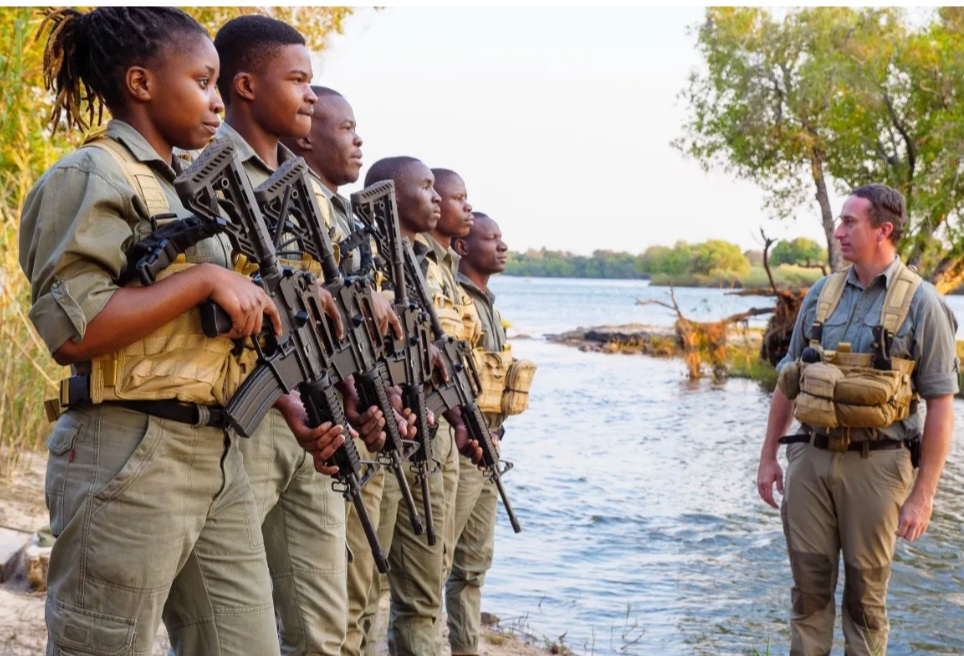
BY ADAM SHAND
John Gardiner surveys the elephants converging on the waterhole in the late afternoon sun.
Another maternal herd is bustling in from the scrub, and soon every available spot by the water will be occupied.
Gardiner, a 66-year-old with a forthright manner and piercing blue eyes, has an ambivalent relationship with the elephants.
There are too many in the area, he says.
However, their abundance speaks to his vision and the renaissance taking place here.
“It’s only a problem if you can’t throw money at it,” says the Australian-born businessman.
The Gardiner family has thrown a lot of money at stopping the poachers who once overran the 55,000-hectare property, Matetsi Private Game Reserve, which includes a lodge/hotel, Matetsi Victoria Falls, and 15 kilometres of Zambezi River frontage near the falls in Zimbabwe.
Gardiner checks himself, not wanting to sound arrogant, but after four decades building businesses in Africa, he knows this is a fact.
If you don’t back the dream with dollars in Africa, you will not succeed.
Gardiner’s $24 million investment seems brave when you consider that Matetsi (and Zimbabwe) had virtually no revenue from foreign tourists for the two years of the Covid-19 pandemic.
About 80 percent (US$36 million) of the Zimbabwe Parks and Wildlife Management Authority’s annual revenue comes via photographic tourism, mostly foreign-sourced.
In addition, the economic crisis caused by the pandemic increased the threat of poaching, wildlife trafficking and habitat loss through deforestation.
Another global lockdown would be disastrous to governments’ ability to protect wildlife from poaching across southern Africa, according to Gardiner.
“[The poachers] will come again. A bank robber will always go for a bank. As much as you protect it, they’ll take it on, it will be an opportunistic attack.”
A highly organised attack is always possible and Gardiner is preparing for that event by ensuring his team is highly trained and well-equipped to defend itself, this vast wilderness and the wildlife.
“The poachers have guns, and they will take out our people if the reward is there for them,” says Gardiner.
“If there’s an elephant they want and our guy gets in the way, they will shoot him. And that is a fact. The stakes are high.”
As high as the Gardiner family’s ambitions.
Gardiner’s 34-year-old daughter Sara, who co-founded Matetsi in 2015, has a different take on the poaching issue. For her, it’s a question of territory.
“You might say there are too many elephants. I would say there is too little land.”
The African Wildlife Foundation estimates that Zimbabwe loses 20 percent of its natural forest (excluding national parks and private game reserve land) each year to agriculture.
National parks and private game reserves have thus become islands where wildlife congregates. Matetsi, with its abundance of water, is one model for the successful coexistence of humans and animals.
But it’s easy to feel you are coming to Victoria Falls too late.
Zimbabwe’s economic meltdown of 2008 (when inflation hit 89 sextillion per cent) led to an unprecedented destruction of the country’s natural heritage: poachers slaughtered rhino, elephants and countless smaller mammals on an industrial scale.
John Gardiner’s Cessna 210 aircraft makes slow headway over the unyielding grey-green landscape below, until the plume of vapour from the falls comes into majestic view.
Victoria Falls City, 45 minutes by road from Matetsi, is spreading tendrils outwards, but swing to the west and it’s just bush stretching out like a sun-faded canvas.
From the air, this frontier region is seemingly undefendable: a vast wilderness on the Zambezi River wedged between Zimbabwe’s north-western borders with Zambia and Botswana.
It incorporates the Zambezi National Park, as well as a series of sprawling private game reserves leased from the government, including the Gardiners’ Matetsi property, with areas so remote that they remain unexplored by their owners.
A poacher’s paradise.
After touching down at Matetsi’s new airstrip, Gardiner reflects on the past decade since acquiring the lease on the property.
The last leaseholders went broke.
“When I came to Matetsi, all I saw was one trembling impala,” says Gardiner.
“There was nothing. Total devastation.”
Less than five minutes’ drive from the landing strip, we encounter a group of sable antelope ambling across the road.
They seem to have no fear, stopping to watch the vehicle pass by.
Over the next few days, Gardiner visits the 19 boreholes he’s established on the property, which have drawn the wildlife from all around to Matetsi.
“We need to do more boreholes,” he says, watching a 600-strong herd of Cape buffalo jostle for a drink at Gardiner’s Pan.
“It’s like making instant soup; you add water and the animals come in from everywhere.”
Drive out of Matetsi into the Zambezi National Park and, within a few minutes, the profusion of game thins noticeably.
The animals have worked out the limits of their safe haven; they stay close to water.
Gardiner has just taken delivery of 14 waterbuck, an endangered antelope species not seen in the area for decades, a gift from the Zimbabwe Parks and Wildlife Management Authority.
One of the male waterbuck has done his best to destroy an expensive high-fenced enclosure, but all is calm now and the group is ready for release.
This project alone has cost US$40,000.
“The reason we brought the waterbuck on the property is because the riverline is now secure,” says Gardiner.
“We believe we have contained the poaching. We have lifted more than 500 snares off the property, [and] stopped all the netting in the river for the time being.”
Gardiner is building his legacy here, the next project being the return of ostriches.
He vows that when he turns 70 in 2026, there will be black rhino on Matetsi once more.
Sara Gardiner will carry on this work and plans to expand her father’s vision across this frontier with other leaseholders.
Before dawn on a crisp winter’s morning, the Matetsi anti-poaching unit gathers for a patrol.
The unit is called Amaganyane – “wild dogs” in the local Ndebele language – and its members are learning to hunt in a pack like the African painted dogs, the wild canines they protect on Matetsi.
This is a service Gardiner’s guests rarely get to see, but he’s trying to encourage an understanding of the conservation work taking place.
The 50-strong unit patrols around the clock, but there’s an urgency now.
Unarmed poachers from across the river in Zambia, looking to feed their families, pose a daily challenge, and as the dry season wears on and food resources become more limited, incursions become more likely.
Armed criminal gangs that come from further afield to fill overseas orders for ivory are less frequent visitors, but the team is ever-vigilant.
The armourer checks out the radios and semi- automatic AR-15 rifles for the team members and hands squad leader Brian Gurney his .44 handgun, which he carries as a last resort in the event of encountering dangerous game.
The unit is composed of young people from diverse backgrounds: there are former hospitality workers, storemen, security guards and aspiring game guides, most of whom hail from the Victoria Falls region.
It’s Gurney’s job to prepare this patrol for any eventuality.
There’s no chatter or laughter among the scouts, just a quiet resolve. Morale is high; they are waging a just and winnable war on this frontier.
“I think [the poachers] are afraid to come because we are trying by all means to make this place untouchable, whatever the cost,” says Blessmore, a former security guard.
Today, three “sticks” (teams of two) will sweep an area in the north-west of the property, which includes a drainage channel, a favourite incursion point for poachers.
They will investigate two elephant carcasses to establish the causes of death. Not every elephant poacher is after ivory.
The local Zambians want “big-ticket meat items,” says Gurney. At this time of year, when the people are hungry, the poachers are seen as Robin Hood-type thieves and have entire villages backing them.
This is the most prevalent form of poaching in Africa: bush meat for sustenance. Incursions by criminal gangs seeking ivory and other tradable items are much less common, he says.
We come upon the first carcass of an elephant, as dry as an old suitcase, likely dead for several months.
Gurney flips it over. He’s looking for bullet holes, especially around the shoulder, where an experienced hunter will aim, or any cracks in the hide too big for a scavenging hyena to have made.
Nothing sinister to be seen here.
The second carcass is just a few days old; vultures whirl and dive above it.
It’s a bull elephant that used to frequent the campsite and, because he was habituated to humans, an easy target.
The stench is so overwhelming it fills the air and gets into your clothes – you can taste it all day.
Gurney covers his mouth and nose and goes in for a close inspection. He concludes it’s likely to be from natural causes, but can’t say for sure, and we move on.
Zimbabwean-born Gurney returned here from the UK to become involved in wildlife conservation after serving with the Royal Marines in Afghanistan.
He’s protected rhinos in Zimbabwe’s low veld and gone undercover to bust pangolin traders.
His adjustment to civilian life after his Afghanistan tour was challenging, but the mission on Matetsi Private Game Reserve has a clear goal.
“It’s about building an ethos into the team, a value system of courage, determination, loyalty and integrity,” he says.
“Mr G [John Gardiner] is very big on each person taking responsibility and a sense of ownership.
“We are taking young people, some of whom have almost no skills, coming out of high school with not much experience. It’s an opportunity to gain discipline, an understanding of professionalism.”
There are women on the team, including scouts in the field, one of whom is the best shot.
Others are in the control room monitoring a network of hidden cameras across the reserve, keeping tabs on wildlife numbers and the breeding of hyenas and other species.
The use of force is a sensitive issue: not all the interlopers are armed, and the scouts may only fire upon poachers in self-defence. “When we talk to the scouts about poachers, we call them players because, ultimately, it’s a big game,” Gurney says.
“Some of them are kids [from villages across the river] and you can’t treat them like adults. One night we caught a 12-year-old, a 10-year-old and an eight-year-old all sitting wide-eyed in a mokoro [canoe].”
A scout finds an old wire snare, a rare discovery on Matetsi in 2022.
The team has removed more than 500 in the past three years.
The snare is the greatest threat, killing or maiming anything passing by, from an elephant to a warthog.
Each snare found helps Gurney learn more about his enemy.
As he notes, “Families will tag their snares; they will have a little ribbon, a bit of a reed tied with different knots to say, ‘These are ours.’ We have family names now and are in the process of connecting these tags to individuals.”
The poachers have shifted operations to the neighbouring Zambezi National Park, so Gurney is extending patrols there and finding fresh snares.
Later that night, Gurney is at the cliffs by the river that overlook an island.
He can hear a dog barking from a Zambian village just a few hundred metres away.
The river is a maze of inlets and channels giving cover to raiders coming to poach fish and bigger game.
Gurney estimates there are about 30 suspects in that village who are regular visitors and another 15-20 in a village six kilometres downstream, whom he describes as “really evil” customers.
Cultivating sources in their ranks to pass on information is essential to understanding and putting an end to their illegal activities.
Matetsi has a 24-hour-a-day river patrol and maintains covert observation posts along its river frontage.
Gurney’s wife, Stephanie, 32, heads the canine unit and has trained local rescue dogs to track poachers.
The team must also contend with gangs who come to steal power and communications equipment, which are vital to maintaining this safe space.
“There are moments of high adrenalin,” says Gurney.
“Last year, they hit our main repeater station with all our communications, including our Wi-Fi link, and stole all the solar batteries.
“We put our trackers on them, then bounced our guys ahead of them to cut them off.
“We chased them into the national park and they dropped everything – pots, pans, clothes – and we got all our kit back.”
John Gardiner says poaching will only get worse until the Zambian government addresses poverty in the riverside communities.
“They have been hunting here for generations and generations, and they feel, ‘Why should we stop?’
“ It’s the culture: hunting for bushmeat, netting the river until there’s no fish in it.
“Since we put all this protection on the property, everything is being rejuvenated, and they are now looking for softer targets on the river, other properties and other places that are less prepared.
“All we can do is make it as difficult as possible for them to come on the property.
“We’ve had some incidents in the past where they have come across with their AK-47s and there have been firefights on the property historically.”
Non-government organisations are introducing fish farming to the Zambian villagers as an alternative to poaching for sustenance and income.
“The Zambezi River used to bring people together,” says Sara Gardiner.
“It used to be a life source and that’s the way it should be.”
John Gardiner was born in Australia but shaped by Africa.
He came to what was then known as Salisbury, Rhodesia (which he recalls as “a paradise”) in 1978 when most whites, especially foreigners, were making for the exits.
The minority white government was on its last legs and the new democratic nation of Zimbabwe would soon emerge from years of civil war.
Gardiner was born into a military family in Melbourne’s inner city and raised on TV shows like Tarzan, Jungle Jim and Daktari that depicted white men surviving and thriving in Africa.
He left Carlton North’s Princes Hill High at 14 to live with his family in the Greek islands and avoided any formal education thereafter.
Drawing on a love of hospitality, Gardiner started out running a restaurant in Salisbury (now Harare) and has parlayed that into a consumer goods import and distribution business that employs hundreds of people across four countries in the region.
He married Carolyn, an elegant white Zimbabwean, and their twins Sara and Charles were born here. (Charles is the finance planner for the group.)
Gardiner feels more African than Australian these days, but the attitude is still very much North Carlton.
“I’m very proud to be an Australian. I still travel on my Australian passport, but I think now I’m a Zimbabwean at heart, my kids are Zimbabwean.
“Australia is great to visit but look at this – it’s my back garden.”
As Gardiner tours the property, he jokes that every conversation with staff costs him thousands of dollars in new projects.
This week, he’s agreed to widen the bridge to safely accommodate the brand-new fire engine he recently bought for US$150,000.
“Matetsi is the only safari lodge in Africa to have a fire engine,” he says.
“We can lose 5000 hectares to fire in a few hours. As people in Australia know, you need to protect the asset.”
Gardiner wants to correct a perception that Zimbabwe, after decades of misrule and corruption, is doomed.
And that Matetsi is a rich man’s folly.
“With my family, I wanted to showcase everything that was excellent about Zimbabwe.
“We built Matetsi to prove to the world that this is not a third-world basket-case.
“Anyone who doesn’t see this place as a sound investment needs their heads read.
“Done properly, this has become one of the finest properties in Africa.” (Last year, Travel+Leisure magazine rated Matetsi Private Game Reserve as the best resort hotel in Africa.)
“It’s a business – a very big investment,” Gardiner adds.
“We are building this legacy for Zimbabwe and showing people what we can do.”
To safeguard wildlife, there must be a partnership between private capital and government, Gardiner insists.
There are 10 private concession holders operating tourist camps inside the national park and all expect the government to protect the wildlife that draws tourists.
“National Parks, a great bunch of people, just haven’t got the funds available,” he explains.
“So there has to be co-operation between government and the private sector. There has to be a national plan about how we make it work.
“People are looking at Matetsi and saying, ‘This is a centre of excellence, look at what the team are doing there. It’s paying dividends.’
“ I’d love to see the national parks in Zimbabwe privatised, with the government and private sector both being stakeholders.”
Managing egos in Zimbabwe’s competitive wildlife-related industries is a challenge. Kingdoms rise and fall fast and there’s been little co-operation to date, leaving areas like Victoria Falls vulnerable.
Gardiner family money has built Matetsi, but creating a united front against poaching at Victoria Falls will require collaboration with other donors and charities.
Sara has a doctorate in physical chemistry from Oxford University and gave up lucrative opportunities to come home and build Matetsi.
Saving Zimbabwe’s wildlife and creating tourism jobs will help to revitalise the national economy.
“There are five million Zimbabweans living outside the country.
“They want to come back, but haven’t figured out what they’re coming home to,” she says.
“There’s been a terrible brain drain, but slowly we are starting to see people coming back.
“Many South African tourism operations are run by expat Zimbabweans.”
Gardiner’s plan to return black rhino to Matetsi by July 2026 is another huge investment and underlines his faith in Zimbabwe’s future.
He intends to fence 30 square kilometres of land and bring in 24-hour physical and electronic surveillance; the cohort of anti-poaching scouts will triple.
Gardiner knows that returning rhino to Matetsi after 25 years will elevate this place as a target for poaching, and he must meet the cost.
Brian Gurney says Matetsi has created an anchor point of stability, but the poachers will definitely return.
Creating effective deterrence is an arms race that Gardiner must win.
“You have to be a force of nature, you can’t have a soft typhoon,” says Gurney of his employer.
“If you want to be the wind that changes the world, you have to blow strong. We may not have fixed the problem yet but we are dealing with it.
“Coming home to Zimbabwe to help is a fantastic thing to throw your life’s work into. What better thing to do than be out in the bush and do this … and to catch a few bad guys.”
Africa is not for the faint-hearted, says Gardiner.
“I have companies in four African countries.
“I’ve seen American corporates come into Africa and get slaughtered because they reckon they know how to do it, but Africa has its own set of rules.
“I’m just fortunate that the Zimbabwe government allowed me to be the custodian of Matetsi, and I’m not going to let them down.”
He looks out on his favourite waterhole, sipping a glass of sauvignon blanc.
All is peaceful and perfect, until Gardiner notices a young elephant that has lost half its trunk to a poacher’s snare.
Earlier, he grumbled about elephant damage to the forest; now he’s full of defiance and compassion.
“This is why we’re doing this. And why all this game has come to Matetsi.
“We will win this war, no matter what it takes.
“Without these beautiful animals, this is just empty land. I’m a showman and this is the show.” – The Sydney Morning Herald
You may like
In the community
Hwange West MP demands urgent action after two killed by elephants in Victoria Falls
Published
1 week agoon
February 26, 2026By
VicFallsLive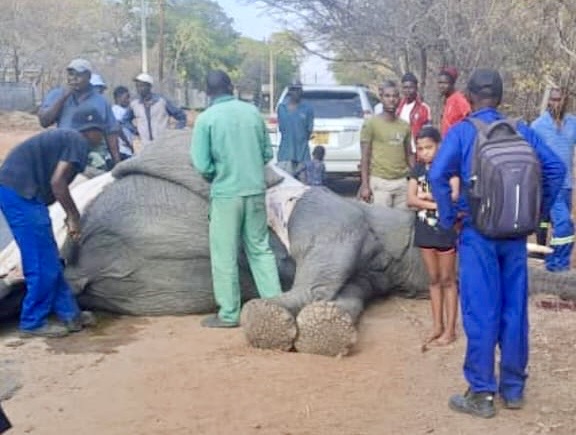
BY NOKUTHABA DLAMINI
VICTORIA FALLS – Hwange West legislator Vusumuzi Moyo has called for urgent and decisive intervention to address escalating human-elephant conflict after two people were killed by elephants in Victoria Falls within the space of a week.
Rising on a point of national interest in the National Assembly, Moyo said the recent deaths had left families in mourning and exposed the growing danger faced by communities living near wildlife corridors.
“In closing, Mr Speaker Sir, I want to convey my message to two families within Victoria Falls. This happened within a week. They lost their lives because of this conflict,” Moyo said. “In a space of a week, two families are mourning the loss of their loved ones.”
Victoria Falls and surrounding communities, which border wildlife areas, have in recent years experienced increased incidents of elephants straying into residential areas, destroying crops and infrastructure, and in some cases fatally attacking residents.
Moyo told Parliament that the crisis must no longer be viewed solely as a conservation issue but as a matter of human dignity and national development.
“My issue is not merely about wildlife management. It is about national development, constitutional responsibility and ultimately, protecting human dignity,” he said.
He warned that communities from Kariba to Binga, and in tourism corridors around Victoria Falls, are “under siege” from escalating human-elephant conflict.
“Families are losing crops, infrastructure is being destroyed and tragically, lives continue to be lost. This House cannot ignore the cries of rural citizens who coexist with wildlife every day,” Moyo said.
The Hwange West MP defended previous government decisions to cull elephants in high-conflict zones, arguing that such measures were sometimes necessary to restore ecological balance and protect human life.
“These are not acts of recklessness but acts of necessity because conservation must never come at the expense of human survival,” he said.
While acknowledging the importance of non-lethal measures such as fencing and translocation, Moyo said in some areas those interventions were no longer sufficient on their own.
He urged authorities to urgently implement provisions of the Parks and Wildlife Act, promulgated on 28 November 2025, particularly in communities bordering national parks.
“It is my sincere hope that the implementation of the Parks and Wildlife Act… will be taken to the areas that border within national parks so that people appreciate and that the regulations can be done as fast as possible,” he said.
Moyo stressed that Parliament must strike a balance between conservation and protecting human life.
“The people are not asking Parliament to choose between elephants and human beings. They are asking us to restore the balance,” he said.
The latest fatalities have renewed debate in Victoria Falls over how authorities can better safeguard residents while maintaining Zimbabwe’s strong conservation reputation.
In the community
Grace-and-Favour: Binga RDC builds $200k lakeside mansion for CEO despite government ban
Published
2 weeks agoon
February 24, 2026By
VicFallsLive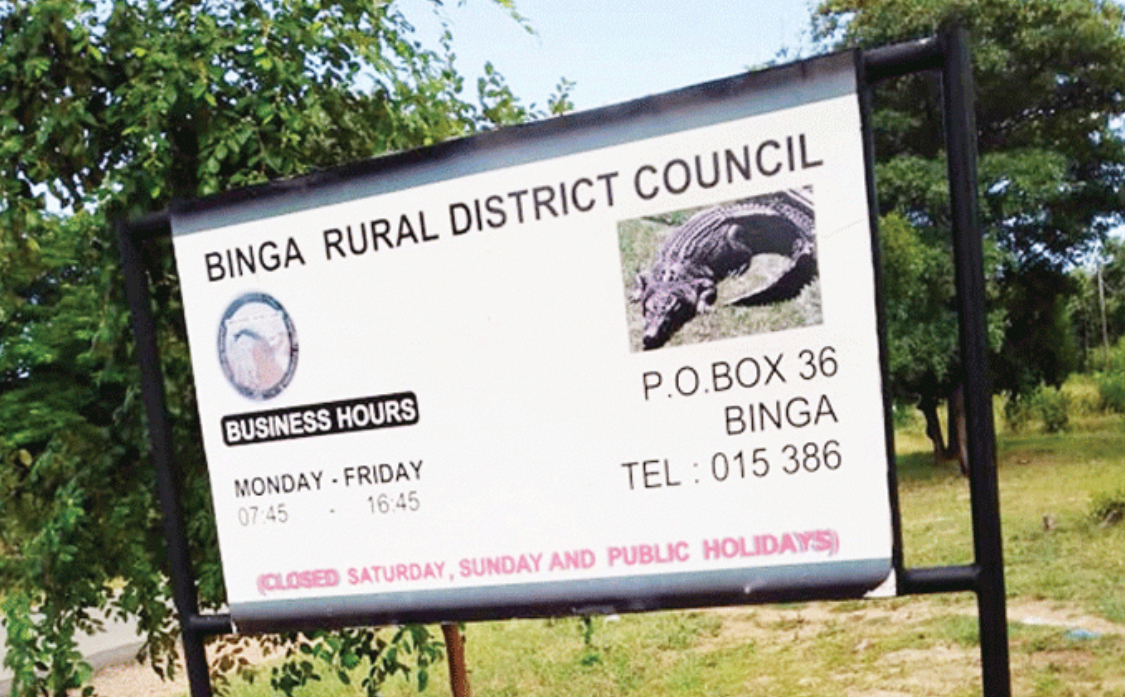
BY TANAKA MREWA
In a district where hunger drives thousands of children out of school and most households lack basic sanitation, a luxury four-bedroom house with a jacuzzi is nearing completion on the shores of Lake Kariba, built at public expense for the long-serving chief executive of one of Zimbabwe’s poorest local authorities.
An investigation by CITE reveals that Binga Rural District Council (RDC) has spent close to US$200 000 constructing a “grace-and-favour” home for its chief executive officer, Joshua Muzamba, despite a standing government directive prohibiting local authorities from building personal residences for senior officials.
The development has ignited questions about governance, accountability and political protection in a district consistently ranked among Zimbabwe’s poorest, and where residents say public resources are routinely diverted from desperately needed services.
The house sits on a two-acre stand overlooking Lake Kariba, in an exclusive peninsula neighbourhood about six kilometres from Binga town, surrounded by water on two sides.
Council records and sources familiar with the project say the stand, valued at over US$40 000, was allocated to Muzamba free of charge. The property includes four bedrooms – three of them ensuite – a jacuzzi and two garages.
The project’s cost and scale contrast sharply with living conditions in the district.
Official statistics paint a grim picture: ZimStat data shows that 73 percent of households in Binga lack toilets, while many communities travel long distances for schools and healthcare facilities amid largely impassable roads.
Education ministry figures indicate that in 2022 alone, 6 671 pupils dropped out of school, while more than 13 000 children were irregular attendees due to hunger.
Yet despite chronic underdevelopment, council funds have been channelled into the high-end residence.
Muzamba and the council did not respond to multiple requests for comment.
A ministry of local government circular issued on October 6, 2014 (Circular CX154) explicitly forbids local authorities from allocating institutional properties to employees, mayors or council chairpersons.
The ministry’s spokesperson Gabriel Masvora confirmed the directive remains in force.
“The government’s wish is to see improved service delivery prioritised in local authorities for the benefit of the people,” Masvora said. “Local authorities are a third tier of government which have systems and controls in place to ensure resources are used effectively.”
He added that councillors should scrutinise expenditures to ensure compliance with government policy and residents’ priorities.
The Association of Rural District Councils of Zimbabwe (ARDCZ), with Muzamba as chair, passed a resolution allowing construction of houses for senior officials after 10 years of service, effectively sidestepping central government policy.
Muzamba has led Binga RDC for 14 years, a tenure marked by recurring controversies.
Fanuel Cumanzala, the MP for Binga South (CCC) describes the CEO as a dominant figure operating with little internal resistance.
“He has become a liability to Binga,” Cumanzala said. “Whatever he does is for personal gain, not for the wellbeing of the people. Councillors are afraid to go against him.”
Cumanzala alleges the CEO survives political pressure because of backing from influential figures with economic interests in the district.
Muzamba lost his position in Zanu PF’s central committee in 2018 after the Supreme Court ruled public officials could not hold multiple posts simultaneously.
Concerns over governance at Binga RDC stretch back years.
In 2018, police requested a full audit of the council after investigations into suspected theft of trust property revealed potential financial irregularities.
The then senior assistant commissioner Stephen Mutamba, now police commissioner general, wrote to the local government ministry recommending a comprehensive audit after police uncovered evidence that council employees were allegedly under-receipting cash.
The subsequent ministry audit found serious weaknesses, including: bank transfers not being recorded in cash books; rampant under-receipting; an absence of an authenticated employment policy, exposing the council to nepotism and unethical hiring practices; and unsigned council minutes, raising doubts about the authenticity of the records.
Despite these findings, residents say meaningful corrective action never followed.
Muzamba is accused of protecting one employee, Lovemore Siamuyi, who was implicated in earlier investigations and remains employed.
Current and former council insiders allege the CEO has filled the local authority with relatives, claims he has not publicly addressed.
A council official, speaking anonymously for fear of reprisals, said a previous resolution capped staff numbers at 50 due to financial constraints, leading to retrenchments.
“But soon after that, more people started being employed,” the source said. “Now the place is flooded with his kinsmen.”
Employees describe a workplace climate of fear and factionalism.
Residents also question a council resolution allowing senior officials to purchase service vehicles at book value after five years, a policy they say disproportionately benefits senior executives and their associates.
“This means residents effectively buy new vehicles every five years,” said one ratepayer.
The council is reportedly struggling with cash flow, at times paying salaries through allocations of housing stands instead of wages.
Muzamba’s critics argue that such challenges make spending on his luxury house especially difficult to justify.
The Auditor-General has previously warned that similar practices elsewhere risk undermining service delivery. In 2022, Marondera RDC was flagged after building a CEO residence using capital development funds. The Auditor-General cautioned that “service delivery may be compromised as council funds are used for unintended purposes.”
Matabeleland North Minister Richard Moyo said his office had received no formal complaints about corruption at Binga RDC.
“We haven’t received any official reports pertaining to this matter,” he said, suggesting some allegations could be politically motivated disputes between councillors from different parties.
Meanwhile, the government says a Zimbabwe Anti-Corruption Commission (ZACC) taskforce is examining corruption allegations across local authorities.
“If there are any reports made, the committee will swiftly look into the issues,” Masvora said.
The MP Cumanzala said it was particularly disheartening that communities in Binga remain trapped in poverty despite vast natural resources including Lake Kariba fisheries, forests teeming with wildlife and mineral wealth.
“Binga RDC is one of the worst run in the country in the sense that we have so much resources and a lot of potential and we receive a lot of attention from non-governmental organisations and the government itself, but those resources are being pocketed by certain people,” he said.
SOURCE: CITE
Slider
Hwange lion DNA helps convict poachers for first time
Published
2 weeks agoon
February 23, 2026By
VicFallsLive
BY BBC
Lion DNA has been used to successfully prosecute poachers for the first time in the world, it has emerged.
Wildlife crime experts have only just revealed how they were able to identify the individual animal from body parts found in a suspect’s village, as they matched a profile on Zimbabwe’s lion database.
A blood sample had previously been taken from the male lion, which was being tracked by authorities in Hwange National Park – using a radio collar.
Two poachers were convicted for the 2024 incident and sent to prison in what is thought to be the first prosecution of its kind.
The details of the convictions and the role the DNA database played have been previously unknown.
Non-governmental organisation (NGO) Traffic, which works to combat the illegal trade in wildlife, has shared the detail with us.
In May 2024, authorities in Hwange National Park became suspicious after a radio collar worn by a male lion stopped working.
Investigators and police traced its last known position and found a snare with lion fur attached to it.
After collecting forensic evidence they questioned two men in a nearby village and discovered three sacks of meat, 16 lion claws and four teeth. These body parts would later be tested against the database, with the DNA from all matching the profile of that missing lion.
But possessing lion parts is not necessarily a crime in Zimbabwe.
Having them can be explained away as old, traditional ornaments or as coming from an animal that died of natural causes.
This has been an obstacle to prosecutions in the past.
But thanks to a breakthrough in DNA profiling, that’s now changed.
The lab generated a DNA profile from the recovered body parts and compared this to the profile previously generated from a blood sample of the lion with the radio collar.
The two profiles matched and scientists were able to identify the specific missing animal.
Over the last eight years the Victoria Falls Wildlife Trust (VFWT) has received about £250,000 from the People’s Postcode Lottery in the UK to build up the DNA database of lions in Zimbabwe.
The scientist at the trust, who made the discovery, asked to remain anonymous for his own safety, but said:
“Before we had access to this technology, we were only able to do species identification, but sometimes that’s not enough.
“We can essentially match those claws or those products to the lion of interest that we are looking for.”
Within 10 days of the killing, the DNA evidence was presented in court.
Two men pleaded guilty and were given 24 month prison sentences.
The hearing was told the value of the lion was about $20,000.
Richard Scobey, Traffic’s executive director, said “countries now have the forensic capability to bring, solid science-based evidence to court” and that it will have global impact.
This is understood to be the first time that DNA from an individual lion has been identified and used to prosecute poachers.
Professor Rob Ogden has been closely involved in setting up the project and is co- founder of the organisation Trace, which promotes the use of forensic science in wildlife law enforcement.
He says the prosecution gives “a message of hope” and shows what can be done using a combination of training, research and development and forensic casework.
Recent figures suggest an increase in the number of lions being killed for their body parts which are then sold both as cultural objects in Africa and for traditional Chinese medicine.
It is thought the rise may be down to organised crime gangs also involved in the illegal trade in Rhino horn and ivory trafficking.
In Mozambique between 2010 and 2023, 426 lions were killed as a result of contact with humans with a quarter linked to deliberate poaching.
A measure of the scale of the trade is also the number of seizures by the authorities in recent years.
That includes 17 lion skulls found in Lusaka in 2021, reportedly en-route from South Africa, and a 2023 seizure in Maputo of more than 300kg of lion body parts.
Which is why this breakthrough on DNA identification is seen as sending an important message to would-be poachers.
Trending
-

 Slider3 years ago
Innscor launches brewery to produce Nyathi beer
-

 National4 years ago
In perched rural Matabeleland North, renewable energy is vital
-

 Tourism and Environment4 years ago
Strive Masiyiwa’s daughter opens luxury Victoria Falls lodge
-

 Special reports4 years ago
Tinashe Mugabe’s DNA show’s popularity soars, causes discomfort for some
-

 Opinion4 years ago
A street art mural in Zimbabwe exposes a divided society
-

 National4 years ago
Victoria Falls’ pilot dies in helicopter crash
-

 National3 years ago
Commission of inquiry findings fail to be tabled as Victoria Falls councillors fight
-
 National3 years ago
Hwange coal miner fires workers over salary dispute