Connect with us

In the community

In Hwange, conflict escalates between elephants and humans

Published

on

BY DERICK MATENGARWODZI

For months, the idea of her crops being unable to pass another night in the field unperturbed while she dozed indoors rattled Flora Mangwana so much.

Advertisement

These days, the 40-year old farmer sleeps in a makeshift hut outside her home in Siyalwindi, northwestern Zimbabwe.

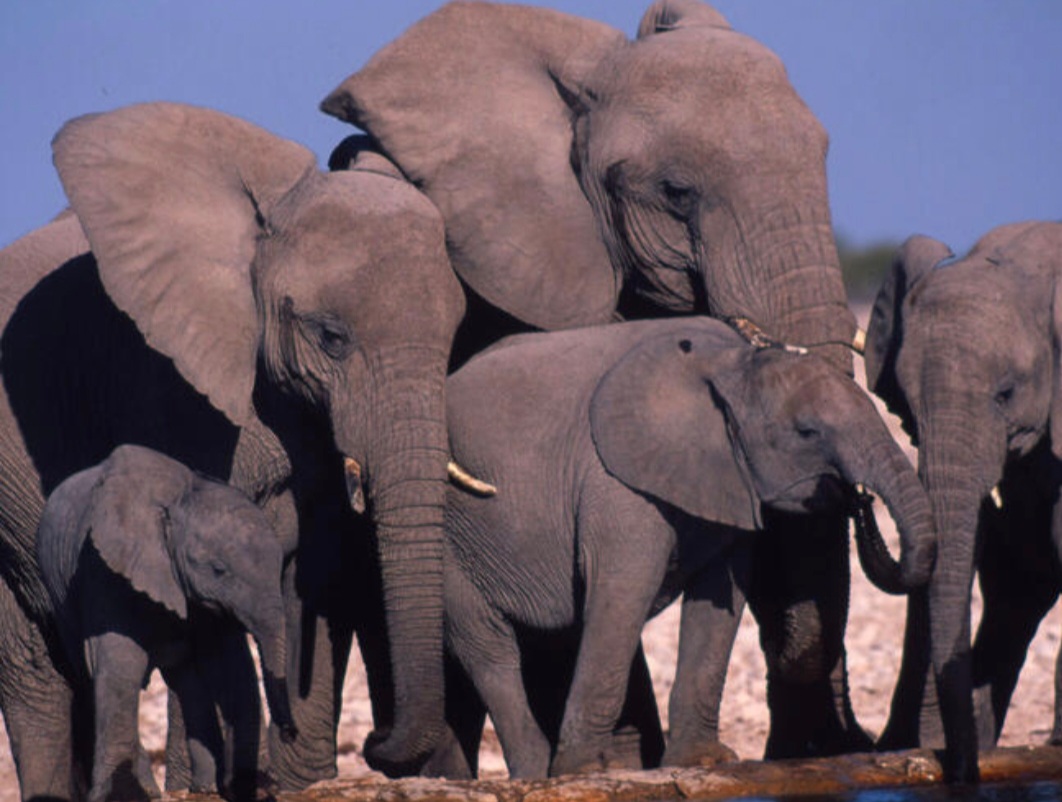
For more than a dozen years now, herds of elephants from the nearby Hwange National Park invade her family plot every other night, devouring the planted maize before it reaches maturity.

That has often left Mwangana, her family’s breadwinner, scrambling to find other food sources to feed her family of six. Ahead of harvest this April, she is worried about a repeat scenario.

Advertisement

“The elephants are coming to our fields in large numbers and we are not going to harvest much this season,” she said.

“Every year, we don’t harvest much because of the elephants. This year, there was little rainfall and elephants are still becoming a big problem, destroying our fields.”

The Hwange National Park is the biggest wildlife reserve in the southern African nation.

Advertisement

In 1928, it was declared a game reserve. Stretching over 14,600 square km and located in the eastern part of the Kalahari Desert, a low rainfall area, it is home to more than 100 mammal and 400 bird species.

During the dry season, the competition for food and water intensifies, resulting in conflicts among the animals.

For years, some of these animals, the elephants, have also been straying into residential areas around the park.

Advertisement

The invasion has led to loss of crops on farmland and lives across the country.

Things have worsened as the elephant population in the game park increased over the years to more than 50,000, far beyond its holding capacity of 10,000, Zimbabwe Parks and Wildlife Management (ZimParks) told the BBC.

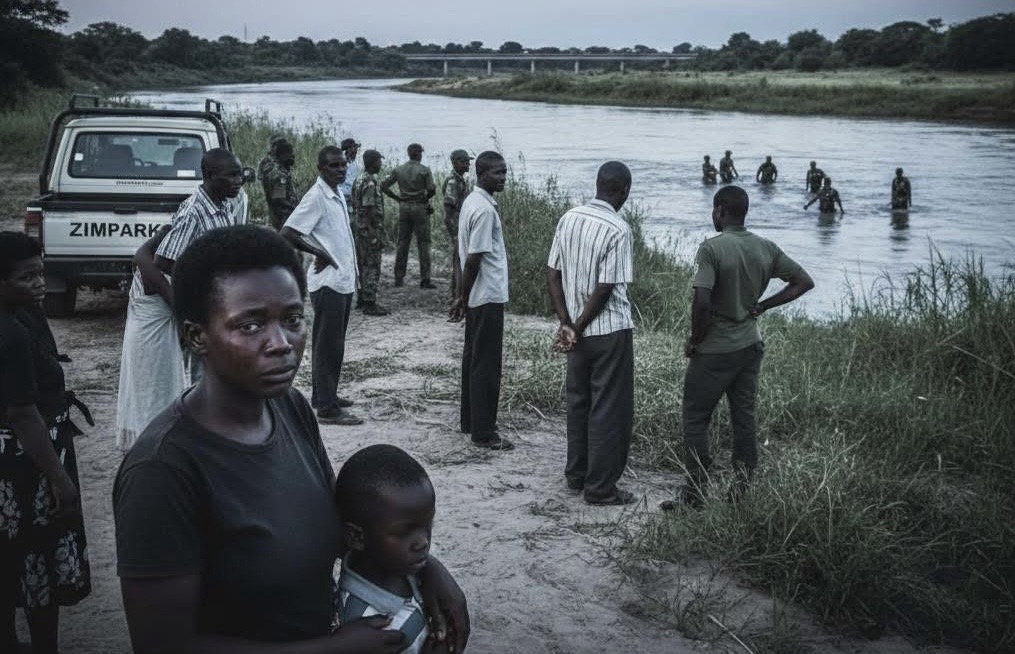
In 2020, there were more than 50 injuries and 60 deaths due to growing wildlife-human conflict, according to ZimParks’ website.

Advertisement

It was an increase of more than fifty percent from the previous year.

In search of good pastures and water holes, the villagers drive their livestock into the game park.

Thomas Tshuma (47), a cattle herder has encountered elephants while tending to his livestock in the game park.

Advertisement

“Each time we go into the game to herd our livestock, the elephants are harassing us, attacking and chasing away our livestock at watering holes and pastures,” Tshuma told Al Jazeera.

“The grazing lands are now scarce and we have to look for better pastures to feed our animals.”

To protect their crops, the villagers have formed watch groups to scare away the elephants using primitive weapons and bonfires.

Advertisement

When the animals emerge from the park, the watchmen start beating metal tins loudly to frighten them.

But experts also say that this human activity is part of the problem.

“Land use change and continuous human encroachment near and sometimes in protected areas is the driving factor to the increase in Human-Wildlife Conflict”, said Shamiso Mupara, executive director of Mutare-based nonprofit Environmental Buddies Zimbabwe.

Advertisement

“And it likely results in both parties suffering.”

The increase in demand for land use around Hwange has seen communities encroaching on the game park.

“Before the conflicts started, there was a fence dividing the community and the park. However, it was removed and the elephants have access to the community farmlands,” said Ndlelende Ncube, the founder of Tikobane Trust, a Hwange-based conservation volunteer group.

Advertisement

 “Also, the increase in population has resulted in the occupation of buffer zones, sometimes a kilometre wide, resulting in conflicts in 27 villages.”

Survival of the fittest

Due to poor rainfall, the current farming season is likely to yield a poor harvest  even as the elephants continue to launch regular raids.

Advertisement

So the villagers are doubling down on crop protection, saying farming as a primary source of livelihood in Siyalwindi is being threatened.

“We don’t sleep in our homes at night, we stay awake trying to keep away the elephants that are coming for the little crops we have,” Mangwana added.

Others have resorted to trapping wild animals for meat or for sale of their body parts to poachers.

Advertisement

ZimParks, which manages the country’s national parks, said it is trying to “create a balance between people and wildlife”, according to Tinashe Farawo, a spokesperson for ZimParks.

“Both the animal and human populations are increasing.”

“Communities who share borders with parks must desist from herding cattle in the parks because their livestock is at risk of contracting diseases and being attacked,” added Farawo.

Advertisement

Previous studies done in the Kruger National Park in neighbouring South Africa to test the repellents have proved that “elephant repellents, chili bombs and beehive fencing are effective in deterring elephants,” according to Mupara.

Last year, Tikobane Trust tested an elephant repellent it made with the help of local advocacy groups, in one village.

The main ingredients were cow dung, water and garlic. It proved to be a “success, repelling elephants from 200 meters away”, said Ncube.

Advertisement

There also seem to be concerted efforts to reduce poaching through skills training and entrepreneurship education for communities near the parks to aid them in participating in the tourism value chain.

Farawo said the villagers are benefitting from Communal Areas Management for Indigenous Resources (CAMPFIRE), a government programme to support community-led development.

Government officials said the funds from the programme are used for development purposes, such as building schools, clinics and roads.

Advertisement

However, some farmers say the perennial losses incurred by the animals trampling on their crops are having a toll on them and they see little direct benefits from the CAMPFIRE funds.

Community members, including Mangawana and Ncube said their neighbours appointed to the committees do not know how it works because they do not run the project.

For example, when a rowdy elephant is shot by ZimParks, communities allegedly get only a small share, Ncube said.

Advertisement

Last year, Dete, another affected area, reportedly received less than US$100 payout, he said.

After years of confronting the elephants, Mangwana is running out of patience and wants quick solutions, rather than new policies and programmes.

“The elephants should rather be taken away from the area,” she said. “We are losing and we are under a lot of stress because we are not sleeping at night.

Advertisement

“The CAMPFIRE funds are only benefitting a few people who are administering the programme.” – Aljazeera 

Advertisement
Continue Reading
Click to comment

Leave a Reply

Your email address will not be published. Required fields are marked *

In the community

Free dental outreach treats over 700 in Victoria Falls

Published

on

BY NOKUTHABA DLAMINI

More than 700 residents in Victoria Falls have received free dental care following a three-day outreach programme held at Mkhosana Clinic.

Advertisement

The initiative, led by global charity SmileStar in partnership with CIMAS, saw 705 patients treated between 9 and 11 March. The programme builds on previous outreach efforts in the region and is expanding this year to include Matobo.

A team of 16 volunteer dental professionals—many from Dentex—provided urgent treatment, pain relief, and oral health education, while also sharing skills with local healthcare workers.

Team leader Dr Mitesh Badiani said tooth decay linked to high sugar consumption, particularly among children, was the most common issue encountered.

Advertisement

“Many of these dental problems are preventable, and education plays a key role in helping to avoid such problems in the future,” he said.

The outreach received support from Africa Albida Tourism, with the team hosted at Victoria Falls Safari Lodge.

Africa Albida Tourism managing director Nigel Frost said the initiative would have lasting benefits for the community.

Advertisement

“This initiative provides vital dental care and education that will continue to benefit the residents of Victoria Falls long after the clinics have ended,” he said.

Mark Cockburn added that the programme highlighted the impact of volunteerism in addressing healthcare gaps.

Following the Victoria Falls outreach, SmileStar continued its programme in Hwange, before moving to Matobo today and tomorrow at Ethandweni Children’s Home, with a target of treating more than 1 000 patients across the three regions.

Advertisement

Continue Reading

In the community

Kamativi mine to relocate 65 graves to pave way for operations

Published

on

BY STAFF REPORTER

Sixty-five human remains are set to be exhumed from the Kamativi Mining Company premises in Matabeleland North as the firm moves to clear a section of land earmarked for ongoing mining operations.

Advertisement

The development follows a formal notice issued by Kamativi Mining Company in compliance with the Cemeteries Act, which governs the handling and relocation of human remains.

“Notice is hereby issued by Kamativi Mining Company in compliance with the Cemeteries Act, Chapter 5:04, regarding the relocation and reburial of 65 graves situated within the dry tailings operational area at Kamativi Mine, located in the Hwange District of Matabeleland North Province,” the notice read.

According to the company, the relocation is necessary to ensure that mining activities within the affected zone can proceed safely and sustainably.

Advertisement

The graves are located within the mine’s dry tailings operational area, a key section linked to current and planned extraction processes.

While the notice outlines compliance with legal requirements, the move is likely to raise sensitivities among local communities, given the cultural and emotional significance attached to burial sites.

Kamativi Mining Company has urged stakeholders and individuals with concerns or inquiries to engage directly with the company for further clarification on the exhumation and reburial process.

Advertisement

No timeline for the relocation has been publicly disclosed.

Additional reporting source: Byo24 News

Advertisement
Continue Reading

In the community

Hwange West MP demands urgent action after two killed by elephants in Victoria Falls

Published

on

BY NOKUTHABA DLAMINI 

VICTORIA FALLS – Hwange West legislator Vusumuzi Moyo has called for urgent and decisive intervention to address escalating human-elephant conflict after two people were killed by elephants in Victoria Falls within the space of a week.

Advertisement

Rising on a point of national interest in the National Assembly, Moyo said the recent deaths had left families in mourning and exposed the growing danger faced by communities living near wildlife corridors.

“In closing, Mr Speaker Sir, I want to convey my message to two families within Victoria Falls. This happened within a week. They lost their lives because of this conflict,” Moyo said. “In a space of a week, two families are mourning the loss of their loved ones.”

Victoria Falls and surrounding communities, which border wildlife areas, have in recent years experienced increased incidents of elephants straying into residential areas, destroying crops and infrastructure, and in some cases fatally attacking residents.

Advertisement

Moyo told Parliament that the crisis must no longer be viewed solely as a conservation issue but as a matter of human dignity and national development.

“My issue is not merely about wildlife management. It is about national development, constitutional responsibility and ultimately, protecting human dignity,” he said.

He warned that communities from Kariba to Binga, and in tourism corridors around Victoria Falls, are “under siege” from escalating human-elephant conflict.

Advertisement

“Families are losing crops, infrastructure is being destroyed and tragically, lives continue to be lost. This House cannot ignore the cries of rural citizens who coexist with wildlife every day,” Moyo said.

The Hwange West MP defended previous government decisions to cull elephants in high-conflict zones, arguing that such measures were sometimes necessary to restore ecological balance and protect human life.

“These are not acts of recklessness but acts of necessity because conservation must never come at the expense of human survival,” he said.

Advertisement

While acknowledging the importance of non-lethal measures such as fencing and translocation, Moyo said in some areas those interventions were no longer sufficient on their own.

He urged authorities to urgently implement provisions of the Parks and Wildlife Act, promulgated on 28 November 2025, particularly in communities bordering national parks.

“It is my sincere hope that the implementation of the Parks and Wildlife Act… will be taken to the areas that border within national parks so that people appreciate and that the regulations can be done as fast as possible,” he said.

Advertisement

Moyo stressed that Parliament must strike a balance between conservation and protecting human life.

“The people are not asking Parliament to choose between elephants and human beings. They are asking us to restore the balance,” he said.

The latest fatalities have renewed debate in Victoria Falls over how authorities can better safeguard residents while maintaining Zimbabwe’s strong conservation reputation.

Advertisement

Continue Reading

Trending

Copyright © 2022 VicFallsLive. All rights reserved, powered by Advantage