Connect with us

Slider

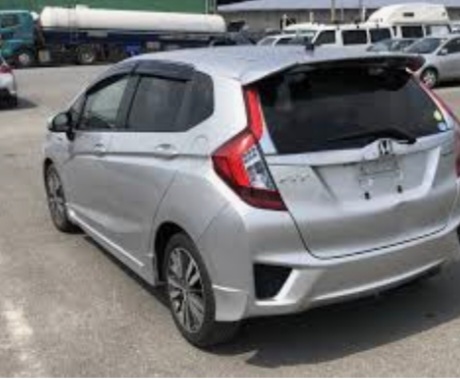
Honda Fit has become the vehicle of choice for criminals in Bulawayo

Published

on

BY MARKO PHIRI

Harrison Kachingwe vows he will never board a Honda Fit — or any private lift for that matter — after he was robbed and thrown out of the moving vehicle in December.

Advertisement

He had thumbed a lift at night on his way from a city pub, and it quickly became a nightmare.

“There were four guys in the car, including the driver, and I imagined the others were passengers, but after the car had travelled a few minutes, I was strangled, beaten up and had the little money I had and my phone taken,” Kachingwe said.

According to the police, this is not an isolated incident.

Advertisement

A police spokesperson has previously reported that up to 75 percent of city robberies  were committed by criminals using the Honda Fit as an accessory.

An old joke in Nigeria is if a stone dropped from the sky, it would hit a university graduate, testimony to the country’s high levels of education.

In present day Bulawayo’s urban traffic jungle, it may well be said that if a stone dropped from the sky, it will most likely hit a Honda Fit.

Advertisement

And if cars could talk, the Honda Fit would claim its place among the most used and abused.

One Honda Fit — the vehicle that can cram up to six or even seven passengers with one agreeable paying commuter sitting in the boot — was stopped by police last year at a roadblock and was found to be carrying 16 stolen goats.

The ubiquity of these cars have become a symbol of mayhem, turning the city streets into a pirate’s paradise.

Advertisement

The Honda Fit has become an unofficial alternative to registered public transport vehicles.

In a country where millions are without jobs, the pirate taxi pick-up points are now a haven of touts earning a living, while residents claim the touts work in cahoots with drivers to identify potential robbery victims.

By September last year, the police said they had more than 20 000 touts  across the country, the staggering number highlighting not just the country’s slide, but an industry that refuses to be tamed.

Advertisement

After the government outlawed privately-owned commuter omnibuses, citing Covid-19 public health concerns, the small vehicles quickly tapped into a niche, zigzagging through pot-holed streets to transport stranded, desperate commuters across Bulawayo, which has an estimated population of 653 000 but is generally believed to be much higher.

Amid such high demand, the Honda Fit now operates as a utility vehicle of sorts, and has in the process become the get-away car of choice for criminals.

Motorists claim the fuel efficiency of the Honda Fit has made it attractive — and so have the criminals.

Advertisement

Thousands of such vehicles clog the streets of Zimbabwe’s second city.

At one point the police impounded more than 400 vehicles in just one week, most of them Honda Fits.

Despite numerous public service announcements by the Zimbabwe Republic Police warning members of the public against boarding the Honda Fit, the country’s failing public transport system has meant commuters ignore such warnings.

Advertisement

But Kachingwe’s harrowing experience has been enough to convince him that you only ignore the police warnings at your own peril.

Women have especially been targeted for rape  in the notorious vehicles. “I just wish more could be done to get these cars off our streets but I also know that it won’t happen as this has been going on for too long,” Kachingwe said.

Amid that notoriety, the Honda Fit has however become Zimbabweans’ dream car, with a scramble of sorts to import the vehicles.

Advertisement

Online, they are advertised for anything between US$99 and US$1 000 in country of manufacture, but can set you back for as much as US$5 000 locally.

Resident representatives say that crimes committed using pirate taxis point to a greater problem with the city’s public transport system.

“Most areas where Honda Fit- related crimes have been reported are those that are not fully serviced by the Zimbabwe United Passenger Company [Zupco],” said Abigail Ndlovu, gender officer at the Bulawayo Progressive Residents Association.

Advertisement

Zupco is a government-owned entity and the only transporter mandated to ferry commuters, but has on numerous occasions been criticised for failing to meet demand.

“Residents are forced to board the illegal Honda Fits, and there is a need to look at the underlying forces that have led to an increase in robberies as providing more Zupco buses alone may not solve the problem,” Ndlovu said.

According to the Zimbabwe Revenue Authority, between 2015 and 2020, used vehicles  worth US$1.3-billion were imported, at one time prompting Finance Minister Mthuli Ncube to impose stiff customs duty, ostensibly to promote the local car manufacturing industry.

Advertisement

With the Honda Fit taking over Zimbabwe’s streets, it could be long before the country meets the goals of the United Nations Safe Cities  initiative, as more and more Zimbabweans keep importing the small vehicles with one intention: to generate income on the cities’ pot-holed streets. – M&G

Advertisement
Continue Reading
Click to comment

Leave a Reply

Your email address will not be published. Required fields are marked *

Hwange

Hwange Central finally receives long-awaited CDF funds

Published

on

BY NOKUTHABA DLAMINI

Hwange Central constituency has finally received its long-awaited Constituency Development Fund (CDF) allocation, marking the first disbursement since 2022, Member of Parliament for the area, Fortune Daniel Molokele, has confirmed.

Advertisement

In a statement, Molokele said an amount of ZiG 1.3 million was deposited last week into a special bank account set up exclusively to administer CDF funds for the constituency. The disbursement falls under the 2024 national budget, following confirmation from the Parliament of Zimbabwe that no CDF disbursement will be made under the 2023 national budget.

He further noted that there is still no clarity on when CDF allocations under the 2025 and 2026 national budgets will be released.

“With this development, our local CDF Committee will, during the coming week, initiate the process of rolling out the approved projects,” said Molokele.

Advertisement

Priority Wards and Projects

The initial phase of implementation will cover five wards, namely Wards 1, 4, 5, 6 and 14, with the remaining wards expected to benefit under the next CDF disbursement.

According to minutes from a public consultation meeting held on 13 April 2024 at St Ignatius Primary School in Hwange, the community unanimously prioritised solar-powered boreholes with JoJo tanks and fenced nutritional gardens as the flagship project for the 2024 CDF cycle.

Advertisement

The project is set to be implemented at the following locations:

  • Ward 1: Chibondo
  • Ward 4: Baghdad
  • Ward 5: Empumalanga
  • Ward 6: Phase Four
  • Ward 14: Ngumija

Other proposals discussed at the meeting included the construction of an Advanced Level laboratory science facility at Nechilisa Secondary School and the refurbishment of Nengasha Stadium, but these were deferred in favour of addressing water and food security.

CDF Committee in Place

The public meeting also elected a new 2023–2028 CDF Committee, comprising:

Advertisement
  • Alice Phiri (Trade Unions, Women and Local Communities)
  • Luka Katako (Traditional Leaders and Faith-Based Leaders)
  • Bryan Nyoni (Youth and Local Communities)
  • Shonipai Muleya (Finance and Accounting)

Francisca Ncube was nominated as the National Assembly representative, while Teresa Kabondo will represent the constituency in the Senate.

The CDF bank account signatories and procurement committee members include Molokele, Luka Katako, Thulani Moyo and Alice Phiri.

Funding Clarifications

Although earlier discussions indicated that the 2024 allocation would include outstanding funds from 2023—bringing the total to an estimated USD100 000, to be disbursed in ZiG at the interbank rate—the Speaker of Parliament later clarified that the 2023 CDF allocation was no longer available.

Advertisement

“As a result, each constituency ended up receiving ZiG 1.3 million, which was meant to be equivalent to USD50 000,” Molokele explained, adding that the approved projects were subsequently endorsed by the relevant Parliamentary committee.

He also confirmed that no CDF proposals have yet been submitted for 2025 and 2026.

Residents seeking further information have been advised to contact CDF Committee Secretary Thulani Moyo on 078 648 3659.

Advertisement

Molokele said at least two public feedback meetings will be held once implementation begins, to ensure transparency and accountability in the use of the funds.

Advertisement
Continue Reading

National

Education ministry launches nationwide one laptop, one iPad per pupil program

Published

on

BY LWAZI SHOKO

Zimbabwe has launched a nationwide One Laptop, One iPad Per Pupil initiative aimed at bridging the digital divide and expanding access to technology in schools, Minister of Primary and Secondary Education Torerayi Moyo announced on X on Monday.

Advertisement

The programme, being implemented in partnership with UNICEF Zimbabwe, will see the distribution of ICT equipment including laptops, tablets and projectors to schools across the country, with priority given to disadvantaged and solar-powered schools.

According to Minister Moyo, the initiative is designed to strengthen digital teaching and learning while promoting inclusive and equitable education. He said the programme seeks to ensure that all learners, regardless of geographic location or socio-economic background, have access to modern learning tools.

“As part of this initiative, I had the honour of presiding over the official handover of a major consignment of ICT devices,” Moyo said, adding that the resources would support the delivery of quality education and help prepare learners for a technology-driven future.

Advertisement

The minister described the programme as a transformative step that goes beyond the provision of devices, framing it as an investment in equity, opportunity and long-term national development.

Moyo also paid tribute to President Emmerson Dambudzo Mnangagwa, crediting his leadership under Vision 2030 and the Presidential Computerisation Programme for driving innovation and public-private partnerships in the education sector.

“By placing a laptop and an iPad in the hands of every pupil, we are building the digital foundations of a knowledge-based economy,” he said.

Advertisement

Lastly, expressed gratitude to UNICEF Zimbabwe and other development partners for their continued support, noting that the collaboration is key to building a more connected and future-ready education system.


Advertisement
Continue Reading

In the community

Two artisanal miners die in Umguza mine shaft collapse

Published

on

BY STAFF REPORTER 

Two artisanal miners have died following the collapse of a flooded mine shaft at Cement Side in Umguza District, ZBC has reported.

Advertisement

The incident occurred early Tuesday morning after heavy water ingress caused the shaft to give way, trapping the two men underground.

When rescue teams arrived at the scene, officers from the Bulawayo Fire and Ambulance Services Department, assisted by local volunteers, were leading recovery efforts.

A survivor of the incident, Khulumani Nkomo, described the terrifying moments leading up to the collapse.

Advertisement

“We heard a loud cracking sound as we reached the ground, then water started rushing in. The two were behind us, and the shaft just closed, trapping the other one in the tunnel,” he said.

Nkomo added that attempts to rescue the trapped miners proved futile.

“We tried to dig with our hands and tools, but the water kept coming. By the time help arrived, it was already too late.”

Advertisement

A brother of one of the deceased miners said the family is struggling to cope with the loss, revealing that the victim was only 19 years old.

Advertisement
Continue Reading

Trending

Copyright © 2022 VicFallsLive. All rights reserved, powered by Advantage