
Special reports
Online African sex workers face abuse and blackmail


Slider
From discarded glass to second chances: How conservation is rebuilding the lives of Zambia’s street boys
BY NOKUTHABA DLAMINI
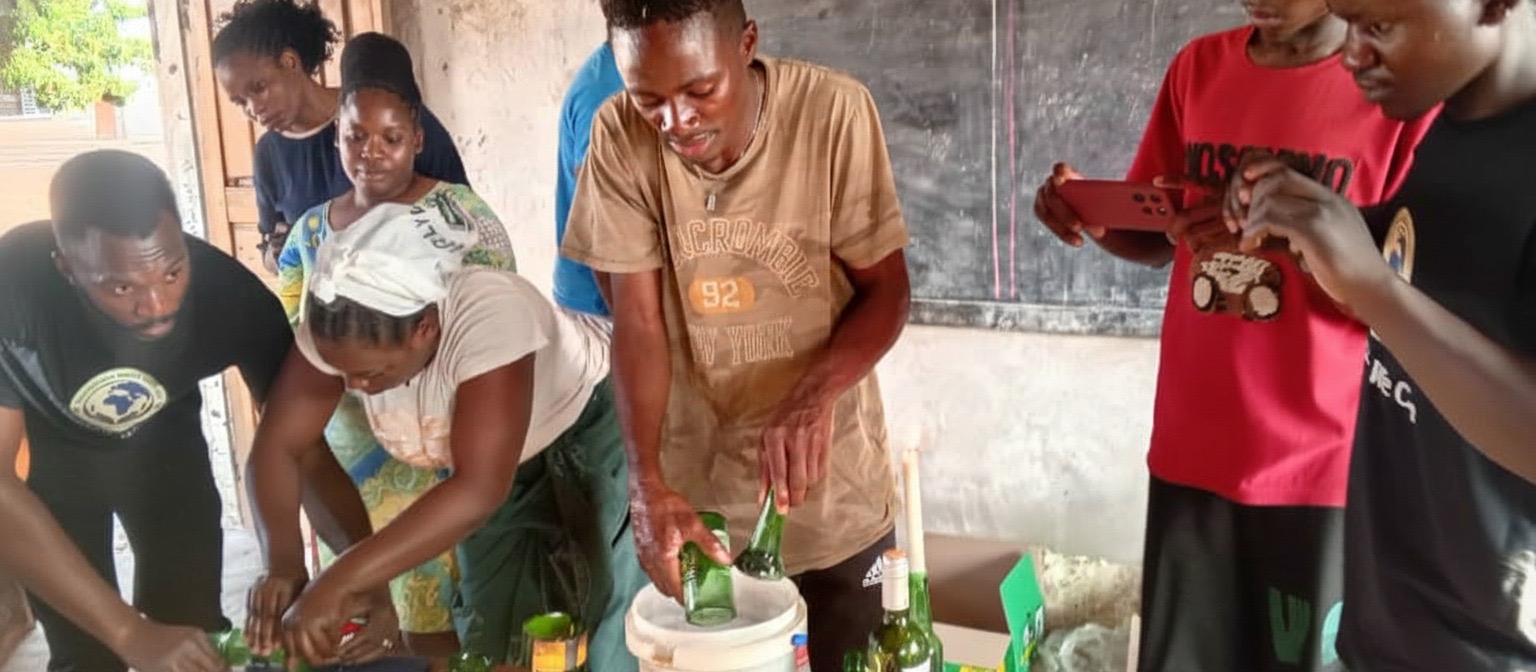
Livingstone, Zambia — In Maloni township, the sound of glass snapping cleanly against a cutter echoes through the yard of a modest home. What was once a discarded beer bottle now sits neatly trimmed, smoothed into a drinking glass. For a group of young men long dismissed as “junkies,” this simple act has become the beginning of a second chance.
At the centre of this transformation is Songiso Mukena, a conservationist, tourism practitioner and founder of the Responsible Earth Keepers Foundation (REK). Through conservation work, recycling, football and mentorship, Mukena is quietly rewriting the futures of boys once written off by their own communities.
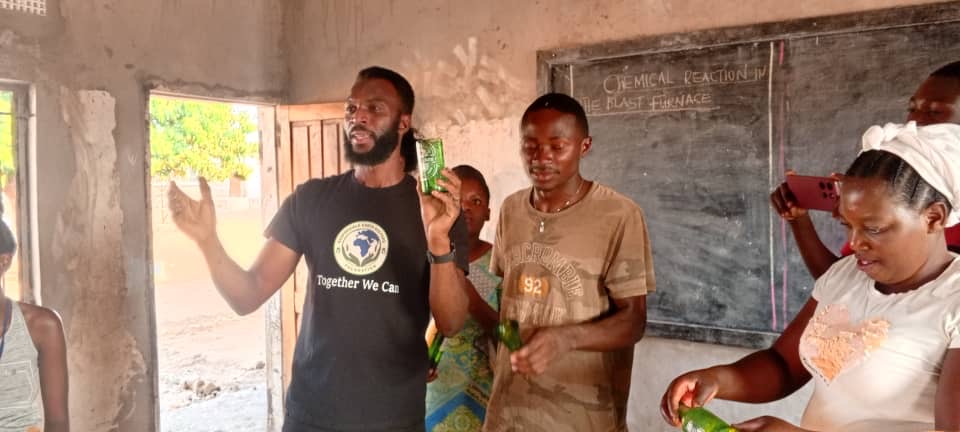
“My name is Songiso Mukena from Livingstone, Zambia,” he says. “I am the founder of Responsible Earth Keepers Foundation – a non-profit making organisation.”
A journey rooted in hospitality and conservation
Mukena’s passion for conservation grew out of more than 15 years working in Zambia’s hospitality industry. While employed at Jolly Boys Backpackers in Livingstone, he was involved in a programme focused on responsible tourism and waste management.
“For me, it was just work,” he explains. “It was all about waste separation, finding a better place where to take or whom to give. We were doing worm farming and also just learning how to manage waste.”
That experience sparked a deeper interest. “I think it’s one of the places I worked that really opened my mind,” he says.
In 2016, a visit to a recycling organisation became a defining moment.
“I was amazed with what I saw,” Mukena recalls. “They were giving life back to bottles that were discarded out there or thrown out. They would cut them, make candle holders, lanterns and drinking glasses.”
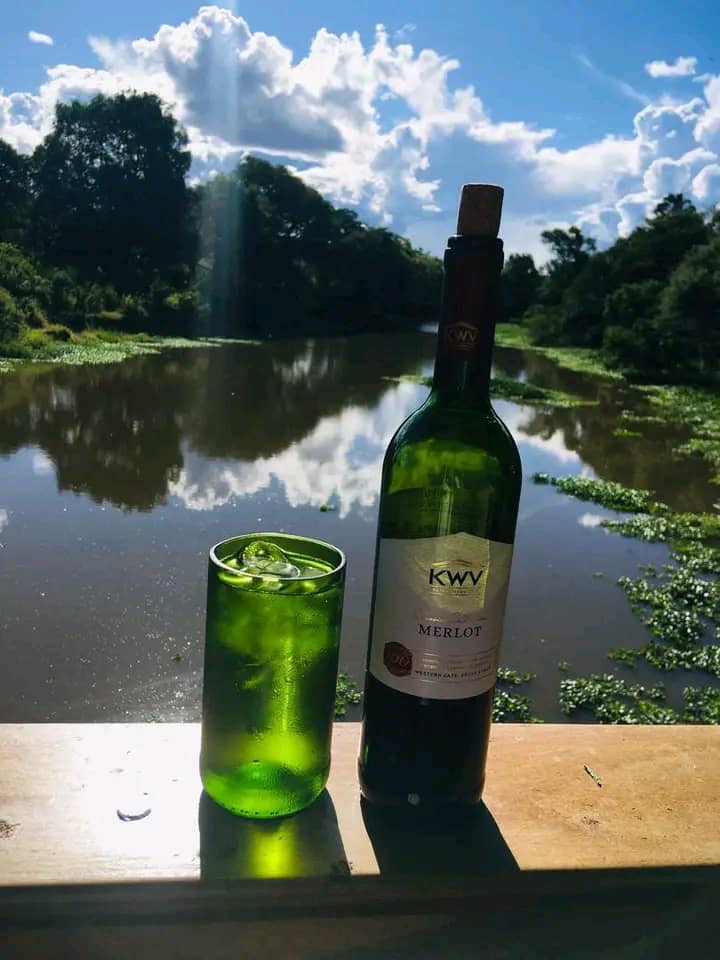
Although he wasn’t taught the technique, the idea stayed with him. “I started doing research on how to cut a bottle and make a drinking glass,” he says. “It wasn’t easy.”
A breakthrough came when former employers, Mr and Mrs Sikaneta of Munga Eco-Lodge, donated a glass cutter.
“I started practicing and practicing,” Mukena says. “The whole of 2017 I was practicing. In 2018, I started taking bottles to my house and cutting them.”
Soon, people began buying the glasses.
“For me, my mind shifted,” he says. “I thought, I think this can be a big idea on recycling.”
COVID-19 and a move into the community
The COVID-19 pandemic forced Mukena out of employment as tourism ground to a halt. He moved from Linda township to his own plot in Maloni, an area facing deep social challenges.
“It’s a remote area,” he explains. “It’s one of the places where you find early pregnancies, boys failing exams and turning into what today are called junkies.”
Many of these boys had gone through traditional initiation ceremonies, after which they were often stigmatised.
“When they come back, the community views them in a different way,” Mukena says. “Once you go there and come back, you are not taken as a normal boy child.”
Instead of distancing himself, Mukena opened his space to them.
“I started teaching those boys how to cut bottles, making drinking glasses,” he says. “We started with about ten boys.”
The glasses were sold, and the money shared according to need.
“If one lacked shoes, we would sponsor that,” Mukena explains. “If another boy wanted to go back to school and lacked books, we helped.”
Healing beyond skills
The transformation was not just physical or financial. Mukena’s wife, Yvonne, a psychosocial counsellor, joined the initiative.
“She started talking to the boys,” he says. “Trying to get their minds shifted.”
Their home became a safe space.
“Our home became a home of many,” Mukena says. “Some kids would come just to play.”
Recycling soon funded broader social causes.
“We said, how about we sell these glasses back into the charity to help make it self-sustainable? Mukena explains. “Waste management became a starting point for other projects.”
Football as a tool for dignity
Football emerged naturally from the boys themselves.
“They were already playing – and with real talent,” Mukena says. “One day they came and said, ‘Father, we want to play City Stars and we’ll win!”’ City Stars is a professional team.
Recognising their talent and passion, the boys asked for support.
“They said, if possible, can you organise football kits for us?” he recalls.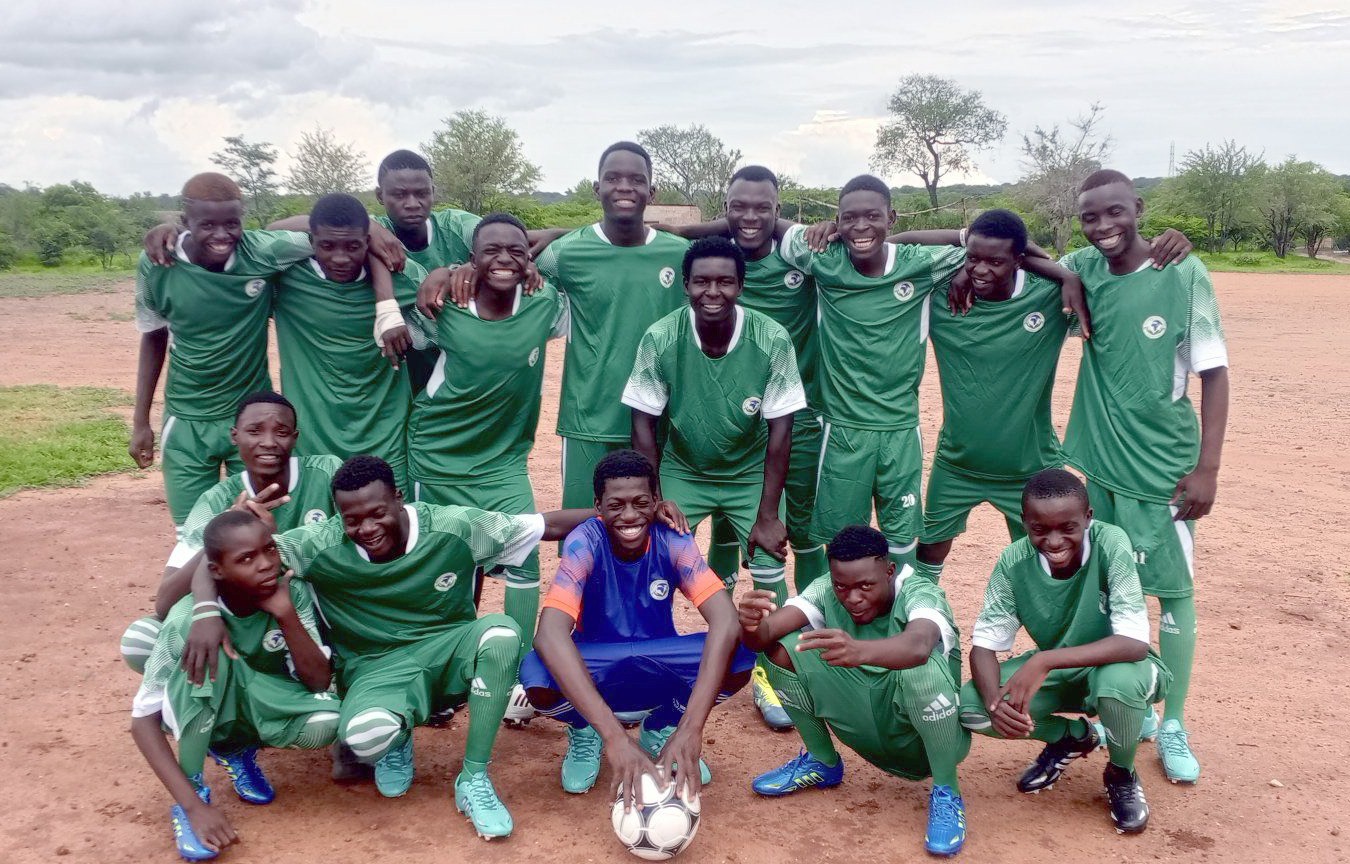
A local church donated land for a pitch, and REK FC was formed. Recycling income helped support the charity’s activities, linking conservation directly to sport.
Football also brought structure, discipline and confidence.
“We don’t just concentrate on soccer,” he says. “We also give motivational talks, encouragements, testimonies and Bible readings. At the end of the day, it’s a mind change that we are looking for.”
Support from abroad, built on trust and friendship
Among those drawn to support Mukena’s work were two tourists from the UK, Simon Greene and Audrey Furnell. Simon explains why grassroots initiatives resonate with donors today:
“In return for a relatively modest donation anyone can make a tangible difference. Supporters like us can see a direct return on what we give which is incredibly rewarding.”
Simon says this is exactly the kind of work they want to promote.
“We’ve learnt a huge amount from Song and Yvonne and were struck by their kindness and impressed by their drive to do more for his community,” Simon says.
Their family’s support began with a classroom project in Linda, expanded to monthly assistance for school needs, and later funded a borehole near Kazungula.
When introduced to the boys of Maloni, Audrey says:
“We saw their passion for football and it was clear they deserved the chance to be their best on the field – but without proper kit that could never happen.”
Soon afterwards, Simon recalls:
“Songiso lost no time, organised all the kit and immediately arranged a match on Christmas Eve with REK FC playing against a professional team. We were thrilled.”
Rewriting the story of the boy child
Mukena believes the project addresses a wider national issue.
“There was a campaign for educating the girl child,” he says. “That campaign was done very thoroughly. But the boy child was left behind.”
He believes that neglect has contributed to rising numbers of boys labelled as criminals and drug users.
“When a boy’s mind is changed,” Mukena says, “it’s an achievement for the organisation, the community and the country.”
Today, REK works with approximately 100 boys aged between 15 and 22, with about 25 actively involved in recycling and football.
The long-term goal is to establish a recycling and skills training centre employing youth from the community.
“We want a better community,” Mukena says.
Small acts, lasting change
In Maloni, discarded bottles are no longer just waste. They are tools of transformation — funding education, restoring dignity and giving young men a reason to believe in themselves.
For Mukena, success is simple.
“One day we hope a boy will be picked to play for a professional team,” he says, “that will be an incredible achievement for him — and for us.”
And for Simon and Audrey:
“We feel blessed to have Songiso in our lives. Being able to see REK make valuable improvements like these is very rewarding. We’d like more people in the wider donor community to act as we have – together we can make a difference.”
BY NOKUTHABA DLAMINI
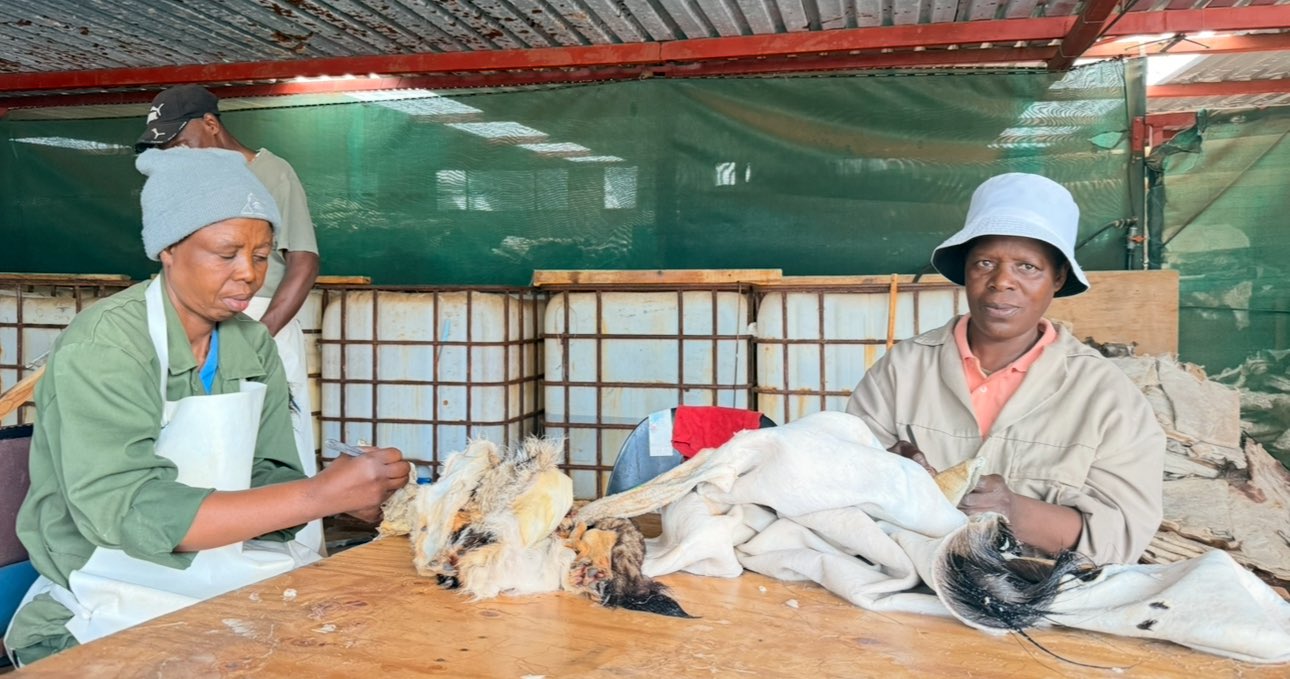
In the small town of Bela-Bela, a quietly flourishing business is unfolding — one that turns wildlife into livelihood, education, and economic opportunity. On a humid afternoon, we walked into the operations of Estelle Nel Taxidermy (and its parent networks), where rows of beautiful animal mounts — from antelope horns to zebra skins, skulls to full-body trophies — line the walls.
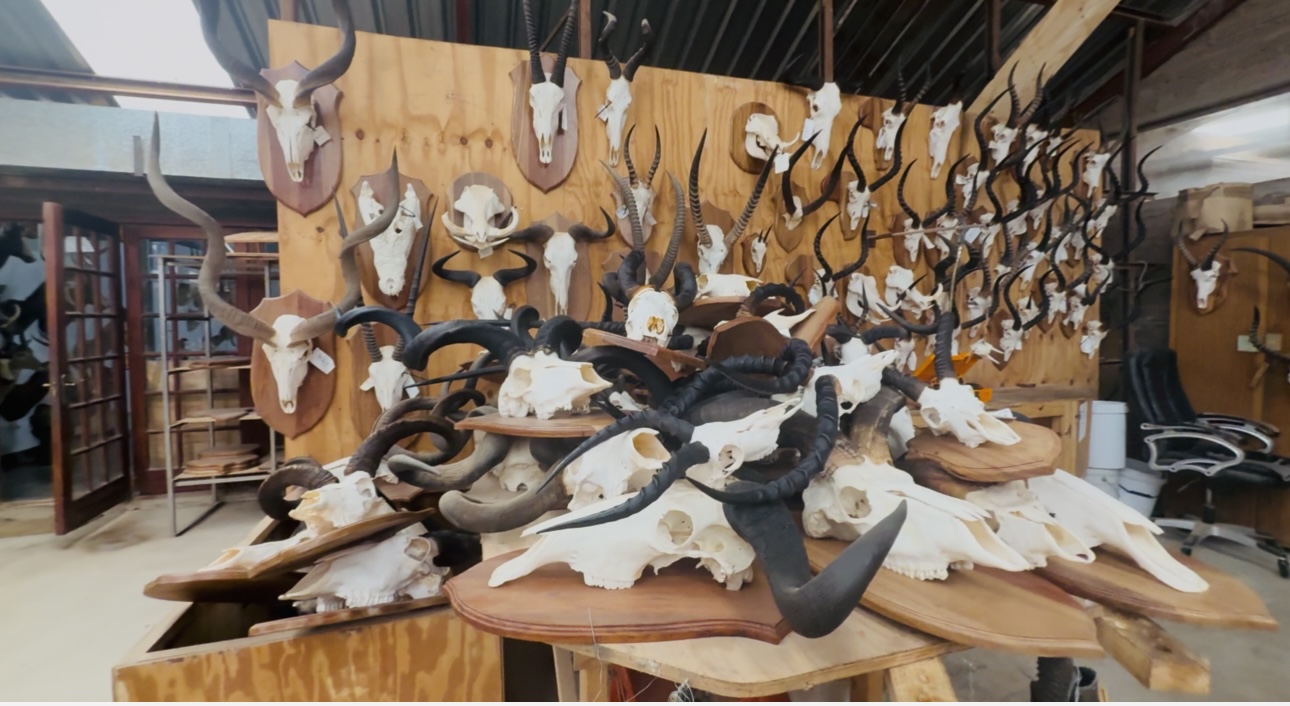
But beyond the busts and custom mounts lies a deeper purpose: this is not simply a display of hunting trophies. It is a system of sustainable use — where animals that die naturally or are hunted legally are completely utilised: meat, skin, horns, bones — nothing goes to waste, and everything acquires value.
As we discovered from our conversations, this network extends beyond taxidermy. Adjacent to the showrooms are processing facilities, butcheries, and game-meat wholesalers — all integral to transforming South Africa’s wild fauna into a formal, regulated, and sustainable economy.
“This is home” — an artisan’s vocation
I sat down with Melanie Viljoen, who serves as Export Secretary at Estelle Nel Taxidermy. Her voice was calm, resolute.
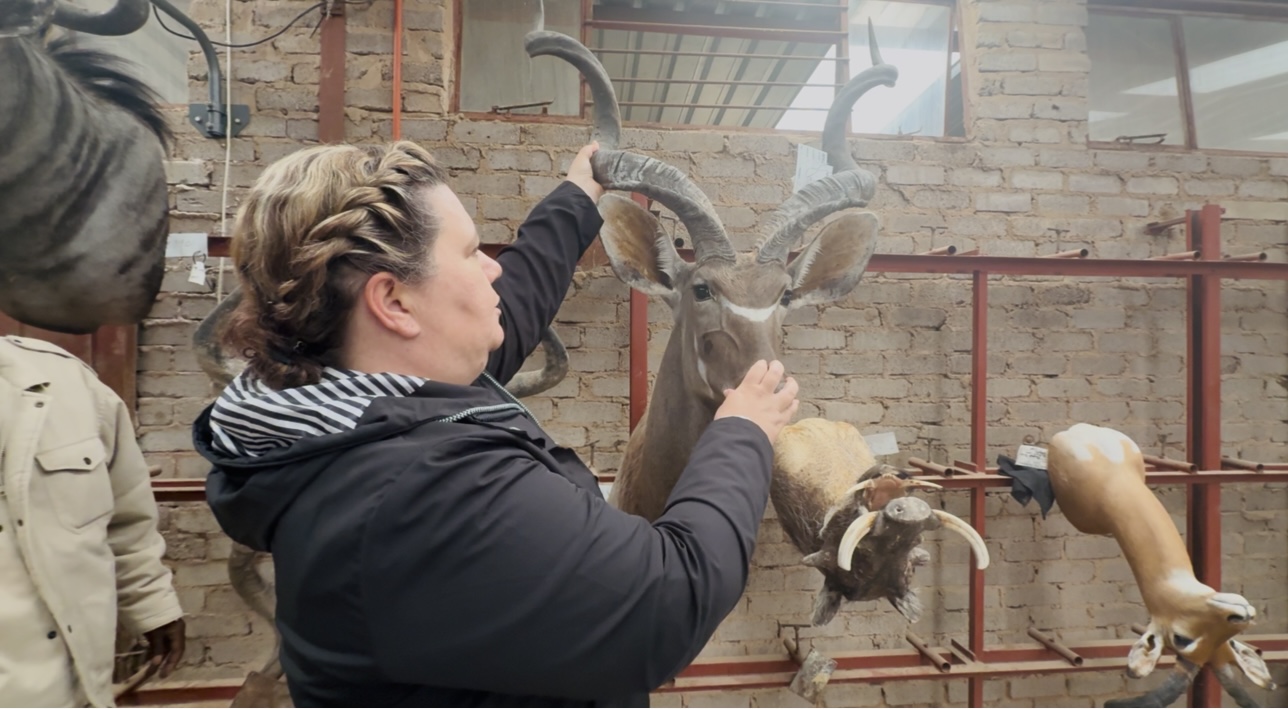
“For me, it’s like this is home and it’s something that I love to do. I love art. I studied art at school. I can’t think of anything else I’d rather do.”
She told us she’s been with the business for thirteen to fourteen years. Over that time she’s mastered a unique craft. “I’ve found my niche,” she said, “and I’m not going anywhere.”
Melanie explained how the business flows: outfitters bring in international clients to hunt on private farms, then process the animals: trophy mounts for some, meat for others. Locals also bring animals — sometimes for trophies, sometimes just for meat. There is even “school-mount” work: smaller species, sometimes a mother and its young, carefully preserved — not just for hunters, but for children to touch and learn about wildlife up close.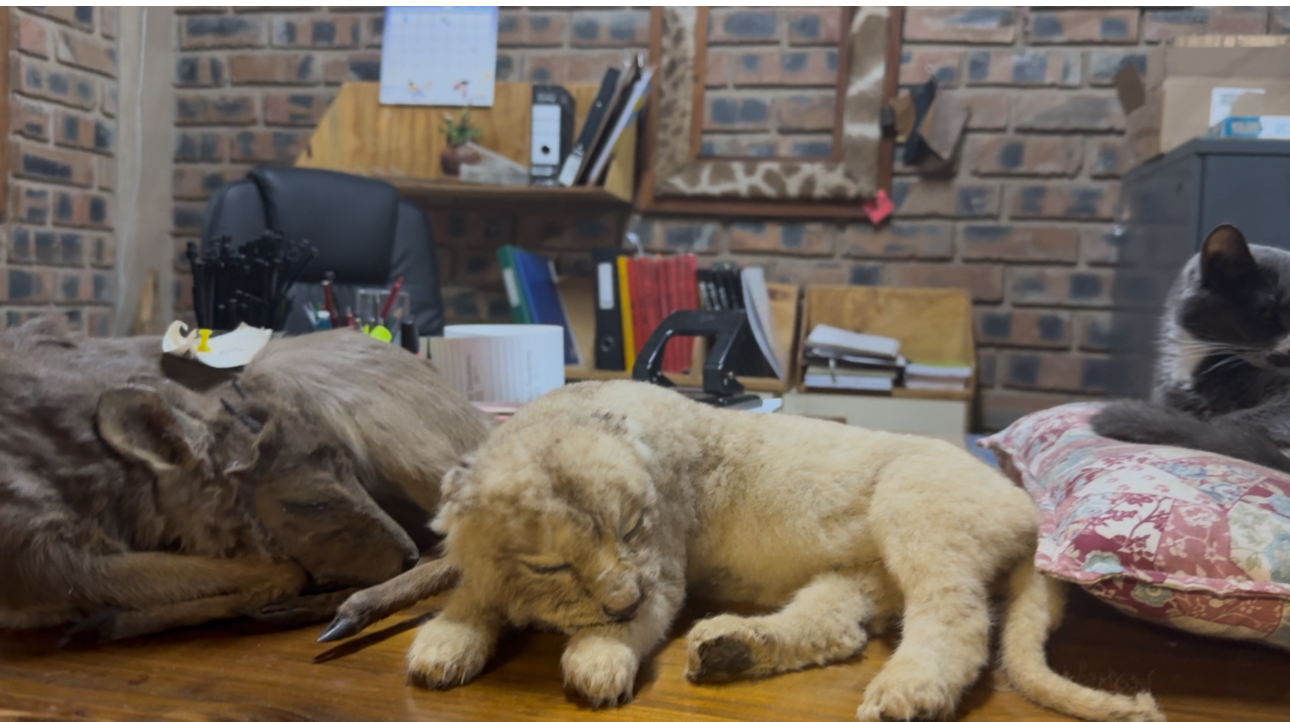
“We mount animals that have died naturally or were hunted… we use everything, from the meat to the skins and curls. It’s a sustainable way of doing business, and everything has a monetary value.”
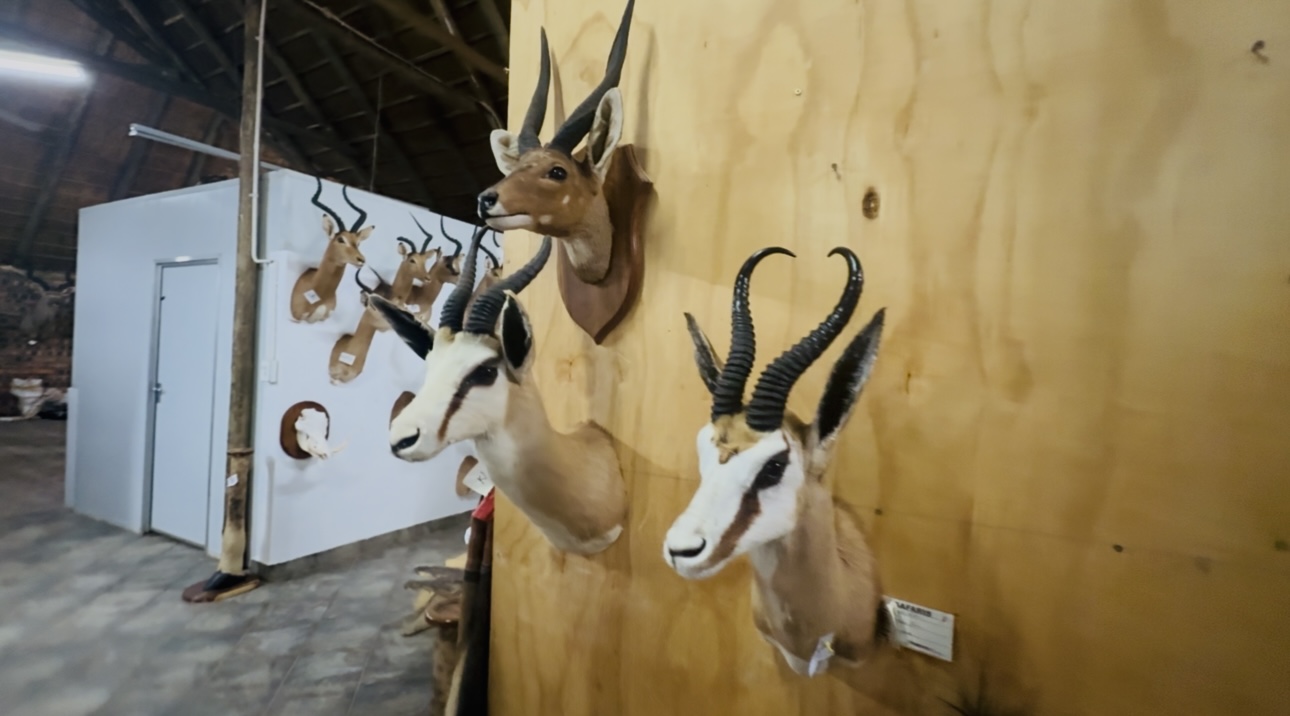
This, she says, is both business and passion — blending artistry, conservation, and commerce.
From workshops to global markets — taxidermy meets commerce
According to membership details o South African Taxidermy & Tannery Association, Estelle Nel Taxidermy offers a wide range of services: from mounting mammals, birds, reptiles; tanning skins and capes; cleaning, mounting and articulating skulls, bones, horns, tusks; to producing novelty leather items, polished horn décor, engraved bones, hoof lamps — even gunbags and furniture. They offer full export packing and crating services, and help clients ship internationally.
What this means is that skins, hides and trophies — once the culmination of a hunt — become far more than personal souvenirs. They become export commodities, contributing to livelihoods of artisans, packers, shippers, and everyone in between.
Yet, as Pieter Swart President of South African Taxidermy & Tannery Association (SATTA)/chairman of SUCO-SA) told us, that path to global markets is not without obstacles.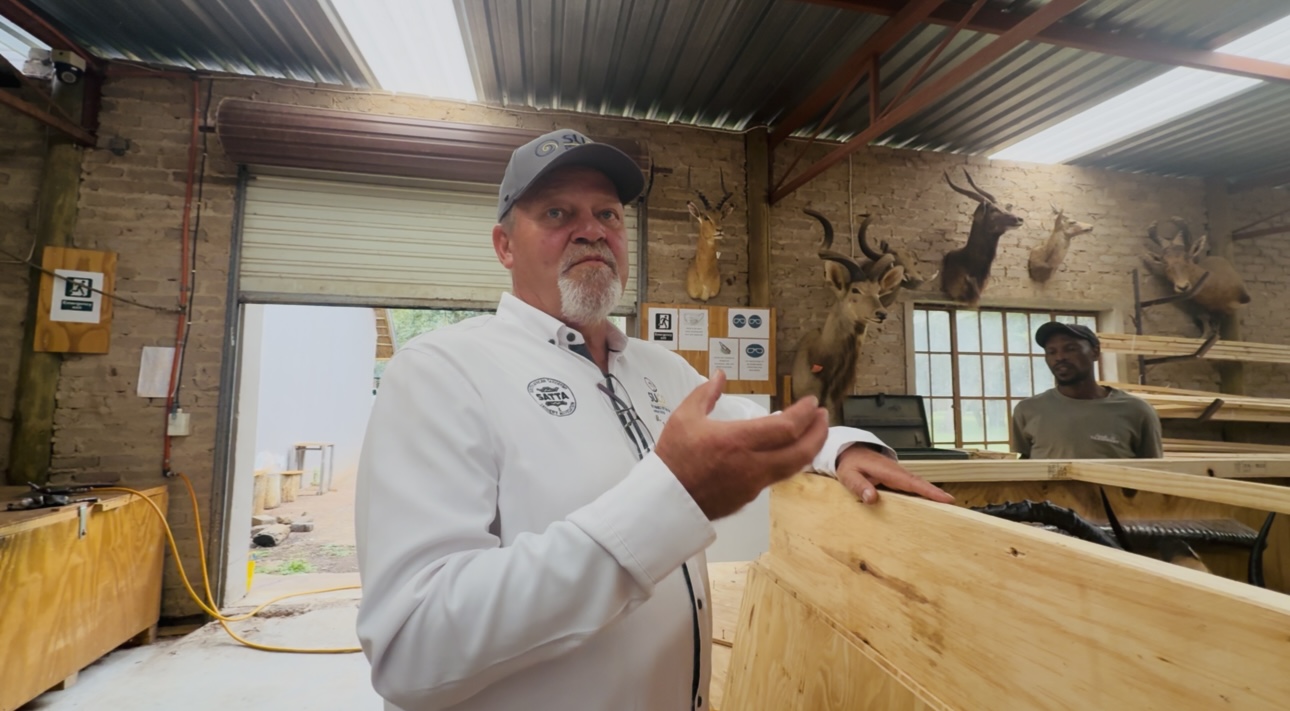
“Certain airlines allow the shipping of these trophies. I think it’s about four airlines that you can ship them overseas, but the rest refuse to take their hunting trophies to destinations. As well as the sea shipments — there’s only one ship going to America every three months. The rest of the shipping lines refuse to take hunting trophies.”
He lamented the difficulty in logistics. And yet, he sees themselves as part of a broader — and misunderstood — effort. “This anti-animal works movement created the idea that hunting is killing the animals and destroying them to extinction — but that is actually quite the opposite,” he said. “More and more, the guys are farming the animals; that is creating a better future for the animals.”
In other words: regulated, sustainable use — of every part of the animal — can coexist with conservation, economic empowerment, and community upliftment.
Next door to the taxidermy showroom, we toured a modest but hygienic meat-processing Camo Meat facility, run by people like Ina Hechter. They explained that their business started small — in 2012 as a private processing butcher for animals from farms. Around 2017 they expanded into wholesale for local markets. Export remains limited, but local demand is growing.
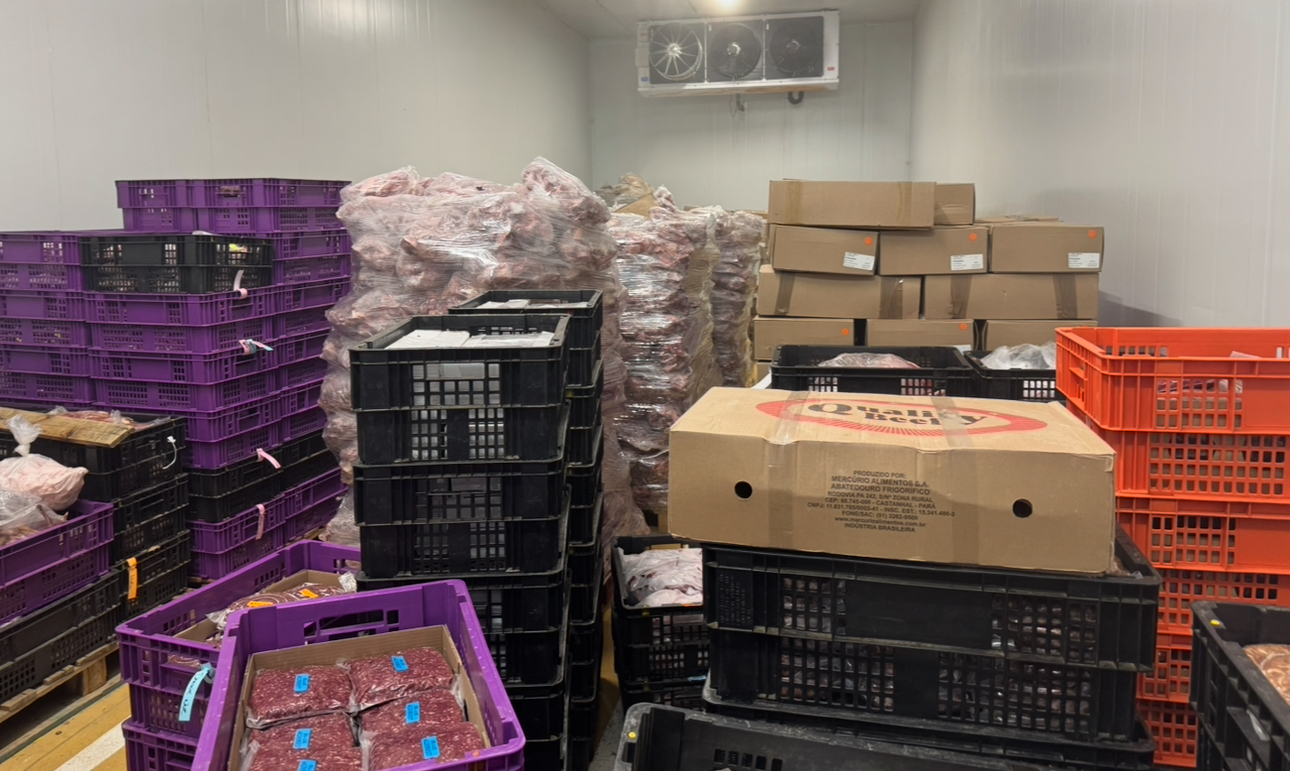
Their meats include species typical of the South African game-meat industry: kudu, impala, springbok, wildebeest, zebra and others. What began as a niche — somewhat stigmatised — trade is slowly gaining acceptance. Some supermarkets and lodges are carrying game meat; more restaurants are offering “veld flavour.”
Ina told me that in times of drought — when traditional livestock farming may suffer — game-meat businesses often see increased activity. Farms with overstocked wildlife or animals unable to survive drought may harvest and sell meat, skins and other resources. In this way, what might have been a loss can become income, conservation, and food security.
“Our parks are so small that they can’t sustain all the animals that are there,” Ina said. “Especially in drought years … when it’s not raining a lot you will see they die and then they sell the animals.”M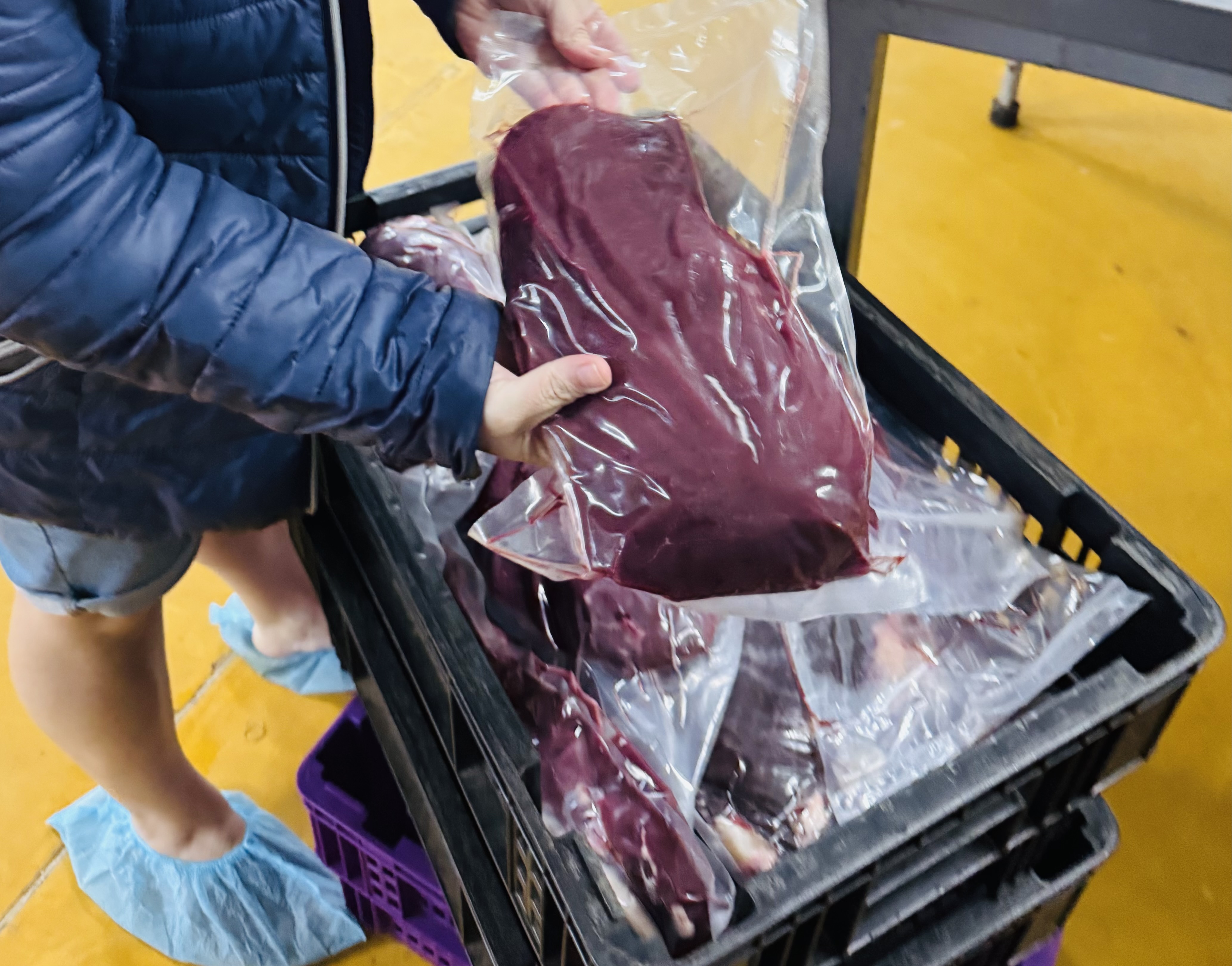
She sees game meat not only as a business, but as part of a broader sustainable economy — offering healthy, lean protein to consumers, easing pressure on overburdened habitats, and circulating value in rural and peri-urban communities.
More than meat and trophies — a conservation-economy model
What struck me during the tour was how holistic the operation is. It isn’t just about hunters bringing back trophies. It’s about using every bit of what exists: meat, skins, hides, horns, bones — even skulls, and decorative by-products. From full-body mounts to polished horn décor, from retail game-meat packages to furniture made from hoofs: this is a full-value chain.
Companies like Estelle Nel Taxidermy are members of formal trade associations and provide professional services — tanning, mounting, packing, export documentation — and in doing so, they help formalize trade in wildlife products.
Meanwhile, the game meat industry — though historically informal — is slowly growing more regulated. According to a recent national biodiversity-economy strategy, game-meat production supports economic growth, food security, and employment. The most commonly produced and consumed species: impala, kudu, wildebeest, springbok.
In other words: when properly managed, this sector has the potential to transform perceptions of wildlife — from being simply “wild animals” to resources that can feed, employ and uplift entire communities.
Challenges — logistics, stigma, regulation
But it’s not all smooth. As Pieter Swart highlighted, export logistics remain a bottleneck: only a few airlines transport trophies; shipping lines are often reluctant; sea freight to markets like the United States may come only every few months. This makes it harder for the industry to scale globally.
Domestically, the market for game meat and wildlife products still battles cultural and regulatory stigma. Many people still frown at game meat; supermarkets and restaurants are only slowly integrating it.
Regulation is another issue: for the industry to be sustainable, wildlife needs to be farmed or managed responsibly, harvesting must follow quotas, and processing must meet health and safety standards. When abattoirs, tanneries, and exporting agents comply with regulation, this gives the industry legitimacy — but it also requires oversight, capacity, and buy-in from all stakeholders.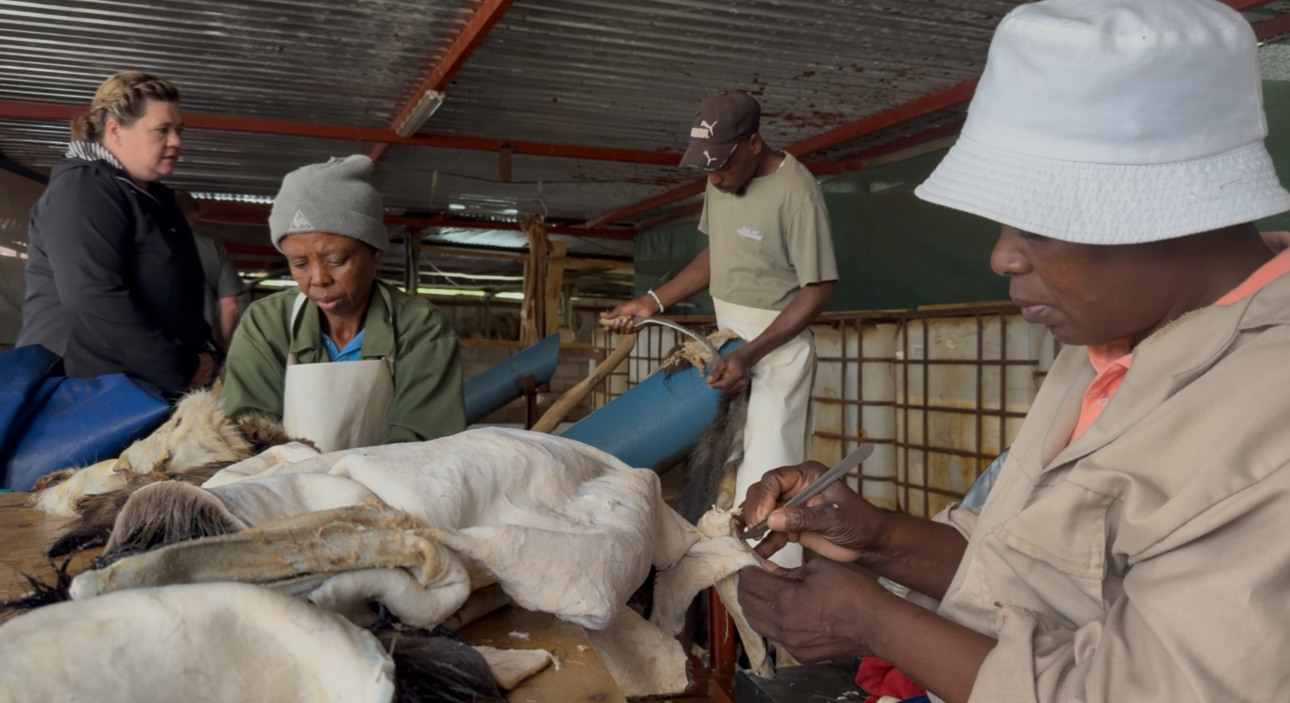
Our visit painted a picture of a wildlife economy that’s evolving: where skilled artisans turn skins, horns, skulls into enduring art; where processors supply game meat to homes, restaurants and hotels; where farms, outfitters, taxidermists, meat processors, exporters, and even children (learning from mounted displays) all form part of an ecosystem.
It’s a world that challenges simplistic ideas of wildlife as either “pristine wilderness” or “endangered species.” Instead, it shows how — if managed with respect, regulation, and purpose — natural resources can sustain livelihoods, build economies, and forge a bridge between conservation and commerce.
For many of those involved — from Melanie Viljoen to Ina Hechter and Pieter Swart — it’s not just business. It’s home. It’s art. It’s the future.
Slider
Zimbabwe pushes youth-centred, rights-based, and community-driven reforms ahead of CITES CoP20

BY NOKUTHABA DLAMINI
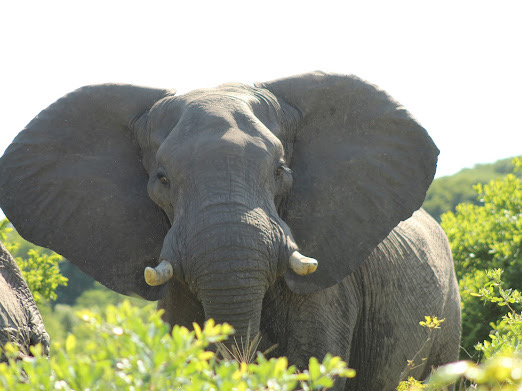
As the world prepares for the 20th Conference of the Parties (CoP20) to the Convention on International Trade in Endangered Species of Wild Fauna and Flora (CITES), Zimbabwe has outlined a bold and comprehensive policy agenda that shifts global discussions beyond ivory and toward broader issues of sustainable use, human rights, and community empowerment.
In an exclusive interview with VicFallsLive, Dr. Agrippa Sora, board chairman of the Zimbabwe Parks and Wildlife Management Authority (ZimParks), said the country’s proposals are anchored on a simple but transformative message: wildlife conservation must deliver real benefits to the people living with wildlife.
 Key proposals Zimbabwe taking to CITES CoP20
1. Commercial trade in elephant leather products
Zimbabwe is pushing for approval to engage in regulated commercial trade in elephant leather products. Authorities argue that this form of value addition can bring economic gains to local communities, promote sustainable use, and reduce reliance on donor funding.
2. A formal voice for communities within CITES
Zimbabwe is advocating for the establishment of an Advisory Body or Community Forum within CITES, ensuring that the voices of rural people—who coexist with wildlife—formally shape decisions on international trade, conservation restrictions, and benefit-sharing.
This push echoes one of the founding principles of CITES, which acknowledges that “peoples and States are and should be the best protectors of their own wild fauna and flora.”
3. Recognition of human rights within conservation governance
Zimbabwe’s delegation wants CoP20 to acknowledge the human rights dimensions of conservation—particularly:
- The right to safety for communities facing human–wildlife conflict
- The right to food security
- The right to benefit from natural resources within their landscapes
For Zimbabwe, these rights are inseparable from wildlife management.
Moving beyond ivory: A broader view of sustainable use
Dr. Sora emphasized that Zimbabwe does not want the CoP20 debate to be reduced to ivory.
Zimbabwe argues that without these broader interventions, the conservation model remains unbalanced—protecting wildlife while leaving the people who live among it trapped in poverty
Youth at the centre of the conservation agenda
One of the strongest themes in Zimbabwe’s CoP20 position is youth empowerment, an area Dr. Sora said is now central to national conservation policy.
“Zimbabwe is supporting the Youth Ethnic Conservation Agenda, and we want to continue empowering young people,” Dr. Sora said.
“These are young people who travel long distances between villages and shopping centres, often unaware of wildlife incidents happening around them.”
He revealed that Zimbabwe has approved the establishment of a national chapter of the CITES Rural Youth Network, a platform designed to give young rural citizens a voice in global conservation decision-making.
Dr. Sora said young people—often traveling long distances between villages and service centres—are the first responders to wildlife encounters, yet are rarely included in policy processes.
“Their inclusion is critical for awareness, safety, and community resilience,” he said.
A rights-based approach linked to national priorities
Dr. Sora linked Zimbabwe’s CITES proposals to the country’s National Development Strategy (NDS2), which prioritises poverty eradication.
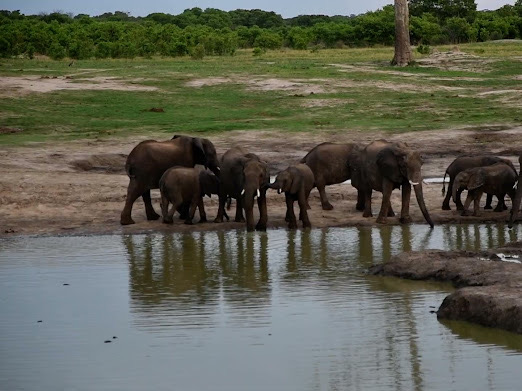
“We want to ensure that communities living within wildlife landscapes receive meaningful support and benefits from the natural resources around them,” he said.
This includes promoting value addition—for example, crafting products from elephant leather—and enabling community enterprises tied to legal wildlife products.
“We are promoting opportunities for value addition so that communities can benefit economically from the wildlife with which they coexist.”
He added that the board is committed to transitioning youth from vulnerability to empowerment, ensuring access to education, business opportunities, and long-term livelihoods.
Unlocking finance through sustainable use
Zimbabwe also plans to push for financial mechanisms—particularly the sustainable use of existing wildlife stockpiles—to support community development.
“Our aim is to secure mechanisms that allow us to reinvest in these communities, strengthening their resilience and ensuring they thrive alongside wildlife.”
Zimbabwe argues that restrictive global trade rules deprive communities of funding that could improve safety, reduce human–wildlife conflict, and support conservation programs.
Zimbabwe’s position rooted in CITES founding principles
Zimbabwe’s proposals, Dr. Sora said, are consistent with the spirit of CITES itself.
The convention’s preamble affirms:
Wild fauna and flora are an irreplaceable part of the earth’s natural systems… Peoples and States are and should be the best protectors of their own wild fauna and flora… International cooperation is essential to prevent over-exploitation…
Zimbabwe believes that empowering communities, recognizing human rights, and enabling sustainable use are simply modern applications of these foundational principles.
-

 Slider3 years ago
Innscor launches brewery to produce Nyathi beer
-

 National5 years ago
In perched rural Matabeleland North, renewable energy is vital
-

 Tourism and Environment4 years ago
Strive Masiyiwa’s daughter opens luxury Victoria Falls lodge
-

 Special reports4 years ago
Tinashe Mugabe’s DNA show’s popularity soars, causes discomfort for some
-

 Opinion4 years ago
A street art mural in Zimbabwe exposes a divided society
-

 National4 years ago
Victoria Falls’ pilot dies in helicopter crash
-

 National3 years ago
Commission of inquiry findings fail to be tabled as Victoria Falls councillors fight
-

 National3 years ago
Hwange coal miner fires workers over salary dispute