Connect with us

National

Hwange West to spend $2m CDF cash on education, health projects

Published

on

BY NOKUTHABA DLAMINI AND NOTHANDO DUBE

Hwange West constituency plans to use its $2 million Community Development Fund (CDF) allocation on education, health, and community empowerment projects.

Advertisement

Hwange West Member of Parliament Godfrey Dube told VicFallsLive that the projects will include improvement of infrastructure in schools, clinics, dip tanks, small irrigation schemes and water sources, mainly in rural wards.

“If you look at Kachechete, Matetsi, Chidobe, Nemananga, Chikandakubi and Ward 19, which falls under the Zimbabwe Parks and Wildlife Management Authority (Zimparks), all need attention,” Dube said.

“It is mostly school infrastructure that needs repairs and expansion, clinics are far from the people.

Advertisement

“In Ward 19, most roads to the (game) park are not accessible and it has been worsened by coal mining companies that are causing havoc, especially in the Sinamatela area.”

He, however, bemoaned the $2 million constituency fund saying it was not enough to cover the needs of the community.

“It is no secret that the funds allocated to the CDF are very much inadequate,” Dube said.

Advertisement

“For example, from the 2021allocation of $ 2 million (which is less than US$20 000) there are a lot of expectations from the community, but the funds are limited.

“So, the CDF is not in a position to fund these major capital projects.”

Hwange West constituency comprises 11 urban and five rural wards.

Advertisement

The constituency faces perennial water shortages, has a poor road network and inadequate public schools, and hospitals.

Last year, schools like Mosi -Oa- Tunya, Sikumbi, Chikandakubi, Sikabela, Matetsi, Baobab, Chamabondo and Chinotimba benefited from the CDF while BH23 Dip tank under chief Mvuthu was also renovated.

“Although it’s a small amount, we put it to good use, of which residents are welcome to visit these sites,” Dube said.

Advertisement

“The communities are appreciative of the work done by the office, though the high expectations sometimes fail to match the resources allocated.

“We truly appreciate the relationship that exists between us and the community.”

Advertisement
Continue Reading
Click to comment

Leave a Reply

Your email address will not be published. Required fields are marked *

National

World AIDS Day: UN Chief says ending AIDS by 2030 “is within grasp”

Published

on

BY SONIA HLOPHE

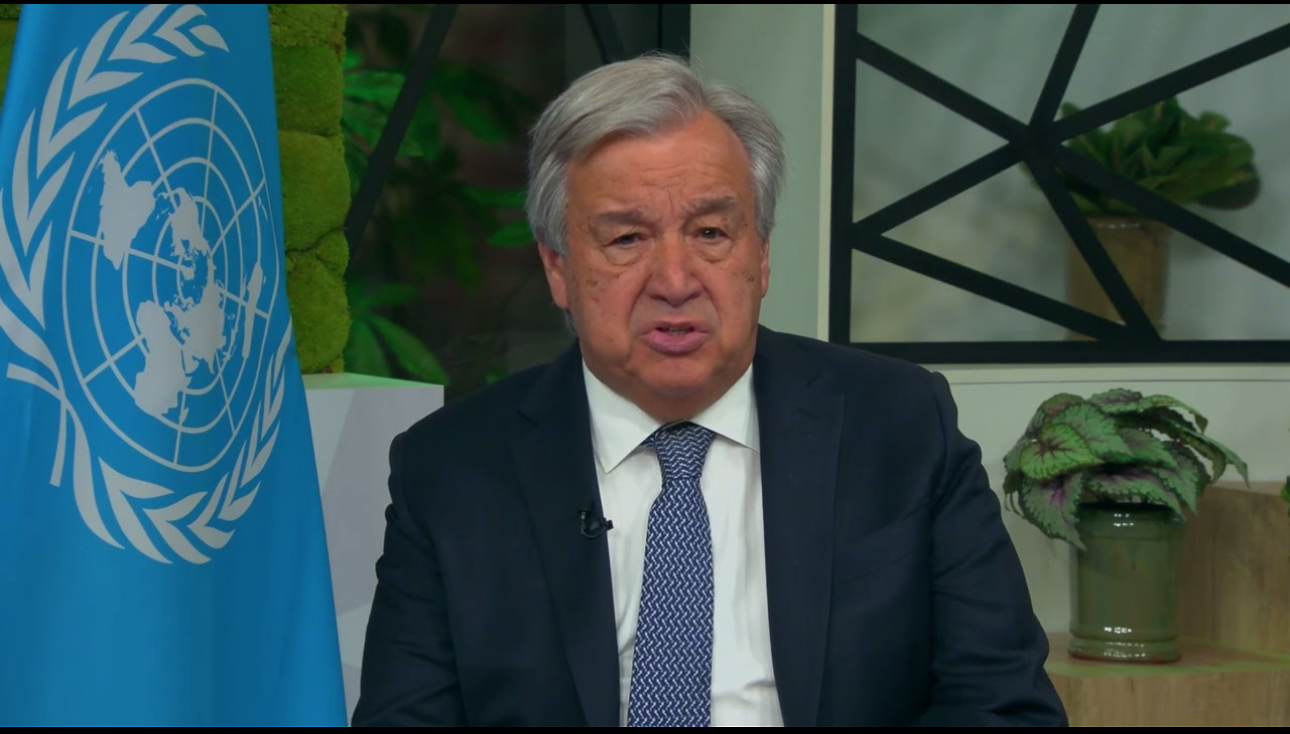
United Nations Secretary-General António Guterres has marked World AIDS Day with a message urging world leaders to scale up investment, confront stigma and ensure that lifesaving HIV services reach everyone who needs them.

In his statement, Guterres said this year’s commemoration serves as a reminder that the world “has the power to transform lives and futures, and end the AIDS epidemic once and for all.”

He highlighted the major gains achieved over the past decade.

“The progress we have made is undeniable,” he said, noting that “since 2010, new infections have fallen by 40 per cent” while “AIDS-related deaths have declined by more than half.” Access to treatment, he added, “is better than ever before.”

But despite this global progress, the Secretary-General warned that the crisis is far from over.

“For many people around the world, the crisis continues,” he said. “Millions still lack access to HIV prevention and treatment services because of who they are, where they live or the stigma they endure.”

Guterres also raised concern over shrinking resources:

“Reduced resources and services are putting lives at risk and threatening hard-won gains.”

He said ending AIDS requires fully supporting communities, scaling up prevention and ensuring treatment for everyone.

“Ending AIDS means empowering communities, investing in prevention and expanding access to treatment for all people.”

He also called for innovation to be matched by real-world delivery:

“It means uniting innovation with action, and ensuring new tools like injectables reach more people in need.”

Above all, he stressed the need for a human-rights centred response so no one is excluded.

“At every step, it means grounding our work in human rights to ensure no one is left behind.”

With the 2030 global deadline approaching, the UN chief said success is still possible if momentum is sustained.

“Ending AIDS as a public health threat by 2030 is within grasp. Let’s get the job done.”


Continue Reading

National

Zimbabwe fast-tracks approval of long-acting HIV prevention drug Lenacapavir

Published

on

BY WANDILE TSHUMA

Zimbabwe has taken a major step in the fight against HIV following the rapid approval of Lenacapavir, a groundbreaking long-acting injectable for HIV pre-exposure prophylaxis (PrEP). The Medicines Control Authority of Zimbabwe (MCAZ) authorised the drug in just 23 days, marking one of the fastest regulatory approvals in the country’s history.

The application, submitted by pharmaceutical company Gilead Sciences in October, underwent an expedited review because of its public health importance. MCAZ says the fast-tracked process did not compromise scientific scrutiny, with the product subjected to a rigorous assessment of its safety, efficacy and quality.

Lenacapavir is designed for adults and adolescents weighing at least 35kg who are HIV-negative but at substantial risk of infection. Unlike traditional daily oral PrEP, the medicine is administered as a six-monthly injection, following an initiation phase that includes one injection and oral tablets on Days 1 and 2. Health authorities say this long-acting formulation could dramatically improve adherence and expand prevention options, particularly for communities where daily pill-taking is difficult.

MCAZ Director-General  Richard T. Rukwata described the approval as a landmark moment in Zimbabwe’s HIV response.

“The rapid approval of Lenacapavir reflects MCAZ’s dedication to accelerating access to trusted, high-quality health products. This milestone brings new hope for HIV prevention and reinforces our commitment to safeguarding public health,” he said.

To fast-track the process, the Authority applied a regulatory reliance approach, drawing on scientific assessments from the World Health Organization’s Prequalification Programme (WHO PQ). This allowed evaluators to build on internationally recognised review processes while ensuring Zimbabwe’s own standards were met.

The introduction of Lenacapavir comes as Zimbabwe continues efforts to reduce new HIV infections, particularly among young people and key populations who face barriers to consistent PrEP use. Public health experts say the drug’s twice-yearly dosing could be a game changer in improving uptake and protection.

MCAZ says it remains committed to ensuring Zimbabweans have access to safe, effective and good-quality medical products, in line with its mandate under the Medicines and Allied Substances Control Act.

Continue Reading

National

Zimbabwe makes gains against TB

Published

on

BY WANDILE TSHUMA

The World Health Organization (WHO) data show that Zimbabwe continues to make measurable gains in its fight against tuberculosis (TB).

According to the Global Tuberculosis Report 2025, Zimbabwe’s estimated TB incidence has declined to 203 per 100,000 population, representing a 3.8 % reduction from 2023. The report states that “TB incidence in Zimbabwe has fallen to 203 per 100 000, a 3.8 % reduction from 2023.” 

On treatment outcomes, the country’s overall success rate for all forms of TB has improved to 91 %, up from 89 % in 2023. The report quotes: “Treatment success for all forms of TB has improved to 91 %, up from 89 % in 2023.” 

For drug-resistant TB (DR-TB), progress has also been recorded: treatment success rose from 64 % for the 2021 cohort to 68 % for the 2022 cohort. As the report notes: “treatment success for drug-resistant TB increased from 64 % for the 2021 cohort to 68 % for the 2022 cohort.” 

In the critical sphere of TB‐HIV co-infection, Zimbabwe saw a drop in the co‐infection rate to 49 %, down from 51 %. The report states: “TB/HIV co-infection rates have fallen to 49 %, down from 51 %.” 

Zooming out, the 2025 global report shows that across the world TB is falling again, although not yet at the pace required to meet targets. Globally, incidence declined by almost 2 % between 2023 and 2024, and deaths fell around 3 %. 

However, the report warns that progress is fragile. Funding shortfalls, health-system disruptions (especially during the COVID-19 era), and the ongoing challenge of drug-resistant TB threaten to erode gains. The WHO page reminds that the 2025 edition “provides a comprehensive … assessment of the TB epidemic … at global, regional and country levels.” 

For example, although more people are being diagnosed and treated than in previous years, not enough are being reached with preventive interventions, and many countries are still far from the targets set under the End TB Strategy.


Continue Reading

Trending

Copyright © 2022 VicFallsLive. All rights reserved, powered by Advantage