Connect with us

Slider

Victoria Falls based lawfirm donates football kits to Division Two teams

Published

on

BY NOKUTHABA DLAMINI 

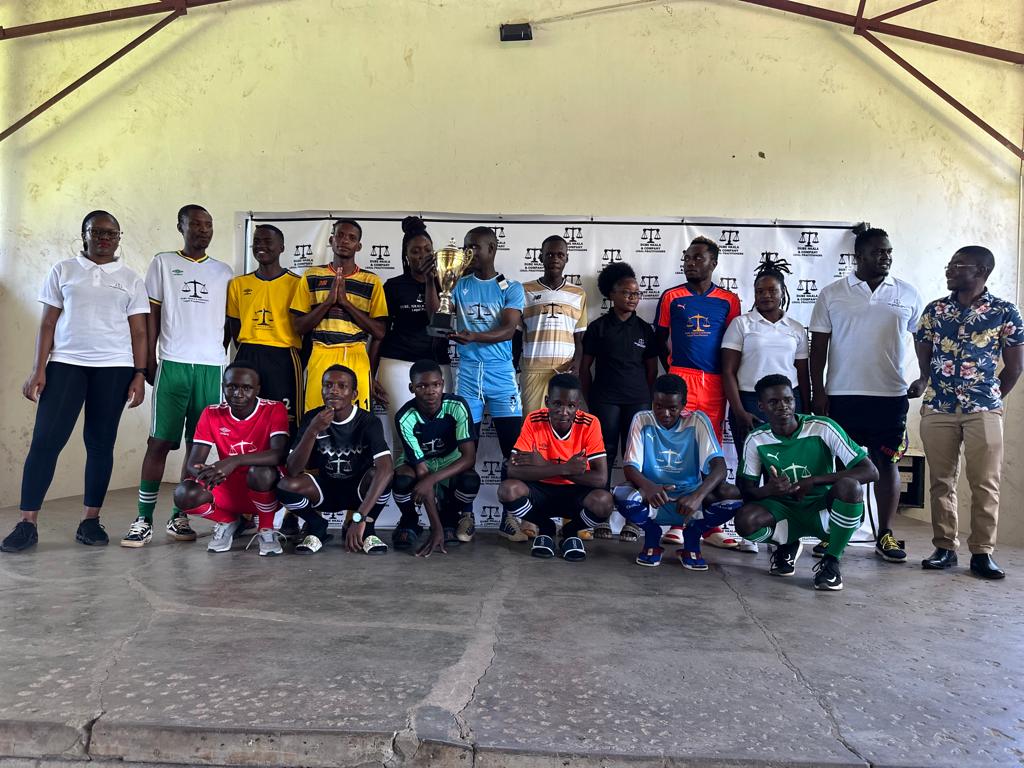
A Victoria Falls based law firm has donated football kits to twelve Division Two soccer players in Hwange West district in an effort to fight drugs and substance abuse among youths in the communities. 

Advertisement

According to the law firm’s director Thulani Nkala, of Dube Nkala & Company Legal Practitioners, the donation aims to promote a healthy society where teenagers can engage in sports even after school. 

Division Two falls under the Zimbabwe Football Association and it comes after Division One which is also below the premier league.
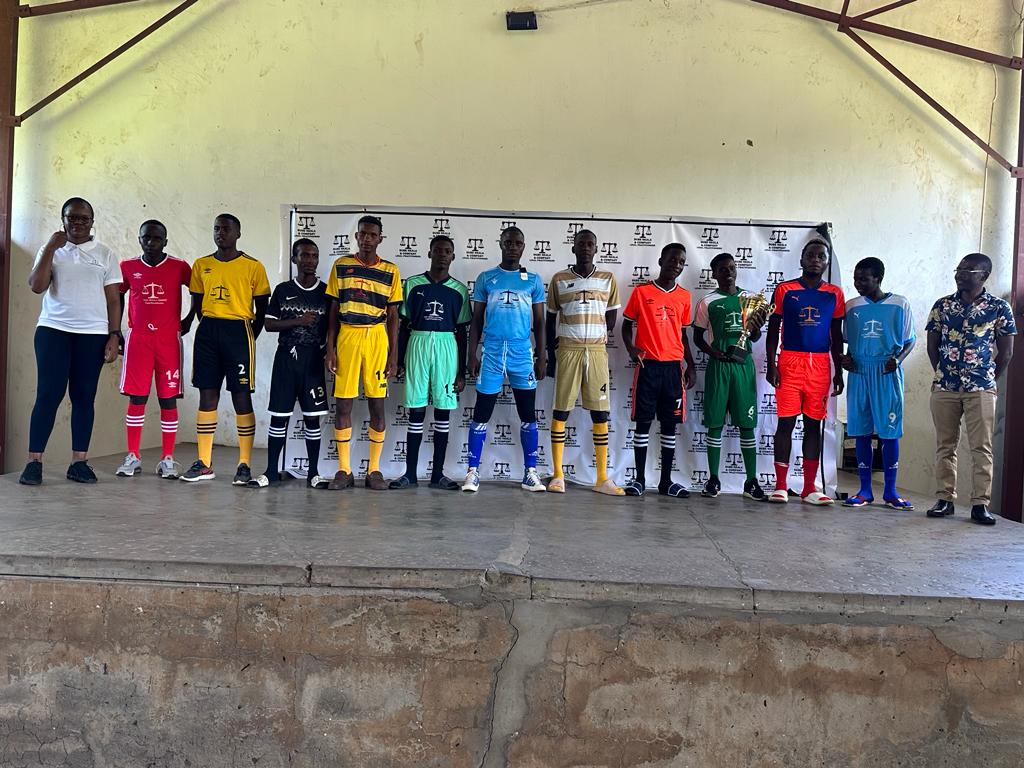
“As you are all aware that drugs are causing problems in our town, we felt that we can make a difference to counter this by donating some football kits and other equipment for our youths to use as they play,” Nkala said. 

Advertisement

“We hope that this will be an ongoing partnership, but for now we will only be sponsoring for this upcoming season which is about to start and we shall renew as the next seasons approach on condition that we have mutual understanding which is based on respect because we will not want a situation where teams fight each one another.”

He said apart from the kits and trophy, the teams will play for a prize money at the end of the season.
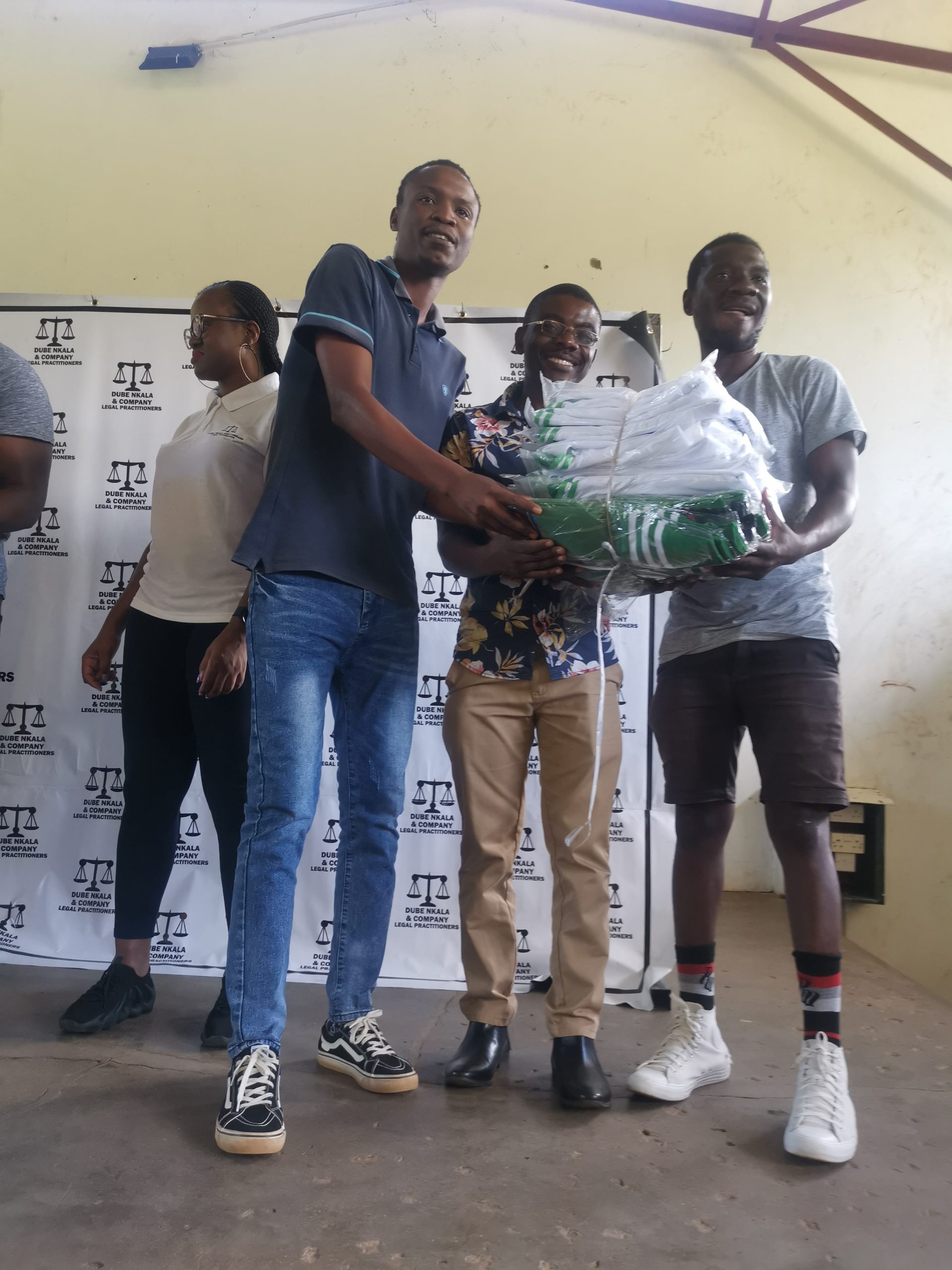
Zimbabwe Football Association (ZIFA) Matabeleland North provincial acting chairman Clevious Ncube said the gesture will go a long way in nurturing young talents in the Division Two league, whom most of them are school going children and teenagers.

Advertisement

Prosper Neshavi, provincial ZIFA board member, lamented lack of interest in football sponsorship even at national level.

He said this has been part of the reasons why the country has been kicked out of the Federation Internationale  Football Association (FIFA). 

FIFA President Giovanni Infantino last year said the association had to suspend Zimbabwe and Kenya for government interference in the activities of the football associations. 

Advertisement

“They know what needs to be done for them to be readmitted or for the suspension to be lifted. “Infantino said last year. 

Meanwhile, as part of efforts to introduce sports tourism in Victoria Falls, tourism operators and other sports officials have joined hands to form a committee that will spearhead the allocation of land by the Victoria Falls City Council for sporting activities such as the football, tennis, boxing and rugby among other sporting disciples. 

This was revealed by the committee chairperson Mthabisi Ncube who lamented lack of sporting facilities in the city. 

Advertisement

He revealed that through their negotiations with the council, a certain portion of land has been set aside for the project. 


Their end goal is to see the town hosting local and international teams, which will inturn boost the country’s tourism GDP. 

Advertisement

“As we say that we are the tourism capital of Zimbabwe and possibly the better capital of Africa and we fail to have a 10 000 seater stadium,” he said. 

“We can not fail to host training matches such as the rugby, football where teams such as the Kaizer Chiefs Football Club can decide to come to Victoria Falls as they prepare ahead of the season, so their coming will help us a lot because all the businesses from accomodation to the salons and vegetable vendors will benefit from their presence, but it cannot happen when we do not have the facilities. 

“Our vision is to have a complex where we can host international games, international meetings for cricket, rugby, tennis. We want to be like what Capetown (South Africa) does where they have no free weekend in arts and sporting activities.”
Advertisement


Advertisement
Continue Reading
Click to comment

Leave a Reply

Your email address will not be published. Required fields are marked *

Slider

Southern Africa’s Sustainable Use Coalition slams CITES CoP20 decisions as “punishing success” and “killing with kindness”

Published

on

BY NOKUTHABA DLAMINI 

The Sustainable Use Coalition Southern Africa (SUCo-SA) has issued two strongly worded statements criticising decisions made at the CITES CoP20 conference in Uzbekistan, accusing Parties of undermining conservation success in southern Africa and ignoring evidence from range states.

Advertisement

In the first statement, SUCo-SA Vice Chair and the Confederation of Hunters Association of South Africa CEO Stephen Palos condemned the vote rejecting a proposal to remove the abundant southern giraffe from Appendix II. The proposal received 49 votes in favour, 48 against and 38 abstentions — including the 27-member EU bloc — falling short of the two-thirds majority required.

Palos called the outcome “yet another travesty of justice at the CITES CoP,” arguing that the decision reflects “a world dominated by an emotion before science philosophy in conservation.”

He singled out opposition from several African countries, saying:

Advertisement

“The most vocal objections made came from African countries with shocking records in conservation… where poaching, conflict, poverty, and desperation have decimated their wildlife, and now sell their souls to global anti-use/animal-rightist NGOs.”

Palos said the Chair “overlooked Eswatini and allowed none of the observer organisations an opportunity to speak,” forcing South Africa to call for a vote despite having “superbly presented” the proposal.

According to SUCo-SA, evidence showed that southern giraffe populations in Angola, Botswana, Eswatini, Malawi, Mozambique, South Africa, Zambia and Zimbabwe are “overwhelmingly increasing, with only one population reported as stable, and not a single population showing decline.”

Advertisement

The statement said this success is the result of “decades of effective national legislation, management frameworks, investment by private and community custodians, and sustainable-use incentives.”

But SUCo-SA argues that countries with no giraffe populations or poor conservation performance are influencing decisions that harm nations managing wildlife successfully.

“Once again, CITES (Convention on International Trade in Endangered Species of Wild Fauna and Flora) has managed to punish success and reward failure in conservation. And real people in southern Africa pay the price in hunger and deprivation.”

Advertisement

SUCo-SA: CITES Parties “killing with kindness” on rhino horn and ivory

In a second statement titled “CITES Parties Killing with Kindness at CoP20 – Rhino Horn & Ivory,” the SUCo-SA Executive criticised what it described as a predictable pattern where CITES Parties praise southern African conservation results while refusing to support related proposals.

The coalition said:

Advertisement

“They start by congratulating southern African range states for their ‘outstanding successes’… And then, without pause, they immediately announce that they will not support the proposal.”

The statement argued that many countries rejecting downlisting proposals come from regions where rhino or elephant populations have “collapsed or are entirely absent,” and that 47 years of trade bans and demand-reduction campaigns have failed.

“If 47 years of demand-reduction campaigns and trade bans have not saved rhino or elephants, at what point do we acknowledge that this approach is not working?” the coalition asked.

Advertisement

The statement questioned the positions of the EU, UK and USA, asking why they continue to “punish African conservation successes while rewarding failures” and why they “elevate the views of non-range states and discount the data, management systems, and lived realities of the countries that actually protect these species on the ground.”

According to SUCo-SA, southern African countries deserve practical support, not diplomatic praise that leads to policy obstruction.

“In the most diplomatic but patronising manner, southern African countries are told, in effect, to ‘go to hell, but enjoy the trip.’ This is what we mean when we say they are killing with kindness.”

Advertisement

The coalition said African states are “not asking for applause; they are asking for recognition of proven results” and the policy space to continue what works.

The statement concludes with a challenge to the global convention:

“CITES must decide whether it wants to remain a forum guided by evidence and sovereignty, or one led by political theatre and external pressure. The future of rhino and elephant conservation depends on that choice.”

Advertisement

Continue Reading

In the community

Hwange man sentenced to 40 years for raping two minors

Published

on

BY STAFF REPORTER

A 32-year-old man from Victoria Falls has been convicted by the Hwange Magistrates’ Court and sentenced to 40 years imprisonment  for raping two minors.

Advertisement

The man, whose name has been hidden to protect the image of the victims was being tried by the prosecutors on two counts of rape leading to the conviction.

The court heard that the accused committed the offences against two young female juveniles, aged nine 10 years old who are sisters on the 25th of September this year.

“The offender who was at his place of residence called the victims who were going to school to come to his place of residence to collect baobab fruits,” the National Prosecuting Authority said in a statement.

Advertisement

“They both got into the offender’s place of residence and the offender instructed the victims to get into his bedroom hut.

The victims complied and the offender followed them into his bedroom and closed the door from inside and raped them.”

The matter came to light on the same day when a relative informed the victim’s grandmother and father that she saw the victims leaving the offenders bedroom and they revealed what had transpired, leading yo his arrest.

Advertisement

Continue Reading

National

World AIDS Day: UN Chief says ending AIDS by 2030 “is within grasp”

Published

on

BY SONIA HLOPHE

United Nations Secretary-General António Guterres has marked World AIDS Day with a message urging world leaders to scale up investment, confront stigma and ensure that lifesaving HIV services reach everyone who needs them.

Advertisement

In his statement, Guterres said this year’s commemoration serves as a reminder that the world “has the power to transform lives and futures, and end the AIDS epidemic once and for all.”

He highlighted the major gains achieved over the past decade.

“The progress we have made is undeniable,” he said, noting that “since 2010, new infections have fallen by 40 per cent” while “AIDS-related deaths have declined by more than half.” Access to treatment, he added, “is better than ever before.”

Advertisement

But despite this global progress, the Secretary-General warned that the crisis is far from over.

“For many people around the world, the crisis continues,” he said. “Millions still lack access to HIV prevention and treatment services because of who they are, where they live or the stigma they endure.”

Guterres also raised concern over shrinking resources:

Advertisement

“Reduced resources and services are putting lives at risk and threatening hard-won gains.”

He said ending AIDS requires fully supporting communities, scaling up prevention and ensuring treatment for everyone.

“Ending AIDS means empowering communities, investing in prevention and expanding access to treatment for all people.”

Advertisement

He also called for innovation to be matched by real-world delivery:

“It means uniting innovation with action, and ensuring new tools like injectables reach more people in need.”

Above all, he stressed the need for a human-rights centred response so no one is excluded.

Advertisement

“At every step, it means grounding our work in human rights to ensure no one is left behind.”

With the 2030 global deadline approaching, the UN chief said success is still possible if momentum is sustained.

“Ending AIDS as a public health threat by 2030 is within grasp. Let’s get the job done.”

Advertisement


Advertisement
Continue Reading

Trending

Copyright © 2022 VicFallsLive. All rights reserved, powered by Advantage