Connect with us

National

US$2 000 limit now in effect for departing travelers

Published

on

BY WANDILE TSHUMA

Zimbabwe has introduced a new regulation that limits the amount of US dollars travelers can take out of the country.

Advertisement

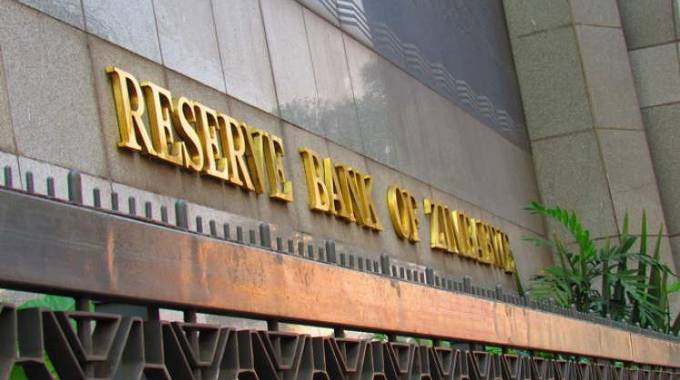
The new law, which was introduced by the Reserve Bank of Zimbabwe (RBZ) last month, reduces the maximum amount of US dollars that travelers can carry from US$10 000 to US$2 000.

This change is aimed at curbing the externalization of funds and maintaining foreign currency reserves, in an effort to stabilize the country’s economy.

The Bankers Association of Zimbabwe (BAZ) has warned that this restriction could disrupt the informal import trade sector, a key source of employment in Zimbabwe.

Advertisement

Despite these concerns, the government has proceeded with the enactment of the new regulation, which has come into effect immediately.

Travelers departing Zimbabwe are now required to adhere to the US$2 000 limit without the need for further authorization, or risk penalties under the Exchange Control Regulations.

The new regulation is part of ongoing efforts to regulate currency flows and stabilize the country’s economy.

Advertisement

It alters the rules governing currency export from Zimbabwe and sets new limits on the amount of both Zimbabwean currency and foreign currency travelers can carry without special authorization.

According to the amendment, the maximum amount of foreign currency that can be taken out of the country is now capped at US$2 000 or its equivalent in other currencies.

The BAZ has raised concerns about the potential economic impact of the regulation, warning that it could lead to a reduction in externalization of funds and disruption in informal import trade.

Advertisement


Advertisement
Continue Reading
Click to comment

Leave a Reply

Your email address will not be published. Required fields are marked *

National

Government to equip Mpilo Hospital with radiotherapy machines funded by sugar tax initiative

Published

on

BY WANDILE TSHUMA 

Patients in Matabeleland North who rely on specialized care in Bulawayo are set to benefit from a major upgrade in cancer treatment facilities, as the government begins deploying equipment funded by the national sugar tax.

Advertisement

The Deputy Minister of Health and Child Care, Sleiman Timios Kwidini, confirmed to Parliament that the Treasury has released approximately $30.8 million to procure critical radiotherapy machines. Two low-energy units are earmarked for the country’s major referral centers, specifically Mpilo Central Hospital in Bulawayo and Parirenyatwa Hospital in Harare.

Advanced payments have been made to suppliers, and the government confirmed that installation is currently in progress alongside the preparation of specialized treatment bunkers. Kwidini described the move as a significant milestone intended to reduce patient waiting times and the costly need for referrals to facilities outside the country.

However, the announcement met with sharp criticism from lawmakers who argued the ministerial update lacked sufficient detail regarding the total revenue collected and the specific types of equipment purchased.

Advertisement

Surrender Kapoikilu led the debate, questioning whether the ministry had secured essential components like linear accelerators and diagnostic tools like endoscopes. He warned that without adequate surge protection, the high-tech equipment remains at risk from power fluctuations. “ZESA currents have many surges,” Kapoikilu said. “If you just plug it in, in five minutes, a machine is gone”.


He emphasized that effective treatment must begin with proper diagnosis, stating, “If you cannot diagnose cancer, you cannot conquer”.

Advertisement

The discussion expanded to include the dire state of basic patient care, with Corban Madzivanyika pointing out that referral centers often lack fundamental tools. “You get to the hospital and you are told that there is no wheelchair,” Madzivanyika told the House, describing the shortage of stretchers and wheelchairs as embarrassing.

Responding to the concerns, the Acting Speaker, Joseph Tshuma, directed the ministry to defer the matter and return with a more comprehensive dossier detailing the expenditure and the availability of essential medicines.


Advertisement

Continue Reading

National

Parliament weighs 40% community share in carbon credit deals

Published

on

BY NOTHANDO DUBE

Lawmakers in Zimbabwe are debating a comprehensive Climate Change Management Bill that supporters say will finally ensure rural communities are no longer “mere spectators” in the multi-billion dollar carbon credit industry.

Advertisement

The Bill, which moved into its second reading, seeks to regulate carbon trading and protect the country’s natural resources from foreign exploitation.

Mutsa Murombedzi delivered a passionate plea for the legislation, arguing that it is a matter of “justice, survival and the dignity of our people”. “Climate change is not a distant stone,” Murombedzi told the House. “It is the flood that we see in Chimanimani, which sweeps away our schools… the heatwave that scotches our communities in Hwange, one silent drought that empties our granaries”.

A major point of contention and hope is the proposed 40% community share in carbon projects. Lawmakers argued that previous projects often left locals with nothing but “tsotso stoves or bicycles” while profits were “repatriated back to their countries, particularly those from the global north”.

Advertisement

Master Makope applauded the move to bring transparency to a sector where deals were often done “without the knowledge of the authorities”.

“By having this policy framework, I believe our people are going to benefit,” Makope said.

“The Minister has to make sure that the villagers, the communities, should also have easy access to registration of their own projects because they are the ones who own these forests”.

Advertisement

The debate also focused on the establishment of a National Climate Fund.

Susan Matsunga insisted on rigorous oversight, suggesting a biennial reporting cycle to Parliament to ensure progress is measurable. “This is about building a culture of transparency that ensures our climate goals are not just promises on paper but measurable achievements,” Matsunga stated.

Murombedzi added that “Climate finance must not vanish into corridors in Harare; it must flow to the ward level where resilience is built”.

Advertisement

Continue Reading

National

Zim’s backyard pharmacies boom as economic crisis bites

Published

on

BY VANESSA GONYE

Health experts have expressed growing concern over the emergence of illegal herbal creams and unregulated drug sales on the streets of Harare and throughout Zimbabwe.

Advertisement

A disturbing increase in the presence and sale of unregulated medicines is bedeviling the country, with worry rising over the dangerous outcomes associated with these products.

In recent years, the capital has witnessed a sharp rise in informal drug outlets commonly referred to as “backyard pharmacies”.

 These unlicensed operations are often run from residential homes, tuckshops, market stalls, or simply from blankets laid on busy pavements.

Advertisement

In recent years, the capital has witnessed a sharp rise in informal drug outlets commonly referred to as “backyard pharmacies”.

 These unlicensed operations are often run from residential homes, tuckshops, market stalls, or simply from blankets laid on busy pavements.

Surveys reveal that these backyard pharmacies operate without any quality control, cold chain storage, or professional oversight.

Advertisement

Some of the drugs may be counterfeit, expired, adulterated, or incorrectly labelled.

Itai Rusike, the executive director of the Community Working Group on Health (CWGH), expressed alarm over the proliferation of these vendors, noting the trend puts patients’ health and safety at serious risk.

“The challenge is and has always been the gap in communicating the dosage schedule and indication for treatment,” Rusike said.

Advertisement

“There is no accreditation or regulation of the practitioners, their practice, nor their premises, as is done for registered pharmacists trained in conventional medicine”.

Rusike also highlighted a dangerous lack of scientific data: “There is generally a lack of clinical trials, scientific data and evidence to support the efficacy of street medicines, despite some claims from treated individuals”.

He called for widespread health and treatment literacy programmes to stop citizens from “taking wild gambles” with their health.

Advertisement

Rusike urged that: “the regulatory authorities should also be seen to effectively apply the laws regulating the sale of medicines in the country and protecting the health and safety of the general public without fear or favour”.

Johannes Marisa, president of the Medical and Dental Private Practitioners of Zimbabwe, echoed these concerns, stating that selling drugs from unregulated places is a major threat to public health.

“When we are talking of public health, we become very worried when we see drugs being sold everywhere,” Marisa said.

Advertisement

He warned that counterfeit drugs can create a “false belief that you are recovering from something, yet you are taking a counterfeit drug, which does not work”.

He added that such practices prolong infections and increase both morbidity and mortality.

The trend is largely driven by economic hardships that have made formal healthcare unaffordable for many, alongside high unemployment that has pushed individuals into pharmaceuticals as a lucrative vending commodity.

Advertisement

The Medicines Control Authority of Zimbabwe (MCAZ) has repeatedly warned that these unregistered products pose significant risks, including kidney and liver damage, high blood pressure, and increased cancer risk.

In response, the government has introduced stiffer penalties, with offenders now facing up to 20 years in prison.

SOURCE: THE STANDARD

Advertisement

Continue Reading

Trending

Copyright © 2022 VicFallsLive. All rights reserved, powered by Advantage