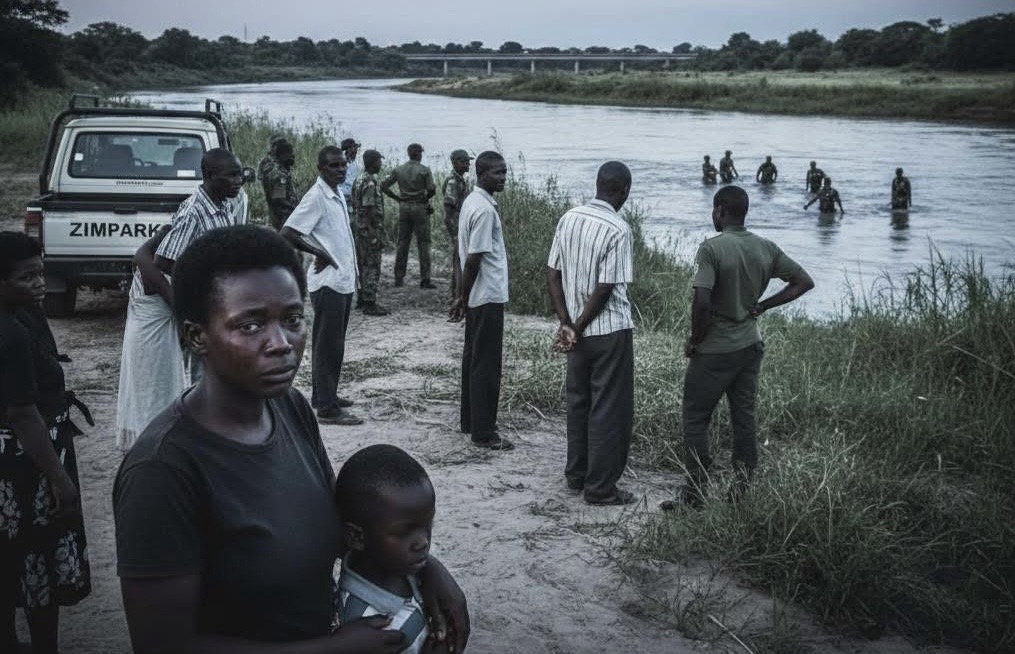
Zimbabwe will on Thursday, this week, join the rest of the world in commemorating the International Day for Disaster Risk Reduction (IDDR), with national events set to take place at Tshino Primary School in Ward 5, Tsholotsho District, along the Tsholotsho–Sipepa road.
Advertisement
The global day, observed annually, aims to promote a culture of disaster risk awareness and highlight efforts to reduce vulnerability and build resilience in communities.
Speaking to VicFallsLive, Civil Protection Unit Director Nathan Nkomo said this year’s commemoration holds special significance for Tsholotsho, a district that has long struggled with recurrent flooding.
“The whole issue is to reduce, not to increase the occurrence of disasters. And by commemorating, that’s where we share ideas with other people,” Nkomo said.
Advertisement
He noted that Tsholotsho’s selection as the national host was deliberate, following the successful relocation of families who were affected by flooding at the confluence of the Gwai and Shashani rivers.
“It’s not by accident that we are commemorating in Tsholotsho. We have built 305 houses for people who were affected in the Spepa area, and we will be celebrating in style because we have managed to relocate them,” he said.
“Now we no longer hear of people being flooded in Tsholotsho because of that relocation. So, we will be celebrating in style for Tshini and Sawudweni.”
Advertisement
The relocations, carried out under government’s disaster recovery and housing programs, have been hailed as a success story in proactive disaster risk management.
Looking ahead to the cyclone season, Nkomo said funding remains the major challenge in preparedness and response.
“We cannot preempt to say there are challenges yet, but historically, since we’ve dealt with COVID-19 and Cyclone Idai, the issue of funds has always been critical,” he said.
Advertisement
“This year, we are dealing with cyclones at a time when even our development partners have dwindling resources. So, funding will take centre stage in our deliberations, to see how best we can respond with the little we have. The whole idea, when you go to war, is not the question of numbers, but of strategy and how to win.”
The International Day for Disaster Risk Reduction is observed globally every October 13, but Zimbabwe’s national commemorations are being held later this year to align with local preparedness programs and community-based activities.
Advertisement
Powered by ikigai Africa
· Questions generated automatically from this article
Zimbabwean lawmakers on Thursday clashed over proposals to extend presidential and parliamentary terms from five to seven years and replace direct presidential elections with an Electoral College system, as debate on the Constitution of Zimbabwe Amendment (No. 3) Bill continued in the National Assembly.
Advertisement
Supporters of the Bill argued that longer terms would provide governments with enough time to implement development programmes and reduce political uncertainty.
Mkoba North legislator Edgar Ncube said the current five-year cycle was too short to deliver meaningful transformation.
“You cannot plant a tree on Monday and harvest its shade by Friday,” Ncube told Parliament. “Five years is too short to conceive, implement and entrench transformative national development.”
Advertisement
Moses Mudzingwa supported the proposal, arguing that frequent elections kept the country in a perpetual campaign mode that discouraged long-term investment.
Opponents, however, said elected officials should not alter constitutional provisions in ways that could weaken public oversight.
Martin Mureri argued that authority rests with voters and cannot be extended without their consent.
“If a headman gives you four acres of land, you cannot wake up and make them eight acres,” Mureri said. “The employers are the people of Zimbabwe.”
Advertisement
One of the debate’s most memorable interventions came from Goodrich, who used a football analogy to oppose extending terms of office.
“If Scotland is playing Caps United and the match is set for 90 minutes, when the 90 minutes are over you do not ask for another 30 minutes because you are playing well,” Chimbaira said.
The Bill’s proposal to have the president elected by an Electoral College comprising members of Parliament and senators also drew sharp divisions.
Advertisement
Others defended the proposal, saying it could help reduce political tensions associated with disputed elections.
“We do not want our students to be exposed to election toxicity,” Ziyambi said, adding that indirect elections could contribute to national stability.
Supporters pointed to countries such as Botswana, India and Germany as examples of parliamentary democracies that elect leaders indirectly.
Advertisement
Opposition legislators rejected the argument, saying the proposal would erode democratic gains secured through the liberation struggle.
Lynette Karenyi-Kore said the principle of “one man, one vote” should remain central to Zimbabwe’s political system.
“The ideals of the liberation struggle were built around one man, one vote,” Karenyi-Kore said. “The people of Chikanga are not asking for constitutional engineering. They are asking for bread, jobs and affordable education.”
Advertisement
The role of traditional leaders in politics also emerged as a contentious issue.
Samson Matema argued that chiefs should be allowed to participate openly in political affairs.
“The liberation struggle was fought over land, and the owners of the land are the chiefs,” Matema said.
Advertisement
Omega Sibanda Jaravaza voiced support for the Bill in spiritual terms, saying he believed liberation icons Mbuya Nehanda and Sekuru Kaguvi would approve of the proposed changes.
But Taurai Dexter Malinganiso warned that allowing chiefs to become active political actors could undermine the neutrality that gives traditional leaders legitimacy.
“When chiefs enter the political arena and join the mudslinging, they risk losing the moral authority that has sustained their institutions for generations,” Malinganiso said.
Advertisement
Despite divisions over most provisions of the Bill, lawmakers from different sides of the House found common ground on the future of the Zimbabwe Gender Commission.
Tsitsi Buka said the commission had become a critical institution for advancing women’s participation in public life and warned against proposals to merge it with the Zimbabwe Human Rights Commission.
“It is a shield for women and a source of assistance,” Buka said.
Advertisement
Sibongile Ndlovu echoed those concerns, saying many women serving in Parliament had benefited from the commission’s support and mentorship programmes.
Debate adjourned shortly before 8 p.m. after Justice Minister Ziyambi Ziyambi moved for proceedings to continue on Friday.
Advertisement
Powered by ikigai Africa
· Questions generated automatically from this article
Zimbabwe’s parliament was locked in a heated debate on Wednesday over a proposed constitutional amendment that would scrap direct presidential elections and extend the terms of office for the president, parliament and local authorities from five to seven years.
Advertisement
The Constitution of Zimbabwe Amendment (No. 3) Bill [H.B. 1, 2026] proposes that future presidents be elected by parliament rather than through a direct vote by citizens.
Opposition legislators strongly opposed the proposals, arguing that the changes would weaken democratic participation and erode constitutional rights.
MP James Chidhakwa described the bill as fundamentally undemocratic, arguing that legislators were elected to represent the people rather than replace their choices.
Advertisement
“We were indeed elected by the people to represent the people and not to substitute our judgment for theirs,” he told the National Assembly. “Sovereignty resides in the citizens of Zimbabwe and leadership renewal must come through elections, not through arithmetic in this House.”
Questioning the need to lengthen political terms,Chidhakwa challenged the government’s justification that additional time was required to achieve development goals.
“Do we honestly need an extra two years to balance the budget? Do we need another two years to close our porous borders…?” he asked.
Advertisement
Richard Madzivanyika, MP for Chikanga, argued that the proposal conflicted with constitutional provisions guaranteeing citizens the right to vote in elections. He said removing the direct election of the president would undermine those rights.
Madzivanyika also warned that electing a president through parliament could create opportunities for corruption.
“An MP getting USD275 per month can easily be bribed with USD200 000,” he said.
Advertisement
Other legislators raised concerns about provisions allowing traditional leaders to participate in partisan politics and the proposal to merge the Zimbabwe Gender Commission with the Zimbabwe Human Rights Commission.
John Kuka, MP for Mkoba South, argued that political involvement by chiefs could undermine public trust in their leadership.
“Once a chief becomes politically aligned, community members will lose confidence in his or her ability to act fairly and impartially,” he said.
Advertisement
Justice, Legal and Parliamentary Affairs Minister Ziyambi Ziyambi defended the bill, saying constitutions must evolve to meet changing national circumstances.
He described constitutions as living instruments that should respond to prevailing realities and argued that longer terms would promote policy continuity and reduce election-related expenditure.
“Frequent election cycles often result in Governments spending substantial periods preparing for elections rather than focusing on implementation,” Ziyambi said.
Advertisement
Supporters of the bill said longer terms would provide greater certainty for investors and allow government more time to implement development programmes.
Farai Jere, MP for Murewa West, said investors often adopt a wait-and-see approach ahead of elections, delaying major investments.
Fortune Murechu, MP for Nkulumane, likened the country’s development trajectory to an aircraft that was “cruising nicely”, arguing that election cycles risked disrupting economic progress.
Advertisement
Some supporters also drew on religious arguments. Some said said the number seven symbolised purity and perfection in the Bible and suggested that seven-year terms could bring victory and restoration.
The lengthy debate was marked by frequent points of order and interruptions. At one stage, the Speaker called for medical assistance after a member became unwell during proceedings.
The bill also proposes allowing the President to appoint 10 senators based on academic and professional expertise. Another MP supported the proposal, saying it could strengthen policymaking and assist government in addressing national challenges.
Advertisement
The House adjourned at 7:14 p.m. without concluding debate on the bill.
While ZANU-PF legislators argued that the proposed changes would improve governance and allow more resources to be directed towards service delivery, opposition members maintained that the amendment represented an attempt to weaken democratic accountability.
Debate on the bill is expected to continue today.
Advertisement
Powered by ikigai Africa
· Questions generated automatically from this article
Opposition and independent Members of Parliament mounted a vigorous defence of Zimbabwe’s 2013 Constitution on Tuesday, warning that proposed constitutional amendments could centralise power, weaken democratic safeguards and undermine gains achieved through years of constitutional reform.
Advertisement
Debate on the Constitution of Zimbabwe Amendment (No. 3) Bill saw legislators challenge both the substance and intent of several proposed changes, including the extension of terms of office, changes to the presidential election system and the restructuring of constitutional commissions.
Agency Gumbo, the CCC MP for Hatcliffe and a legal practitioner, delivered one of the strongest criticisms of the Bill, arguing that constitutions exist primarily to restrain those in power rather than expand their authority.
“The Constitution exists for one fundamental purpose: to limit power, distribute power and to make power accountable to the people,” Gumbo said during debate.
Advertisement
He warned that Zimbabwe’s democratic future depended on strengthening institutions rather than extending the tenure of political office holders.
“Strong nations are built by strong institutions, not by extended incumbents,” he said.
Another contentious proposal involved plans to abolish the Zimbabwe Gender Commission as a stand-alone body and merge it with the Zimbabwe Human Rights Commission.
Advertisement
Susan Matsunga, the CCC MP for Budiriro North, strongly opposed the proposal, arguing that women and vulnerable groups would lose an important institution dedicated to addressing gender-based discrimination and violence.
“I do not agree that we should dismantle the Gender Commission. Who is going to stand up for the girl child and women and who will come up with a database of rapists in our area?” Matsunga asked.
Opposition legislators argued that the commission performs a specialised role that cannot easily be absorbed into a broader human rights institution.
Advertisement
Edwin Mushoriwa, the CCC MP for Dzivaresekwa, accused the government of pursuing constitutional changes designed primarily to preserve political power rather than address the everyday concerns of citizens.
“This Bill is about one thing and one thing alone, which is the accumulation and the preservation of political power,” Mushoriwa said.
He also criticised proposals that would allow Parliament to elect the President, arguing that such a move would remove a key democratic right from ordinary Zimbabweans.
Advertisement
“The people are told they can no longer be trusted to elect their President. Politicians will decide. Really?” he asked.
Concerns were also raised over proposals affecting electoral administration.
Gladys Hlatywayo, the CCC MP for Kuwadzana East, criticised suggestions that responsibility for the voters’ roll be moved from the Zimbabwe Electoral Commission to the Registrar-General’s Office.
Advertisement
Opposition legislators argued that such a move would reduce the independence of electoral processes and place excessive influence in the hands of the executive.
Hlatywayo further questioned the credibility of the public consultation process that preceded the Bill, claiming some hearings were characterised by intimidation.
“Any attempt to extend term limits outside a referendum is procedural, unconstitutional, undemocratic, fundamentally flawed and will set a bad and dangerous precedent,” she warned.
Advertisement
Throughout the debate, opposition MPs repeatedly returned to the argument that Zimbabwe’s Constitution was overwhelmingly approved by voters in a national referendum in 2013 and should not be fundamentally altered without direct public endorsement.
As proceedings drew to a close, calls for a fresh referendum grew louder from critics of the Bill, who insisted that Parliament alone should not decide on changes they believe could reshape Zimbabwe’s political system for generations.
The debate is set to continue today.
Advertisement
Powered by ikigai Africa
· Questions generated automatically from this article