Connect with us

Slider

Ngarava shines as Zimbabwe beat Ireland

Published

on

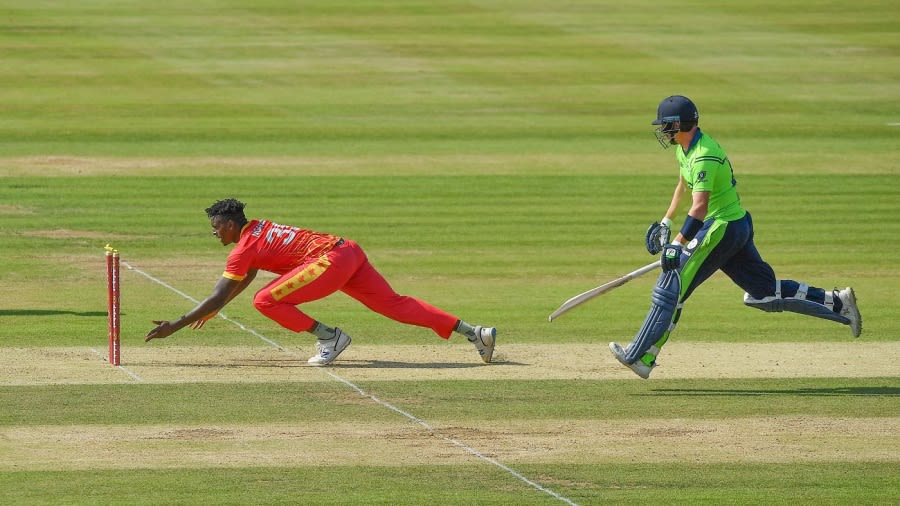
DUBLIN – Richard Ngarava defended five off the last over to give Zimbabwe a tense, three-run win in the series opener against Ireland.

Zimbabwe have only defended one total lower than their 117 in Dublin today – 105 against West Indies in February 2010. The win was also Craig Ervine’s first as T20 captain.

Advertisement

After a batting performance riddled with problems, with only Regis Ch akabva scoring more than 20, Zimbabwe’s spinners Wellington Masakadza and Ryan Burl shared five wickets between them, and conceded just 40 runs, to keep Zimbabwe in the contest.

Luke Jongwe took 2 for 17 to reduce Ireland to 88 for 7, leaving the eighth-wicket pair of Simi Singh and Barry McCarthy to finish the job.

Ireland needed 18 runs off the last three overs, 12 off the last two and six off the final over, but Ngarava held his nerve at the end.

Advertisement

His first ball was a yorker that Singh could not dig out, his second was quicker and Singh missed and his third was flicked away for one.

With five needed off the last three, McCarthy walked across his stumps to try and ramp the ball over short fine leg but was bowled.

Craig Young was run-out at the non-striker’s end off the penultimate ball before the last delivery, a low full-toss, cost just one run to give Zimbabwe victory.

Advertisement

Zimbabwe’s openers had a dismal start to the series and were both dismissed in the first 17 balls, playing lazy shots against a fired-up Craig Young.

Wessley Madhevere was unable to build on his form from earlier in the year and the first to go, jabbing at the last ball of the opening opener, to give debutant Neil Rock his first (and what may end up being one of his easiest) catch in international cricket.

After he had a scored a single in the first over, Tadiwanashe Marumani looked like a sitting duck as he negotiated the second over from Barry McCarthy. He inside-edged the first ball, missed the next three and then finally found some defence to face a maiden.

Advertisement

The pressure got to him and Marumani tried to get a move on when he danced down the track in an attempt to heave Young over the leg side, but the quick saw him coming, dragged the length back and had him caught at slip.

Young’s opening spell yielded 2 for 5.

After the opening blunders, Regis Chakabhva helped Zimbabwe recover, sharing the best partnerships of the innings – 38 with Dion Myers and 30 with Craig Ervine.

Advertisement

He gave Zimbabwe their most profitable over against Curtis Campher, who he pulled through midwicket, pounded through point and tucked down to fine leg for three boundaries in his first four balls.

Campher’s first over in this format cost 16 runs all told. Chakabva’s best shot, however, was the six he hit off Singh, when he went down on one knee to send the spinner over midwicket.

By then, Chakabva made sure Zimbabwe had a stable foundation at 79 for 4 in 12 over. But he didn’t read Singh’s wrong ‘un, in the 13th over, and was bowled. He would have been disappointed to fall one short of equalling his score in the format and three shy of a first T20I fifty.

Advertisement

Paul Stirling and Kevin O’Brien are at polar opposite places in terms of form and it showed. Stirling, who is coming off a tournament-winning knock in the Hundred, swept the third ball he faced over square leg for four.

On the other hand, O’Brien, who has scored just two runs in his last three T20I innings, was tentative putting bat on ball.

He was beaten four times by Ngarava’s first six balls and then watched Stirling flat-bat the first ball he faced from Tendai Chatara over point for four and cut the third one for four more.

Advertisement

Stirling had scored 14 off 12 by the time O’Brien got his first run, a single off the ninth delivery he faced.

Stirling then got two more boundaries, to deepen the difference between them.

It was only after Stirling misjudged Jongwe’s length and was bowled that O’Brien found his stride.

Advertisement

He hit Masakadza over extra cover for four for his first boundary in four matches.

He found the rope two more times in his 32-ball innings.

Stirling’s dismissal gave Zimbabwe an opportunity to fight their way back and they were able to, thanks largely to, their legspinner, Burl.

Advertisement

He bowled with good pace and surprised captain Andy Balbirnie with a quick, flat delivery that pinned him on the front pad and then removed George Dockrell and O’Brien with successive balls to leave Ireland on 65 for 4.

Dockrell was caught at long-off trying to clear the rope and O’Brien was bowled when he missed a ball that turned into him.

The hat-trick delivery was to Campher, who managed a single but Burl had given Zimbabwe an opening.

Advertisement

He finished with 3 for 22, by which time fellow spinner Masakadza had two wickets.

Campher holed out to deep midwicket and Shane Getkate was caught reverse-sweeping, at third man.- ESPNCrickInfo

Advertisement
Continue Reading
Click to comment

Leave a Reply

Your email address will not be published. Required fields are marked *

In the community

Nkayi’s mortuary crisis leaves families racing against time

Published

on

BY NOKUTHABA DLAMINI

When an elephant trampled Mbusi Mabhena to death two weeks ago in Mthoniselwa village in Nkayi, his family’s grief was swiftly compounded by another ordeal.

Advertisement


By the following day, he had been buried.

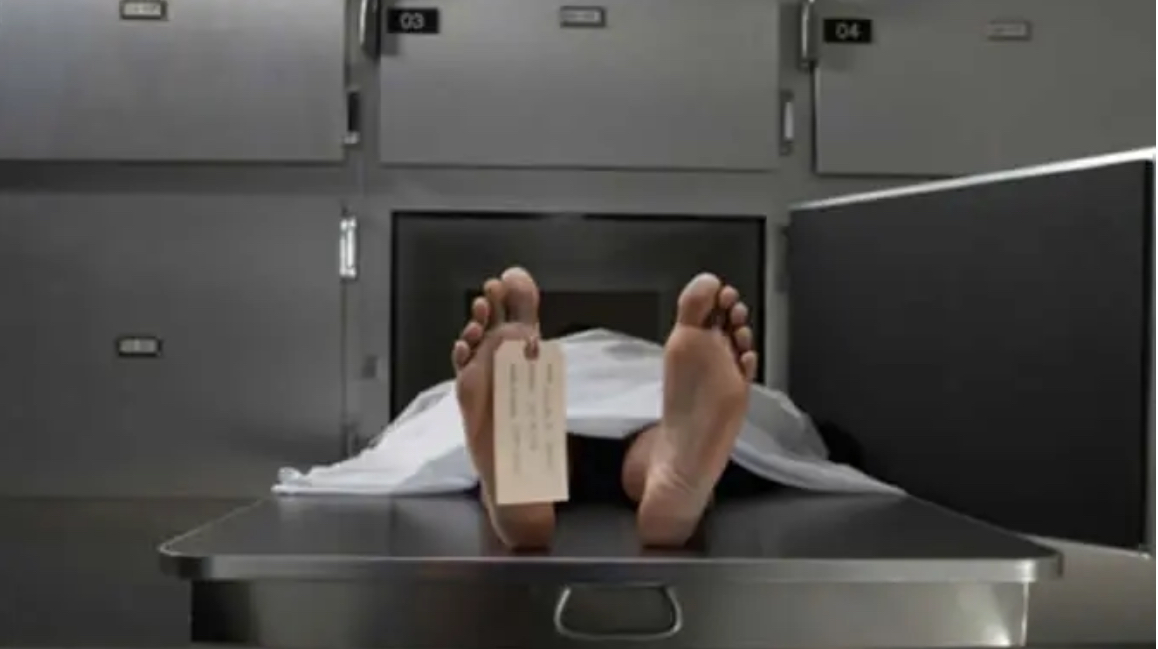
In Ward 13 of Nkayi district, there was no time for a traditional week-long wake or a post-mortem examination. There is no mortuary.

Local leaders say immediate burials have become common in parts of Nkayi and neighbouring Lupane, where families cannot preserve bodies due to a lack of cold storage facilities.

Weston Msimango, the councillor for Ward 13, said Mr Mabhena’s body was covered with sand before burial in an attempt to slow decomposition.

“It has become normal for people to be buried within 24 hours,” he said. “We have no facilities to keep them.”

The problem centres on Mbuma Mission Hospital, the main referral hospital for Nkayi and Lupane districts. Despite serving thousands of people, it has never had a mortuary.

For many villagers, transporting a body to cities such as Bulawayo or Gweru is too expensive. As a result, families resort to improvised methods to manage the smell of decomposition while making urgent burial arrangements.

Thandiwe Moyo, from Mkalathi village, said families often use sand and bananas to try to reduce odours while waiting for a few relatives to gather.

“To bury someone you love within 24 hours, without a proper goodbye because there is no cold room, feels like we are disposing of trash rather than honouring a life,” she said.

Residents say the lack of basic infrastructure contrasts sharply with the political rallies occasionally held in the district.

Jabulani Hadebe, the Member of Parliament for Nkayi South, has criticised what he describes as a lack of political will to address the issue.

He pointed to a large 2023 election rally in the area, attended by senior political figures, as an example of misplaced priorities.

“Leaders had an opportunity to visit the hospital, see what was missing and help,” he said. “Instead, the focus was on displays of wealth.”

Hadebe also alleged that some people who attended the rally were given spoiled food and later fell ill, though this claim could not be independently verified.

Sibusiso Sibanda, from Gonye village, said residents struggle to reconcile the arrival of luxury vehicles at rallies with the absence of a basic mortuary facility.

“They can come with big cars and give out meat, but they cannot finish a small room at Mbuma to keep the dead,” he said.

He added that without funeral insurance or money for transport, families have little choice but to bury relatives quickly.

“In the morning you are alive. If you die and you do not have a funeral policy, by evening you are in the sand,” he said. “There is no dignity left.”

Villagers in Somakantane said the absence of a mortuary has also disrupted cultural practices that require the body to remain at home for several days before burial.

The situation is not unique to Nkayi. Lawmakers have raised similar concerns in Binga, where some hospitals also operate without mortuary facilities.

Despite the issue being raised in Parliament, there has been no formal response from the government indicating when mortuaries might be built or repaired in affected districts.

The Ministry of Health’s spokesperson, Donald Mujiri, could not be reached for comment.

SOURCE: CITE

Continue Reading

National

Zimbabwe export surge, diaspora inflows mask funding gaps in foreign affairs sector

Published

on

BY STAFF REPORTER 

Zimbabwe is seeing strong gains in export earnings and diaspora remittances, but lawmakers warn chronic underfunding is undermining the country’s diplomatic and economic ambitions.

Parliament heard that remittances reached about $1.8 billion by the third quarter of 2025, while exports rose sharply, helping cut the trade deficit. Lawmakers said the diaspora remains “a vital source of foreign exchange, directly contributing to the enhancement of the nation’s foreign reserves and overall economic stability.”  

However, MPs said financial constraints are weakening the institutions meant to sustain that growth. The Zimbabwe Foreign Services Institute received only a fraction of its budget, limiting recruitment and training.

“The staffing shortfall has inevitably affected operational efficiency and the institute’s ability to discharge its core mandate,” the committee report noted.  

Lawmakers warned that without consistent funding, gains in exports and diaspora engagement could stall, particularly as Zimbabwe pushes toward an export-led economy.

Continue Reading

National

Government pushes vaccines drive as MPs warn of rural access gaps, misinformation

Published

on

BY NOKUTHABA DLAMINI 

Zimbabwean lawmakers have called for urgent action to close immunisation gaps, warning that rural communities remain vulnerable due to weak access and persistent misinformation.

Speaking during Africa Vaccination Week, MPs said vaccines remain “among the most effective, equitable and transformative public health interventions,” but coverage remains uneven.  

“Persistent gaps endure, particularly in rural and underserved areas where barriers of access, awareness and trust continue to impede full immunisation coverage,” one legislator told Parliament.  

Lawmakers urged stronger investment in cold-chain systems and public engagement campaigns, stressing that immunisation is not just a health issue but “a strategic development imperative” tied to productivity and national growth.  

Continue Reading

Trending

Copyright © 2022 VicFallsLive. All rights reserved, powered by Advantage