
Slider
Inside Boschpoort Predators: A candid tour with Hannes Wessels

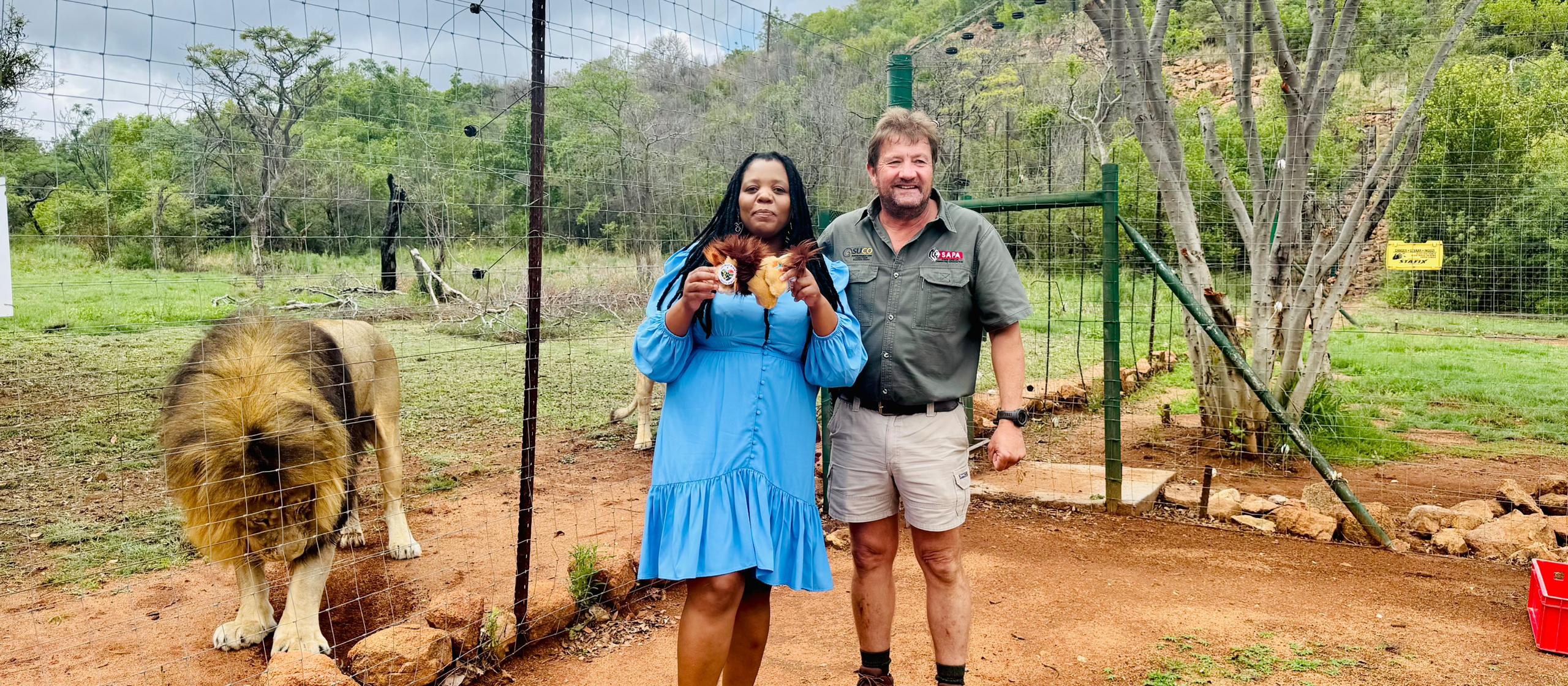
BY NOKUTHABA DLAMINI
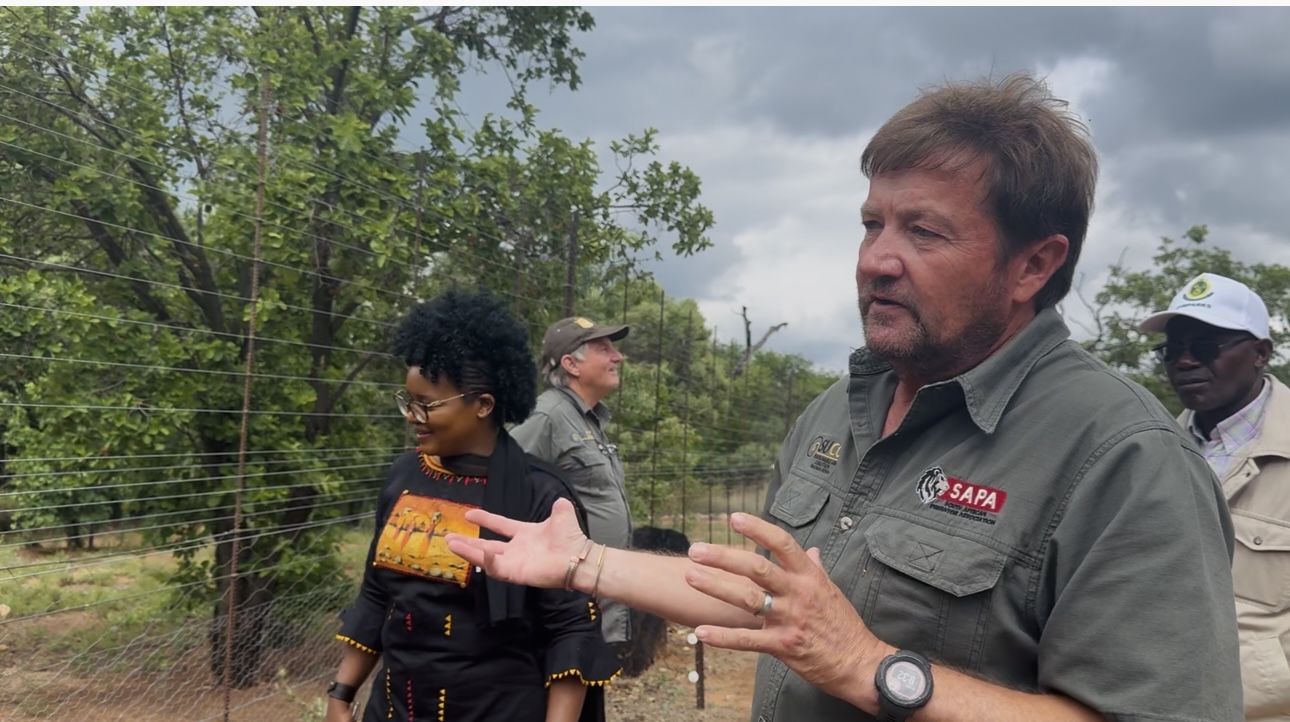
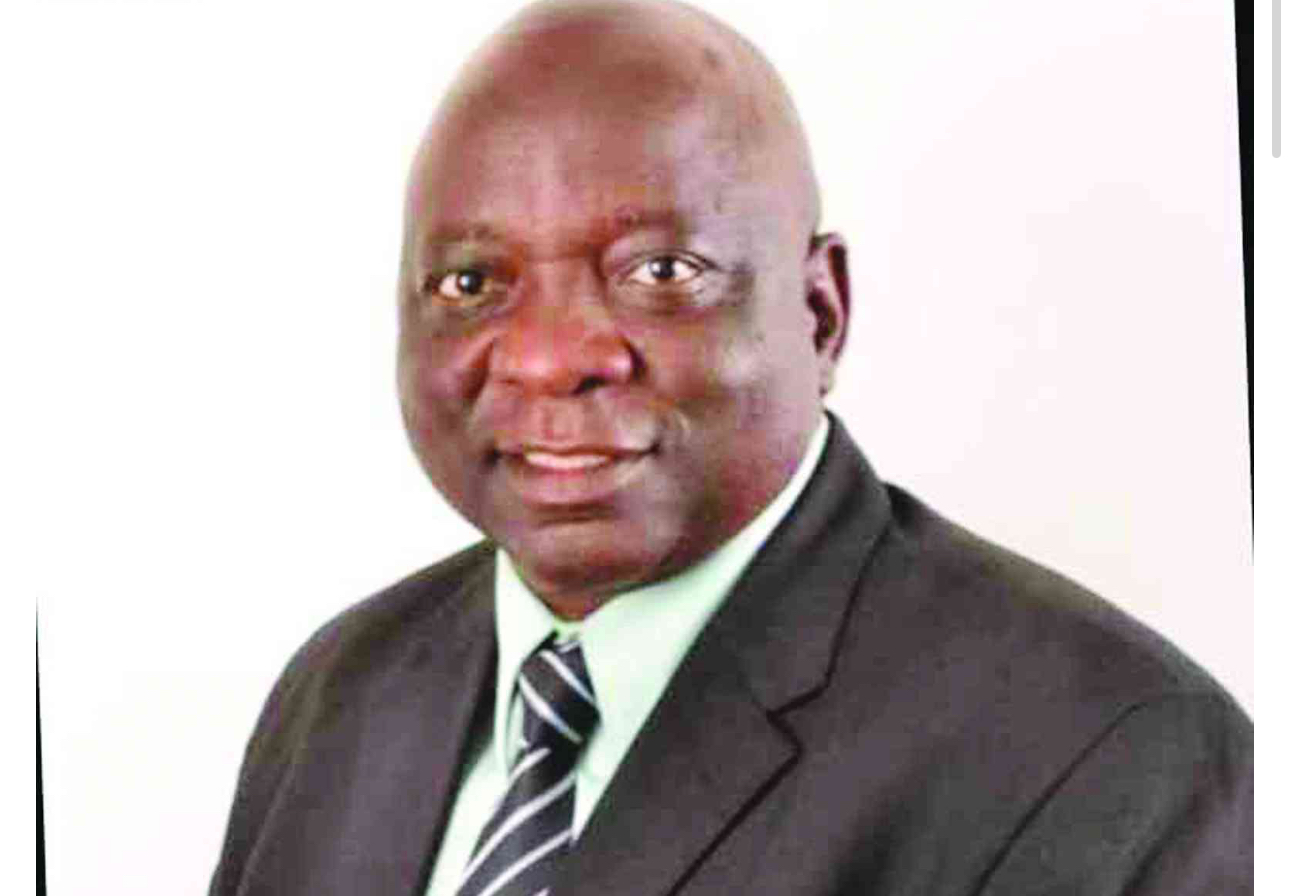
When l visited South Africa recently with the Zimbabwe Parliament and Wildlife Management Authority delegation, I was taken on a private tour of Boschpoort Predators by Hannes Wessels — President of the South African Predator Association, SUCo-SA member, and one of the industry’s most outspoken defenders. For hours, he walked us through his sanctuary, breeding areas, and off-site hunting properties, offering an unusually frank look into a sector that is often hidden behind controversy and media narratives.
“The youth are our conservationists”
We began in the sanctuary section, where Hannes explained why thousands of schoolchildren visit the property each year.
“On Tuesdays and Thursdays school groups visit us free of charge,” he said. “Our school system in South Africa has no conservation value in the syllabus anymore. The youth are our conservationists, and that’s why it’s important to bring their schools in and take them through the jobs.”
The sanctuary is one of three main sections: the public sanctuary, tiger breeding facilities in the valley, and a mountain breeding area that is closed to visitors.
“We don’t want human imprint on animals that are going into the hunting land,” he explained.
Breeding, hunting and the “Buffer” argument
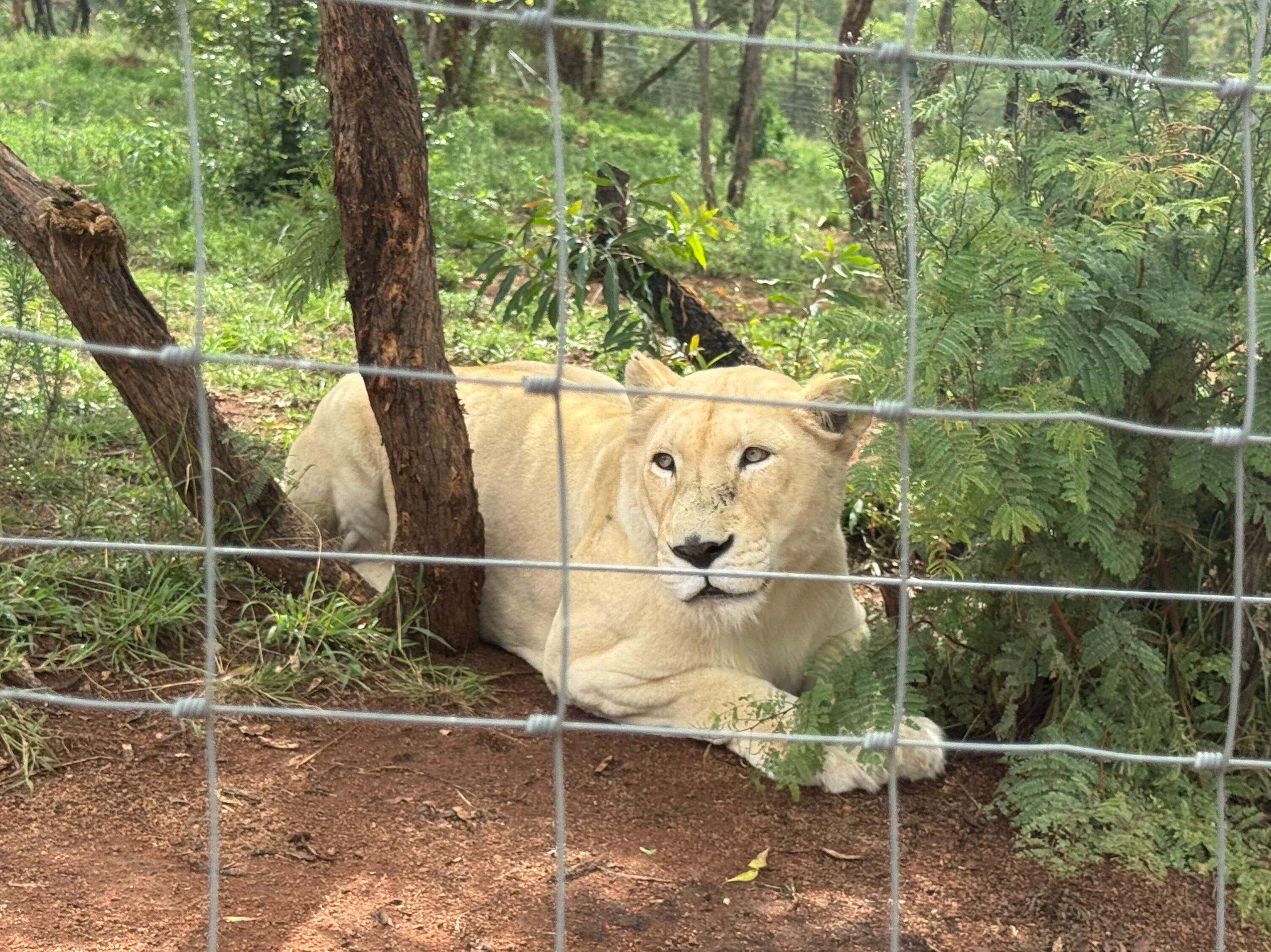
Hannes spoke openly about the role of the predator-breeding industry in South Africa.
“We need to keep this industry open, because it’s a buffer for the wild populations we’ve got,” he said.
“There’s been unnecessary negativity. People see an animal in a cage and think it’s starving today because of what they see in the media.”
He argued that captive-bred lions reduce pressure on wild reserves, especially as some national parks face disease challenges.
“A specimen like that, you won’t find in our national parks anymore — Kruger is compromised due to disease in the lions. Other metapopulations are under pressure.”
He also highlighted the economic contribution:
“This industry contributes five hundred million to GDP from lion hunting alone,” he said. “If you look at the whole value chain — taxidermy, shipping agents — it makes up to a billion.”
Traditional use and sustainability
Standing beside the enclosures, he spoke about cultural practices involving animal parts:
“Animals are part of traditional medicine in our culture, and there’s nothing wrong with it as long as it’s used sustainably. You cannot change the culture of a nation, but you can teach sustainability.”
The challenge of tiger genetics and DNA markers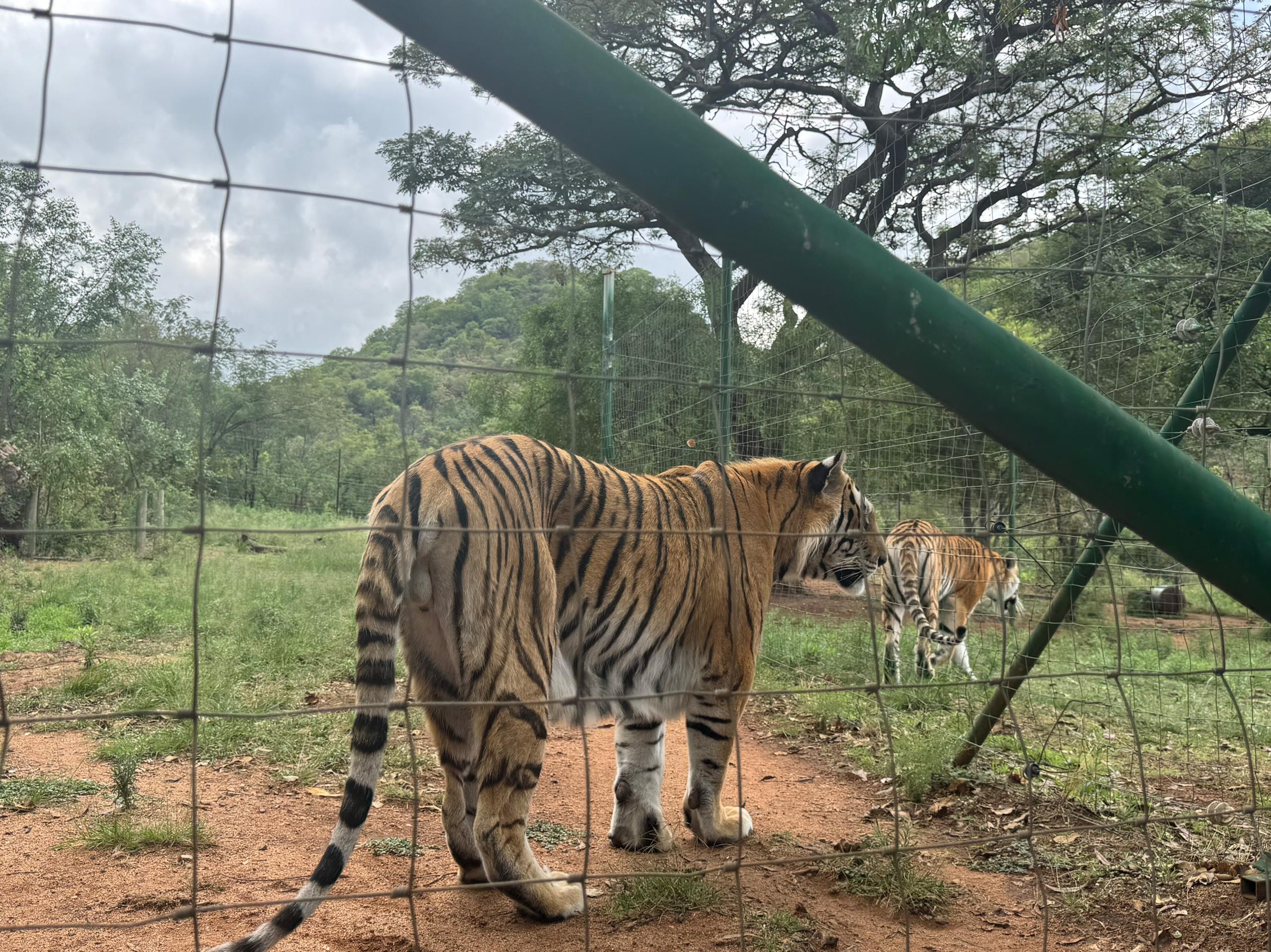
At the tiger section, he turned to what he called South Africa’s biggest challenge in tiger management:
“South Africa cannot export tigers to the countries of origin because we haven’t got DNA markers,” he said.
“I can say this is a Siberian, but it’s got Bengal blood — nobody can tell me. That’s the problem: there’s no regulation or DNA system to determine pure lines.”
He mentioned that one of his colleagues is working to change that.
“One of my staff members is working on that to see if we can get tiger markers in, so we can actually determine what we’ve got.”
Traceability
Hannes described a new programme they believe will reshape South Africa’s predator sector:
“We’ve got a new traceability programme, written by one of the best, especially for the lion industry,” he said.
“We can trace a lion from cradle to grave — DNA, parentage, everything.”
This, he said, is crucial for international acceptance:
“The US (United State of America) wants traceability on the product. They don’t just want to know it doesn’t threaten the species — they want enhancement findings. It must prove a benefit.”
He argued that once traceability is universal:
“CITES (Convention on International Trade in Endangered Species of Wild Fauna and Flora) will open up, because then we can prove we are not busy with inbreeding.”
A database to counter inbreeding claims
He said their internal database already captures detailed lineage:
“I’ve got parentage, I’ve got DNA, I’ve got everything. We can prove we’re not breeding irresponsibly.”
But he added that government itself lacks accurate numbers:
“If you ask the department how many one-year-old male lions we have in captivity, they battle to tell us.”
The new programme aims to force uniform reporting across the industry.
Re-wilding and new conservation fund
Hannes revealed a new initiative:
“Every lion that will be hunted in the future will contribute to a conservation fund,” he said.
“That fund is busy with projects like re-wilding.”
He insisted re-wilding can work:
“They say you cannot re-wild a lion — it’s like teaching a house cat to hunt. We re-wilded lions in 2016, and it’s working.”
Breeding success and natural mortality
He explained that captive-breeding success mirrors natural patterns:
“The success rate is usually four cubs, but there’s a 25% loss. Four will be born, you’ll raise three — one is always lost.”
In nature, he said, mortality is even more brutal due to pride takeovers.
“A new male kills all the cubs because he wants his own blood. That’s why it’s almost impossible for a father to mate with his daughter in the wild.”
Some online images showing thin lions mislead the public, he argued:
“Most of those pictures are lions growing old. They’re not sick — they just go old and starve naturally once they’re chased out.”
The 1984 Smith study: “Putting facts ahead”
Hannes cited the work of Dr Smith, who sedated a number lions in Kruger in 1984 to establish physical averages.
“Smith claims a big lion male should be 1.05 metres at the shoulder,” he said, standing beside one of his large males.
“This one is 1.32 — higher than a normal lion male. That’s the genetics we’re working with.”
He emphasised that quality genetics drive higher industry prices.
Industry scrutiny and advocacy
Hannes believes misinformation is one of the industry’s greatest challenges.
“We are confronted with opinions. We’ve got the science, we’ve got the proof. NGOs are sponsoring opinions and we haven’t got the funding to put the facts out.”
He credited sector associations
“If it wasn’t for Peter, Stephen, and especially Richard — attending meetings, fighting for us — we would have lost this industry a long time ago.”
He dismissed political threats to shut predator farming:
“The wish of the government to close the industry is the same as my wish to win the lottery — it will never happen.”
Inside the facility: Slaughterhouse, hospital, and daily Realities
At one point we passed the onsite veterinary building.
“That’s our hospital where we treat all our animals,” he said. “It’s also the slaughterhouse for carcasses — nothing is wasted.”
He explained they had just processed a horse that had died that morning following an attack with a wildebeest.
Gabi and the nocturnal predators
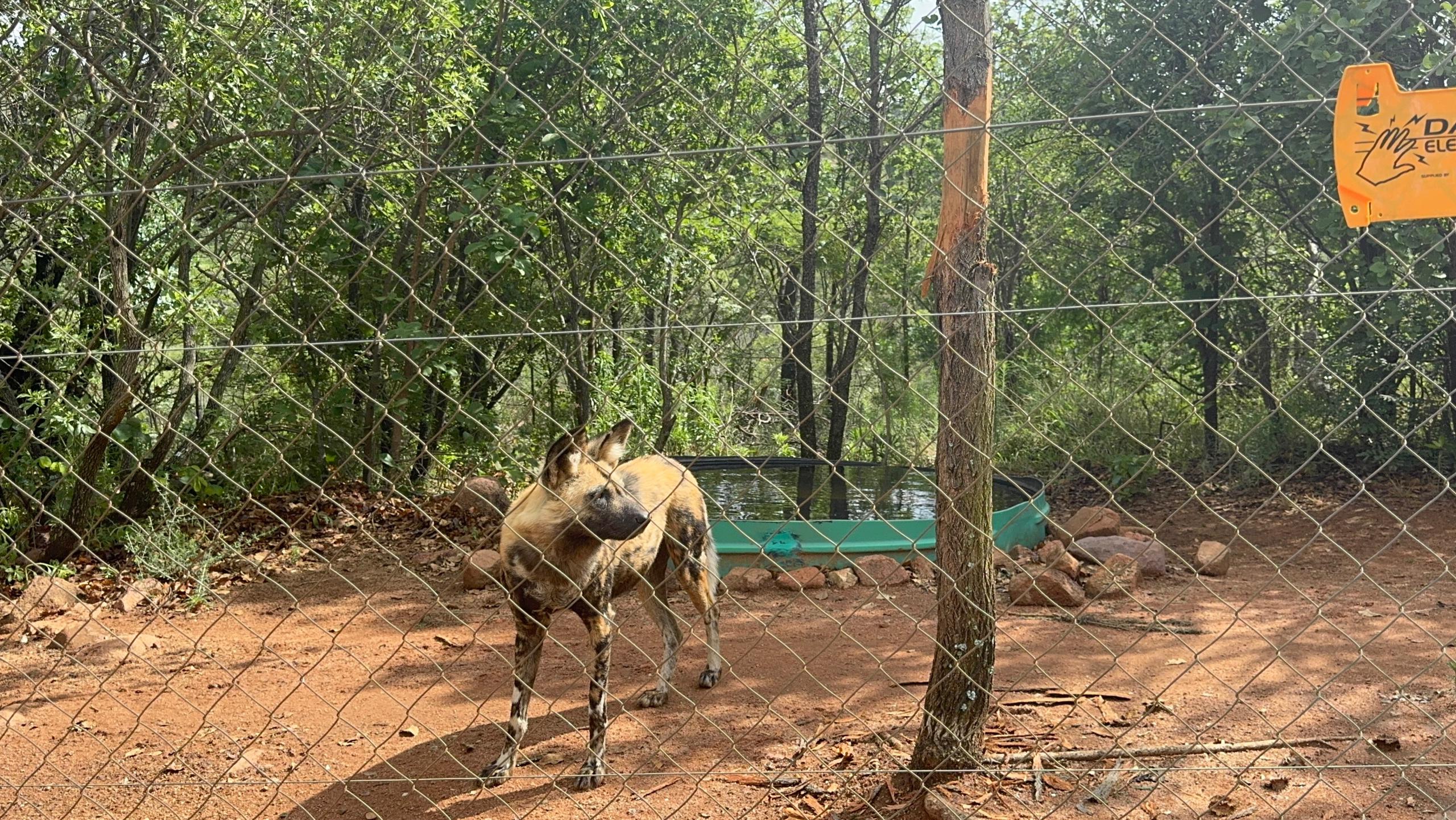
The tour almost ended with Gabi, a six-year-old predator kept in the sanctuary.
“Normally nocturnal,” Hannes said, “but she’s quite big, and she was hand-raised before being released on the property.”
A controversial but transparent vision
My tour with Hannes revealed a man deeply committed to a model that blends conservation, utilisation, and economic sustainability — a model many organisations and countries intensely debate. He insists that with science, genetics, traceability, and strict record-keeping, the predator-breeding industry can both protect wild populations and support livelihoods.

-

 Slider3 years ago
Innscor launches brewery to produce Nyathi beer
-

 National5 years ago
In perched rural Matabeleland North, renewable energy is vital
-

 Tourism and Environment4 years ago
Strive Masiyiwa’s daughter opens luxury Victoria Falls lodge
-

 Special reports4 years ago
Tinashe Mugabe’s DNA show’s popularity soars, causes discomfort for some
-

 Opinion4 years ago
A street art mural in Zimbabwe exposes a divided society
-

 National4 years ago
Victoria Falls’ pilot dies in helicopter crash
-

 National3 years ago
Commission of inquiry findings fail to be tabled as Victoria Falls councillors fight
-

 National3 years ago
Hwange coal miner fires workers over salary dispute