Connect with us

In the community

Little Zimbabwe’ community in South Africa struggles for survival

Published

on

BY MOSIMA RAFAPA

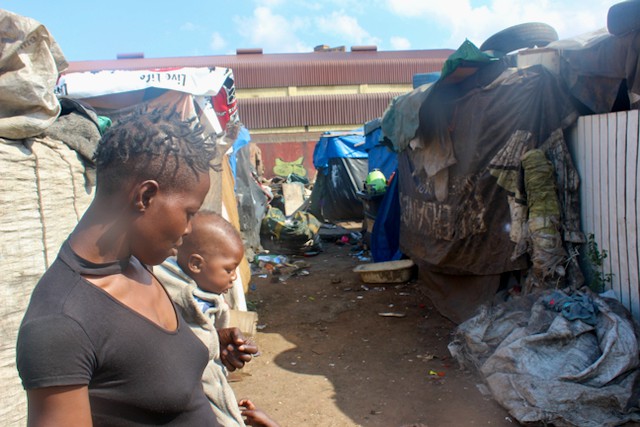
Mostly undocumented immigrants live in leaking shacks without sanitation, water or electricity in this small informal settlement in Marabastad, Pretoria, South Africa.

Advertisement

But they say they are happy to be left in peace.

No toilets, no electricity, no water – not much has changed in “Little Zimbabwe” informal settlement, situated in the busy business area of Marabastad, Pretoria, since GroundUp last reported on the living conditions here in 2019.

However, the 16 or so families, all from Zimbabwe, with more than 35 children, say they are grateful to be left in peace. Metro law enforcement has not demolished their shacks for over a year. Taxi drivers operating in the area, who used to accuse the residents of dealing in drugs like nyaope, have also left them alone.

Advertisement

Elizabeth Musungabe, 26, recalled an attack in September 2019 when taxi drivers torched their shacks, trapping a seven-month-old baby inside one. “We thought he’d die but we were able to rescue him,” she says, pointing to a now two-and-a-half-year-old boy.

Most of the residents are undocumented and many have been in South Africa for a decade at least.

Their shacks are made out of asbestos sheets, board, cloth, plastic sheets and tent material.

Advertisement

One-roomed shacks are crowded and divided in two for separate families.

They sleep on makeshift beds. They cook on open fires. Bushes nearby serve as a toilet.

Many of the children are not registered.

Advertisement

“We had documents that we received at a hospital when you give birth, but we lost them during the time they burned our shacks. Some even lost their asylum documents,” Precious Twariki told GroundUp.

Eight of the children are of school-going age.

“Previously, four children in the settlement attended a primary school in town.

Advertisement

“We paid R400 for them and they were allowed to attend without documentation because the owner of the school is Nigerian.

“Now they’ve stopped going because the fees have gone up.

“They want us to pay R800 per month. It’s a private school,” says Melody Zimuto.

Advertisement

Four teenagers currently go to school in Atteridgeville, Pretoria West.

Musungabe moved to the settlement in 2014.

She is undocumented and struggles to find work.

Advertisement

Originally from Harare, she went first to Limpopo to look for a job in 2012.

“I survive by asking for donations and doing people’s laundry.

“Our husbands go out everyday to look for material for recycling, so we also rely on that,” she says.

Advertisement

Musungabe has four children and is expecting her fifth.

Tariro Musa, from Rusape, went to Johannesburg in 2010 to live with her aunt.

She moved to the settlement earlier this year after she lost her housekeeping job at a hotel in Arcadia.

Advertisement

She had taken maternity leave, but when she returned to work she was told her position had been filled.

“I could not afford to pay rent. I also ask for piecemeal jobs from flats nearby,” she says.

She survived for a while by washing cars. She now asks passersby and store owners in town for food.

Advertisement

Melody Zimuto was one of the first to erect a shack in the settlement.

She says they used to have to share the space with nyaope smokers on one side.

“When it rained, we slept under the veranda of the shops in Marabastad,” she says.

Advertisement

She moved to Little Zimbabwe in 2011.

“When they closed the Schubart building, we moved here. We used to pay rent to some people.

“I think they had hijacked the flats, because we don’t know who owns them.

Advertisement

“We had no alternative place to go because most of us are poor,” says Zimuto.

Zimuto came to South Africa in 2008 to support her mother who is blind.

She survives on piecemeal jobs and sometimes begs for food in town. She has four children.

Advertisement

Caroline Chinozvana was only 14 when she came to South Africa from Harare a decade ago.

She was orphaned when she was five.

She begs for money at the traffic lights and looks for piecemeal jobs.

Advertisement

Chinozvana says that without an ID the residents struggle to find work or to access social relief programmes.

She sleeps in a small shack with her three children on two makeshift beds.

The shacks leak when it rains.

Advertisement

“We don’t mind as adults, but we worry about our children,” she says. – GroundUp

Advertisement
Continue Reading
Click to comment

Leave a Reply

Your email address will not be published. Required fields are marked *

In the community

Tsholotsho man jailed for stealing and slaughtering neighbour’s goat

Published

on

BY STAFF REPORTER

A 31-year-old man from Tsholotsho has been sentenced to an effective six months in prison after being convicted of stealing and slaughtering his neighbour’s goat.

The incident occurred on 11 July 2024 when the complainant released his herd to graze at Mhlahlo grazing land. One black-and-white goat failed to return, prompting the owner and fellow villagers to launch a search.

The search led to the accused’s homestead, where the complainant positively identified the carcass of his missing goat. The man initially denied involvement in the theft, but investigations revealed overwhelming evidence linking him to the crime.

He was arrested and placed in police custody but later escaped while being taken to the police station. The escape was promptly reported, leading to his re-arrest.

The court sentenced the accused to 12 months’ imprisonment, with three months suspended on condition of good behaviour. A further three months were suspended on condition that he pays restitution amounting to ZAR1 500. He will therefore serve an effective six-month prison term.

In a statement, the National Prosecuting Authority of Zimbabwe commended communities for remaining vigilant and reporting crime promptly.

“Justice is strongest when citizens stand together against lawlessness. Silence and tolerance of crime only empower offenders,” the NPAZ said.

Continue Reading

In the community

EMA, Lupane State University step up fight against deadly Umkhawuzane in Mat North

Published

on

BY WANDILE TSHUMA

The Environmental Management Agency (EMA), in partnership with Lupane State University, has launched a community-based initiative to control and reduce the impact of the toxic plant Dichapetalum cymosum, locally known as Umkhawuzane or Gifblaar, which has caused significant livestock losses in Matabeleland North.

The initiative, focuses on managing the spread of the poisonous plant, which is widely recognised as one of the most dangerous threats to cattle in Southern Africa. Gifblaar is estimated to contribute to about eight percent of livestock deaths linked to toxic plants in the region. The plant contains fluoroacetate, a potent toxin that causes sudden death in animals and poses risks of secondary poisoning through the food chain.

According to EMA, the study was carried out in Ward 18 (Makhovula) in Lupane District and Ward 10 in Umguza District. It combined community sensitisation with mechanical and chemical control trials aimed at identifying effective ways to eradicate the plant.

Community engagements revealed a high level of awareness among farmers about the toxicity of Umkhawuzane. Farmers reported losing an average of three to four animals per household during the winter season, when forage is scarce and the plant remains green, increasing the risk of livestock consumption.

Results from the trials showed that mechanical removal of the plant produced promising outcomes. No regeneration was observed in areas where roots were excavated to depths of between one and 1.5 metres. However, chemical control using glyphosate only led to temporary suppression of the plant and did not achieve complete eradication, while also affecting surrounding vegetation.

EMA said the findings highlight the need for integrated and site-specific management approaches. These include effective mechanical removal, cautious use of chemicals, and continuous community education to prevent further losses.

The agency, together with Lupane State University, reaffirmed its commitment to working closely with local communities to protect livestock, improve rangeland management and reduce the economic losses caused by Umkhawuzane in Matabeleland North.

Continue Reading

In the community

Two missing Apostolic Faith sect members found deceased in Zambezi River

Published

on

BY NOKUTHABA DLAMINI 

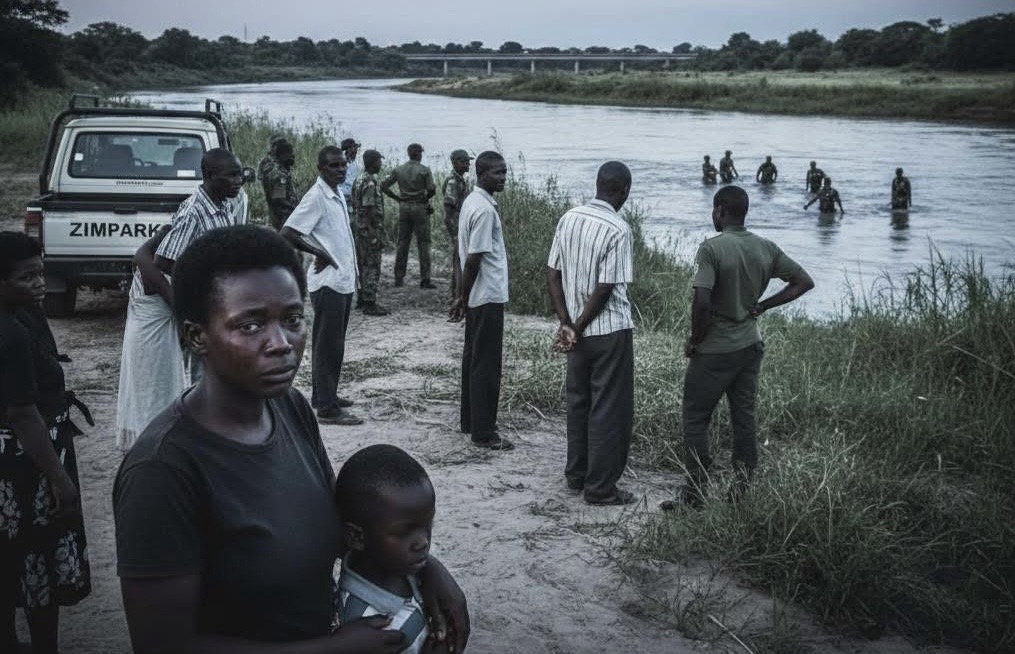
Two members of an Apostolic Faith sect who were swept away by strong currents during a baptism service on the Zambezi River in Victoria Falls on Saturday have been found deceased, two days after they went missing.

Search and rescue efforts, which had been ongoing since the incident, culminated on Monday when the two bodies were located with the assistance of a local rafting company operating on the river.

Confirming the development, Victoria Falls Residents Association chairperson, Kelvin Moyo, said the discovery brought a tragic end to hopes of finding the pair alive.

“As of this afternoon, we have received confirmation that both bodies have been found,” said Moyo. “The operation was supported by a local rafting company, and at the time of the update, teams were still working on the process of retrieving one of the bodies from the river.”

Moyo said the incident has once again highlighted the dangers associated with conducting religious activities in the Zambezi River, particularly during periods of strong water flow.

He urged residents and visitors to exercise extreme caution when approaching the river and called on religious groups to prioritise safety when carrying out baptism rituals.

Authorities are expected to continue engaging relevant stakeholders on safety measures as the community comes to terms with the loss.

Continue Reading

Trending

Copyright © 2022 VicFallsLive. All rights reserved, powered by Advantage