Connect with us

In the community

Covid-19 vaccines give battered Victoria Falls new hope

Published

on

BY FARAI MUTSAKA

Victoria Falls usually teems with tourists who come to marvel at the roaring Zambezi River as it tumbles down more than 108 meters to the gorge below, sending up a mist that is visible from miles away.

Advertisement

“The Smoke That Thunders” – the English translation of what the waterfall is called in the Sotho language – is still mighty, but the Covid-19 pandemic has reduced visitors to a trickle.

Ordinarily, Victoria Falls attracts 350,000 tourists a year, but their numbers have dropped to almost none as a result of travel restrictions.

Hotel occupancy rates fell into the single digits during 2020 and the first half of 2021, and some hotels were forced to close, according to the Hospitality Association of Zimbabwe.

Advertisement

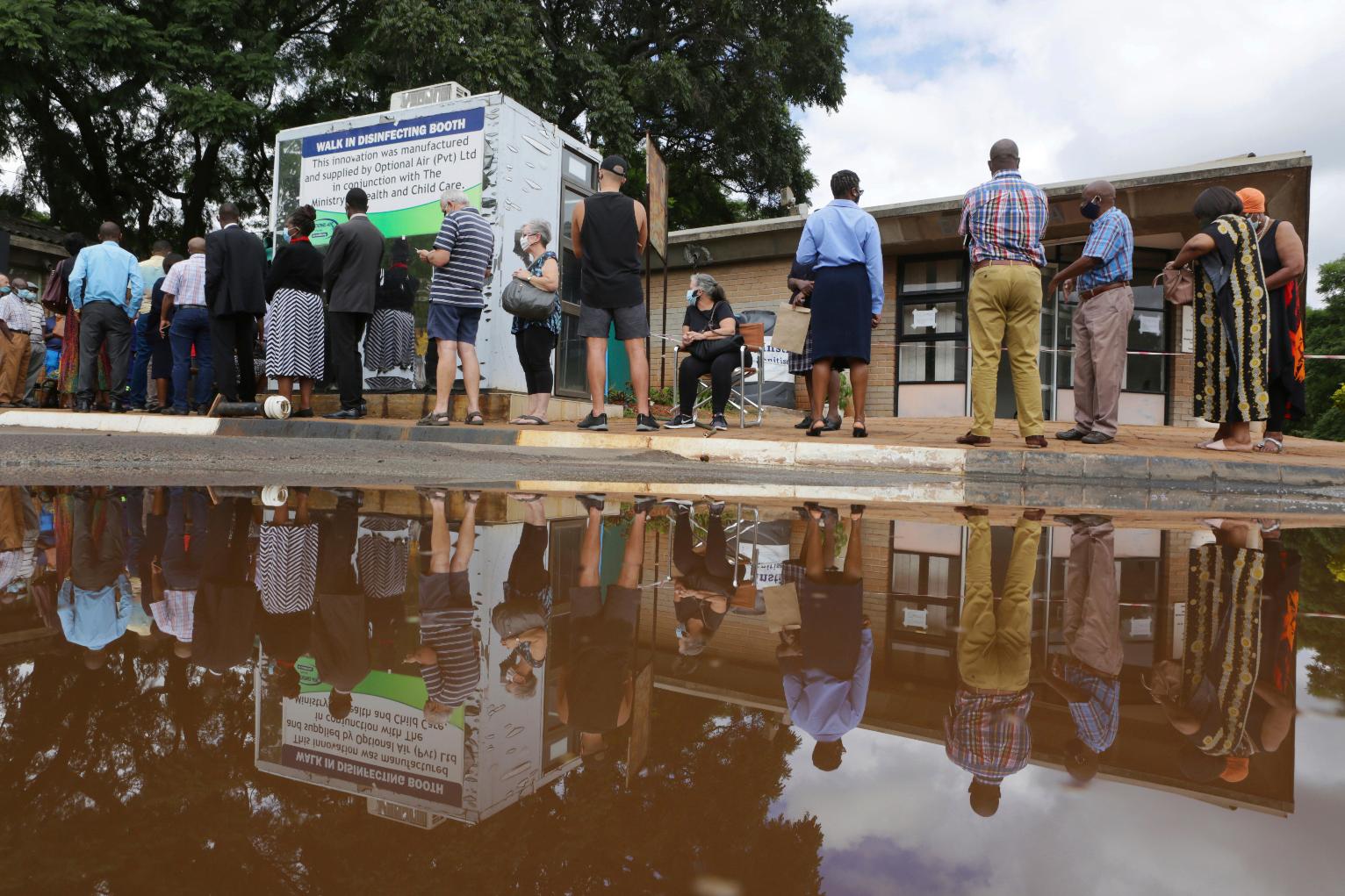
To promote Victoria Falls as a safe destination, President Emmerson Mnangagwa’s government has made vaccines available to all 35,000 residents of the town that shares a name with the waterfall.

An estimated 60% of the people there have been vaccinated with either the Sinopharm or Sinovac vaccines, both from China.

Although tourists have not returned in large numbers, Victoria Falls mostly has been spared the current wave of Covid-19 that has swept across the rest of Zimbabwe and southern Africa, which health officials attribute to the town’s relatively high level of vaccinations.

Advertisement

Nationwide, over 1.8 million people, slightly more than 12% of Zimbabwe’s population, have received a first dose, while more than 900,000 people are fully vaccinated with two doses.

On the strength of the vaccination rate in Victoria Falls, the government recently reopened two land borders that link the town to the neighboring countries of Zambia, Namibia and Botswana.

Travelers with proof of vaccination and a negative Covid-19 test will be permitted entry.

Advertisement

Victoria Falls was where Zimbabwe recorded its first Covid-19 case in March 2020, likely because of its high number of international visitors.

A year later, at a time where only medical workers and other essential workers were eligible for vaccines, shots were made available for all of the town’s residents age 18 and older.

All adult Zimbabweans are now eligible, but because of widespread supply shortages, the lines for jabs are long and many people are disappointed.

Advertisement

Restaurants in Victoria Falls are allowed to serve sit-in customers – something that is forbidden in the rest of Zimbabwe, which still has tight restrictions as a result of the current surge driven by the delta variant of the coronavirus.

Close to 90 percent of Covid-19 hospitalisations and deaths in the current surge are of unvaccinated people, according to a recent report by the Ministry of Health.

Although planeloads of tourists have not yet returned, the reopening of Victoria Falls was a relief for a town that survives on tourism, Anald Musonza, the regional chairman of the Hospitality Association of Zimbabwe, told The Associated Press.

Advertisement

“We had been waiting for this for a long time,” Musonza said. “This will help us retain some jobs that were lost due to the pandemic.”

Tourism, together with mining and agriculture, is a key anchor of Zimbabwe’s fragile economy.

Mass vaccinations could help open up tourist destinations countrywide, said Tinashe Farawo, a spokesperson for the Zimbabwe National Parks and Wildlife Management Authority.

Advertisement

The loss of tourism revenue has hurt the authority’s ability to operate.

“Victoria Falls is testimony of what vaccines can do,” he said. “It’s good for us.

“It’s good for wildlife because now we can raise money to deploy our rangers and fund other critical operations.” – AP

Advertisement

Continue Reading
Click to comment

Leave a Reply

Your email address will not be published. Required fields are marked *

In the community

Heavy rains worsen condition of Binga’s poor road network

Published

on

BY STAFF REPORTER 

Communities in Binga are facing worsening road conditions after heavy rains damaged key routes, prompting urgent calls for rehabilitation and government intervention.

Advertisement


Binga South legislator Fanuel Cumanzala said several major roads in the district have been severely affected by incessant rains, disrupting transport and access to essential services. 

Advertisement


He cited the Karoi-Binga Centre Road, Binga Centre-Cross Dete Road, Kariangwe-Lusulo Road, and Gwai-Lusulo Road as critical routes in need of urgent attention.

“The state of these roads is now a serious concern for our communities as they are no longer easily accessible,” Cumanzala said 

Advertisement


“People are struggling to reach markets, health facilities and schools due to the damage caused by continuous rains.”

Advertisement


Transport and Infrastructural Development minister Felix Mhona said the Karoi-Binga Road, a 192-kilometre inter-provincial route linking Mashonaland West to Matabeleland North, has only 62 kilometres surfaced, with the remaining 130 kilometres gravel. 

He said plans were underway to upgrade the gravel sections.

Advertisement


Mhona added that the Karoi-Binga-Cross Dete Road has been earmarked for rehabilitation under a Public-Private Partnership, with an investor’s expression of interest currently under consideration. 

Advertisement


On the Kariangwe-Lusulo and Gwai-Lusulo roads, he said ongoing works are focused on repairing rain-damaged structures.

“Contractors working along the Bulawayo-Victoria Falls Road have also been engaged to attend to nearby damaged structures,”Mhona said.

Advertisement


“As a ministry, we will continue assessing the situation and submit funding requests for full rehabilitation as a long-term solution.”

Advertisement


He noted that several roads in Binga District have outlived their lifespan and require urgent rehabilitation, adding that upgrading costs have been calculated and projects will be implemented gradually as funds become available.

In the meantime, he said the ministry will continue routine maintenance efforts such as re-gravelling and pothole patching in collaboration with local stakeholders.

Advertisement


“We are committed to improving the road network in Binga to enhance access to markets, healthcare and education facilities while ensuring long-term sustainability of the infrastructure,” Mhona said.  Source: Southern Eye 

Advertisement


Continue Reading

In the community

Speaker proposes national hotline for flood-prone districts like Tsholotsho

Published

on

BY NOKUTHABA DLAMINI 

The National Assembly recently held an urgent debate on the state of national disaster preparedness, with lawmakers warning that the current lack of resources at the district level is costing lives

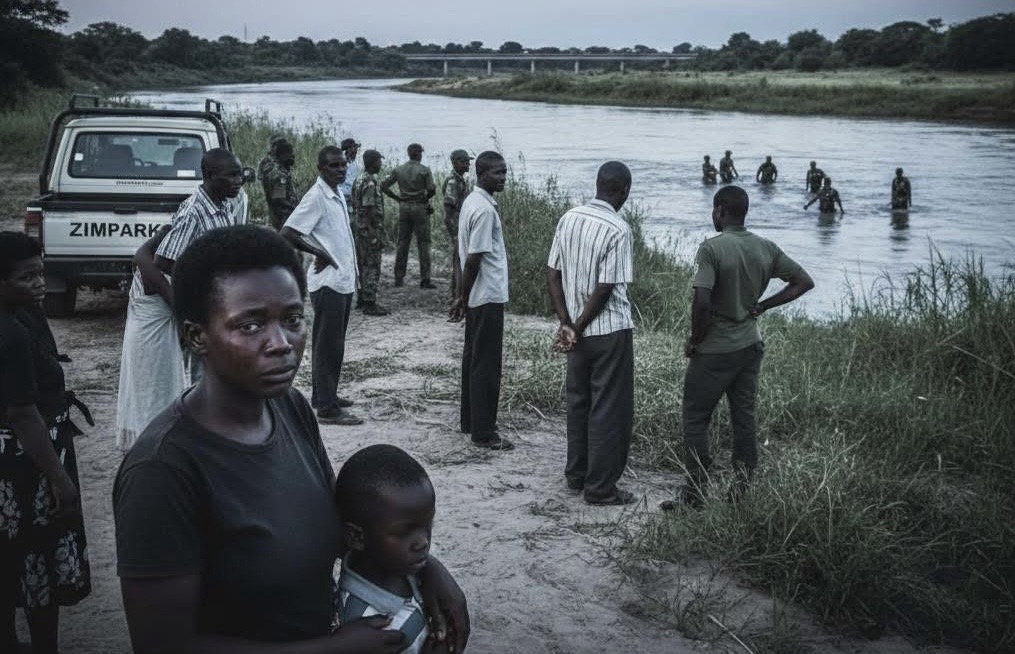
During the session, Clemence Chiduwa presented a somber report on a tragedy in Zaka South where two men died after being marooned for twelve hours following the capsizing of their boat . Emphasizing the gravity of the situation, he told the House, “The loss of life in Zaka South was not a local tragedy; it is a national warning as this is also happening in other districts”

Chiduwa argued that the failure of local units to respond quickly is a symptom of broader underfunding and lack of equipment, stating, “It reminds us that the disaster response delayed is disaster response denied”. He further observed that “institutions without tools cannot save lives,” calling for the Rural Infrastructure Development Agency (RIDA) to be adequately resourced with the machinery and financial support necessary for timely road and bridge rehabilitation.

Addressing these concerns, the Speaker of Parliament reminded the members that the state must utilize its existing resources, particularly the military’s air capabilities which have proven effective in the past.

The Speaker specifically highlighted previous successful interventions, noting, “The helicopters from the army are always ready to come in and they have done so in the past, especially during Cyclone Idai and also when there were floods in Tsholotsho”.

To improve response times in flood-prone areas across Matabeleland North, the Speaker proposed the implementation of a national emergency line. He suggested that “what we need to really push for is hotline availability to all districts, if not all wards, so that as soon as they experience that, they phone that hotline straight to headquarters and the army will react accordingly”. This initiative aims to ensure that communities like Tsholotsho can bypass local infrastructure failures and receive immediate military assistance during future flood events.

Continue Reading

In the community

MPs question poor radio, TV coverage in Mat North

Published

on

BY STAFF REPORTER 

Concerns over limited access to national broadcasting services in Matabeleland North Province were raised in Parliament.

MP Discent Bajila of Emakhandeni-Luveve constituency asked the Minister of Information, Publicity and Broadcasting Services:

“To explain why national radio and television coverage remains poor or non-existent in parts of Gokwe North District, Matabeleland North Province, Matabeleland South Province, and nearby districts, and to indicate whether there are any digital signal expansion plans in place before 2026.” 

In a separate question, Joseph Bonda for Hwange East Constituency raised concern over weather information gaps in Hwange:

“Why the weather forecast for Hwange is not broadcast, given that it is a resort with municipal status and significant business activities.” 

No responses were recorded.

Continue Reading

Trending

Copyright © 2022 VicFallsLive. All rights reserved, powered by Advantage