Connect with us

Slider

In Zimbabwe loss of native languages leads to a generation’s identity crisis

Published

on

BY FORTUNE MOYO AND KUDZAI MAZVARIRWOFA

Sheets of animal hide hang on the otherwise bare walls of this dimly lit room. A wooden plate filled with burning herbs is placed in front of the procession of neatly lined candles, along with a bowl of water.

Advertisement

Sitting in the room are Nancy Khumalo and her aunt, Thokozani Khumalo.

Almost instinctively, Thokozani Khumalo wraps a piece of loose fabric around the waist of her niece, who is wearing blue jeans and a red T-shirt, because she believes it’s disrespectful to approach the altar dressed in non-traditional wear.

Everything here needs to be pure; everything must be sacred. After all, this isn’t an ordinary day.

Advertisement

Today, Nancy Khumalo, a 25-year-old Zimbabwean nurse who grew up in the United Kingdom, is trying to communicate with her dead ancestors for the first time to seek answers to urgent questions about her life.

But this isn’t going to be easy, not because of the complicated nature of these rituals in general, but because Nancy Khumalo, like many in her generation of Zimbabweans, has lost touch with the first prerequisite for the ritual of connecting to her ancestors — the language to speak with them.

Though Zimbabwe is one of the countries in southern Africa with a diverse language landscape, several of its indigenous languages — along with roughly half of the world’s 6,000 or 7,000 languages — are hanging by a thread.

Advertisement

Losing a language is more than just losing a few codes for communication. Here, language acts as a cultural glue to hold together a community, its unique ways of life, its intangible heritage and its collective memory.

And so, the slow decay of these languages is worrying a younger generation in the country that fears they won’t ever know their roots.

For Nancy Khumalo, not knowing her indigenous language Ndebele means struggling to make sense of her own identity at an age when she wants to better understand herself.

Advertisement

“During rituals and traditional practices, knowing their original languages plays an important part in connecting with the ancestors,” says Khumbulani Nhali, who works to preserve the tradition of the Kalanga tribe.

“It is believed your ancestors are able to easily identify you when you connect using their indigenous language.”

The importance of language is not seen only in traditional rituals and practices.

Advertisement

Because most indigenous cultures transmit knowledge orally, spoken languages become a repository of information.

With the loss of these languages, the names, uses and preparations of medicines, for example, or the methods of farming, fishing, hunting or even survival become collateral damage.

In Zimbabwe, 16 official languages are spoken and recognized in the country’s constitution.

Advertisement

English is the official language for business and commerce; Shona and Ndebele are major indigenous languages.

In pre-colonial Africa, language was used to identify with a community’s way of life.

For most children in Zimbabwe, the first language is the one spoken at home, often an indigenous language, that then becomes part of their identity.

Advertisement

But cultural analysts say the country’s colonial past, globalization and the spread of migrants’ languages all contribute to a sense of language loss and a detachment from the larger Zimbabwean identity.

Senete Majowani, tour guide and educator at the Kore Kore Cultural Village, an artificially created space in Zimbabwe’s Mashonaland West that aims to preserve the culture of the Kore-Kore tribe, says migration of people in search of better opportunities has led to a situation where there are barely any elders left behind to impart cultural traditions.

“The absence of the elderly as cultural custodians in families,” he says has led to “the dilution of dialects,” together with the “superior status” ascribed to the English language.

Advertisement

Methuseli Zulu, a 23-year-old chemical engineering student in Bulawayo, says his family speaks Ndebele at home, but he prefers to speak English to his siblings.

Mellisa Muleya, 23, says while her parents speak Tonga because they are from Binga, a district in the province of Matabeleland North, she knows only how to greet in the language.

As she grew up in Bulawayo in southwest Zimbabwe, she spoke Ndebele like everyone else there.

Advertisement

Those concerned with the future of languages in the country say the mix of languages is a dormant crisis waiting to explode.

What these youngsters speak is not exactly a language, Nhali says, but a cocktail they pick right from “the street pot. It is a mixed bag of foreign dialects and local indigenous languages, giving a cocktail of confusion that can be seen in the confused personalities of most young people.”

In 2017, the government for the first time introduced examinations in minority languages taught in schools, through the Zimbabwe School Examinations Council.

Advertisement

Tonga, Nambya, Venda and Chewa are several languages tested in schools.

Asked about the government’s role in promoting and preserving indigenous languages, Taungana Blessing Ndoro, the director of communications and advocacy for the Ministry of Primary and Secondary Education, says, “We’re teaching in indigenous languages from [early childhood development] to grade two.”

Omphile Marupi, a Sotho tribe member who is a radio producer and presenter, says Zimbabwe’s education system has ignored the versatility and importance of indigenous languages in the curriculum.

Advertisement

“Our languages have been confined to the village and not taken to the laboratory to develop with other languages as seen with Chinese, Japanese and Mandarin,” he says.

“While it is proper to embrace English, indigenous languages should be given space in the academia to sprout.”

When asked about this alleged neglect of indigenous languages, Ndoro didn’t respond to multiple requests for comment.

Advertisement

Inside this sacred room, speaking in English, Nancy Khumalo apologizes to her ancestors while her aunt simultaneously interprets her words.

Both exit the space with a hope that the spirits understand the intent behind the initiation and guide Nancy Khumalo to the answers she is seeking. – Global Press Journal 

Advertisement
Continue Reading
Click to comment

Leave a Reply

Your email address will not be published. Required fields are marked *

National

EcoCash bill splitting signals rise of social commerce in Zimbabwe

Published

on

BY STAFF REPORTER

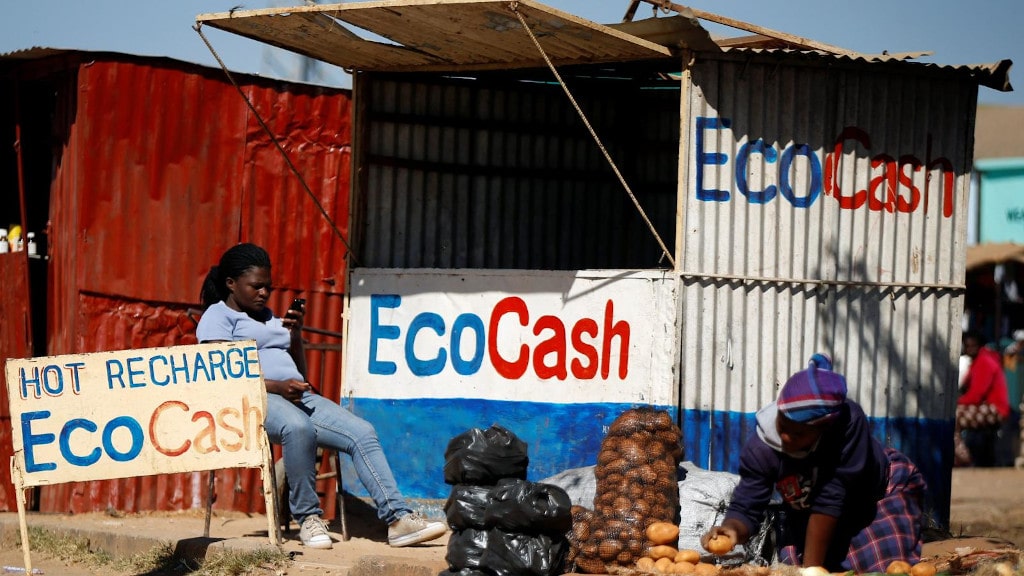
EcoCash’s latest bill-splitting feature on its Super App is not just a product upgrade, it is part of a broader shift towards “social commerce,” where financial transactions are embedded directly into everyday conversations.

Advertisement

Traditionally, sending money has been a deliberate, separate action: open the app, enter details, confirm payment. But with EcoCash’s integrated chat environment, that process is being redefined. Payments now happen in the same space where decisions are made — within conversations among friends, families and colleagues.

This development, which is being driven by Sasai Fintech, a subsidiary of Cassava Technologies, result is a more natural flow between communication and commerce.

This model, often referred to as chat-first payments, is gaining traction globally. Platforms such as Venmo in the United States and Revolut in Europe have popularised the idea of embedding payments into social interactions, allowing users to split bills, request funds and settle expenses within a messaging context.

Advertisement

EcoCash’s move signals that Zimbabwe is aligning with — and in some ways accelerating — this global trend.

Unlike many mature markets where card-based payments dominated before social features were layered on, Zimbabwe’s mobile-first ecosystem provides a different foundation. Mobile money is already deeply embedded in daily life, making it easier to integrate financial services into conversational platforms without requiring a behavioural overhaul.

By placing bill-splitting within its chat interface, EcoCash is effectively turning conversations into transaction points. A group discussing dinner plans can now split the bill instantly. Colleagues organising transport can settle contributions in real time. Families coordinating school fees or groceries can move from agreement to payment without leaving the chat thread.

Advertisement

This convergence of messaging and money is at the heart of social commerce.

From a strategic standpoint, the implications are significant. Each conversation has the potential to generate multiple transactions, increasing activity on the platform while strengthening user engagement. Payments become less of a task and more of a seamless extension of communication.

Industry analysts note that this model tends to drive higher transaction frequency and user retention, as financial interactions become habitual rather than occasional. For EcoCash, the bill-splitting feature is a practical entry point into this space, simple enough to encourage adoption, yet powerful enough to shift behaviour.

Advertisement

Continue Reading

National

Zimbabwe’s diplomatic ‘House of Cards’ exposed as funding crisis hits missions

Published

on

File footage retrieved online

BY WANDILE TSHUMA

Zimbabwe’s push to rebrand itself on the global stage is being undermined by a deepening funding crisis that has left key diplomatic missions in disrepair and staff facing eviction threats, lawmakers have warned.

Advertisement

A parliamentary report presented on Tuesday  shows a stark disconnect between rising foreign currency inflows and the deteriorating state of the country’s embassies abroad. While diaspora remittances surged to nearly $1.8 billion in the first three quarters of 2025 and exports jumped 27%, Treasury released only about 60% of the Foreign Affairs Ministry’s budget.  

The shortfall, equivalent to over ZWG1.2 billion, has “critically hampered” operations and stalled infrastructure upgrades at missions meant to anchor Zimbabwe’s international presence, according to the Portfolio Committee on Foreign Affairs.

“The substandard condition of missions… projects an image of resource scarcity and neglect,” the report said, singling out the embassy in Japan as emblematic of the decline.  

Advertisement

Renovation delays in key capitals such as London and Berlin, alongside stalled construction projects in Abuja, have eroded Zimbabwe’s diplomatic standing, lawmakers said. The ministry failed to meet targets to renovate or construct properties, missing at least five planned upgrades by September 2025 due to lack of funds.  

Members of Parliament warned that the deteriorating infrastructure risks sabotaging the government’s “Brand Zimbabwe” campaign, which seeks to attract tourists, investors and trade partners.

“If we want to attract investment and build strong relations, we must present ourselves in a dignified and professional manner,” one lawmaker said during debate, adding that underfunded embassies “do not present the actual face of the country.”  

Advertisement

The crisis extends beyond bricks and mortar. MPs said erratic funding has disrupted day-to-day operations, leaving missions struggling with basic costs such as fuel, ICT support and staff welfare. In some cases, diplomats abroad face “evictions and lockouts” due to unpaid expenses, Parliament heard.  

Underfunding has also weakened Zimbabwe’s ability to assist its citizens overseas and curtailed its participation in global diplomacy. “Underfunded embassies are often unable to assist globally dispersed citizens, even in emergencies,” another MP said.  

The situation has created what analysts describe as a fragile diplomatic architecture — one buoyed by strong economic inflows from the diaspora and export growth, yet hollowed out by fiscal constraints.

Advertisement

The committee noted that while Treasury has provided average monthly reimbursements of about $6.3 million to support missions, the funding gaps have “compromised the Ministry’s performance” and delayed critical projects.  

This contradiction is particularly striking given the government’s emphasis on economic diplomacy. Export earnings reached $8.57 billion between January and November 2025, sharply narrowing the trade deficit, while tourism campaigns under the “Brand Zimbabwe” banner have boosted international arrivals.  

Yet lawmakers cautioned that without adequate and timely funding, these gains could be undermined.

Advertisement

“Funding must not be allocated on paper. It must be released on time. Without that, even the best plans will fail,” one MP said.  

The committee urged Treasury to prioritise full and timely disbursements to restore Zimbabwe’s diplomatic infrastructure, warning that continued neglect could damage the country’s global image and weaken its ability to compete for investment.

“Embassies are the face of the nation,” the report concluded. “Without resources, that face risks becoming a liability rather than an asset.”

Advertisement

Continue Reading

In the community

Zimbabwe moves to support human-wildlife conflict victims

Published

on

BY NOKUTHABA DLAMINI

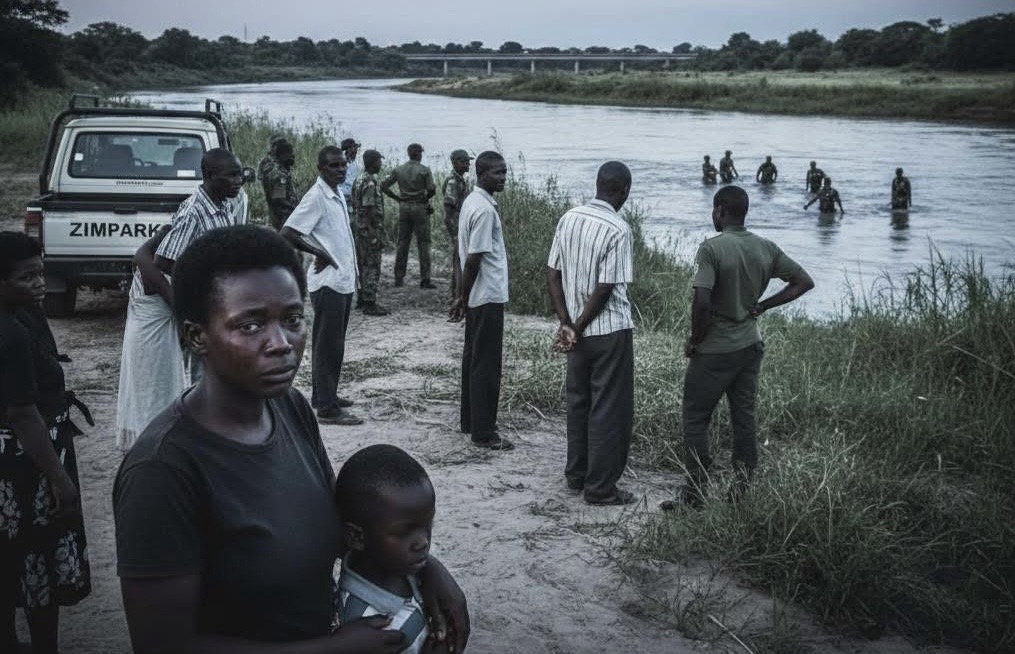
Cabinet has officially approved a transformative National Wildlife Policy, marking the first major overhaul of the sector’s regulatory framework in over three decades.

Advertisement

For the communities of Matabeleland North—from the elephant-dense corridors of Hwange to the tourism heartbeat of Victoria Falls—the policy promises a radical shift in how local people coexist with and benefit from the country’s natural heritage.

Presented by Finance minister Mthuli Ncube on Tuesday, the new policy acknowledges that the wildlife sector has been “remarkably transformed” since the current laws were enacted in 1992.

The updated framework seeks to align Zimbabwe with modern international best practices, moving toward a “vibrant wildlife-anchored economy” that directly supports national development.

Advertisement

For residents of Hwange and Victoria Falls, the most critical breakthrough is the policy’s explicit focus on human-wildlife conflict (HWC).

The framework provides for the implementation of the Human-Wildlife Conflict Relief Fund, specifically designed to provide benefits and support to victims of wildlife encounters.

This is paired with new regulations for CAMPFIRE (Communal Areas Management Programme for Indigenous Resources) and the establishment of dedicated wildlife corridors to reduce dangerous interactions between animals and human settlements.

Advertisement

The policy is built upon 10 strategic pillars, including community-based natural resources management and the equitable sharing of benefits.

Crucially, the government now recognises wildlife as a “public resource,” with the policy aiming to support devolution and enhance “active community participation.”

This ensures that present and future generations in Matabeleland North are not just neighbours to the game reserves, but active stakeholders in its socio-economic success.

Advertisement

However, community members say the success of the policy will depend on how effectively benefits are devolved to grassroots level.

“We have heard policies before, but what matters is whether the money reaches us,” said a Hwange villager, Eslina Ndlovu from Nemanhanga. “Our schools are struggling, some do not even have adequate classrooms or learning materials. If wildlife revenue is coming from our areas, it should help improve our education system.”

Another villager,Joseph Mwembe from Vukuzenzele village under Chief Mvuthu, echoed similar sentiments, calling for investment in health services. “We are living with wildlife every day, but our hospitals are not equipped. We don’t have proper referral hospitals or machines. If this policy is serious about supporting communities, then we must see that money building clinics, equipping hospitals, and improving services here in Matabeleland North,” he said.

Advertisement

Villagers stressed that without tangible improvements in infrastructure and social services, the policy risks falling short of its intended impact.

“If communities do not benefit in real terms, then it defeats the whole purpose of calling wildlife a national resource,” added Ndlovu.

The policy also introduces measures for fisheries conservation and the protection of indigenous plant species, with strict penalties for violations that threaten resource sustainability.

Advertisement

Continue Reading

Trending

Copyright © 2022 VicFallsLive. All rights reserved, powered by Advantage