BY GIBBS DUBE
A public banner in 1995 at a street corner in Zimbabwe’s second largest city, Bulawayo, advertising one of Zimbabwe’s top athletics events, the Merlin Marathon, changed the life of a then 23-year-old novice runner, Winneth Dube.
At that time, she had not competed in any professionally-organised marathon in her life, save for some school events when she was at Silveira Mission, Masvingo Province.
Winneth’s mother was quick to dismiss her interest in participating in the prestigious Merlin Marathon.
“My mother looked at me and said, ‘you know, marathons are not for day dreamers and how do you participate in such a big event when you have not been training?.”
She had just completed her secondary education and had not shown interest in participating in professional athletics events.
“I did some competitions but I was not really so much interested in it despite the fact that everybody always told me that I was talented.
“I was good at running, I could compete, it wasn’t really very difficult for me to partake in any formal sport, and when I left high school I wasn’t really interested.
“I didn’t have any plans of actually doing any form of competition, or knowing that I was going to be an elite athlete or something like that.
“So, I think I remember my first one (competition) when I went back into athletics again which was actually very different than actually doing sprints, it was a marathon.
“I registered for the Merlin Marathon … It was 42 kilometers. From not training or doing anything, I just thought, well I could actually run a marathon which was very crazy.
“And I never stopped from there on, and then I joined some clubs because then it was very difficult to find a tracks and field club.
“All you could find was just a marathon and middle distance.”
The Merlin Marathon kick-started her illustrious athletics career, which took her from the dusty streets of Bulawayo’s Tshabalala high density suburb, to the Airforce of Zimbabwe, Harare, Egypt, the Athens 2004 Olympic Games in Greece, Canada, South Africa and several countries where she competed with some of the world’s top athletes, including her mentor, sprinting queen Merlene Ottey of Jamaica.
Over the years, Winneth abandoned marathons and focused on sprints after she was spotted by one of Zimbabwe top athletics coaches, Stanely Mandebele.
“So, my career, I started in 1995 doing relays … I ended up going to the Commonwealth Games, I ended up going to the African Championships, All Africa Games again and also world championships in Paris.
“I was specializing in sprints, sprint events, which is 100 meters and 200, but for Olympics I qualified only for the 100 meters.”
Winneth’s personal best in the 100-meter race was 11.36, which she clocked in South Africa in 2003 before the Athens Games, according the official website of the International Olympics Committee.
“It is a Zimbabwean record. I think I started actually breaking the Zimbabwean record that was actually Commonwealth Games, when I ran and got to the semi-finals, that’s when I actually broke the records for the 100 meters and the 200 meters.
“I also then went to Tunisia after that which was the African Championships.
“Unfortunately, I couldn’t do my 100 (meter race).
“I was just there for the 200 because we were delayed. Our flights were delayed, we couldn’t get the 100 meters and I ran another 200 meter record.”
In the Athens Olympic Games, Winneth competed in the B category and came sixth in her heat.
“When I started doing the Commonwealth Games that’s when I realized that I can actually be able to compete really on the world stage and be able to be competitive.
“So, from then onwards, I also started preparing for the next season which was in 2003 I actually managed to run my 11.36, which was the B-standard for qualifying for the Olympics.
“So, that’s how I managed to actually get into the Olympics team.
“My 23.23 was not good enough for me to run in the 200 meters in the Olympics, because you have to enter either with an A-standard or with a B-standard, so with me I actually got my entry in the B-standard for the 100 meters.”
At the Athens 2004 Olympic Games, she rubbed shoulders with some of the top athletes, who included her Jamaican mentor.
“In the track and field, I think Merlene Ottey the Jamaican was actually my favourite.
“So, I was very lucky because when I went to the Olympics we were actually in the same heat, and then when I went to the Games Village dining hall, I managed to actually sit and talk to her, because as you know that is very, very difficult to come close and compete with so many athletes because you are competing at the world stage.”
“I competed against Debbie Ferguson, the Bahamian, which is the same girl that I actually competed with in the Commonwealth Games which is kind of sweet, and I also competed with a lot of great athletes from Africa – Mary Onyali, the African queen (Nigerian), Geraldine Pillay, the South African.
“So, we had great, great athletes that were competing there, just to name a few that I actually competed with that come into my mind right now.”
Several other athletes featured in the Athens 2004 Olympic Games. She vividly remembers most of them.
“There was Kelli White, Chryste Gaines, and there was Christy Aron, the French (woman) … That was the time when we had Marion Jones (American), so there were quite a number of athletes that actually were competing then.
“Some they were not just like sprinters, also, there were 400 meter runners that would actually also double up and actually run the 200 meters.
“Veronika Campbell is one of the greatest also that I actually had, you know, a chance to compete with and a number of Europeans.”
But Winneth could not progress to the next round of her competition.
“Well, I was just in the first round. I couldn’t advance to the next round like what I did in the world championships. As you know that Olympics really has a high caliber of athletes and also you need to be very well prepared.
“So, my season prior to that I wasn’t really so well prepared. I was prepared to get into the competition and do everything that I needed to do in terms of preparation, but you find other athletes are also prepared.
“So, it was really, really tough because I actually ran 11.56 which couldn’t actually give me another spot going into the next round of the games.”
She was disappointed about her performance but never gave up.
“As an athlete I think you, you always feel you could have done more because that’s the idea of competitions and that’s the idea of you preparing to get to this stage.
“It’s always wanting to know what you could actually have done better.
“You never really walk away being satisfied. I feel like I could have done much better in the Games, but you never really…you can’t.
“But now as I’m older and looking back, you know, I realise that it was quite an effort, I actually did my best considering the situation that I was in and also the environment that we were in.
“So, I really did my best.”
Soon after the Olympics, she had to find a new coach as her mentor was injured in a road traffic accident.
Canadian John Cannon became her new coach.
Winneth participated in the African Championship under him and other games and moved to Canada before settling in South Africa where she retired and started engaging in school events and other activities.
She says for athletes to get to the top, they should always be well-prepared for all events and should be proud of representing their nations in national and international events.
“I always say as an athlete, you prepare very much you know like everything that you do, your focus is to be the great athlete that you can possibly be.
“And also, I believe everybody when you make it to that greatest stage which means you’ve put so much work, you’ve put so much effort, you’ve sacrificed so much for you to be at that stage, and I always say, you know, you’ve got to believe in you, you know, and you’ve got to do your best, your best of that very day or whatever.
“That competition you’re going to do is really… once you get to the Olympics there’s never a lesser or whatever.
“You are part of the community, which means you are talented and you’re a great athlete.
“I always say keep to your plan even if you know it’s challenging right now you know because as I say is I think, champions and made in times of … when you are being tested, because there is never a perfect time for a champion.
“When things get harder, when you have to prove your resilience, and when you have to stand up when things feel like you’re going to lose, that they’re going to slip out of your hands.
“And that’s what makes a champion.”
She praises all the athletes who participated in the Tokyo 2020 Olympic Games saying they have done a great job in the world of athletics.
“When you’ve qualified and you’ve gone through and then you also have this thing, that cloud that actually says, ‘should I keep going?’, Will I be able to get to the stage and actually be able to perform? …
“I did it, you know. I was there and I did my best and I think that’s the best thing you can actually do for yourself.
“By virtue of working so hard for whatever years that you’ve done, right for you to end up in the team, OK, and representing your countries, it’s the greatest thing ever.
‘And what are you going to do there is also another milestone that you’re going to … whether you’re going to get a medal, whether you’re going to be in the second round or whatever, it doesn’t really matter, just do your best.
“Just keep doing exactly what you did. And guess what?
“We are all proud of them because they’ve done well and actually are representing us.”
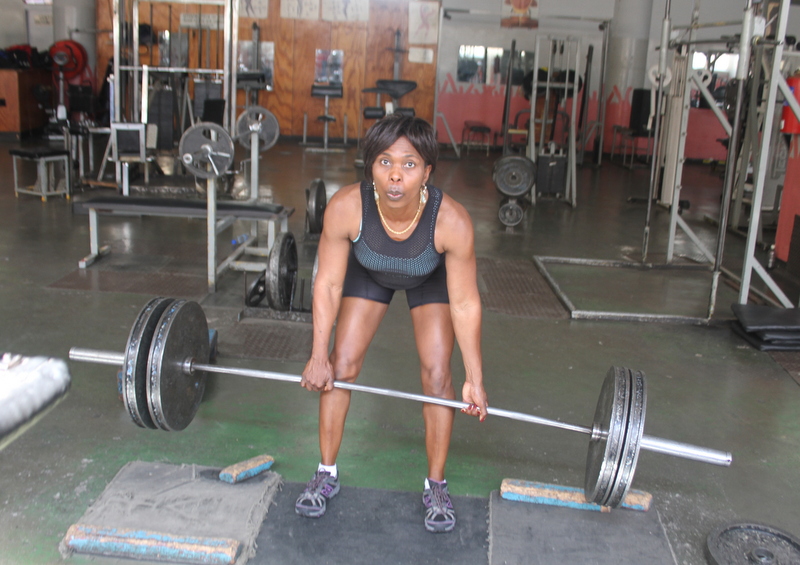
Winneth Dube currently lives in South Africa where she is engaged in many programmes, including school mentorship.
She likes cooking and body building. – VOA






 Slider3 years ago
 National5 years ago
 Tourism and Environment4 years ago
 Special reports4 years ago
 Opinion4 years ago
 National4 years ago
 National3 years ago
 National3 years ago