BY NOKUTHABA DLAMINI
In rural Lubimbi and Gwayi, Lupane district, the drought has done more than dry up rivers; it is straining communities.
Year after year, the rains fail, fields are left cracked and hunger tightens its grip. Now, girls as young as 14 are being drawn into sex work—sometimes with their parents’ knowledge—just to put food on the table.
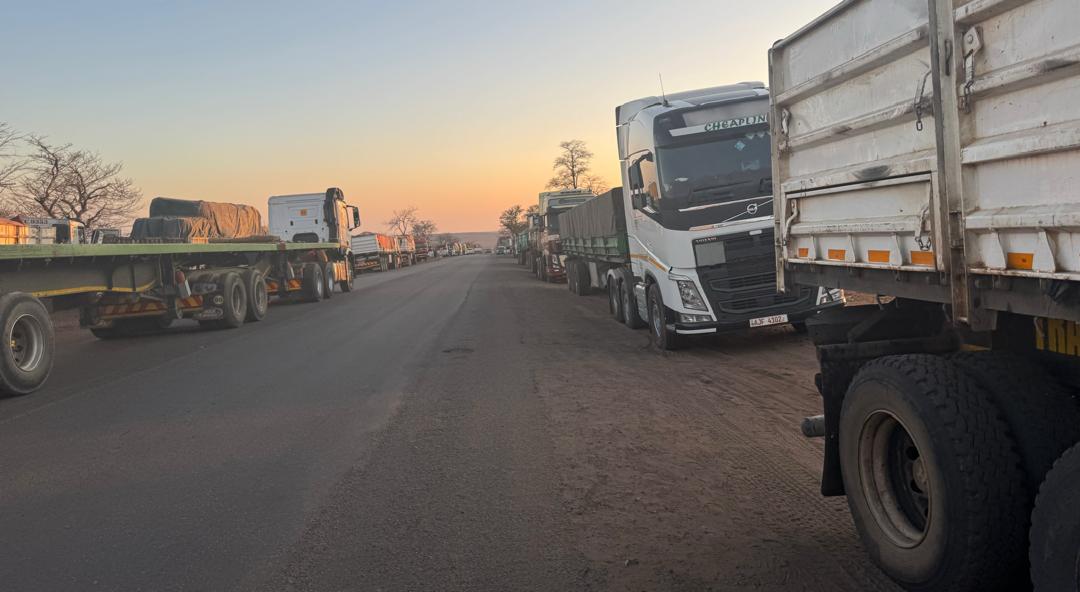
At Gwayi growth point, where haulage trucks park overnight along the Victoria Falls–Bulawayo highway, the trade is an open secret.
Harvest of Pain
“We see a lot of trucks coming here to park,” says Coster Ncube, a Gwayi villager. “Parents end up allowing their daughters to roam around at night for sex work because there’s no food at home. The fathers are unemployed and poverty is crushing us.”
Ncube’s voice carries both anger and grief. His 13-year-old niece, who was in Grade 7, recently fell pregnant after being sexually exploited by a married man who has since vanished.
“She’s in hospital now, waiting to give birth,” he told NewsHub on 26 September. “It’s heartbreaking. These are children who should be in school, not out here dying of diseases.”
He adds that the girls often come from as far as Jotsholo, Mabale, Cross Dete, Lupote and Lupane Centre—hundreds of kilometres away—drawn by the trucks and the chance to earn a few dollars through commercial sex.
“They’re between 14 and 21,” he says. “All they want is survival.”
For Selina Mthupha, a 47-year-old widow and small-scale farmer in Lubimbi, climate change has turned her once productive fields into dust.
“We used to have maize and groundnuts stacked in our granaries,” she says. “Now, even the millet dies before it tassels. The borehole water is salty, and the riverbeds are dry.”
She says she struggles to feed her two teenage daughters. “When I hear that girls their age are doing sex work for two dollars, I don’t judge. I cry. Because hunger can make you do things you never thought possible.”
Selina says she once dreamed of sending her children to college. “Now I just dream of rain.”
The desperation in Lupane mirrors findings from national research.
A 2025 study titled “Climate Change and the Feminisation of Poverty in Africa” established that climate change in rural Zimbabwe is deepening food insecurity and forcing women and girls into survival strategies that expose them to exploitation.
The study noted that failed harvests and long dry spells have left women with fewer economic options and greater vulnerability to abuse and transactional sex.
Another report published in 2021, “Challenges Faced by Rural People in Mitigating the Effects of Climate Change in the Mazungunye Community, Masvingo Province”, found that communities were already suffering the direct impacts of climate change: failed crops, loss of livestock, and worsening poverty.
It warned that most rural families lack access to climate-adaptive resources, leaving them trapped in a cycle of vulnerability.
For Ruth Bikwa, director of Hopeville, an organisation which works in child protection in Hwange’s Matabeleland North province, the crisis reflects a dangerous intersection of climate change, poverty, and neglect.
“When harvests fail and there’s nothing to eat, girls start finding other means to survive,” she explains.
“It’s not about choice, it’s about hunger. They trade sex for one or two dollars, just enough to buy mealie-meal or soap. And once they start, they face abuse, disease, and stigma. It becomes a trap.”
Bikwa says when droughts and economic shocks worsen, so does child exploitation. “It follows the poverty line. The harsher the climate, the more vulnerable the children become.”
“We Are Failing Our Children”
At Gwayi Centre, a resident, Shelter Vengesai Mpofu says drought has turned daily life into a survival theatre.
“Our boreholes run dry by midday,” she says. “We used to harvest from our fields, but now there’s nothing. The children see others making money from truck drivers and think that’s their only chance.”
She pauses, then continues: “We are failing our children — not because we want to, but because poverty leaves us helpless.”
At Gwayi Valley Primary School, teacher Mthulisi Ncube (name changed as teachers are not always allowed to speak directly with the press) says climate change is not only wiping out crops but also the classroom.
“We’ve lost many girls from the upper grades,” he says. “Some stop coming because they don’t have uniforms or sanitary pads. Others are lured by quick money. You can tell when hunger follows a child. They stop concentrating, then they disappear.”
He says teachers try to intervene, but most families are too poor to cope. “How do you tell a hungry child to stay in school when there’s no food at home? It’s better though now because the government at times provides hot meals in schools after realising this challenge.”
“It’s Laziness, Not Hunger”
Ward 24 councillor Senzeni Sibanda sees things differently.
“Our children don’t want to go to school or do physical work,” she says. “We have a vocational training centre and detergent-making lessons for just three dollars, but they refuse. They prefer quick money.”
Sibanda says her office has appealed for limits on overnight truck parking but was told the law allows drivers to rest anywhere along the road.
“The trucks bring prostitution, yes, but our youths are also lazy. They don’t want to work.”
Her remarks, however, clash sharply with what parents and activists say: that climate-induced poverty, not laziness, is driving desperation.
Human rights advocates warn that without urgent action — food relief, youth empowerment programs, and climate adaptation projects — the situation will worsen.
“It’s easy to judge,” says Bikwa, “but when the earth no longer gives, people do what they must to survive.”
For many families, this is what climate change looks like—not just cracked soil and empty dams, but lost childhoods and futures fading in the dust.
A 2024 parliamentary meeting revealed a staggering statistic: 4 557 school girls dropped out of school due to pregnancy in 2023 alone.
The majority of these girls (3 942) were from rural schools, and most were in secondary school.
Then, minister of Primary and Secondary Education, Torerai Moyo, said the Education Management Information System (EMIS) tracked these annual figures, and that the government was introducing guidance, counselling in schools, and legal protections via the Education Amendment Act of 2020, allowing pregnant girls to take a two week maternity leave and return.
Recent statistics from the National AIDS Council (NAC) show that Matabeleland North Province has an adult HIV prevalence rate of about 14.4–14.5% among people aged 15 and above, significantly higher than the national average of around 11.7%.
This elevated rate is linked to factors such as increased sex work around mining sites and business centres, migration, spousal separation, and inconsistent condom use. NAC has specifically flagged Bubi District as one of the areas with high risk due to mining and business centre activity, as well as Lupane and Hwange.
SOURCE: Newshub






 Slider3 years ago
 National5 years ago
 Tourism and Environment4 years ago
 Special reports4 years ago
 Opinion4 years ago
 National4 years ago
 National3 years ago
 National3 years ago