Connect with us

In the community

Drought devastates Matabeleland North province: Livestock deaths mount

Published

on

BY NOKUTHABA DLAMINI

In the parched lands of Matebeleland North province, a dire situation is unfolding. Villagers in Nkayi, Lupane and Hwange report that cattle are dying in staggering numbers, especially those that have recently given birth.

Advertisement

“The situation is terrible,” says Jane Ndlovu, a local farmer Simbo village.

Calf born alive, but immediately dies as the mother fails to feed

“Cows are dying after giving birth, and even the newborns are not surviving. It’s heartbreaking to see. We’re facing a catastrophic situation here. Our cattle are dying left and right, especially the ones that have just given birth. It’s like they’re being born just to die. And it’s not just the cattle, our donkeys are also perishing in large numbers. We’re talking about our livelihoods here, our source of income. Without our animals, we’re doomed.”

Ndlovu’s neighbor, Singaphi Sibanda, echoes her concerns.

“The situation is dire. We’re struggling to find food and water for our animals. The grazing lands are dry and barren, and the heat is unbearable. Our animals are suffering from exhaustion and dehydration. We’re trying to do our best, but it’s like fighting a losing battle. We’re talking about our very survival. There’s no food, no water, no nothing. Our children are going to bed hungry every night. We’re forced to walk long distances just to find a drop of water. And when we do, it’s often contaminated. We’re living in a nightmare.”

Advertisement

Jambezi resident Lenziwe Moyo adds, “The drought is relentless. We’ve never seen it this bad. Our animals are suffering, and we’re struggling to find food and water. We’re trying to do our best, but it’s like fighting a losing battle.”

Sub-calf ravaged by the drought

As the drought worsens, concerns grow about the long-term impact on the community.

“This drought is a disaster, a complete and utter disaster,” says Lupane village head Phios Ncube, a local leader.

“We need help, and we need it now. Our people are suffering, our animals are dying. We can’t just sit back and watch as our community is decimated.”

Advertisement

Background:

The current drought in Matebeleland North province and the country at large is driven by the El Nino phenomenon, which has brought extreme weather conditions to the region.

According to the Zimbabwe National Statistics Agency, the country has experienced a 70% decline in maize production, and livestock deaths have surged.

Advertisement

The government has declared a state of emergency and launched the “Drought Relief Programme” to provide assistance to affected communities.

International organizations, such as the World Food Programme and the Food and Agriculture Organization, are also providing support, but it is not reaching to everyone.

Research by the International Livestock Research Institute (ILRI) shows that droughts in southern Africa have increased in frequency and severity over the past century, leading to significant livestock losses and food insecurity.
Advertisement

Continue Reading
Click to comment

Leave a Reply

Your email address will not be published. Required fields are marked *

In the community

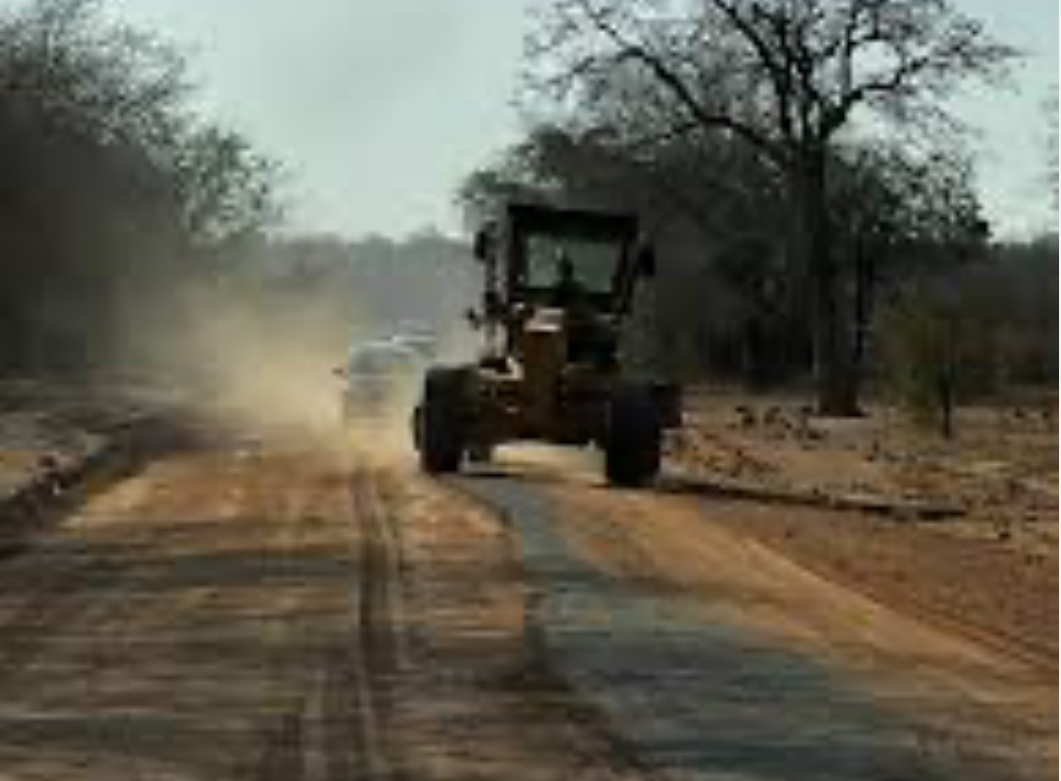
Heavy rains worsen condition of Binga’s poor road network

Published

on

BY STAFF REPORTER 

Communities in Binga are facing worsening road conditions after heavy rains damaged key routes, prompting urgent calls for rehabilitation and government intervention.

Advertisement

Binga South legislator Fanuel Cumanzala said several major roads in the district have been severely affected by incessant rains, disrupting transport and access to essential services. 

He cited the Karoi-Binga Centre Road, Binga Centre-Cross Dete Road, Kariangwe-Lusulo Road, and Gwai-Lusulo Road as critical routes in need of urgent attention.

“The state of these roads is now a serious concern for our communities as they are no longer easily accessible,” Cumanzala said 

Advertisement

“People are struggling to reach markets, health facilities and schools due to the damage caused by continuous rains.”

Transport and Infrastructural Development minister Felix Mhona said the Karoi-Binga Road, a 192-kilometre inter-provincial route linking Mashonaland West to Matabeleland North, has only 62 kilometres surfaced, with the remaining 130 kilometres gravel. 

He said plans were underway to upgrade the gravel sections.

Advertisement

Mhona added that the Karoi-Binga-Cross Dete Road has been earmarked for rehabilitation under a Public-Private Partnership, with an investor’s expression of interest currently under consideration. 

On the Kariangwe-Lusulo and Gwai-Lusulo roads, he said ongoing works are focused on repairing rain-damaged structures.

“Contractors working along the Bulawayo-Victoria Falls Road have also been engaged to attend to nearby damaged structures,”Mhona said.

Advertisement

“As a ministry, we will continue assessing the situation and submit funding requests for full rehabilitation as a long-term solution.”

He noted that several roads in Binga District have outlived their lifespan and require urgent rehabilitation, adding that upgrading costs have been calculated and projects will be implemented gradually as funds become available.

In the meantime, he said the ministry will continue routine maintenance efforts such as re-gravelling and pothole patching in collaboration with local stakeholders.

Advertisement

“We are committed to improving the road network in Binga to enhance access to markets, healthcare and education facilities while ensuring long-term sustainability of the infrastructure,” Mhona said.  Source: Southern Eye 

Advertisement
Continue Reading

In the community

Speaker proposes national hotline for flood-prone districts like Tsholotsho

Published

on

BY NOKUTHABA DLAMINI 

The National Assembly recently held an urgent debate on the state of national disaster preparedness, with lawmakers warning that the current lack of resources at the district level is costing lives

Advertisement

During the session, Clemence Chiduwa presented a somber report on a tragedy in Zaka South where two men died after being marooned for twelve hours following the capsizing of their boat . Emphasizing the gravity of the situation, he told the House, “The loss of life in Zaka South was not a local tragedy; it is a national warning as this is also happening in other districts”

Chiduwa argued that the failure of local units to respond quickly is a symptom of broader underfunding and lack of equipment, stating, “It reminds us that the disaster response delayed is disaster response denied”. He further observed that “institutions without tools cannot save lives,” calling for the Rural Infrastructure Development Agency (RIDA) to be adequately resourced with the machinery and financial support necessary for timely road and bridge rehabilitation.

Addressing these concerns, the Speaker of Parliament reminded the members that the state must utilize its existing resources, particularly the military’s air capabilities which have proven effective in the past.

Advertisement

The Speaker specifically highlighted previous successful interventions, noting, “The helicopters from the army are always ready to come in and they have done so in the past, especially during Cyclone Idai and also when there were floods in Tsholotsho”.

To improve response times in flood-prone areas across Matabeleland North, the Speaker proposed the implementation of a national emergency line. He suggested that “what we need to really push for is hotline availability to all districts, if not all wards, so that as soon as they experience that, they phone that hotline straight to headquarters and the army will react accordingly”. This initiative aims to ensure that communities like Tsholotsho can bypass local infrastructure failures and receive immediate military assistance during future flood events.

Advertisement
Continue Reading

In the community

MPs question poor radio, TV coverage in Mat North

Published

on

BY STAFF REPORTER 

Concerns over limited access to national broadcasting services in Matabeleland North Province were raised in Parliament.

Advertisement

MP Discent Bajila of Emakhandeni-Luveve constituency asked the Minister of Information, Publicity and Broadcasting Services:

“To explain why national radio and television coverage remains poor or non-existent in parts of Gokwe North District, Matabeleland North Province, Matabeleland South Province, and nearby districts, and to indicate whether there are any digital signal expansion plans in place before 2026.” 

In a separate question, Joseph Bonda for Hwange East Constituency raised concern over weather information gaps in Hwange:

Advertisement

“Why the weather forecast for Hwange is not broadcast, given that it is a resort with municipal status and significant business activities.” 

No responses were recorded.

Advertisement
Continue Reading

Trending

Copyright © 2022 VicFallsLive. All rights reserved, powered by Advantage