BY LINDA MUJURU
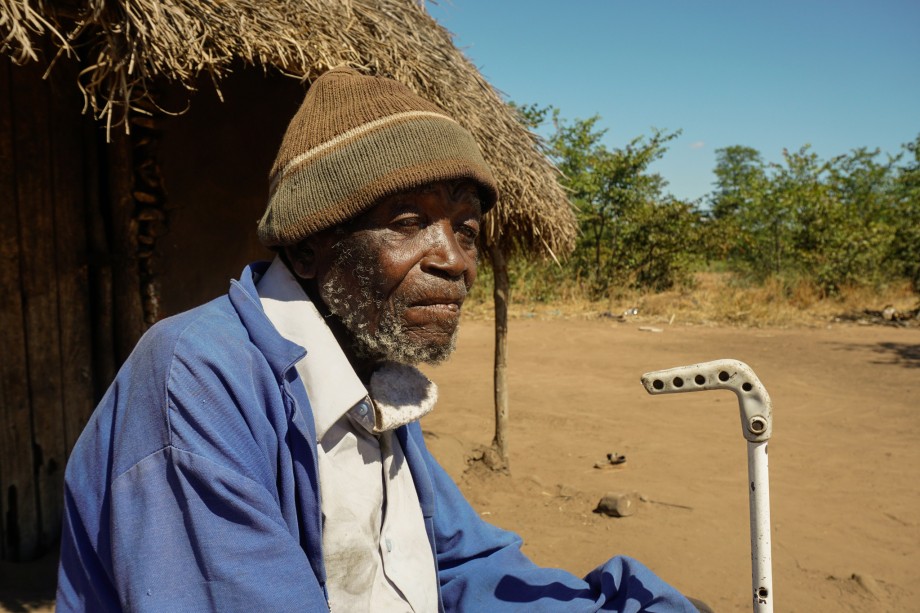
When Mkachana Chali
meets fellow residents of this quiet, rural community in southeastern Zimbabwe,
he chants “Chitakataka chahina,” a Shangaan saying that means “our black soil.”
That’s all he talks
about each day: the land.
For generations, this region
located near the border with Mozambique and South Africa has been home to the
Shangaan people, who, together with other indigenous groups, make up less than
10% of Zimbabwe’s population.
Now, however, Chali
said the land and the entire Shangaan way of life are under threat.
Earlier this year, the
Zimbabwean government set aside nearly 13,000 hectares of land in the area for
a major commercial irrigation project to support alfalfa production.
As a result, more than
12,000 Shangaan people in the region could be forcibly displaced from their
homes.
“I have 22 cows and
more than 60 goats. I have built my house here and given my children part of
the land that I got from my father. My children have also built their homes on
the land I gave them,” Chali said.
“I’m very comfortable
with what I have and what I have accomplished. If the government sets up this
irrigation scheme, it will limit our land use.”
Moreover, the project
could sever the Shangaan people’s connection with their ancestral graves and
other sacred sites.
Traditional rituals,
dances and music also could be lost if the Shangaan are displaced, according to
the Masvingo Center for Research Advocacy and Development (Macrad), a nonprofit
social and economic justice organisation.
“They have lost all
their rights to the land,” says Ephraim Mutombeni, coordinator of Macrad.
Local residents have
been pushing back against the development project.
“We are
self-sustainable, and we don’t want to depend on handouts. A private
company-financed irrigation project will render us useless and dependent on
them for survival,” Muhlava Matsilele said. “We don’t want our land taken!”
Boniface Chirovera
similarly said the project to grow alfalfa — also known as lucerne — will
prevent him from raising cattle and growing sorghum, which he sells to local
butcheries and breweries, respectively.
“Lucerne grass will not
help me get food on my table,” Chirovera said.
“It will not enable me
to send my children to school. It will not help me take care of my family the
way I am right now, because it does not belong to me.”
Residents of the region
have been displaced before. In the 1960s, the Shangaan were forced to move off
part of their ancestral land in order to make way for the Gonarezhou National
Park, which stands just outside Chilonga.
And beginning in 2010,
nearly 1,800 households were forcibly displaced from the villages of
Chisumbanje and Chinyamukwakwa — about 110 kilometers and 130 kilometers from Chilonga, respectively — to make way for
an ethanol plant operated by Green Fuel, a Zimbabwean energy firm.
In 2012, a government
committee found that most of the households displaced by the ethanol project
had not been resettled or provided meaningful compensation.
It criticised as
inadequate the standard compensation of 0.5 hectare of land per household,
recommending that households be provided with up to 2 hectares of land.
Merit Rumema, corporate
social responsibility manager at Green Fuel, said the company has committed to
allocating 10% of the land it develops to the local community and, to date, has
distributed 0.5-hectare plots to 1,205 families in Chinyamukwakwa, Chisumbanje
and Munepasi, another village in the area. “An additional 90 plots are
currently being cleared and will soon be occupied by the community in the
Chisumbanje area,” Rumema said.
Local residents do not
feel they have received a fair deal, however.
“I had 9 hectares of
land that I grew crops on with my four children,” says Adam Chijakara, 83, who
has lived in Chinyamukwakwa since 1973.
“Now I am left with
half an acre, and my children were not given anything. Their legacy has been
stolen.”
Melody Mlambo says she
didn’t receive any warning that her 5 acres of farmland would be taken.
“Even the cotton that
was on the land at that time was destroyed by the Green Fuel company,” she
says.
Rumema says Green Fuel
operates in the region through an agreement with Zimbabwe’s Agricultural and
Rural Development Authority, which grants it the right to access the land.
“Green Fuel is not
aware of any other person or entity that has rights over the said land who are
capable of being ‘displaced,’” Rumema said. “Anyone who claims they were
‘displaced’ must surely legally substantiate such allegation.”
The Agricultural and
Rural Development Authority did not respond to multiple requests for comment.
The government should
have addressed the concerns of local residents before moving forward with the
ethanol project, says Claris Madhuku, director of the Platform for Youth and
Community Development, a community organization focused on sustainable
development that is based in Chipinge, another town in eastern Zimbabwe.
“The community members
were not given an opportunity to negotiate for access to information on their
rights and cultural concerns,” he says.
All of this now
concerns the residents of Chilonga, who see history repeating itself.
“These irrigation projects did not start here only,” said Chali, pointing out how other residents of the area have been impacted. “It has actually affected their livelihoods. And now they want to do the same to us.”- Global Press Journal






 Slider3 years ago
 National5 years ago
 Tourism and Environment4 years ago
 Special reports4 years ago
 Opinion4 years ago
 National4 years ago
 National3 years ago
 National3 years ago