Connect with us

Slider

Zimbabwe deports Chinese in viral video assaulting mine workers

Published

on

BY KITSEPILE NYATHI

Zimbabwe this week deported two Chinese nationals accused of hanging two mine employees on a front-end loader in a case that ignited debate about alleged abuses by investors from the Asian country.

Advertisement

A viral video of the two employees being tied to a bucket of the front-end loader before it was lifted with them hanging by their hands sparked outrage and spurred the authorities to take action. 

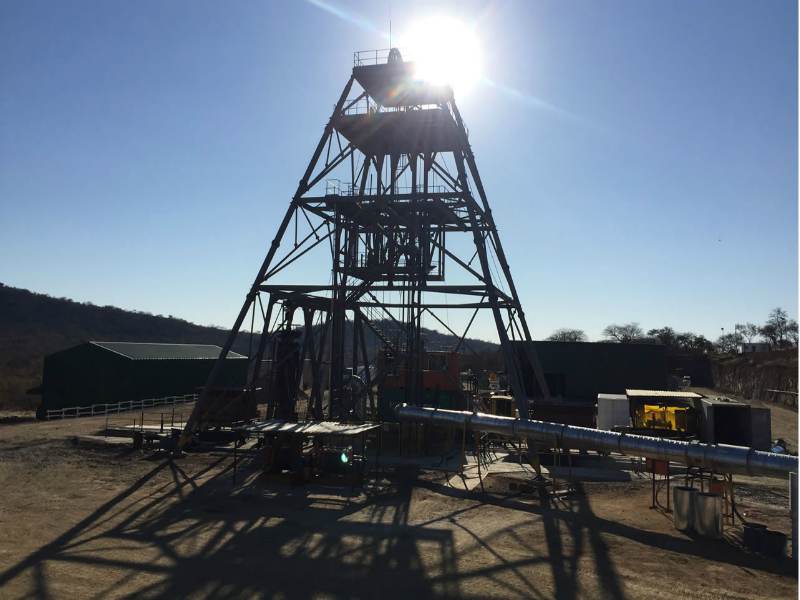
Police on Wednesday said they had identified the suspects and complainants at Makanga mine in Bindura, about 88 kilometres northeast of the capital Harare.

The brief police statement said, “investigations are in progress,” without naming the Chinese nationals, but a few hours later a government spokesperson announced on social media that they had been deported.

Advertisement

“The two foreign nationals involved in this abuse depicted on a video that went viral were deported (on Wednesday),” government spokesperson Nick Mangwana posted on X.

The Zimbabwe Miners Federation (ZMF) described the attack as “appalling, vile, inhumane and savage” as it urged the authorities to launch an investigation into the mine’s operating environment.

“The Zimbabwe Miners Federation is incensed and appalled by the vile and savage attack on Zimbabwean mine workers by a Chinese boss at Makanga Mine in Bindura,” ZMF said in a statement.

Advertisement

“The shocking footage circulating shows the workers being subjected to cruel and inhumane treatment, tied up and hanged from a front-end loader bucket like animals.

“This barbaric act is a blatant violation of the Constitution of Zimbabwe, which guarantees the right to personal security and freedom from torture or cruel, inhumane or degrading treatment or punishment. 

“We will not stand idly while our members are subjected to such egregious abuse.”

Advertisement

The mining industry lobby urged the authorities to investigate the matter and deal with rampant claims of abuse of local workers by Chinese bosses in the mining sector.

“ZMF vehemently condemns this despicable act and demands immediate arrest and prosecution of the Chinese bosses responsible, thorough investigation into the mine’s labour practices and swift action against any violations,” the statement said.

“We will not tolerate such blatant disregard for human rights and the rule of law. ZMF stands in solidarity with the victims and will fight tirelessly to ensure that justice is served.”

Advertisement

 Last year, Zimbabwean labour unions wrote to the government demanding that it investigate Chinese employers, whom they said had become notorious for violations such as torture, beatings, gender-based violence, low wages and a host of other labour transgressions.

The Zimbabwe Congress of Trade Unions – the largest labour centre in the country – accused government officials of shielding abusive Chinese employers because they were getting bribes.

A recent report by the Zimbabwe Environmental Law Association (Zela) titled The Handbook of Zimbabwe-China Economic Relations, claimed that there was widespread abuse of local workers in Chinese-owned mines.

Advertisement

“The research team learnt from the communities that Chinese mining companies rarely abide by the minimum wage as per the labour regulations and that there is overwork at the mines and no proper working timetable with workers working a 12-hour day,” said the Zela report.

“We learnt that workers were not being provided with safety clothing. 

“Community leaders, who approached some of the mining companies on this, indicated that they were told that their workers are temporary and on fixed term contract basis, thus they cannot be buying safety clothing every time a contract ends, and a new worker has come in.” 

Advertisement

The Chamber of Chinese Enterprises in Zimbabwe said its members were being unfairly targeted because of transgressions of a few investors from the Asian country.

It also urged the government to apply the law without fear or favour when foreign investors violate local laws. 

Chinese companies have been investing heavily in Zimbabwe’s economic sectors since President Emmerson Mnangagwa came to power seven years ago and they now have a huge presence in the mining, construction, energy and agriculture sectors.

Advertisement

According to the Zimbabwe Development Agency, 60 percent of the new foreign investors recorded last year were from China, with 369 licences that had a projected value of $3.93 billion.

Chinese companies were awarded licences in the third quarter of 2023 to mine lithium and to invest in energy and other sectors.

Source: The East African

Advertisement

Continue Reading
Click to comment

Leave a Reply

Your email address will not be published. Required fields are marked *

Hwange

Hwange MP challenges government over Nambya teacher deployment

Published

on

BY NOKUTHABA DLAMINI

Hwange East legislator Joseph Bonda has called on the government to address what he describes as the marginalisation of the Nambya language in schools, arguing that current teacher deployment policies are undermining early learning in Matabeleland North.

Advertisement

According to the National Assembly’s official record of 7 April 2026, Bonda formally asked the Minister of Public Service, Labour and Social Welfare to explain why trained Nambya-speaking teachers are not being employed in Hwange District while non-speakers are posted to the area.

He said the practice was “depriving children of receiving instruction in their mother tongue at the early education stage”, which he described as critical to both educational outcomes and cultural development.

Under Zimbabwe’s language policy framework, learners are expected to be taught in their mother language in the early grades. Critics say failure to align teacher deployment with local languages weakens that principle in practice.

Advertisement

Despite the concerns raised, the matter remains unresolved in Parliament. The inquiry was deferred on 18 March and, at the latest sitting, the ministry had yet to provide a formal response.

Parents in the district say the issue has direct consequences for children’s performance.

“Our children are disadvantaged from the start,” said Ester Ncube, a parent in Jambezi under Chief Shana. “If a child cannot understand the teacher in Grade One, it affects everything that follows.”

Advertisement

Community leaders argue that the debate goes beyond classroom instruction and touches on identity.

“Language is part of who we are,” said local elder Eliziya Vashe Shoko. “If schools do not teach in Nambya, we are slowly losing our identity. Government must take this seriously.”

Young professionals in the province say the challenge is not a shortage of qualified personnel but gaps in recruitment and deployment.

Advertisement

“There are trained teachers who speak Nambya, Lozvi, Chidombe and other local languages, but they are not being deployed here,” said Lindiwe Sibanda, a recent graduate.

“At the same time, teachers from outside are brought in. It does not make sense. These languages should be prioritised so that communities feel a sense of belonging and respect.”

The language dispute forms part of a wider push for regional equity in Matabeleland North. Bonda has also raised concerns over local employment quotas in the wildlife sector and what he describes as the exclusion of Hwange from national weather forecasts. He argues that these issues reflect a broader mismatch between national policy and local needs.

Advertisement


SOURCE: CITE

Advertisement
Continue Reading

National

Zim’s backyard pharmacies boom as economic crisis bites

Published

on

BY VANESSA GONYE

Health experts have expressed growing concern over the emergence of illegal herbal creams and unregulated drug sales on the streets of Harare and throughout Zimbabwe.

Advertisement

A disturbing increase in the presence and sale of unregulated medicines is bedeviling the country, with worry rising over the dangerous outcomes associated with these products.

In recent years, the capital has witnessed a sharp rise in informal drug outlets commonly referred to as “backyard pharmacies”.

 These unlicensed operations are often run from residential homes, tuckshops, market stalls, or simply from blankets laid on busy pavements.

Advertisement

In recent years, the capital has witnessed a sharp rise in informal drug outlets commonly referred to as “backyard pharmacies”.

 These unlicensed operations are often run from residential homes, tuckshops, market stalls, or simply from blankets laid on busy pavements.

Surveys reveal that these backyard pharmacies operate without any quality control, cold chain storage, or professional oversight.

Advertisement

Some of the drugs may be counterfeit, expired, adulterated, or incorrectly labelled.

Itai Rusike, the executive director of the Community Working Group on Health (CWGH), expressed alarm over the proliferation of these vendors, noting the trend puts patients’ health and safety at serious risk.

“The challenge is and has always been the gap in communicating the dosage schedule and indication for treatment,” Rusike said.

Advertisement

“There is no accreditation or regulation of the practitioners, their practice, nor their premises, as is done for registered pharmacists trained in conventional medicine”.

Rusike also highlighted a dangerous lack of scientific data: “There is generally a lack of clinical trials, scientific data and evidence to support the efficacy of street medicines, despite some claims from treated individuals”.

He called for widespread health and treatment literacy programmes to stop citizens from “taking wild gambles” with their health.

Advertisement

Rusike urged that: “the regulatory authorities should also be seen to effectively apply the laws regulating the sale of medicines in the country and protecting the health and safety of the general public without fear or favour”.

Johannes Marisa, president of the Medical and Dental Private Practitioners of Zimbabwe, echoed these concerns, stating that selling drugs from unregulated places is a major threat to public health.

“When we are talking of public health, we become very worried when we see drugs being sold everywhere,” Marisa said.

Advertisement

He warned that counterfeit drugs can create a “false belief that you are recovering from something, yet you are taking a counterfeit drug, which does not work”.

He added that such practices prolong infections and increase both morbidity and mortality.

The trend is largely driven by economic hardships that have made formal healthcare unaffordable for many, alongside high unemployment that has pushed individuals into pharmaceuticals as a lucrative vending commodity.

Advertisement

The Medicines Control Authority of Zimbabwe (MCAZ) has repeatedly warned that these unregistered products pose significant risks, including kidney and liver damage, high blood pressure, and increased cancer risk.

In response, the government has introduced stiffer penalties, with offenders now facing up to 20 years in prison.

SOURCE: THE STANDARD

Advertisement

Continue Reading

Hwange

Hwange MP raises alarm over wildlife jobs bias as locals back call for reform

Published

on

BY NOKUTHABA DLAMINI 

Hwange East legislator, Joseph Bonda, has taken the fight for local employment in wildlife conservation to Parliament, questioning why communities living alongside dangerous animals are being sidelined in job opportunities.

Advertisement

In a question directed to the Minister of Environment, Climate and Wildlife, Bonda pressed for clarity on what measures are in place to ensure that residents of Hwange District are prioritised for employment by the Zimbabwe Parks and Wildlife Management Authority. He argued that locals, who bear the brunt of human-wildlife conflict, should be first in line for jobs in the sector.

The matter, however, did not receive an immediate response in the National Assembly and was deferred on 18 March 2026, leaving the concerns unresolved for now. 

Bonda’s intervention has resonated strongly with communities in Hwange, where wildlife is both a resource and a risk.

Advertisement

“We live with these animals every day”

In Mabale, local villager Sibangani Ndlovu said it is unfair that outsiders benefit from jobs linked to wildlife while locals face constant danger.

“We live with these animals every day. Elephants destroy our crops, sometimes people are injured or killed. But when jobs come, they go to people from far away. That is not right,” he said.

Advertisement

“Employment should be compensation too”

Another r, Memory Moyo from Dete, said employment in parks and safari operations should be viewed as part of community compensation.

“If we are expected to conserve wildlife, then we must also benefit. Jobs are one of the biggest benefits. Otherwise, people will start to see animals as a burden, not a resource.”

Advertisement

Youth feel locked out

Young people in the district say lack of access to jobs in the wildlife sector is worsening unemployment.

Talent Ncube, a youth from Hwange, said many qualified locals are overlooked.

Advertisement

“We have people trained in tourism and conservation here, but they are not getting opportunities. It discourages us as young people because we feel excluded from our own resources.”

Growing pressure on government

Bonda’s question adds to mounting pressure on government to align conservation efforts with community benefits, especially in areas like Hwange where human-wildlife conflict is frequent.

Advertisement

With the issue now formally raised in Parliament, residents say they are waiting to see whether authorities will respond with concrete policy changes—or whether, like many rural concerns, it will remain unresolved.

Advertisement
Continue Reading

Trending

Copyright © 2022 VicFallsLive. All rights reserved, powered by Advantage