Connect with us

Slider

ZTA gears up for tourism month with significant expo in Mutare

Published

on

BY STAFF REPORTER 

Zimbabwe Tourism Authority (ZTA) is poised for a vibrant September as it kicks off Tourism Month activities, highlighted by the highly anticipated Sanganai/Hlanganani Kumbanayi Tourism Expo in Mutare.

Advertisement

This year’s event set for the 10th to the 12th of this month is set to showcase the country’s diverse tourism offerings and foster investment opportunities.

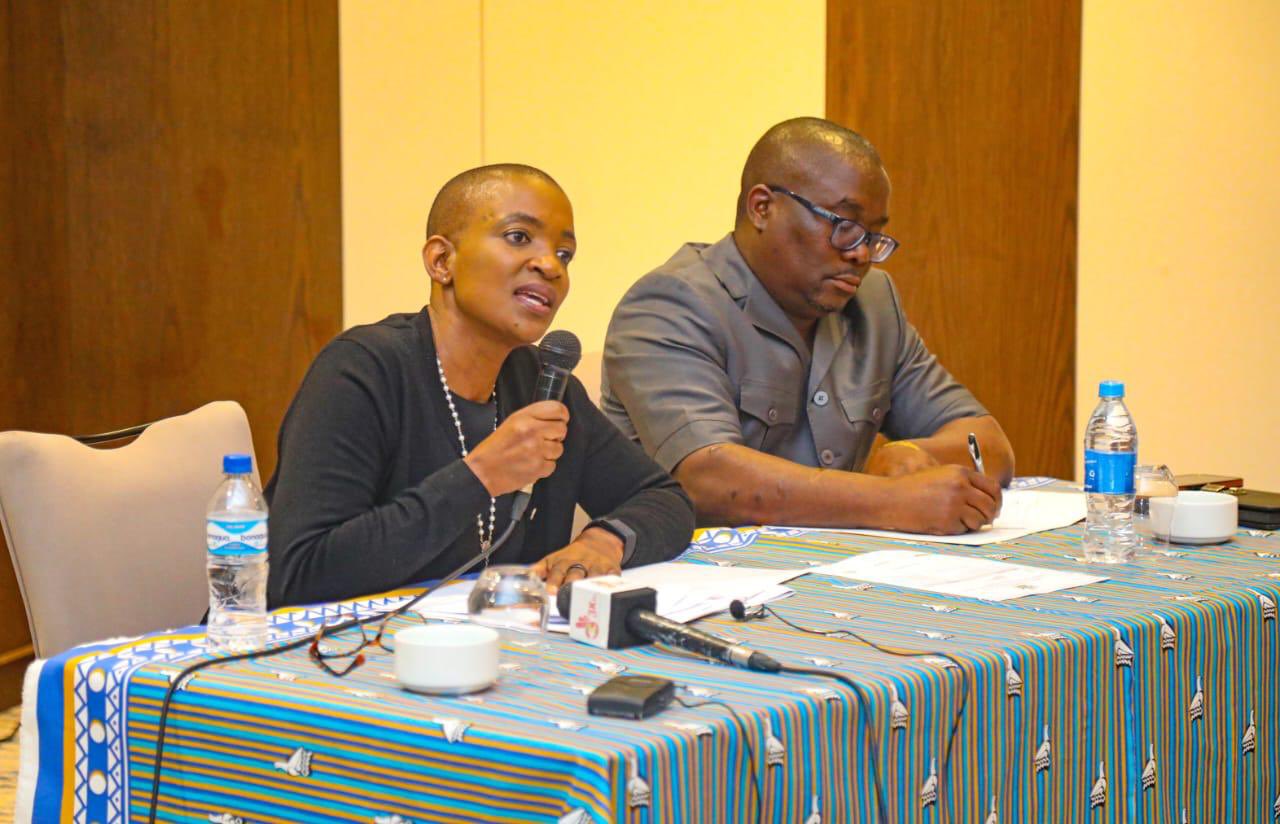
At a press conference held today in Harare and shared by the ZTA on X, Barbara Rwodzi, the Minister of Tourism and Hospitality Industry, expressed optimism regarding this year’s edition, asserting that it will be a “resounding success.”

The Expo features a robust lineup of activities, attracting participation from 83 international buyers from key source markets, 11 local buyers, and a total of 411 registered exhibitors.

Advertisement

Minister Rwodzi emphasized the ongoing infrastructure upgrades in Manicaland, which include improved road conditions, the refurbishment of the Grand Reef Aerodrome, daily flights operated by Air Zimbabwe, and a luxury train service connecting Harare and Mutare. These enhancements are anticipated to stimulate job creation and promote long-term economic growth.

Joined by Deputy Minister, Tongai Mnangagwa, Rwodzi acknowledged the role of the media in amplifying the visibility of the Expo and urged for continued coverage to maximize outreach.

In addition to the Expo, Tourism Month will feature a Tourism Symposium, various sports tourism activities, including a marathon, and celebrations for World Tourism Day, marking September as a pivotal moment for Zimbabwe’s tourism sector.

Advertisement

Powered by ikigai Africa  ·  Questions generated automatically from this article

Advertisement
Continue Reading
Click to comment

Leave a Reply

Your email address will not be published. Required fields are marked *

National

Zimbabwe lawmakers clash over constitutional amendment proposals

Published

on

Image caption: Parliament of Zimbabwe

BY NOKUTHABA DLAMINI

Zimbabwean lawmakers on Thursday clashed over proposals to extend presidential and parliamentary terms from five to seven years and replace direct presidential elections with an Electoral College system, as debate on the Constitution of Zimbabwe Amendment (No. 3) Bill continued in the National Assembly.

Advertisement

Supporters of the Bill argued that longer terms would provide governments with enough time to implement development programmes and reduce political uncertainty.

Mkoba North legislator Edgar Ncube said the current five-year cycle was too short to deliver meaningful transformation.

“You cannot plant a tree on Monday and harvest its shade by Friday,” Ncube told Parliament. “Five years is too short to conceive, implement and entrench transformative national development.”

Advertisement

Moses Mudzingwa supported the proposal, arguing that frequent elections kept the country in a perpetual campaign mode that discouraged long-term investment.

Opponents, however, said elected officials should not alter constitutional provisions in ways that could weaken public oversight.

Martin Mureri argued that authority rests with voters and cannot be extended without their consent.

“If a headman gives you four acres of land, you cannot wake up and make them eight acres,” Mureri said. “The employers are the people of Zimbabwe.”

Advertisement

One of the debate’s most memorable interventions came from Goodrich, who used a football analogy to oppose extending terms of office.

“If Scotland is playing Caps United and the match is set for 90 minutes, when the 90 minutes are over you do not ask for another 30 minutes because you are playing well,” Chimbaira said.

The Bill’s proposal to have the president elected by an Electoral College comprising members of Parliament and senators also drew sharp divisions.

Advertisement

Others defended the proposal, saying it could help reduce political tensions associated with disputed elections.

“We do not want our students to be exposed to election toxicity,” Ziyambi said, adding that indirect elections could contribute to national stability.

Supporters pointed to countries such as Botswana, India and Germany as examples of parliamentary democracies that elect leaders indirectly.

Advertisement

Opposition legislators rejected the argument, saying the proposal would erode democratic gains secured through the liberation struggle.

Lynette Karenyi-Kore said the principle of “one man, one vote” should remain central to Zimbabwe’s political system.

“The ideals of the liberation struggle were built around one man, one vote,” Karenyi-Kore said. “The people of Chikanga are not asking for constitutional engineering. They are asking for bread, jobs and affordable education.”

Advertisement

The role of traditional leaders in politics also emerged as a contentious issue.

Samson Matema argued that chiefs should be allowed to participate openly in political affairs.

“The liberation struggle was fought over land, and the owners of the land are the chiefs,” Matema said.

Advertisement

Omega Sibanda Jaravaza voiced support for the Bill in spiritual terms, saying he believed liberation icons Mbuya Nehanda and Sekuru Kaguvi would approve of the proposed changes.

But Taurai Dexter Malinganiso warned that allowing chiefs to become active political actors could undermine the neutrality that gives traditional leaders legitimacy.

“When chiefs enter the political arena and join the mudslinging, they risk losing the moral authority that has sustained their institutions for generations,” Malinganiso said.

Advertisement

Despite divisions over most provisions of the Bill, lawmakers from different sides of the House found common ground on the future of the Zimbabwe Gender Commission.

Tsitsi Buka said the commission had become a critical institution for advancing women’s participation in public life and warned against proposals to merge it with the Zimbabwe Human Rights Commission.

“It is a shield for women and a source of assistance,” Buka said.

Advertisement

Sibongile Ndlovu echoed those concerns, saying many women serving in Parliament had benefited from the commission’s support and mentorship programmes.

Debate adjourned shortly before 8 p.m. after Justice Minister Ziyambi Ziyambi moved for proceedings to continue on Friday.


Advertisement


Powered by ikigai Africa  ·  Questions generated automatically from this article

Advertisement
Continue Reading

In the community

Three injured in collision in Nkayi’s Mathetshaneni village

Published

on

BY STAFF REPORTER

A newly elected Ward 19 headman was among three people injured in a road traffic accident in Mathetshaneni Village earlier this week while travelling from a meeting linked to his installation.

Advertisement

The accident occurred on a sharp curve along a dusty road near Somathetshane Bridge, where villagers say poor visibility may have contributed to the collision.

According to witnesses, a bus travelling westwards had just passed through the area, leaving behind a thick cloud of dust. Moments later, another vehicle travelling behind the bus allegedly attempted to overtake despite the reduced visibility.

The overtaking vehicle reportedly collided with a blue pickup truck carrying the headman and two other occupants, who were travelling in the opposite direction.

Photographs taken after the accident show extensive damage to the front section of the pickup truck and the other vehicle.

Three people were injured in the crash. Villagers said one occupant sustained head injuries while others suffered cuts and bruises.

Advertisement

One of the injured men, believed to have been driving the pickup truck, remained admitted in hospital as of Wednesday. Community members said there were concerns he may have suffered a fracture, but further medical assessment was delayed after the local hospital reportedly experienced challenges with X-ray services, forcing him to seek additional examinations elsewhere.

The driver of the other vehicle is understood to have escaped with minor injuries.

Villagers who spoke to VicFallsLive described the accident site as a hazardous section of road where dust and poor visibility frequently create dangerous driving conditions, especially during the dry season.

Advertisement

Meanwhile, the traditional leadership succession process continued on Thursday at the Malindi homestead in Mathetshaneni Village.

Mlibazisi Malindi- Sibanda was formally installed as headman, succeeding his late father, Walter Malindi-Sibanda, who died during the Covid-19 period.


Advertisement

Powered by ikigai Africa  ·  Questions generated automatically from this article

Advertisement
Continue Reading

Slider

Connected Conservation trains Victoria Falls residents on elephant safety

Published

on

BY NOMVELO SIZIBA

Residents of Mkhosana and Mfelandawonye in Ward 11 attended a human-wildlife conflict awareness meeting on Wednesday as conservationists urged communities to take extra precautions amid persistent wildlife incidents in and around Victoria Falls.

Advertisement

The session, organised by Connected Conservation, brought together 15 residents who received practical guidance on how to safely respond to encounters with elephants and other dangerous animals.

Connected Conservation representative Samson Gwedla said many injuries occur because people panic when they come across wildlife.

    Samson Gwedla (CC image)

“It is very important to learn the behaviours of animals. For example, with an elephant, if you observe it you can tell whether it has charged or not. Mostly people get hurt because when they encounter an animal they panic and react in a way that provokes the animal,” he said.

Gwedla warned against crowding around elephants when they enter residential areas.

Advertisement

“The problem we sometimes face when we come to chase elephants is that everyone will be outside wanting to see the elephant. Some want to take pictures and others want to take selfies. Now the elephant is stuck and will look for the weakest spot to pass by, and it may hurt people at that time.”

He urged residents not to throw stones or use slingshots to drive elephants away, saying such actions often make the animals more aggressive. Instead, he encouraged people to remain calm and immediately alert the Zimbabwe Parks and Wildlife Management Authority (ZimParks).

The awareness campaign comes as human-wildlife conflict continues to exact a heavy toll across Zimbabwe. ZimParks statistics show that between 2020 and October 2025, authorities received 10,365 reports of human-wildlife conflict and attended to 9,199 cases. During the same period, 340 people were killed and 444 injured in wildlife-related incidents, while 3,061 problem animals were destroyed.

Advertisement

The conflict has also had a significant impact on rural livelihoods, with wildlife killing 952 cattle, 152 donkeys and 1,495 goats over the six-year period.

In Victoria Falls, the issue remains particularly acute because of the city’s close proximity to wildlife corridors. This year alone, elephants have reportedly killed two residents. A Japanese tourist was also critically injured in an elephant attack near the Big Tree earlier this year, although authorities have not publicly provided an update on his condition.

Motorists were also urged to exercise caution when encountering elephants on roads.

Advertisement

“Slow down and avoid hooting. Sudden noise can startle the animals and create danger for both motorists and pedestrians,” Gwedla said.

He encouraged residents to share wildlife safety information with neighbours and children and to keep emergency contact numbers for ZimParks readily available.

Advertisement

Powered by ikigai Africa  ·  Questions generated automatically from this article

Continue Reading

Trending

Copyright © 2022 VicFallsLive. All rights reserved, powered by Advantage