Connect with us

Slider

Zimbabwe’s tobacco rebounds amid worries over health, labour

Published

on

BY FARAI MUTSAKA

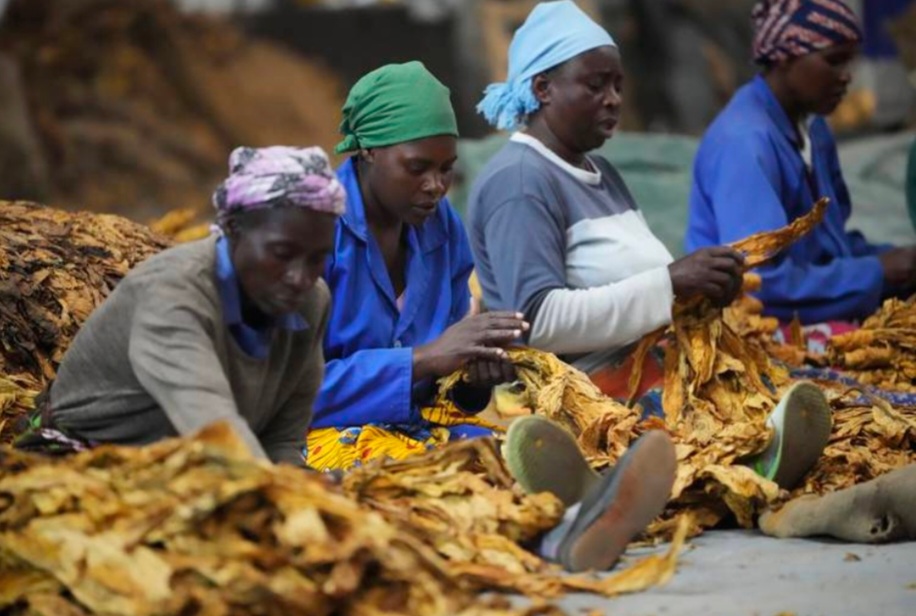
Zimbabwe, Africa’s biggest tobacco grower and one of the world’s top exporters of the nicotine leaf, has opened its selling season for the crop amid pledges to fight deforestation and child labour in response to pressure from rights groups, environmentalists and international buyers.

Advertisement

Tobacco is on a rebound in this southern African nation where production plummeted from a peak of 260 million kilogrammes in 1998 to less than 50 million kilogrammes a decade later following the eviction of several thousand white farmers who accounted for the majority of growers.

In recent years Zimbabwe has rapidly increased the size of its crop, regaining its spot as one of the world’s top five exporters of tobacco.

It exported just over 200 million kilograms (220,000 tons) of tobacco in 2021, according to the Tobacco Industry Marketing Board.

Advertisement

This year’s crop is expected to be about 10 percent and 15 percent smaller due to unfavourable weather, according to one of the country’s biggest merchants TSL Limited.

Tobacco is one of Zimbabwe’s biggest earners of foreign currency alongside minerals such as gold and funds sent by Zimbabweans living outside the country.

Tobacco earned Zimbabwe about US$1.2 billion in exports last year and the government would like to see that increase “into a US$5 billion industry by 2025,” Agriculture Minister Anxious Musuka said at the opening of the tobacco auction season at the end of March.

Advertisement

The government hopes to encourage an increase in the size of the tobacco crop to 300 million kilogrammes  annually by providing more local funding to farmers, Musuka said.

With tobacco’s proven role in causing cancer, international marketers are urging Zimbabwe to avoid any other controversy by producing the crop in ways that don’t harm the environment or use child labour.

Most of Zimbabwe’s tobacco is exported to Asian countries, with China the largest single buyer.

Advertisement

China has been integral to Zimbabwe’s tobacco boom by establishing a grower contract system run by the state-owned China National Tobacco Corporation, the world’s biggest cigarette producer.

Under the system, the firm loans seeds, fertilizers, food, and money for labour and wood to farmers, who in turn are obligated to sell their crop to the firm or its agents.

The bulk of Zimbabwe’s flue-cured tobacco crop now comes from more than 100,000 small-scale black farmers, many resettled on formerly white-owned farms. Small-scale farmers produced 133 million kilogrammes, about 63 percent of the total crop of 211 million kilogrammes  sold last year, according to the tobacco marketing board.

Advertisement

This massive shift away from large-scale commercial farming has changed who does the work producing the labour-intensive crop.

The big white-owned commercial farms used to employ scores of full-time workers but now the small farms are mostly family operations that often rely on child labour, say rights activists.

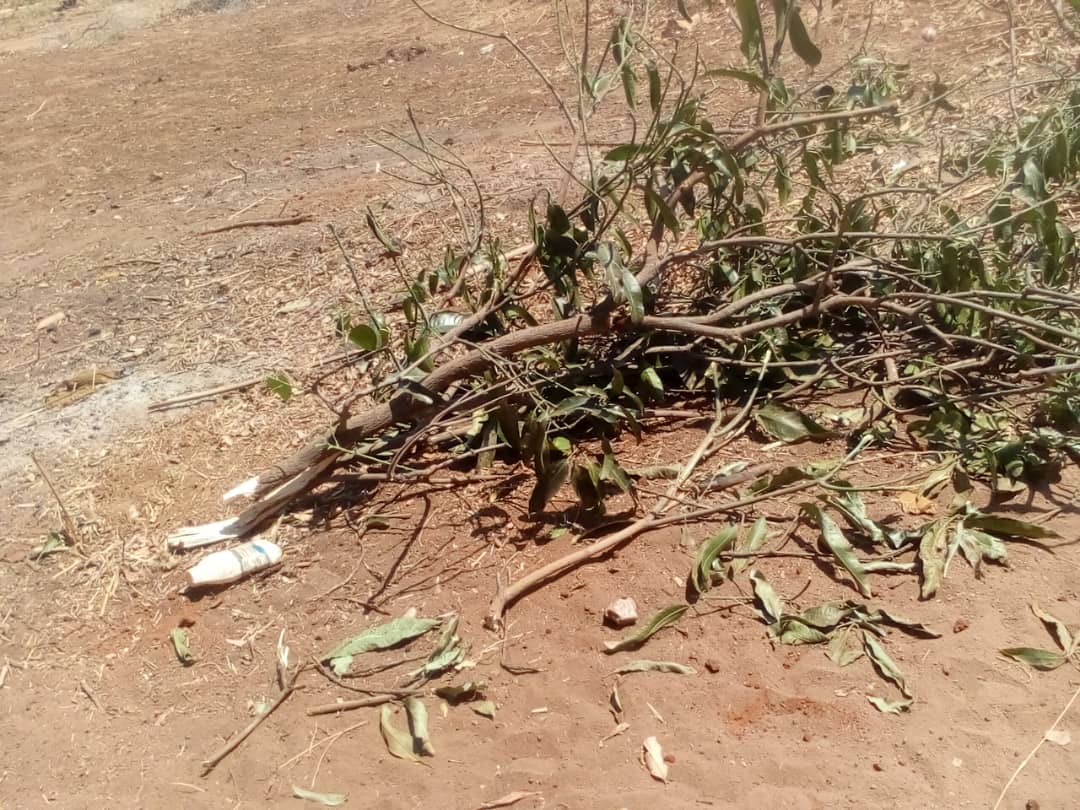
Another problem is that many of the new smaller tobacco growers can’t afford the electricity or coal needed to cure the tobacco leaves so they cut down nearby trees, causing Zimbabwe’s forests to decline by about 15 percent to 20 percent annually in recent years, according to researchers.

Advertisement

Under international pressure, Zimbabwe’s tobacco industry is trying to reduce these problems, Meanwell Gudu, CEO of the tobacco marketing board, told The Associated Press.

“Many blue-chip companies who are our customers have developed a code that they refer to as the sustainable tobacco programme.

“As a supplier we need to comply with that code, which lists deforestation and child labour as some of the undesirable practices,” Gudu said.

Advertisement

The country has been on “a blitz of afforestation” that includes farmers receiving tree seedlings to establish woodlots in their areas, claimed Gudu.

“We are planting a lot of trees so that we can be like our competitors.

“For example, if you look at Brazil, farmers there cure their tobacco from woodlots that they have established and not from indigenous trees … that’s what we want to do,” said Gudu.

Advertisement

Reducing the use of child labour could be a harder task because many families have been doing that for generations, some farmers said.

Children as young as five work in the fields with their parents as part of their normal upbringing to help meet family costs, they said.

A 2018 report by Human Rights Watch stated that children on Zimbabwean tobacco farms “work in hazardous conditions, performing tasks that threaten their health and safety or interfere with their education.”

Advertisement

The report noted that “child workers are exposed to nicotine and toxic pesticides, and many suffer symptoms consistent with nicotine poisoning from handling tobacco leaves.”

Zimbabwean law sets the minimum age for employment at 16 while banning children under 18 “from performing hazardous work,” but does not specifically ban children from handling tobacco.

“I worked in the maize (corn) fields as a child. Everyone did that and there was nothing wrong because it is the norm,” said tobacco farmer Berrington Mupande, 37.

Advertisement

“However, I think the tobacco environment is too tough for children,” he said. “But we see people still working with their children or young relatives because they have no money to pay for labour.” – AP

Advertisement

National

Zambia, Zimbabwe to ban heavy trucks from Victoria Falls Bridge

Published

on

BY DUMANI MOYO

Zambian President Hakainde Hichilema has announced that Zambia and Zimbabwe will restrict heavy trucks and trains from using the century-old Victoria Falls Bridge.

Advertisement

Speaking at an engineering conference in Livingstone, he said the two countries will instead build a new bridge and railway crossing to handle modern freight demands.

Hichilema made it clear that the 121-year-old structure can no longer safely or efficiently carry today’s heavy-duty traffic.

Engineers designed the bridge in the early 1900s for much lighter loads, not for fully laden 60-tonne mining trucks or long freight trains that now dominate regional trade routes.

Advertisement

Engineers completed the Victoria Falls Bridge in 1905 as a narrow arch crossing linking road, rail and pedestrian traffic.

While it remains an iconic piece of infrastructure, its design limits its ability to support modern logistics.

Authorities have already imposed restrictions over the years.

Advertisement

Trains often move at very low speeds, while trucks have faced weight limits that forced heavier vehicles to reroute through other crossings.

Although rehabilitation work in 2006 extended the bridge’s lifespan, it did not solve the fundamental structural limitations.

Experts now agree that upgrading the bridge to meet current freight standards would cost nearly as much as building a new one.

Advertisement

WHY A NEW CROSSING MAKES ECONOMIC SENSE

Officials from both countries now favour constructing a new dual-purpose rail and road bridge instead of attempting further upgrades.

A purpose-built crossing would accommodate higher traffic volumes and modern freight loads without compromising safety.

A new structure would also eliminate a major bottleneck along the North-South Corridor, which links the copper belts of Zambia and the Democratic Republic of Congo to southern markets such as South Africa.

Advertisement

By separating heavy commercial traffic from tourism and local travel, the new bridge would allow the Victoria Falls Bridge to serve lighter vehicles, pedestrians and tourists, preserving its heritage value.

REGIONAL TRADE AND RAIL INTEGRATION BOOST

The proposed crossing would complement major regional projects, including the Mosetse-Kazungula-Livingstone Railway.

A dual-track rail bridge would strengthen links between Zambia and Zimbabwe while supporting long-term plans to expand rail connectivity across Southern Africa.

Advertisement

It would also mirror the successful model of the Kazungula Bridge, which has significantly increased traffic flow since opening in 2021.

FINANCING AND NEXT STEPS

Despite strong political backing, key questions remain around funding, construction timelines and project ownership.

Zimbabwe’s debt constraints could complicate financing, although improved economic reforms may unlock support from international lenders.

Advertisement

If both governments secure funding and move quickly, the new bridge could become one of the most important infrastructure developments in the Southern African Development Community in recent years.

This could transform trade flows and ease congestion along a critical regional corridor.

SOURCE: THE SOUTH AFRICAN

Advertisement

Continue Reading

National

Health ministry rolls out polio vaccination campaign

Published

on

BY OWN CORRESPONDENT

Ministry of Health and Child Care has launched a targeted polio vaccination campaign in selected districts, with health workers going door-to-door and setting up outreach points to reach young children.

Advertisement

The campaign aims to vaccinate all children under the age of five against polio, a highly infectious disease that can cause paralysis. Authorities say the initiative forms part of a wider regional effort to interrupt transmission, being conducted alongside neighbouring countries including Botswana, Malawi, Mozambique and Zambia.

In a message posted on X on Monday and circulated in official memos, the ministry said it was “embarking on a targeted polio vaccination campaign to interrupt the transmission of polioviruses”. It urged families in affected areas to ensure that all eligible children are vaccinated, regardless of their previous vaccination status.

The programme will be carried out in two rounds, from 20 to 23 April and from 2 to 5 June, covering both urban and rural communities.

Advertisement

In Bulawayo Metropolitan Province, vaccination teams are operating in Emakhandeni, the Northern Suburbs and Nkulumane. In Harare Metropolitan Province, the campaign covers Harare, Chitungwiza, Epworth and Ruwa.

In Manicaland Province, teams are working in Mutare, Mutasa, Chimanimani and Chipinge. In Mashonaland Central, the campaign targets Mbire, Mt Darwin, Centenary and Rushinga, while in Mashonaland East it focuses on Mudzi. In Mashonaland West, Kariba and Hurungwe are included.

Further south, the drive extends to Chiredzi in Masvingo Province, as well as Binga, Hwange and Tsholotsho in Matabeleland North. In Matabeleland South, teams are operating in Bulilima, Mangwe, Matobo and Gwanda.

Advertisement

Health workers are using a combination of fixed vaccination sites, mobile units and door-to-door visits in neighbourhoods, markets, shops and clinics to reach eligible children, including those in remote and hard-to-access areas.

The ministry has called on parents and guardians to cooperate with vaccination teams, saying the campaign is critical to protecting children and preventing the spread of the disease.

SOURCE: CITE

Advertisement

Continue Reading

In the community

Elephant kills villager in Nkayi, authorities launch investigation

Published

on

BY NOKUTHABA DLAMINI

An elephant trampled a villager to death overnight in Mthoniselwa village in Ward 13 of Nkayi district, local authorities said on Sunday, in the latest human-wildlife conflict incident in the area.

Advertisement

The fatal attack occurred in the early hours of the morning, according to community leaders, who said the victim was attacked near the homestead.

“We have received a report from our Lupane Investigations Office regarding a tragic incident in Mthoniselwa village, Ward 13 of Nkayi, where a villager was trampled by an elephant,” said Zimbabwe Parks and Wildlife Management Authority (ZimParks spokesperson Luckmore Safuli.

“Further details regarding the identity and circumstances surrounding the deceased are still pending. ZimParks personnel are actively conducting assessments in the area to gather more information. Additionally, the Nkayi Rural District Council officers, in collaboration with the Zimbabwe Republic Police, are on site to investigate the incident and conduct community awareness initiatives,” Saffouli added.

Advertisement

A message circulated in local community groups earlier in the day alerted residents to the incident and urged caution.

“We received a sad report from police this morning of a person who was attacked and killed by an elephant at night in Mthoniselwa, Ward 13. ZimParks has been notified and a ranger is on the way to track the elephant,” the message read.

Community leaders also urged residents to report the presence of dangerous wildlife and to remain vigilant to avoid further tragedies.

Advertisement

Zimbabwe has in recent years recorded a rise in human-wildlife conflict cases, particularly involving elephants, as animals stray into villages in search of food and water.

Advertisement
Continue Reading

Trending

Copyright © 2022 VicFallsLive. All rights reserved, powered by Advantage