Connect with us

In the community

Zimbabwe’s mining towns surrounded by mineral riches, but living in poverty

Published

on

BY VIMBAI CHINEMBIRI

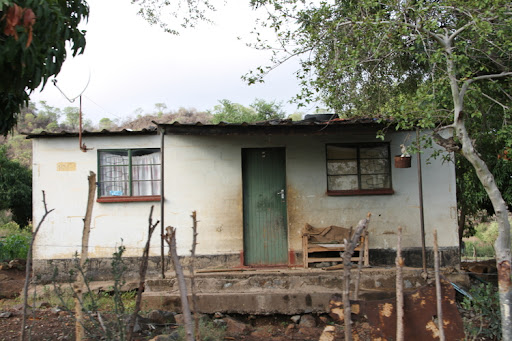
In the mining town of Zvishavane, in central Zimbabwe, lies Maglas, an aging, broken-down community burdened with crumbling houses.

Advertisement

The town’s lack of water and ablution facilities leaves a pervasive stench of feces and urine. In the rainy season, potholed roads fill with water.

Nearly 400 kilometers  to the northeast sits Mutare, a city in Zimbabwe’s eastern highlands, where Redwing mine is located.

Along one road, children have just filled their buckets at a burst pipe. Their homes don’t have running water.

Advertisement

These scenes repeat themselves throughout Zimbabwe’s mining towns, as critics of the government say weak laws and policies, combined with a lack of transparency, have left these communities flailing.

The towns are rich in mineral resources. But their people are among the country’s poorest.

“To say they are not benefiting much [from mining] is an understatement,” said Farai Maguwu, director of the Centre for Natural Resource Governance, a Zimbabwe-based research and advocacy organization.

Advertisement

“Reality is they are not benefiting anything. In fact, mining is further impoverishing them by attacking their environment, which they depend on for livelihoods.

Zimbabwe boasts more than 60 types of minerals, and about 40 are already being mined.

At least 4,000 gold deposits dot the country, along with platinum, chrome, lithium, coal, diamonds and more.

Advertisement

Diamonds in Mutare’s Marange fields were worth an estimated $800 billion a decade ago.

 Zvishavane is blessed with gold, chrome and platinum deposits.

A 2015 Zimbabwe Open University study on mineral revenue argues that “governments and mining companies promise communities from which minerals are mined both social and economic benefits, but still there are no tangible benefits that go to these communities.”

Advertisement

Another study, in 2012 by the Institute of Environmental Studies, found that more than 90% of households involved with mineral extraction lived in poverty.

Midlands province, where Zvishavane is one of several mining towns, is one of the country’s most mineral-rich regions, but it’s saddled with the second-lowest access to basic water services, at 51%, according to a 2019 Zimbabwe Vulnerability Assessment Committee survey.

More than half of children in rural Midlands don’t have access to healthy food.

Advertisement

Onesimo Moyo, permanent secretary in the Ministry of Mines and Mining Development, said it’s unfair to say that mining towns remain undeveloped.

“These towns were built on the back of mining,” Moyo said.

“The schools, clinics and housing were a result of mining companies building infrastructure in the towns they were operating in.

Advertisement

“Zvishavane is a good example of such a town.”

Tinoda Mukutu, Zvishavane’s town secretary, agrees that mining companies have brought schools, clinics and other benefits to the region.

What’s missing, he says, is help from government-backed structures such as community share ownership trusts, which were introduced in 2007 as an offshoot of Zimbabwe’s indigenization law.

Advertisement

Amended in 2018, the law was meant to ensure more economic power for black Zimbabweans.

Mining companies gave the trusts one-time payments for income-generation projects.

And Moyo said the enterprises do share profits via the community trusts. But activists such as Joyce Nyamukunda are dubious.

Advertisement

Since the change in the indigenization law, towns can’t force mining companies to pay into the trusts, said Nyamukunda, coordinator of the Zimbabwe chapter of Publish What You Pay, an initiative that promotes the rights of communities affected by mineral extraction.

“There is no law that specifically provides a system of allocating revenue collected from mining companies between central government, local authorities and communities,” she said.

In Gwanda, a town in Matabeleland South province in southwest Zimbabwe, the trusts improved access to water, electrified rural areas and provided capital for entrepreneurs.

Advertisement

In platinum- and gold-rich Shurugwi, located 88 kilometrrs  from Zvishavane, old buildings and dilapidated roads mar one part of town. But on another section, the town’s biggest mining company –AngloAmerican Platinum – has erected gleaming new apartments for its employees.

“Mining companies [that came before] built infrastructure,” said Walter Nemasasi, general manager at AngloAmerican Platinum, which operates Unki Mine in Shurugwi.

“To the eye they may look dilapidated, to some, but it is not the responsibility of existing mining companies to take up that responsibility…We have our community social responsibility programs that we do and we continue to make our community better the best way we can.”

Advertisement

Residents say the local trust has improved sanitation and educational infrastructure and built more health facilities.

Maguwu, from the Centre for Natural Resource Governance, notes that of Zimbabwe’s 64 registered trusts, only a few can boast of such gains.

“They are not serving any purpose because the government is not compelling companies to contribute,” he said.

Advertisement

His organization and other civil society groups also blame a lack of government transparency for holding back mineral-rich communities.

The government fails to provide data about a range of mining-related areas, according to a 2018 Auditor General’s report.

Those areas include tax incentives, licenses and mining revenue the government receives.

Advertisement

A decade ago, the government promised more transparency for the mining sector, but officials are still mulling whether to join the global Extractive Industries Transparency Initiative, which mandates that governments release mining revenue data.

“We cannot go blindly into it,” Moyo said. “It takes a lot of planning and consultation. Many think it’s a delay tactic, but it’s not. We just have to do due diligence.”

Maguwu, however, argued that joining the initiative isn’t the solution.

Advertisement

“Global governance mechanisms must be reproduced at the national and local level instead,” he said.

“The government, industry, civil society and local communities — including traditional leaders — must be involved in transparency issues.

“That is how investment decisions [should be] made.”  – Global Press Journal 

Advertisement

Continue Reading
Click to comment

Leave a Reply

Your email address will not be published. Required fields are marked *

In the community

Elephant kills villager in Nkayi, authorities launch investigation

Published

on

BY NOKUTHABA DLAMINI

An elephant trampled a villager to death overnight in Mthoniselwa village in Ward 13 of Nkayi district, local authorities said on Sunday, in the latest human-wildlife conflict incident in the area.

The fatal attack occurred in the early hours of the morning, according to community leaders, who said the victim was attacked near the homestead.

“We have received a report from our Lupane Investigations Office regarding a tragic incident in Mthoniselwa village, Ward 13 of Nkayi, where a villager was trampled by an elephant,” said Zimbabwe Parks and Wildlife Management Authority (ZimParks spokesperson Luckmore Safuli.

“Further details regarding the identity and circumstances surrounding the deceased are still pending. ZimParks personnel are actively conducting assessments in the area to gather more information. Additionally, the Nkayi Rural District Council officers, in collaboration with the Zimbabwe Republic Police, are on site to investigate the incident and conduct community awareness initiatives,” Saffouli added.

A message circulated in local community groups earlier in the day alerted residents to the incident and urged caution.

“We received a sad report from police this morning of a person who was attacked and killed by an elephant at night in Mthoniselwa, Ward 13. ZimParks has been notified and a ranger is on the way to track the elephant,” the message read.

Community leaders also urged residents to report the presence of dangerous wildlife and to remain vigilant to avoid further tragedies.

Zimbabwe has in recent years recorded a rise in human-wildlife conflict cases, particularly involving elephants, as animals stray into villages in search of food and water.

Continue Reading

In the community

Grade 2 pupil and neighbor die in gas-filled well in Nkayi

Published

on

BY NOKUTHABA DLAMINI 

A Grade 2 pupil and a young man died on Thursday in a tragic incident at a neighbor’s well in Nkayi Ward 19, after being overcome by suspected carbon monoxide and a total lack of oxygen.

The tragedy unfolded near Nkayi Primary School area when the young student was reportedly sent into the well by an elderly man  to retrieve a bucket that had fallen to the bottom.

He reportedly lured him on the promise of buying him sweets.

When the child failed to resurface, a neighbor entered the shaft in a desperate rescue attempt.

Councillor Thubelihle Mabuza Ncube, who visited the scene on Friday, described the harrowing moments that led to the double fatality. “What happened, we understand, is that a bucket fell into the well and the boy, whose mother was not at home at the time, was lured to get in an retrieve it in exchange of sweets and things,” Ncube said. “It is said there was carbon [monoxide]… there was no oxygen at all at the bottom and that’s how he died”.

According to the councillor, the second individual who had reportedly sent the child to fetch the bucket in the well reached the bottom and was briefly able to interact with the child before being overwhelmed . “He reached the bottom, but [the gas] overcame him,” Ncube explained. “He reportedly tapped the child, but then he was overcome by that carbon and lack of air… They both died in the water “.

A third person attempted to enter the well but immediately signaled to be pulled out, reporting a suffocating heat and a total lack of oxygen inside the shaft.

The councillor expressed deep distress over the decision to send a young child into the well. “It is very painful… a Grade 2 pupil being sent into the well by elders to go and retrieve a container from the bottom,” Ncube said, noting that it appeared the community had grown accustomed to such tasks.

Due to the extreme danger posed by the air quality, rescuers were unable to physically enter the well to recover the bodies. Instead, villagers were forced to use a makeshift tool to retrieve the deceased from the surface.

“They were finally taken out not by being fetched from below; instead, they ended up using something like a wire to pull them because people were afraid to enter where that gas was,” Ncube said.

The incident has left the Nkayi community in mourning. “Nkayi is hurting deeply,” the councillor added. “It is a very painful situation”.

The accused has been charged by the police, according to the councillor,

Continue Reading

Binga

Lawmaker urges localized climate strategies for Tsholotsho, Hwange

Published

on

BY NOKUTHABA DLAMINI

A Shamva South lawmaker has called for a radical shift in climate change mitigation strategies, demanding that the government abandon “one-size-fits-all” projects in favor of solutions that respect the unique geography and culture of districts like Tsholotsho, Hwange, and Binga.

During the debate on the Climate Change Management Bill, Joseph Mapiki argued that national programs often fail because they ignore local realities.

“We should look at our projects in terms of the area,” Mapiki told the National Assembly. “For example, in Tsholotsho and Hwange, where there are game parks, we cannot force them to do horticulture because there is no water. We should encourage them to engage in tourism”.

Mapiki also challenged the government’s staffing policies for climate initiatives, insisting that local language and cultural knowledge are essential for the success of any environmental committee.

“If someone from Mashonaland Central goes and is incorporated in a Committee in Binga, it means that the Committee will not function well because that person will not be conversant with the language,” he argued.

He further emphasized that “First preference should be given to the locals to avoid taking people from other areas… because those other people will not be aware of the language and culture of the people there”.

Beyond staffing and local projects, Mapiki raised concerns about the influence of international donors on Zimbabwe’s environmental policy.

He urged the government to ensure that the majority of climate funding is domestic to avoid “stringent measures and conditions” imposed by foreign entities.

“Our plea Hon. Minister, is that 98% funding for that Bill should be from Zimbabwe,” Mapiki stated.

“Foreign funding is hampering our progress”. His remarks were supported by other MPs who noted that climate change mainstreaming must include the “vulnerable communities” and “local authorities” who are on the frontlines of weather shocks in the province.

Continue Reading

Trending

Copyright © 2022 VicFallsLive. All rights reserved, powered by Advantage