Connect with us

Slider

Zimbabwe’s drug, alcohol abuse problem under Covid-19

Published

on

BY ZIMFACT

Drug and alcohol abuse among Zimbabwean youth is rising, according to government and public health experts who say this increase has coincided with measures aimed at controlling the spread of Covid-19.

Advertisement

The World Health Organisation (WHO), the Zimbabwe government and some civic society organisations have launched public awareness programmes on the problem, worsening under national lockdowns, restrictions on travel and public gatherings, closure of schools and a ban on sports activities.

The following are some of the facts and findings around alcohol and drug abuse:

· A Zimbabwe National Drug Masterplan which the government unveiled in April this year identifies alcohol and drug abuse as one of the top causes of mental health problems in all the country’s 10 provinces.

Advertisement

· Zimbabwe has the highest number of 15 to 19-year-olds in Africa who engage in heavy “episodic drinking”, at 70.7 % among males and 55.5 % among females, according to a World Health Organisation (WHO) report entitled “Mental health among young people in the African Region.”     

WHO defines heavy episodic drinking as the consumption of at least 60 grammes or more of alcohol on at least one occasion in 30 days, which is six pints at a single sitting.

The Harare-based World Health Organisation (WHO) regional advisor on mental health and substance abuse, Florence Kamayonza, warned that heavy drinking needs to be checked to help manage the dangers of rising mental health and alcohol use disorders.

Advertisement

Launched the Special Initiative on Mental Health on July 21, Health and Child Care minister, Vice President Constantine Chiwenga, warned that Zimbabwe faced the risk of a decline in the quality of life of the youth from the impact of alcohol and drug abuse.

 He said “a large proportion of people” were hooked on alcohol and substances like cocaine and crystal meth.

A global survey by the International Society of Addiction Medicines (ISAM) says that many countries are struggling with rising numbers of people abusing drugs as Covid-19 continues to ravage economies, decimate livelihoods and badly alter lifestyles.

Advertisement

Under Covid-19, Zimbabwe has witnessed a sharp rise in the abuse of methamphetamine, a highly addictive stimulant commonly known in the country as “crystal meth” or “ mutoriro”, which affects the nervous system and generally leaves addicts in a wooden state of stupor.

In its 2020 world report, the United Nations Office on Drugs and Crime notes that “rising unemployment and lack of opportunities will make it more likely that poor and disadvantaged people engage in harmful patterns of drug use, suffer drug use disorders and turn to illicit activities linked to drugs – either production or transport.”

With governments and parents less able to respond to problem, strong drug abuse cultures are likely to grow strong roots in communities, according to the UN Office on Drugs and Crime report.

Advertisement

Continue Reading
Click to comment

Leave a Reply

Your email address will not be published. Required fields are marked *

National

Parliament weighs 40% community share in carbon credit deals

Published

on

BY NOTHANDO DUBE

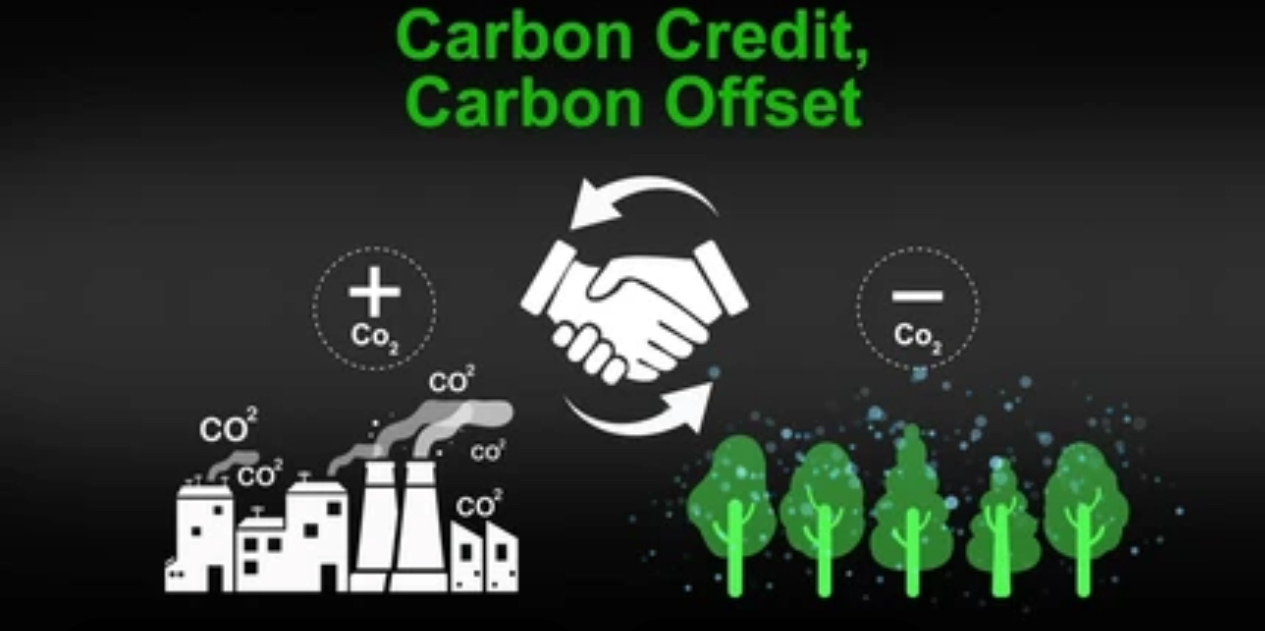
Lawmakers in Zimbabwe are debating a comprehensive Climate Change Management Bill that supporters say will finally ensure rural communities are no longer “mere spectators” in the multi-billion dollar carbon credit industry.

The Bill, which moved into its second reading, seeks to regulate carbon trading and protect the country’s natural resources from foreign exploitation.

Mutsa Murombedzi delivered a passionate plea for the legislation, arguing that it is a matter of “justice, survival and the dignity of our people”. “Climate change is not a distant stone,” Murombedzi told the House. “It is the flood that we see in Chimanimani, which sweeps away our schools… the heatwave that scotches our communities in Hwange, one silent drought that empties our granaries”.

A major point of contention and hope is the proposed 40% community share in carbon projects. Lawmakers argued that previous projects often left locals with nothing but “tsotso stoves or bicycles” while profits were “repatriated back to their countries, particularly those from the global north”.

Master Makope applauded the move to bring transparency to a sector where deals were often done “without the knowledge of the authorities”.

“By having this policy framework, I believe our people are going to benefit,” Makope said.

“The Minister has to make sure that the villagers, the communities, should also have easy access to registration of their own projects because they are the ones who own these forests”.

The debate also focused on the establishment of a National Climate Fund.

Susan Matsunga insisted on rigorous oversight, suggesting a biennial reporting cycle to Parliament to ensure progress is measurable. “This is about building a culture of transparency that ensures our climate goals are not just promises on paper but measurable achievements,” Matsunga stated.

Murombedzi added that “Climate finance must not vanish into corridors in Harare; it must flow to the ward level where resilience is built”.

Continue Reading

Binga

Lawmaker urges localized climate strategies for Tsholotsho, Hwange

Published

on

BY NOKUTHABA DLAMINI

A Shamva South lawmaker has called for a radical shift in climate change mitigation strategies, demanding that the government abandon “one-size-fits-all” projects in favor of solutions that respect the unique geography and culture of districts like Tsholotsho, Hwange, and Binga.

During the debate on the Climate Change Management Bill, Joseph Mapiki argued that national programs often fail because they ignore local realities.

“We should look at our projects in terms of the area,” Mapiki told the National Assembly. “For example, in Tsholotsho and Hwange, where there are game parks, we cannot force them to do horticulture because there is no water. We should encourage them to engage in tourism”.

Mapiki also challenged the government’s staffing policies for climate initiatives, insisting that local language and cultural knowledge are essential for the success of any environmental committee.

“If someone from Mashonaland Central goes and is incorporated in a Committee in Binga, it means that the Committee will not function well because that person will not be conversant with the language,” he argued.

He further emphasized that “First preference should be given to the locals to avoid taking people from other areas… because those other people will not be aware of the language and culture of the people there”.

Beyond staffing and local projects, Mapiki raised concerns about the influence of international donors on Zimbabwe’s environmental policy.

He urged the government to ensure that the majority of climate funding is domestic to avoid “stringent measures and conditions” imposed by foreign entities.

“Our plea Hon. Minister, is that 98% funding for that Bill should be from Zimbabwe,” Mapiki stated.

“Foreign funding is hampering our progress”. His remarks were supported by other MPs who noted that climate change mainstreaming must include the “vulnerable communities” and “local authorities” who are on the frontlines of weather shocks in the province.

Continue Reading

Hwange

Hwange MP challenges government over Nambya teacher deployment

Published

on


BY NOKUTHABA DLAMINI

Hwange East legislator Joseph Bonda has called on the government to address what he describes as the marginalisation of the Nambya language in schools, arguing that current teacher deployment policies are undermining early learning in Matabeleland North.
According to the National Assembly’s official record of 7 April 2026, Bonda formally asked the Minister of Public Service, Labour and Social Welfare to explain why trained Nambya-speaking teachers are not being employed in Hwange District while non-speakers are posted to the area.

He said the practice was “depriving children of receiving instruction in their mother tongue at the early education stage”, which he described as critical to both educational outcomes and cultural development.

Under Zimbabwe’s language policy framework, learners are expected to be taught in their mother language in the early grades. Critics say failure to align teacher deployment with local languages weakens that principle in practice.

Despite the concerns raised, the matter remains unresolved in Parliament. The inquiry was deferred on 18 March and, at the latest sitting, the ministry had yet to provide a formal response.

Parents in the district say the issue has direct consequences for children’s performance.

“Our children are disadvantaged from the start,” said Ester Ncube, a parent in Jambezi under Chief Shana. “If a child cannot understand the teacher in Grade One, it affects everything that follows.”

Community leaders argue that the debate goes beyond classroom instruction and touches on identity.

“Language is part of who we are,” said local elder Eliziya Vashe Shoko. “If schools do not teach in Nambya, we are slowly losing our identity. Government must take this seriously.”

Young professionals in the province say the challenge is not a shortage of qualified personnel but gaps in recruitment and deployment.

“There are trained teachers who speak Nambya, Lozvi, Chidombe and other local languages, but they are not being deployed here,” said Lindiwe Sibanda, a recent graduate.

“At the same time, teachers from outside are brought in. It does not make sense. These languages should be prioritised so that communities feel a sense of belonging and respect.”

The language dispute forms part of a wider push for regional equity in Matabeleland North. Bonda has also raised concerns over local employment quotas in the wildlife sector and what he describes as the exclusion of Hwange from national weather forecasts. He argues that these issues reflect a broader mismatch between national policy and local needs.


SOURCE: CITE

Advertisement


Continue Reading

Trending

Copyright © 2022 VicFallsLive. All rights reserved, powered by Advantage