Connect with us

National

US dollars dethrone Zimbabwe’s currency for second timeBy

Published

on

BY GODFREY MARAWANYIKA AND RAY NDLOVU

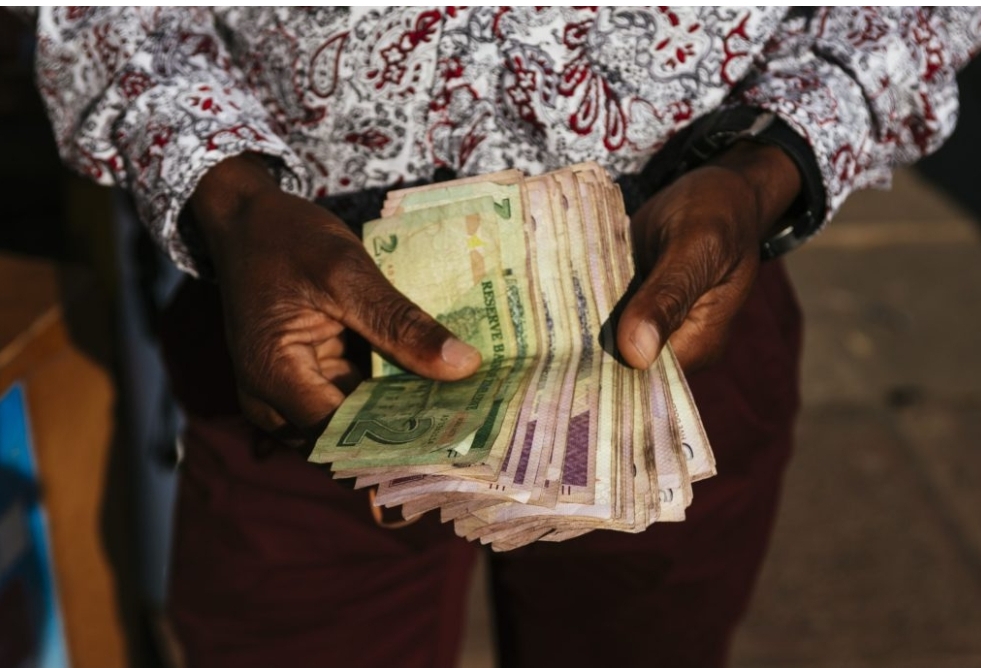
The greenback has replaced the Zimbabwean dollar as the most-used currency in the southern African nation for a second time, almost four years after the re-introduction of the local unit.

Advertisement

US dollars were utilised for 77% of transactions this year, surpassing the proportion that were conducted in the local currency for the first time since it was reissued in June 2019, data compiled by the statistics agency shows. The Zimbabwean dollar was abolished in 2009 and replaced mainly by the US dollar after an episode of hyperinflation rendered it worthless. It was reintroduced in an attempt to revive the stagnating economy.

A government decision in June to officially reintroduce the greenback as legal tender to rein in surging inflation and stabilise the nation’s tumbling exchange rate has hastened the move away from the local currency. The Zimbabwean dollar has depreciated 91% against the US dollar in the last two years to trade at 944 at the official rate and about 1 600 on the parallel market.

In demand
Businesses now charge in greenbacks for everything from food, fuel to medicines as they see the currency as a better store of value. Cement maker PPC’s local unit said in its latest financial statement, that 79% of sales were in dollars.

Advertisement

The government’s revenue collection practices have contributed to the dollars’ resurgence, said Gift Mugano, an economics professor at the Durban University of Technology. “Passports are paid for in dollars, some taxes in foreign currency, fuel is in dollars and you can also pay toll gates in dollars,” he said.

Last month the statistics agency adopted blended inflation, which tracks prices in dollars and the local currency over one that assessed costs only in Zimbabwean dollar terms, as it better reflects the realities of the economy.

The new gauge indicates inflation has been less severe than the one measured in local-currency terms.

Advertisement

The economy for all intents and purposes is largely dollarised,” said Prosper Chitambara, a Harare-based economist.

The central bank’s monetary policy committee attributes the dominance of the greenback to “significant foreign currency inflows into the economy” in 2022. A trend “expected to continue” this year, Governor John Mangudya said in a statement last month.

The shift comes as China has made the internationalisation of the yuan a top priority and countries including Russia, India and Saudi Arabia have sought to include non-dollar payments in their financial systems to reduce their dependence on the US. Last year’s sanctions on Russia and the sharpest tightening in monetary policy by the US Federal Reserve in decades, have brought a new sense of urgency among some nations to do so.

Advertisement

The surge in dollar usage has also led to increased demand from workers to be paid in greenbacks. Miners in March clinched a deal to receive the bulk of their pay in dollars, the first such wage agreement in five years.

Treasury also announced a salary hike for public servants last month that included an increase in Zimbabwean dollars and increments in greenbacks.

The current dollarisation is accepted by authorities as it helps foster confidence in the economy, according to Persistence Gwanyanya, a member of the central bank’s MP-Bloomberg

Advertisement

Continue Reading
Click to comment

Leave a Reply

Your email address will not be published. Required fields are marked *

National

Strive Masiyiwa speaks on how Econet Tech City will work

Published

on

BY OWN CORRESPONDENT

Econet founder and group chairman Strive Masiyiwa, whose company recently listed Econet InfraCo – an infrastructure platform company –  says he was inspired to build an industrial hub in Harare, called Econet Tech City, after observing similar hubs spring up in other African and Asian cities.

Advertisement

In particular Masiyiwa made reference to the 12 000-hectare Eko Atlantic hub in Lagos, Nigeria, built on reclaimed land, where his Data Centre group has established a large facility.

“Modern international investors don’t like hassles when they plan to build a factory or high tech facility, like a Data Centre,” he said.

“They prefer locations where everything they need – such as power, water, fibre and satellite connectivity, industrial waste management, security, street lighting and staff transport – is readily available.

Advertisement

They don’t want to be burdened with complex local planning approvals or licensing processes.

These industrial hubs operate as a one-stop shop, managed by local experts who handle everything for them.

“When we build a data centre in an African city, it is a highly complex project and we seek these hubs, some even offering legal services.” He explained.

Advertisement

Econet InfraCo – which is listed on the Victoria Falls Stock Exchange, with an estimated valuation of US$1 billion dollars – owns an 800-hectare property near the Robert Mugabe International Airport in Harare.

It is currently in the process of turning it into a modern industrial hub – pending government approval – and is expected to attract 300 companies, creating over 20 000 jobs.

Tech City will not only be built by Econet InfraCo; the company will also continue to manage it on behalf the tenants. It will be surrounded by a security wall, with 24-hour guards protecting the perimeters, complete with CCTV and drone surveillance.

Advertisement

Masiyiwa said Econet InfraCo plans to address infrastructure challenges for investors in collaboration with the government.

“The goal is to build a self-sufficient ‘city within a city’, surpassing the pre-independence industrial areas, complete with a shopping mall and clinic, but excluding housing and offices. It is intended to create a spark for industrialization,” Masiyiwa said.

He said the site chosen by Econet InfraCo includes a large stream, crucial for water supply, and will utilize a 100MW solar plant.

Advertisement

Architects and engineers are already developing plans, with solar panels for the first phase arriving from China soon.

Econet, which already has a 5MW data centre in Willowvale, Harare, is planning to build a 10MW facility in Tech City. The industrial hub is the first major project that Econet InfraCo is undertaking.

Regarding project timelines, Masiyiwa said: “From Econet’s perspective, we can complete the site within two years, but government incentives for businesses are crucial.

Advertisement

“Zimbabwe is competing with cities like Lagos, Cape Town, Nairobi and Kigali. I have laid out the vision and discussed it with Zimbabwean leaders.

“If they and the people support it, this could be a great partnership. I envision similar projects across Africa, as I am a Pan-Africanist, but I always start in my country.”

Masiyiwa hopes Econet Tech City will be operational within five years, emphasising the pressing need for jobs for young people, which he said is “too urgent to ignore”.

Advertisement

He said since unveiling the plans, Econet has received inquiries from both local and international companies and discussions with the government were already underway.

Once finalised, he said Econet InfraCo will begin marketing the project to potential investors and start rolling out the facility in phases.

He added that Econet will not seek exclusive terms from the government, in the hope that the offer will extend to others with similar projects in Harare or other cities.

Advertisement

SOURCE: The Standard 

Advertisement
Continue Reading

National

Government to equip Mpilo Hospital with radiotherapy machines funded by sugar tax initiative

Published

on

BY WANDILE TSHUMA 

Patients in Matabeleland North who rely on specialized care in Bulawayo are set to benefit from a major upgrade in cancer treatment facilities, as the government begins deploying equipment funded by the national sugar tax.

Advertisement

The Deputy Minister of Health and Child Care, Sleiman Timios Kwidini, confirmed to Parliament that the Treasury has released approximately $30.8 million to procure critical radiotherapy machines. Two low-energy units are earmarked for the country’s major referral centers, specifically Mpilo Central Hospital in Bulawayo and Parirenyatwa Hospital in Harare.

Advanced payments have been made to suppliers, and the government confirmed that installation is currently in progress alongside the preparation of specialized treatment bunkers. Kwidini described the move as a significant milestone intended to reduce patient waiting times and the costly need for referrals to facilities outside the country.

However, the announcement met with sharp criticism from lawmakers who argued the ministerial update lacked sufficient detail regarding the total revenue collected and the specific types of equipment purchased.

Advertisement

Surrender Kapoikilu led the debate, questioning whether the ministry had secured essential components like linear accelerators and diagnostic tools like endoscopes. He warned that without adequate surge protection, the high-tech equipment remains at risk from power fluctuations. “ZESA currents have many surges,” Kapoikilu said. “If you just plug it in, in five minutes, a machine is gone”.


He emphasized that effective treatment must begin with proper diagnosis, stating, “If you cannot diagnose cancer, you cannot conquer”.

Advertisement

The discussion expanded to include the dire state of basic patient care, with Corban Madzivanyika pointing out that referral centers often lack fundamental tools. “You get to the hospital and you are told that there is no wheelchair,” Madzivanyika told the House, describing the shortage of stretchers and wheelchairs as embarrassing.

Responding to the concerns, the Acting Speaker, Joseph Tshuma, directed the ministry to defer the matter and return with a more comprehensive dossier detailing the expenditure and the availability of essential medicines.


Advertisement

Continue Reading

National

Parliament weighs 40% community share in carbon credit deals

Published

on

BY NOTHANDO DUBE

Lawmakers in Zimbabwe are debating a comprehensive Climate Change Management Bill that supporters say will finally ensure rural communities are no longer “mere spectators” in the multi-billion dollar carbon credit industry.

Advertisement

The Bill, which moved into its second reading, seeks to regulate carbon trading and protect the country’s natural resources from foreign exploitation.

Mutsa Murombedzi delivered a passionate plea for the legislation, arguing that it is a matter of “justice, survival and the dignity of our people”. “Climate change is not a distant stone,” Murombedzi told the House. “It is the flood that we see in Chimanimani, which sweeps away our schools… the heatwave that scotches our communities in Hwange, one silent drought that empties our granaries”.

A major point of contention and hope is the proposed 40% community share in carbon projects. Lawmakers argued that previous projects often left locals with nothing but “tsotso stoves or bicycles” while profits were “repatriated back to their countries, particularly those from the global north”.

Advertisement

Master Makope applauded the move to bring transparency to a sector where deals were often done “without the knowledge of the authorities”.

“By having this policy framework, I believe our people are going to benefit,” Makope said.

“The Minister has to make sure that the villagers, the communities, should also have easy access to registration of their own projects because they are the ones who own these forests”.

Advertisement

The debate also focused on the establishment of a National Climate Fund.

Susan Matsunga insisted on rigorous oversight, suggesting a biennial reporting cycle to Parliament to ensure progress is measurable. “This is about building a culture of transparency that ensures our climate goals are not just promises on paper but measurable achievements,” Matsunga stated.

Murombedzi added that “Climate finance must not vanish into corridors in Harare; it must flow to the ward level where resilience is built”.

Advertisement

Continue Reading

Trending

Copyright © 2022 VicFallsLive. All rights reserved, powered by Advantage