Connect with us

In the community

Nkayi villagers demand justice after police brutality

Published

on

BY ZLHR

More than 10 Nkayi villagers have asked Zimbabwe Republic Police (ZRP) authorities to take remedial action against some delinquent police officers, who ill-treated them by severely assaulting them and coercing them to sing some liberation songs.

Advertisement

The 11 villagers, who reside in Tshayane village in Ward 6 in Nkayi in Matabeleland North province, who, include three teenagers, namely Siphiwe Sibanda aged 18 years, Bekithemba Lunga aged 19 years and a 13 year-old minor and Philemon Ncube aged 21 years, Precious Nkiwane aged 25 years, Mxolisi Ncube aged 27 years, Sitshengisiwe Tshuma aged 38 years, Siphiwe Ncube aged 45 years, Douglas Lunga aged 46 years, Rueben Ncube aged 52 years and Chiedza Takaendesa aged 55 years, were left nursing some injuries after they were severely assaulted by seven ZRP officers from Manoti Police Station in Gokwe in Midlands province, who went on a rampage on 14 July 2024.

In a letter of complaint written to the Officer In Charge of Manoti Police Station by the Nkayi villagers’ lawyers Jabulani Mhlanga and Prisca Dube of Zimbabwe Lawyers for Human Rights, the villagers protested against the conduct of the police officers for conducting a violent operation across three homesteads belonging to the Sibanda, Ncube, and Lunga families, under the pretext of investigating a case of alleged theft of diesel belonging to Oscar Mawarire, local entrepreneur.

Mhlanga and Dube stated that the ZRP officers, who were armed with a rifle, truncheons and whips, unlawfully assaulted the villagers including a minor, using excessive force and without just cause.

Advertisement

In addition, Mhlanga and Dube stated that the villagers were coerced into singing some liberation songs in Shona language and were further assaulted for allegedly failing to sing the songs correctly.

The ZRP officers, Mhlanga and Dube said, rummaged through the villagers’ homesteads even though they did not have search warrants authorising their actions and proceeded to seize various tools from the homesteads, alleging that they were weapons that were used by the villagers in committing some criminal activities.

The human rights lawyers said although Mawarire, who is the complainant in the matter, informed the ZRP officers that the villagers were not the people whom he suspected of stealing his diesel, the law enforcement agents insisted on arresting the villagers and subsequently, seven of them were arrested and taken to a police post located at Kana Mission.

Advertisement

The villagers, Mhlanga and Dube said, were not given an opportunity to wear their shoes or warm clothing and neither were they informed of their rights at the time of being apprehended.

The ZRP officers reportedly threatened to make an example of the villagers in order to deter “Ndebele thieves” from crossing into “Shona territory” and were once again subjected to further physical abuse and forced to sing more liberation songs.

At the police base, the villagers were made to sleep on concrete floors, without the provision of blankets and with no ablution facilities, with men being handcuffed to each other.

Advertisement

The villagers were all released on 15 July 2024 after being ordered to pay US$30 each per person by a police officer, who only identified himself as Dube but were not issued with any receipts acknowledging payment of what was supposed to be an admission of guilt fine and were also not furnished with some request for medical report forms in order for them to seek medical attention at government-run medical facilities.

The villagers only received medical treatment for their injuries at a private medical facility and afterwards engaged Mhlanga and Dube, who on 1 August 2024 wrote a letter of complaint to the Officer in Charge of Manoti Police Station demanding that the law enforcement agency conduct an investigation into the ill-treatment and assault of the Nkayi villagers and take remedial action against the perpetrators of such brutality.

The human rights lawyers protested against the violation of the villagers’ fundamental rights including the right to liberty, right to dignity, the right to bodily and psychological integrity, protection from cruel, inhumane or degrading treatment and the right to equality and non-discrimination, all enshrined in the Constitution.

Advertisement

The conduct of the ZRP officers, Mhlanga and Dube said, amounts to a serious breach of their constitutional mandate and hence the perpetrators of the brutal assault of the villagers should be prosecuted to the fullest extent of the law.

Advertisement
Continue Reading
Click to comment

Leave a Reply

Your email address will not be published. Required fields are marked *

In the community

Zimbabwe moves to support human-wildlife conflict victims

Published

on

BY NOKUTHABA DLAMINI

Cabinet has officially approved a transformative National Wildlife Policy, marking the first major overhaul of the sector’s regulatory framework in over three decades.

Advertisement

For the communities of Matabeleland North—from the elephant-dense corridors of Hwange to the tourism heartbeat of Victoria Falls—the policy promises a radical shift in how local people coexist with and benefit from the country’s natural heritage.

Presented by Finance minister Mthuli Ncube on Tuesday, the new policy acknowledges that the wildlife sector has been “remarkably transformed” since the current laws were enacted in 1992.

The updated framework seeks to align Zimbabwe with modern international best practices, moving toward a “vibrant wildlife-anchored economy” that directly supports national development.

Advertisement

For residents of Hwange and Victoria Falls, the most critical breakthrough is the policy’s explicit focus on human-wildlife conflict (HWC).

The framework provides for the implementation of the Human-Wildlife Conflict Relief Fund, specifically designed to provide benefits and support to victims of wildlife encounters.

This is paired with new regulations for CAMPFIRE (Communal Areas Management Programme for Indigenous Resources) and the establishment of dedicated wildlife corridors to reduce dangerous interactions between animals and human settlements.

Advertisement

The policy is built upon 10 strategic pillars, including community-based natural resources management and the equitable sharing of benefits.

Crucially, the government now recognises wildlife as a “public resource,” with the policy aiming to support devolution and enhance “active community participation.”

This ensures that present and future generations in Matabeleland North are not just neighbours to the game reserves, but active stakeholders in its socio-economic success.

Advertisement

However, community members say the success of the policy will depend on how effectively benefits are devolved to grassroots level.

“We have heard policies before, but what matters is whether the money reaches us,” said a Hwange villager, Eslina Ndlovu from Nemanhanga. “Our schools are struggling, some do not even have adequate classrooms or learning materials. If wildlife revenue is coming from our areas, it should help improve our education system.”

Another villager,Joseph Mwembe from Vukuzenzele village under Chief Mvuthu, echoed similar sentiments, calling for investment in health services. “We are living with wildlife every day, but our hospitals are not equipped. We don’t have proper referral hospitals or machines. If this policy is serious about supporting communities, then we must see that money building clinics, equipping hospitals, and improving services here in Matabeleland North,” he said.

Advertisement

Villagers stressed that without tangible improvements in infrastructure and social services, the policy risks falling short of its intended impact.

“If communities do not benefit in real terms, then it defeats the whole purpose of calling wildlife a national resource,” added Ndlovu.

The policy also introduces measures for fisheries conservation and the protection of indigenous plant species, with strict penalties for violations that threaten resource sustainability.

Advertisement

Continue Reading

Hwange

CDF-funded borehole brings relief to Hwange ward 5

Published

on


BY NOTHANDO DUBE

Advertisement

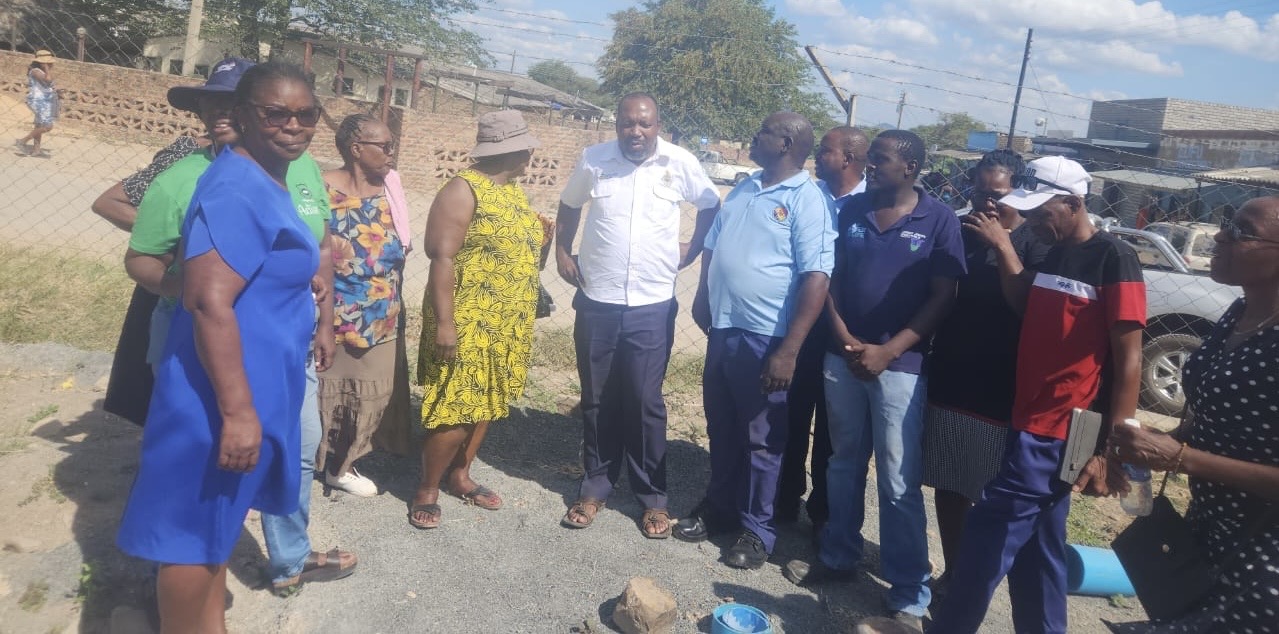
Daniel Molokele has announced the successful rollout and verification of solar-powered boreholes across several wards in Hwange Central, describing the development as a major boost for communities long affected by water shortages.

In a statement issued Friday, Molokele confirmed that a solar-powered borehole in Ward 5 is now fully operational, bringing relief to residents who have endured prolonged periods without reliable water supplies. Community members reportedly expressed “absolute delight” at the development, citing the borehole as a critical intervention.

The Ward 5 project is part of four boreholes installed under the 2024 Constituency Development Fund (CDF). According to the MP’s office, verification visits conducted on April 17 across Wards 1, 4, 5 and 6 confirmed steady progress.

Advertisement

Ward 4 and Ward 6 boreholes have been operational since February, already serving local populations. In Ward 1, installation is nearly complete, with service expected imminently.

Molokele’s office also revealed that delays in Ward 5 were due to funding shortfalls after CDF allocations were exhausted. The MP personally covered an outstanding US$2 000 to ensure completion.

Meanwhile, Ward 14 remains without a borehole despite being included in the original proposal. Officials acknowledged ongoing water challenges in the area and said efforts are underway to mobilise additional funding to complete the project.

Advertisement

Local leaders, councillors and ward development committees participated in the verification exercise alongside the project contractor, who provided technical assessments at each site.

Advertisement
Continue Reading

Nkayi

Burial preparations underway for Nkayi well tragedy victims

Published

on

BY NOKUTHABA DLAMINI 

The Nkayi community is preparing to lay to rest the Grade 2 pupil and his neighbor who tragically died in a gas-filled well in Ward 19 last week.

Advertisement

According to Ward 19 Councillor Thubelihle Mabuza Ncube, the young Grade 2 boy is scheduled to be laid to rest today, while the other deceased individual will be buried tomorrow. The community is currently awaiting the arrival of the bodies from the Nkayi regional mortuary. The remains were recently delivered back to the regional mortuary following the completion of postmortem examinations in Bulawayo.

The double fatality occurred when the young student was reportedly lured into a neighbor’s well by an elder to retrieve a bucket in exchange for sweets. The child was quickly overcome by suspected carbon monoxide and a total lack of oxygen. A neighbor who entered the shaft in a desperate rescue attempt also perished after being overwhelmed by the toxic air.

Due to the hazardous conditions within the well, rescuers were unable to enter the shaft and had to use a makeshift wire tool to retrieve the bodies from the surface. Councillor Ncube previously expressed deep distress over the incident, noting that Nkayi is hurting deeply.

Advertisement

While the community mourns, legal proceedings are also in motion. The councillor has indicated that the accused in the matter has been charged by the police. This update follows a series of tragic events in the Nkayi district, including a recent fatal elephant attack in Ward 13.

Advertisement
Continue Reading

Trending

Copyright © 2022 VicFallsLive. All rights reserved, powered by Advantage