Connect with us

National

Couple kills 14 year-old rape victim’s newly born baby

Published

on

BY NOKUTHABA DLAMINI

A Nyamandlovu couple allegedly poisoned to death a newly born child to cover up the husband’s rape case after he impregnated his 14 year-old victim.

Advertisement

The horrific crime allegedly happened in June in the Zimdabule Village while the man raped the girl in September last year.

“Police in Nyamandlovu are investigating circumstances surrounding cases of rape and murder, which occurred at Zimdabule Village in September 2020 and June 2021,” police said in a statement.

“In September 2020 one of the suspects raped the victim (14), who became pregnant and gave birth to a baby in June 2021.

Advertisement

“The suspect and his wife as well as their neighbour administered an unknown poison to the newly born baby.”

Police said the three accused, after commiting the offence attempted to bury the child’s remains in their homestead.

“The body was then buried within the yard,” police said.

Advertisement

“It was later exhumed and reburied outside the homestead.

“Investigations are in progress.”

Advertisement
Continue Reading
Click to comment

Leave a Reply

Your email address will not be published. Required fields are marked *

National

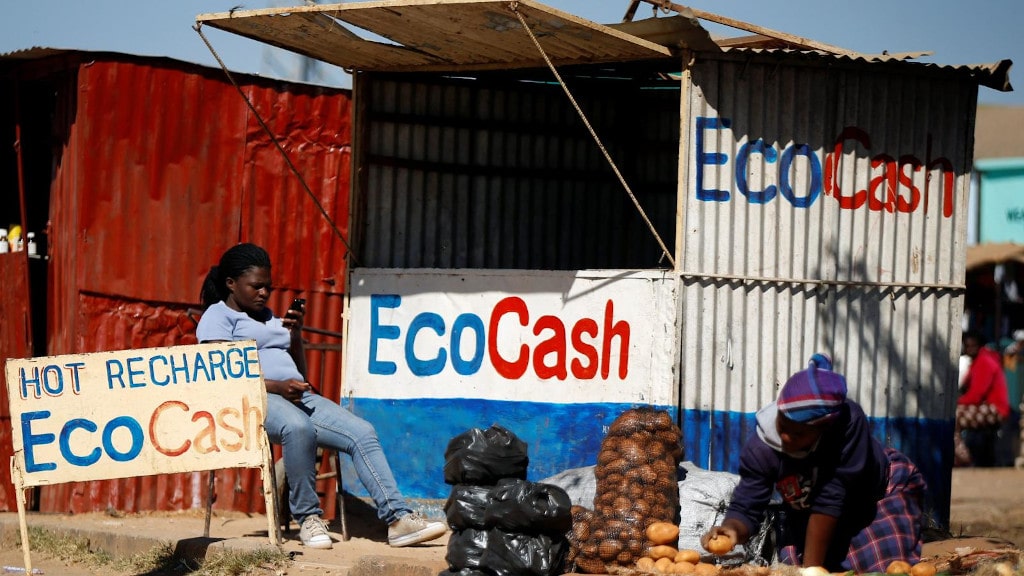
EcoCash launches all-in-one super app

Published

on

BY STAFF REPORTER 

Leading fintech platform EcoCash has launched an all-in-one “super app” integrating payments, chat and lifestyle services into a single platform, in a push to deepen digital financial inclusion.

Developed by Sasai Fintech, a unit of Cassava Technologies, the app signals EcoCash’s shift towards a fully integrated digital and social ecosystem that goes beyond traditional payments.

In a statement, EcoCash said the platform responds to growing demand for seamless, mobile-first solutions that combine communication and transactions.

“With mobile devices now central to how people live, work and transact, we have reimagined the EcoCash app to deliver a secure, convenient and integrated digital experience,” the company said.

A key feature is social payments, allowing users to send and receive money within chat conversations without switching apps. The platform also includes automated bill-splitting, enabling users to divide shared costs in real time.

The app integrates merchant payments, bill settlements, and airtime and data purchases into a single interface, aiming to reduce transaction time and data costs.

EcoCash said the platform also supports content monetisation, allowing users to create and earn income directly, targeting Zimbabwe’s growing community of digital creators and small businesses.

The company said the super app forms part of a broader innovation pipeline that will include stablecoin-based remittances and other digital financial services, supported by investments in artificial intelligence.

Sasai Fintech recently partnered with Circle, an internet financial platform company, to advance stablecoin adoption in Africa.

Continue Reading

National

Zimbabwe approves US$92 million Victoria Falls infrastructure deal

Published

on


BY WANDILE TSHUMA

The government has greenlit a major public-private partnership (PPP) to develop critical bulk infrastructure within the Masuwe Special Economic Zone (MSEZ), a move aimed at transforming Victoria Falls into a premier international hub for finance and tourism.

The project, approved during the Tuesday cabinet meeting, establishes a commercial joint venture (CJV) between the state-owned Mosi Oa Tunya Development Company (MTDC) and the JR Goddard (JRG) Consortium.

According to the government briefing, the MSEZ is a “flagship national development project” established to “transform Victoria Falls into a diversified, high-value hub integrating tourism, financial services and sustainable real estate”.

Advertisement


Under the terms of the agreement, the JRG Consortium—which includes JR Goddard Pvt Ltd, Sesani Pvt Ltd, Stewart Scott Zimbabwe Pvt Ltd, and GGF Africa Pvt Ltd—will provide funding of US25.6 million.

This arrangement results in a shareholding structure of 39% for MTDC and 61% for the JR Goddard Consortium.

The infrastructure roadmap for the 1 200-hectare site is extensive. Planned works include the surfacing of 8 km of internal roads, the upgrading of 9 km of existing gravel roads, and the construction of a 13 km water pipeline designed to serve both the economic zone and neighbouring communities.

Advertisement


Additional developments will feature a package water treatment plant, a sewerage reticulation system, a power sub-station, and effluent re-use storage ponds.

Cabinet said the project was subjected to a “rigorous evaluation” in compliance with the Zimbabwe Investment and Development Agency (ZIDA) Act.

Officials believe the partnership will “catalyse high-value investment” and provide a “sustainable fiscal contribution to gross domestic product (GDP)” while creating downstream jobs.

Advertisement


The government said the project is expected to “catapult the transformation of Victoria Falls into a modern and vibrant economic development city, fulfilling the attainment of Vision 2030”.

The joint venture includes a 25-year structured profit recoup period and will be overseen by a board chaired by the MTDC to ensure alignment with the country’s National Development Strategy 2.

Located within the Kavango-Zambezi Transfrontier Conservation Area (KAZA-TfCA), the Masuwedevelopment is seen as a strategic pivot for Zimbabwe to diversify its tourism-dependent economy into a more robust financial services and real estate centre.

Advertisement


Continue Reading

National

Zambia, Zimbabwe to ban heavy trucks from Victoria Falls Bridge

Published

on

BY DUMANI MOYO

Zambian President Hakainde Hichilema has announced that Zambia and Zimbabwe will restrict heavy trucks and trains from using the century-old Victoria Falls Bridge.

Speaking at an engineering conference in Livingstone, he said the two countries will instead build a new bridge and railway crossing to handle modern freight demands.

Hichilema made it clear that the 121-year-old structure can no longer safely or efficiently carry today’s heavy-duty traffic.

Engineers designed the bridge in the early 1900s for much lighter loads, not for fully laden 60-tonne mining trucks or long freight trains that now dominate regional trade routes.

Engineers completed the Victoria Falls Bridge in 1905 as a narrow arch crossing linking road, rail and pedestrian traffic.

While it remains an iconic piece of infrastructure, its design limits its ability to support modern logistics.

Authorities have already imposed restrictions over the years.

Trains often move at very low speeds, while trucks have faced weight limits that forced heavier vehicles to reroute through other crossings.

Although rehabilitation work in 2006 extended the bridge’s lifespan, it did not solve the fundamental structural limitations.

Experts now agree that upgrading the bridge to meet current freight standards would cost nearly as much as building a new one.

WHY A NEW CROSSING MAKES ECONOMIC SENSE

Officials from both countries now favour constructing a new dual-purpose rail and road bridge instead of attempting further upgrades.

A purpose-built crossing would accommodate higher traffic volumes and modern freight loads without compromising safety.

A new structure would also eliminate a major bottleneck along the North-South Corridor, which links the copper belts of Zambia and the Democratic Republic of Congo to southern markets such as South Africa.

By separating heavy commercial traffic from tourism and local travel, the new bridge would allow the Victoria Falls Bridge to serve lighter vehicles, pedestrians and tourists, preserving its heritage value.

REGIONAL TRADE AND RAIL INTEGRATION BOOST

The proposed crossing would complement major regional projects, including the Mosetse-Kazungula-Livingstone Railway.

A dual-track rail bridge would strengthen links between Zambia and Zimbabwe while supporting long-term plans to expand rail connectivity across Southern Africa.

It would also mirror the successful model of the Kazungula Bridge, which has significantly increased traffic flow since opening in 2021.

FINANCING AND NEXT STEPS

Despite strong political backing, key questions remain around funding, construction timelines and project ownership.

Zimbabwe’s debt constraints could complicate financing, although improved economic reforms may unlock support from international lenders.

If both governments secure funding and move quickly, the new bridge could become one of the most important infrastructure developments in the Southern African Development Community in recent years.

This could transform trade flows and ease congestion along a critical regional corridor.

SOURCE: THE SOUTH AFRICAN

Continue Reading

Trending

Copyright © 2022 VicFallsLive. All rights reserved, powered by Advantage