
Slider
Hwange volunteers fighting to save wild dogs from extinction

BY NOKUTHABA DLAMINI
Forty seven year-old Sarah Makina is one of the volunteers from Hwange fighting to save painted dogs from extinction and earning a living while doing something that has become a passion.
Makina from Mabale village on the outskirts of the Hwange National Park and other volunteers regularly venture into Zimbabwe’s biggest game reserve searching for snares used by poachers to trap the wild animals that are threatened with extinction.
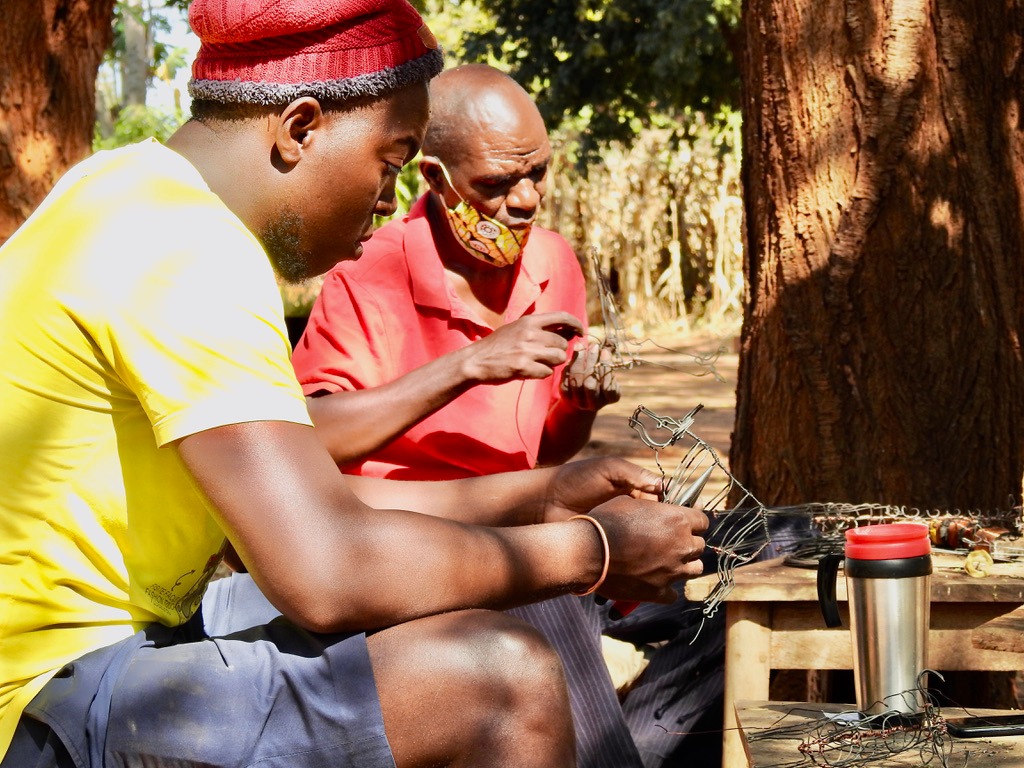
The villagers take the snares to Iganyana Art Centre in Dete, which was set up by the community under Chief Nelukoba, where the deadly traps are used to make artifacts to raise awareness about poaching and the importance of conservation.
Makina became involved in the initiative after Chief Nelukoba mobilised the community to take action after he stumbled on a dead female painted dog near his homestead.
“A community meeting was called, and the chief was not happy about the incident as the painted dog was killed by a snare set by poachers. He explained to us that the animals were already at risk of extinction,” she said.
The dead painted dog was brought to the meeting and after a long address by the chief, the community decided to take an initiative to form a committee that will go to the game reserve every day to remove snares.
The Painted Dog Conservation (PDC), an non-profit organisation set up to protect painted dogs – also known as African wild or hunting dogs – joined hands with the Mabele community to set up the Iganyana Art Centre in 2003 where the snares are turned to into artifacts.
Through the initiative the community has removed over 30 000 snares since 2002.
The centre provides materials and training for local’ artisans, who turn snares into beautiful sculptures.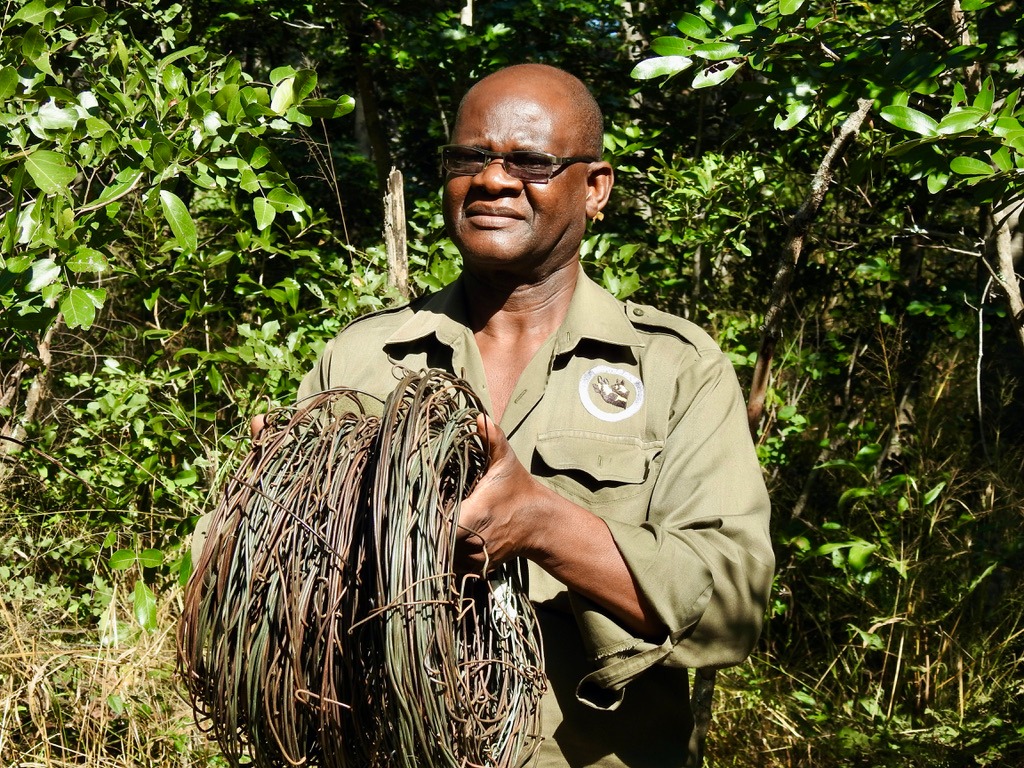 A ranger carrying recovered snares
Ronnie Sibanda, PDC’s communications and marketing manager, said the 23 young people at Iganyana Centre, had acquired skills to use the recovered snares to create artifacts depicting wild animals such as painted dogs, lions, pangolins and giraffes, among others.
“When our anti-poaching communities collect snares from the wild, they bring them to our art centre made up of 23 youths’ artisans who then transform the snares into art,” Sibanda said.
“So it’s turning tragedy into conservation, education, skills and income sustainability.”
“When a painted dog was snared in Mabale which is in our area operation, Chief Nelukoba was not happy about it and the communities formed a voluntary anti-poaching unit to help by patrolling in their areas.
“To date we have over 60 Mabale volunteers and we have also started to see even other neighbouring communities like Dopota, Nabushome and Sianyanga joining in.”
PDC equips the volunteers with equipment to protect themselves from poachers and uniforms.
“They have worked hard to reduce wildlife related crimes through our support with equipment such as the GPS trackers, boots, old uniforms from our anti-poaching unit rangers, shoes so that when they go out they can be identified,” Sibanda added.
“Since then we have not recorded any dog being snared.”
He said at the height of Covid-19 induced lockdowns in 2020 they recorded an upsurge in poaching of wild animals such as kudus, impalas and antelopes.
Volunteers such as Makina swung into action and helped to remove 5 000 snares in three months.
“Covid-19 came by with lots of hardships and desperation where we saw a rise in poaching activities and engaged the first group from Mabale to deploy them outside their community to beef up our scouting team of 16 and because of that effort, we removed 5 000 snares in a space of three months,” Sibanda said.
“The numbers went down to 1 900 after maintaining the stance of putting more boots on the ground such that even the poachers were now scared and that is why we saw a reduction in six months.”
The initiative has seen 85 rescued painted dogs being rehabilitated and released back into the wild.
“Our mission is to create an environment where painted dogs can thrive and we are trying to do this using several methods that include an anti-poaching unit work in the Hwange buffer zone and we also have the rehabilitation facility where we take care of sick or injured dogs as well as dogs from compromised backgrounds such as the puppies whose mothers have been ensnared and a research department monitoring the dogs, particularly those that are vulnerable in unsafe areas,” Sibanda said.
PDC is monitoring six packs of painted dogs on a daily basis across the Hwange National Park and four packs in Mana Pools National Park.
According to scientific research on the painted dog population in Hwange National Park in 1990s, there was a decrease of the dogs’ population to 100 due to space limitations, snares, road kill and diseases.
The game reserve now has an estimated 200, thanks to the conservation work by the organisation and the communities.
There are fewer than 7 000 painted dogs left across Africa. Other parts of the world do not have painted dogs.
*This story was first published by The Standard




-

 Slider3 years ago
Innscor launches brewery to produce Nyathi beer
-

 National5 years ago
In perched rural Matabeleland North, renewable energy is vital
-

 Tourism and Environment4 years ago
Strive Masiyiwa’s daughter opens luxury Victoria Falls lodge
-

 Special reports4 years ago
Tinashe Mugabe’s DNA show’s popularity soars, causes discomfort for some
-

 Opinion4 years ago
A street art mural in Zimbabwe exposes a divided society
-

 National4 years ago
Victoria Falls’ pilot dies in helicopter crash
-

 National3 years ago
Commission of inquiry findings fail to be tabled as Victoria Falls councillors fight
-
 National3 years ago
Hwange coal miner fires workers over salary dispute