Connect with us

Slider

Covid-19 jump-starts online retail sales in Zimbabwe

Published

on

BY EVIDENCE CHENJERAI

MUTARE- Kenneth Mudzingwa has worked and studied in Turkey for five and a half years.

Advertisement

To help his two siblings with groceries, the Zimbabwean citizen used a money transfer service that sometimes took days.

But since last June, he has ordered toiletries, cooking oil, maize meal, milk, sugar and other basics via a supermarket website. The items usually arrive in 24 hours.

“My siblings just send me a list of what they want and I complete the transaction from here, and they get notified of the order instantly for collection or delivery,” Mudzingwa said. “It’s a good start, and I hope online shopping improves in all retail outlets back home.”

Advertisement

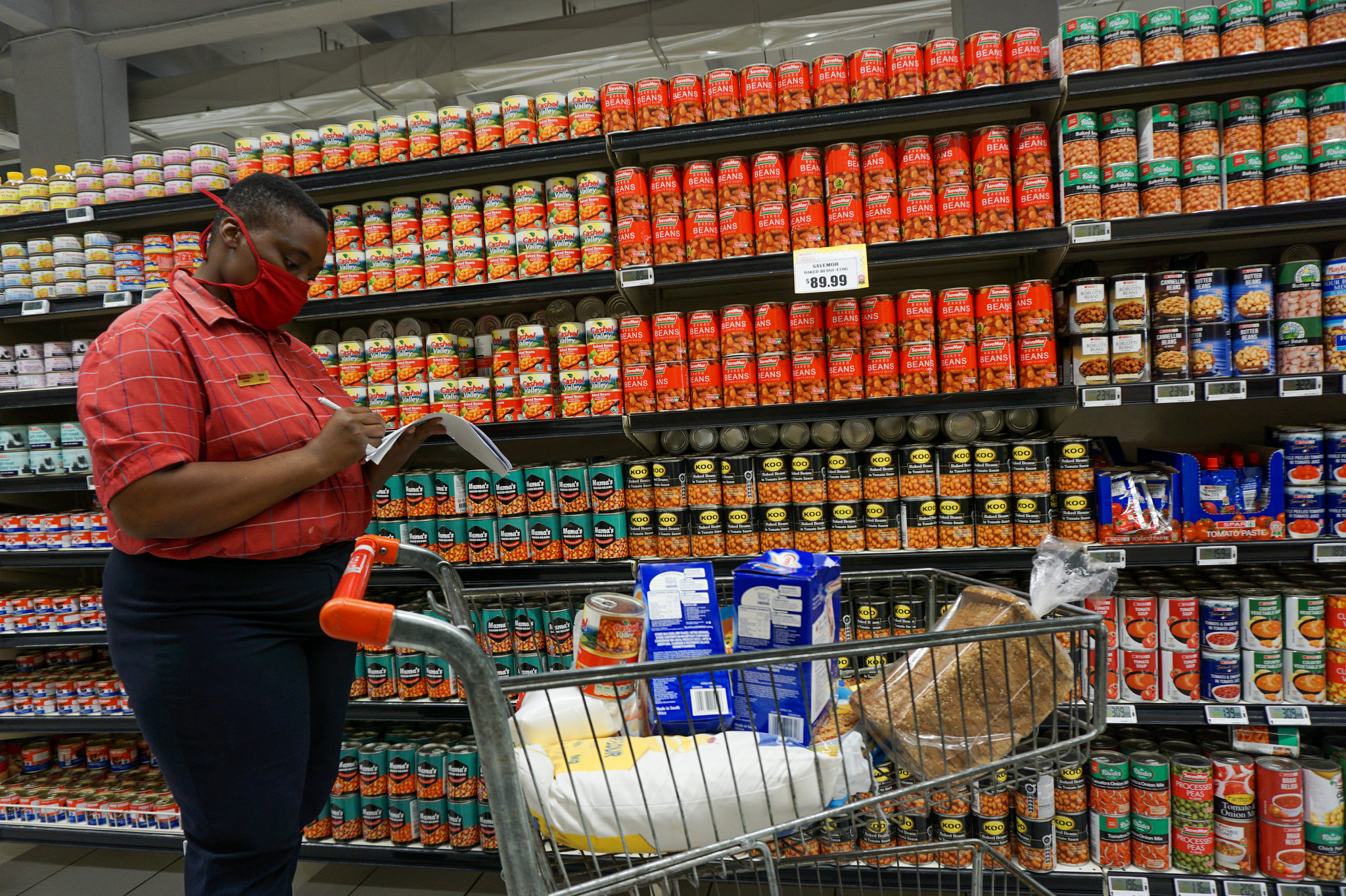
Mudzingwa’s experience is mirrored throughout Zimbabwe, where fears of contracting the coronavirus have forced long-resistant shoppers to embrace online shopping, a trend that could ultimately reshape the retail industry in this southern African country.

The shift comes as Zimbabwe continues to battle the coronavirus that causes Covid-19.

More than 3,000 people have died from the disease in a country that borders South Africa, which has the highest number of cases on the continent.

Advertisement

Since the pandemic erupted in March 2020, Zimbabwe’s government has ordered two nationwide lockdowns, which closed businesses and schools, and kept Zimbabweans at home.

This March, the government partially lifted the latest lockdown. But it left many restrictions in place for businesses, requiring mandatory masks and hand sanitizer, physical distancing, and temperature checks.

As the pandemic has worn on, grocery stores and other retailers have more aggressively promoted online shopping, which Zimbabweans have historically shunned.

Advertisement

Obstacles to online shopping include the high cost of internet data, a lack of digital infrastructure or weak connectivity in some regions, and security concerns, says economist Prosper Chitambara.

In March, Pick n Pay, a major supermarket chain, saw its Zimbabwe stores lose some $22 million (about US$260,000) to email hackers.

Online sales at OK Zimbabwe Limited, another supermarket chain, have jumped by 800 percent during the pandemic.

Advertisement

Monthly website visitors grew to 30,000, said Patricia Gondo, the company’s financial services manager.

She said the company, which began selling groceries online in 2019, started the pandemic with a very small online customer base.

SPAR Zimbabwe, another prominent grocer, unveiled online shopping in 2018, but officials say it didn’t catch on until March 2020, when the government announced the country’s first case of Covid-19.

Advertisement

Average monthly visits in 2020 were 127% higher than 2019, says Louise McAllister, marketing manager for SPAR Zimbabwe.

This year, she says, monthly visits are up 10% over 2020.

To combat Covid-19, both OK Zimbabwe’s and SPAR Zimbabwe’s delivery staff regularly use hand sanitizer, wear masks and submit to temperature checks.

Advertisement

McAllister says that to maintain physical distancing, SPAR Zimbabwe’s staff delivers to a customer’s porch.

Flexible payment options also have made online shopping more popular.

Only an estimated 1.3% of Zimbabweans over age 15 use credit cards, but in recent years mobile money – paying for goods and services through a cellphone – has surged in popularity.

Advertisement

Between 2016 and 2018, mobile money transactions leaped 445%, to more than 1.6 million, according to a report last year from FSD Africa, a financial sector development program funded by the United Kingdom.

A postal and telecommunications sector performance report found that in the first quarter of 2020, active mobile money subscriptions rose by 4.6% to reach more than seven million, compared to the fourth quarter of 2019.

Sydney Mangweka, a father of two whose wife works in a different city, says he started shopping online in April 2020.

Advertisement

A film and music producer who also owns a small printing business, he mainly pays for electricity and buys internet data, groceries and takeout meals.

“Being the only parent at home, it is my duty to ensure the kids have all they need, but due to my busy schedule, I would at times fail to meet that obligation,” said Mangweka (38), who uses mobile money to pay for his goods.

“During the duration of the 2020 national lockdown, as I was working from home, I discovered that I could actually work and shop at the same time using online shopping.”

Advertisement

He also likes the fact that if both he and his wife are traveling, he can still order groceries to be delivered at home.

Meanwhile, Mudzingwa (25), says retailers need to keep honing the online experience for customers.

“They have a long list of questions you go through when ordering, which puts me off ordering from those shops,” he said.

Advertisement

Mudzingwa also says sometimes a supermarket doesn’t include basic grocery items among its online offerings, which means he has to hopscotch between online stores to buy everything he needs.

And sometimes he processes and pays for his order – only for it to be delayed.

Nonetheless, both Mudzingwa and Mangweka plan to keep shopping online after the pandemic ebbs.

Advertisement

Chitambara, the economist, predicts that online shopping’s newfound traction will last, because it reduces the costs that come with in-person sales and lowers the price of goods and services.

“It enhances the long-term welfare and well-being of the economy,” he said. – Global Press Journal

Advertisement
Continue Reading
Click to comment

Leave a Reply

Your email address will not be published. Required fields are marked *

National

Parliament weighs 40% community share in carbon credit deals

Published

on

BY NOTHANDO DUBE

Lawmakers in Zimbabwe are debating a comprehensive Climate Change Management Bill that supporters say will finally ensure rural communities are no longer “mere spectators” in the multi-billion dollar carbon credit industry.

The Bill, which moved into its second reading, seeks to regulate carbon trading and protect the country’s natural resources from foreign exploitation.

Mutsa Murombedzi delivered a passionate plea for the legislation, arguing that it is a matter of “justice, survival and the dignity of our people”. “Climate change is not a distant stone,” Murombedzi told the House. “It is the flood that we see in Chimanimani, which sweeps away our schools… the heatwave that scotches our communities in Hwange, one silent drought that empties our granaries”.

A major point of contention and hope is the proposed 40% community share in carbon projects. Lawmakers argued that previous projects often left locals with nothing but “tsotso stoves or bicycles” while profits were “repatriated back to their countries, particularly those from the global north”.

Master Makope applauded the move to bring transparency to a sector where deals were often done “without the knowledge of the authorities”.

“By having this policy framework, I believe our people are going to benefit,” Makope said.

“The Minister has to make sure that the villagers, the communities, should also have easy access to registration of their own projects because they are the ones who own these forests”.

The debate also focused on the establishment of a National Climate Fund.

Susan Matsunga insisted on rigorous oversight, suggesting a biennial reporting cycle to Parliament to ensure progress is measurable. “This is about building a culture of transparency that ensures our climate goals are not just promises on paper but measurable achievements,” Matsunga stated.

Murombedzi added that “Climate finance must not vanish into corridors in Harare; it must flow to the ward level where resilience is built”.

Continue Reading

Binga

Lawmaker urges localized climate strategies for Tsholotsho, Hwange

Published

on

BY NOKUTHABA DLAMINI

A Shamva South lawmaker has called for a radical shift in climate change mitigation strategies, demanding that the government abandon “one-size-fits-all” projects in favor of solutions that respect the unique geography and culture of districts like Tsholotsho, Hwange, and Binga.

During the debate on the Climate Change Management Bill, Joseph Mapiki argued that national programs often fail because they ignore local realities.

“We should look at our projects in terms of the area,” Mapiki told the National Assembly. “For example, in Tsholotsho and Hwange, where there are game parks, we cannot force them to do horticulture because there is no water. We should encourage them to engage in tourism”.

Mapiki also challenged the government’s staffing policies for climate initiatives, insisting that local language and cultural knowledge are essential for the success of any environmental committee.

“If someone from Mashonaland Central goes and is incorporated in a Committee in Binga, it means that the Committee will not function well because that person will not be conversant with the language,” he argued.

He further emphasized that “First preference should be given to the locals to avoid taking people from other areas… because those other people will not be aware of the language and culture of the people there”.

Beyond staffing and local projects, Mapiki raised concerns about the influence of international donors on Zimbabwe’s environmental policy.

He urged the government to ensure that the majority of climate funding is domestic to avoid “stringent measures and conditions” imposed by foreign entities.

“Our plea Hon. Minister, is that 98% funding for that Bill should be from Zimbabwe,” Mapiki stated.

“Foreign funding is hampering our progress”. His remarks were supported by other MPs who noted that climate change mainstreaming must include the “vulnerable communities” and “local authorities” who are on the frontlines of weather shocks in the province.

Continue Reading

Hwange

Hwange MP challenges government over Nambya teacher deployment

Published

on


BY NOKUTHABA DLAMINI

Hwange East legislator Joseph Bonda has called on the government to address what he describes as the marginalisation of the Nambya language in schools, arguing that current teacher deployment policies are undermining early learning in Matabeleland North.
According to the National Assembly’s official record of 7 April 2026, Bonda formally asked the Minister of Public Service, Labour and Social Welfare to explain why trained Nambya-speaking teachers are not being employed in Hwange District while non-speakers are posted to the area.

He said the practice was “depriving children of receiving instruction in their mother tongue at the early education stage”, which he described as critical to both educational outcomes and cultural development.

Under Zimbabwe’s language policy framework, learners are expected to be taught in their mother language in the early grades. Critics say failure to align teacher deployment with local languages weakens that principle in practice.

Despite the concerns raised, the matter remains unresolved in Parliament. The inquiry was deferred on 18 March and, at the latest sitting, the ministry had yet to provide a formal response.

Parents in the district say the issue has direct consequences for children’s performance.

“Our children are disadvantaged from the start,” said Ester Ncube, a parent in Jambezi under Chief Shana. “If a child cannot understand the teacher in Grade One, it affects everything that follows.”

Community leaders argue that the debate goes beyond classroom instruction and touches on identity.

“Language is part of who we are,” said local elder Eliziya Vashe Shoko. “If schools do not teach in Nambya, we are slowly losing our identity. Government must take this seriously.”

Young professionals in the province say the challenge is not a shortage of qualified personnel but gaps in recruitment and deployment.

“There are trained teachers who speak Nambya, Lozvi, Chidombe and other local languages, but they are not being deployed here,” said Lindiwe Sibanda, a recent graduate.

“At the same time, teachers from outside are brought in. It does not make sense. These languages should be prioritised so that communities feel a sense of belonging and respect.”

The language dispute forms part of a wider push for regional equity in Matabeleland North. Bonda has also raised concerns over local employment quotas in the wildlife sector and what he describes as the exclusion of Hwange from national weather forecasts. He argues that these issues reflect a broader mismatch between national policy and local needs.


SOURCE: CITE

Advertisement


Continue Reading

Trending

Copyright © 2022 VicFallsLive. All rights reserved, powered by Advantage